Air source and ground source heat pumps both qualify for the £7,500 Boiler Upgrade Scheme grant in 2026
If you are considering replacing a gas or oil boiler with a heat pump, the most immediate question is often about cost. The Boiler Upgrade Scheme (BUS) in England and Wales offers a flat £7,500 grant for both air source heat pumps (ASHPs) and ground source heat pumps (GSHPs), making either technology significantly more affordable in 2026.
Air source heat pumps cost £2,500–£7,500 installed before the £7,500 grant, while ground source costs £14,000–£19,000. Both qualify for the same BUS grant in 2026, but GSHP offers higher efficiency and longer lifespan at a higher upfront price.
- Both qualify for the £7,500 Boiler Upgrade Scheme grant in 2026.
- ASHP costs £2,500–£7,500 installed before grant; GSHP costs £14,000–£19,000.
- GSHP suits homes with heat demand over 12 kW; ASHP for up to 12 kW.
- EPC must have no outstanding insulation recommendations to claim the grant.
- Only one BUS grant per property, so choose the right heat pump type first.
- Air source and ground source heat pumps both qualify for the £7,500 Boiler Upgrade Scheme grant in 2026
- Property size and heat demand determine which heat pump type you can install
- Upfront costs differ significantly £2,500 to £7,500 for ASHP vs £14,000 to £19,000 for GSHP before the grant
- Quick numbers running costs, efficiency, and lifespan comparison
- The direct answer air source heat pumps are cheaper to install; ground source are more efficient and quieter
- Eligibility for the BUS grant depends on your EPC, property type, and installer certification
- How to verify an MCS-certified installer and avoid losing the grant
Eligibility for the BUS grant is not automatic. Your property must have a valid Energy Performance Certificate (EPC) with no outstanding recommendations for loft or cavity wall insulation (GOV.UK, 2026). Only one grant is available per property, so you cannot claim for both an ASHP and a GSHP. The grant is deducted from the installer’s quote, not paid directly to the homeowner.
Property size and heat demand determine which heat pump type you can install
The size of your home and its heat demand are the primary factors that dictate which heat pump type is viable. ASHPs are typically suitable for homes with a heat demand up to 12 kW, while GSHPs can handle larger loads, often exceeding 15 kW. A full heat loss calculation, carried out to MCS Standard 3001 or equivalent, is required before installation (MCS, 2026).
Homes with poor insulation, such as those with an EPC rating of F or G, may not qualify for either heat pump under BUS rules unless insulation is upgraded first. If your home has a high heat demand, a GSHP may be the only viable option, but requires sufficient outdoor space for ground loops or boreholes.
Upfront costs differ significantly £2,500 to £7,500 for ASHP vs £14,000 to £19,000 for GSHP before the grant
The upfront cost difference between the two technologies is substantial. A typical installed cost for an ASHP is £2,500–£7,500, while a GSHP costs £14,000–£19,000, excluding the £7,500 BUS grant (Energy Saving Trust, 2026; Energy Saving Trust, 2026).
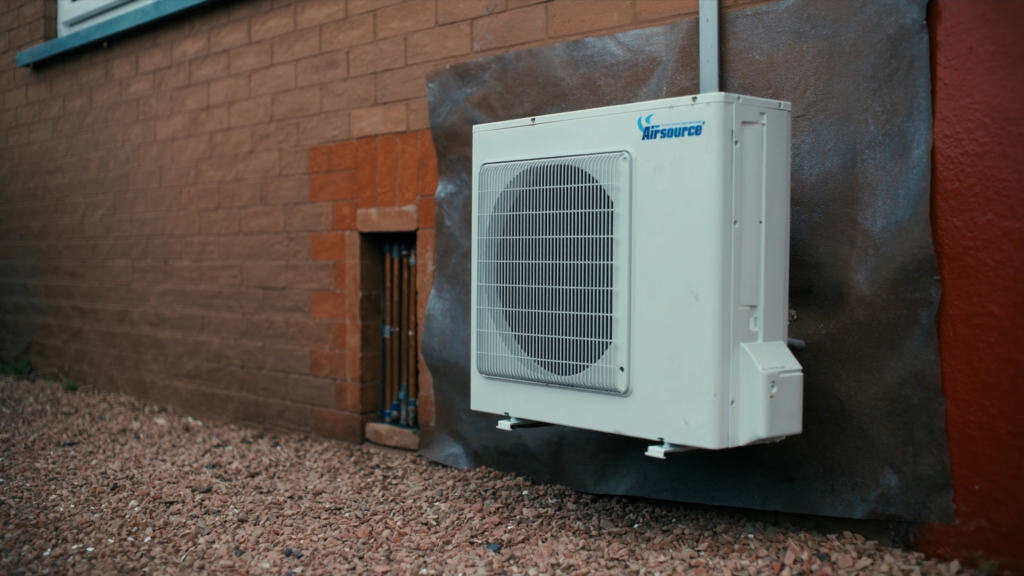
The higher cost of a GSHP is driven by the ground array installation. Excavation for horizontal trenches or drilling boreholes adds £6,000–£12,000 depending on land area and local geology. An ASHP requires only an external unit and an indoor hot water cylinder, with no groundworks needed. This makes ASHP the more affordable option for most homeowners.
Quick numbers running costs, efficiency, and lifespan comparison
| Metric | Air source heat pump | Ground source heat pump |
|---|---|---|
| Typical efficiency (CoP) | 2.5–3.5 | 3.0–4.5 |
| Annual running cost (3-bed semi, 2026) | £600–£900 | £450–£700 |
| Lifespan (years) | 15–20 | 20–25 |
| Noise level (dB at 1 m) | 40–60 | 30–40 |
| Land area required | 0 m² (wall or ground) | 50–150 m² (trench) or 1–2 boreholes |
Efficiency is measured as the Coefficient of Performance (CoP), which indicates how many units of heat are produced for each unit of electricity used. The CoP ranges are sourced from DESNZ heat pump performance data (DESNZ, 2026). Running costs are based on Energy Saving Trust calculations for a typical 3-bed semi-detached home (Energy Saving Trust, 2026). Lifespan data comes from MCS product standards (MCS, 2026). Noise levels are averaged from MCS-registered models and the Noise Policy Statement for England (DEFRA, 2026).
The direct answer air source heat pumps are cheaper to install; ground source are more efficient and quieter
For most homeowners, the choice comes down to a trade-off between upfront cost and long-term performance. An ASHP is the lower-cost option, with installation costing £2,500–£7,500 and a CoP of 2.5–3.5. A GSHP costs more upfront (£14,000–£19,000) but achieves a higher CoP of 3.0–4.5, meaning lower running costs over time (DESNZ, 2026; Energy Saving Trust, 2026).
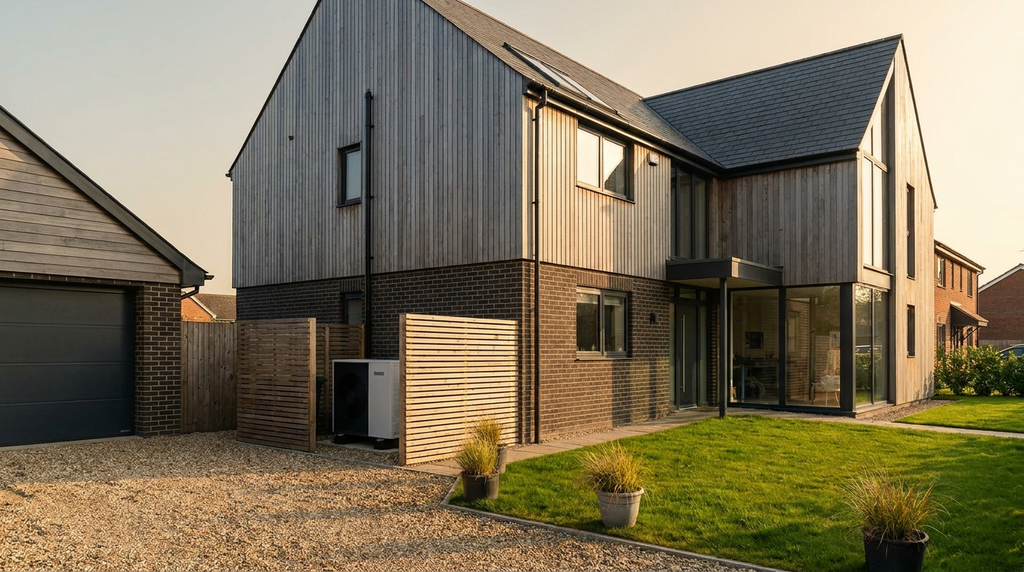
A GSHP also runs more quietly (30–40 dB versus 40–60 dB) and lasts longer (20–25 years versus 15–20 years). For most UK homes with limited outdoor space, an ASHP is the practical choice. A GSHP requires a large garden (50–150 m² for horizontal trenches) or access for borehole drilling, which may not be feasible on smaller plots. compare heat pump running costs with gas boiler running costs
Eligibility for the BUS grant depends on your EPC, property type, and installer certification
To qualify for the £7,500 BUS grant, your property must have a valid EPC (no older than 10 years) with no outstanding recommendations for loft or cavity wall insulation (GOV.UK, 2026). The installer must be MCS-certified and registered on the MCS database (MCS, 2026). The heat pump itself must also be listed on the MCS product database; off-list models do not qualify for the grant.
Off-gas-grid homes are not automatically eligible. The same EPC and insulation rules apply regardless of your current heating fuel. If your EPC lists unfilled loft or cavity wall insulation recommendations, you must address these before the heat pump installation can qualify for the grant.
How to verify an MCS-certified installer and avoid losing the grant
To ensure your grant is processed correctly, check the MCS installer database at mcscertified.com before signing any contract (MCS, 2026). Only MCS-registered companies can process BUS grants. Ask for a written quote that includes the BUS grant deduction. The installer must not charge you the full price and then expect you to reclaim the grant yourself.
Verify the installer holds public liability insurance of at least £2 million and, if electrical work is required, NICEIC or NAPIT registration (TrustMark, 2026). Get a signed contract with a clear start date. The BUS grant must be applied for within 90 days of installation completion. Failure to use an MCS-certified installer or to meet the EPC requirements will result in losing the grant entirely. check if your home is suitable for a heat pump
Frequently Asked Questions
Ground source heat pumps are typically cheaper to run, with average annual savings of £590–£1,600 versus a gas boiler, compared to £395–£1,070 for air source, according to the Energy Saving Trust (2026). The higher efficiency of GSHP (COP of 3–4) reduces electricity use.
No, the Boiler Upgrade Scheme allows only one grant per property, worth £7,500 in 2026 (GOV.UK). You must choose either an air source or ground source heat pump.
A ground source heat pump with horizontal loops needs about 600–1,000 square metres of land, while vertical boreholes require less surface area but more drilling depth, as specified by MCS standards (2026).
Air source heat pumps are often best for older UK homes with limited outdoor space, as they cost £2,500–£7,500 installed. However, a heat loss calculation is required to confirm suitability, and the property must have an EPC rating of at least D for BUS eligibility.
Ground source heat pumps typically last 20–25 years, while air source units last 15–20 years, according to the Energy Saving Trust (2026). The ground loop in a GSHP can last 50+ years.