Switching from Oil to a Heat Pump Saves an Average of £615 per Year on Heating Costs
For homes in the UK that rely on oil heating, the annual cost of keeping warm has become a significant household expense. The Energy Saving Trust’s 2026 data provides a clear financial argument for switching to a heat pump for off-gas-grid properties.
A heat pump for off gas grid homes saves £615 per year on average compared to oil heating, according to Energy Saving Trust 2026 data. Running costs range from £550–£900 annually, versus £1,200–£1,600 for oil.
- Switching from oil to a heat pump saves £615 per year on average.
- Heat pump running costs range from £550 to £900 annually.
- Oil boiler running costs are £1,200–£1,600 per year.
- A well-insulated home and correct SCOP maximise heat pump savings.
- Install a heat pump for £7,000–£13,000 after Boiler Upgrade Scheme grant.
- Switching from Oil to a Heat Pump Saves an Average of £615 per Year on Heating Costs
- Quick Numbers, Cost, Efficiency, and Running Cost Comparison for Off-Grid Homes
- Heat Pumps Are the Most Cost-Effective Heating Option for Off-Gas-Grid Homes
- Eligibility for the Boiler Upgrade Scheme and Other Grants for Off-Grid Homes
- How to Verify an MCS-Certified Heat Pump Installer for Off-Grid Properties
- The Three Main Heat Pump Types for Off-Gas-Grid Homes
- What to Check Before Installing a Heat Pump in an Off-Grid Home
The average annual saving for a typical four-bedroom off-gas-grid home in England, Scotland, and Wales is £615 per year when moving from an oil boiler to a heat pump (Energy Saving Trust, 2026).
This figure compares the average annual running cost of an oil boiler (£1,200–£1,600) against a heat pump (£550–£900), based on EST 2026 data. The actual saving in your home depends on three main factors: the efficiency of your current heating system (older oil boilers are less efficient than modern condensing models), the level of insulation in your property, and the Seasonal Coefficient of Performance (SCOP) of the heat pump you install. The £615 saving assumes a well-insulated property and a correctly sized heat pump, as these conditions maximise the heat pump’s efficiency.
Quick Numbers, Cost, Efficiency, and Running Cost Comparison for Off-Grid Homes
The table below summarises the key figures for the main heating options available to off-gas-grid homes. All running cost and CO₂ data comes from the Energy Saving Trust 2026 update, while installation costs are sourced from the Department for Energy Security and Net Zero (DESNZ) 2026 release.
| Heating system | Typical annual running cost (EST 2026) | Upfront installation cost (DESNZ 2026) | Efficiency (SCOP or %) | CO₂ emissions per year (kgCO₂, EST 2026) |
|---|---|---|---|---|
| Oil boiler | £1,200–£1,600 | £2,500–£4,500 | 85–95% | 4,500–5,500 |
| LPG boiler | £1,300–£1,800 | £2,500–£4,500 | 85–95% | 4,000–5,000 |
| Electric storage heaters | £1,000–£1,400 | £1,500–£3,000 | 100% | 2,500–3,500 |
| Air-source heat pump | £550–£900 | £7,000–£13,000 | SCOP 3.0–4.0 | 1,000–1,500 |
| Ground-source heat pump | £450–£750 | £14,000–£21,000 | SCOP 3.5–4.5 | 800–1,200 |
All figures are for a typical four-bedroom detached home in the UK. The SCOP (Seasonal Coefficient of Performance) measures how many kWh of heat a heat pump produces per kWh of electricity it consumes over a full heating season. A higher SCOP means greater efficiency and lower running costs.
Heat Pumps Are the Most Cost-Effective Heating Option for Off-Gas-Grid Homes
For homes not connected to the mains gas network, heat pumps are cheaper to run than oil, LPG, or electric resistance heating over the long term, based on EST 2026 running-cost data. The typical SCOP for an air-source heat pump is 3.0–4.0, while ground-source models achieve 3.5–4.5 (MCS register, 2026).
Comparing annual running costs directly: heat pumps cost £550–£900 per year, oil boilers cost £1,200–£1,600 per year, LPG boilers cost £1,300–£1,800 per year, and electric storage heaters cost £1,000–£1,400 per year (EST 2026). The efficiency advantage is clear, heat pumps produce 3–4 kWh of heat per 1 kWh of electricity used, making them 300–400% efficient, compared to 85–95% for modern oil boilers.
The Boiler Upgrade Scheme (BUS) reduces the upfront cost by £7,500 for both air-source and ground-source heat pumps in England and Wales (GOV.UK, DESNZ, 2026). This grant significantly narrows the price gap between a heat pump and a replacement oil boiler, particularly for off-grid homes that are automatically exempt from the gas grid requirement.
Eligibility for the Boiler Upgrade Scheme and Other Grants for Off-Grid Homes
The Boiler Upgrade Scheme is the primary grant for heat pumps in off-gas-grid homes. To qualify, your home must not be connected to the mains gas grid, and the heat pump must be installed by an MCS-certified installer (GOV.UK, DESNZ, 2026). The grant amount is £7,500 for either an air-source or ground-source heat pump, and the scheme is currently funded until 2028.
Off-grid homes are automatically exempt from the gas grid requirement, making them priority candidates for BUS funding. Other grants are available regionally. Home Energy Scotland offers interest-free loans of up to £10,000 for heat pumps (Energy Saving Trust, 2026). The Nest scheme in Wales provides up to £4,000 for eligible households (Welsh Government, 2026).
How to Verify an MCS-Certified Heat Pump Installer for Off-Grid Properties
MCS (Microgeneration Certification Scheme) certification is mandatory for BUS grants and for most manufacturer warranties and scheme eligibility (MCS, 2026). To find a certified installer, check the MCS installer directory online at mcs-certified.com for your postcode.
Additional certifications provide consumer protection. TrustMark registration ensures the installer follows government-endorsed standards for customer service and workmanship (TrustMark, 2026). If you are switching from LPG and retaining a gas boiler backup, the installer must also be on the Gas Safe Register (Gas Safe Register, 2026).
Always ask for at least three quotes from MCS-certified installers and compare the heat pump sizing calculations. A proper room-by-room heat loss survey is essential, never accept a quote based on a rule-of-thumb calculation, as oversizing or undersizing will reduce efficiency and increase running costs.
The Three Main Heat Pump Types for Off-Gas-Grid Homes
Three main heat pump types are suitable for off-gas-grid homes, each with different costs and installation requirements.
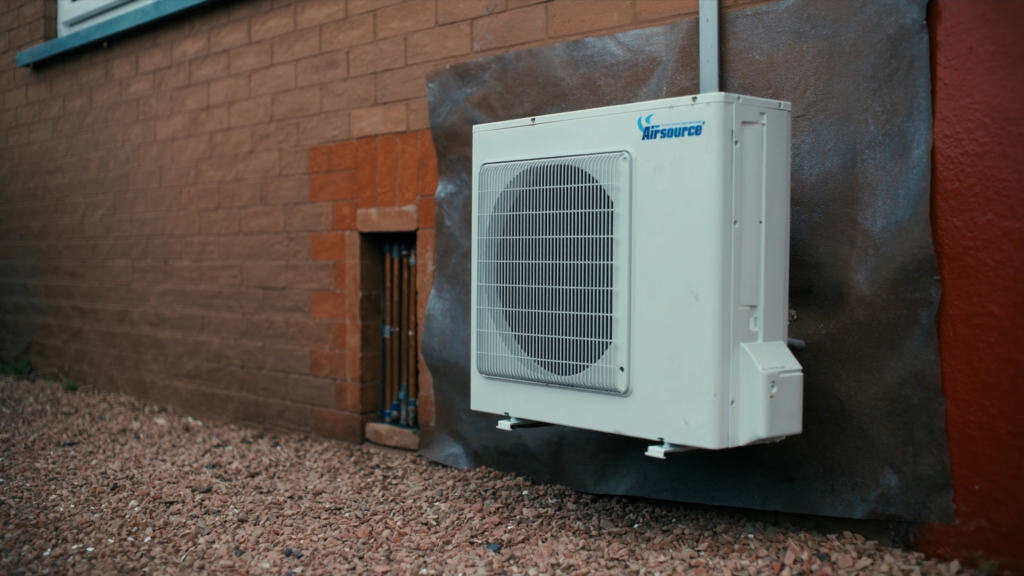
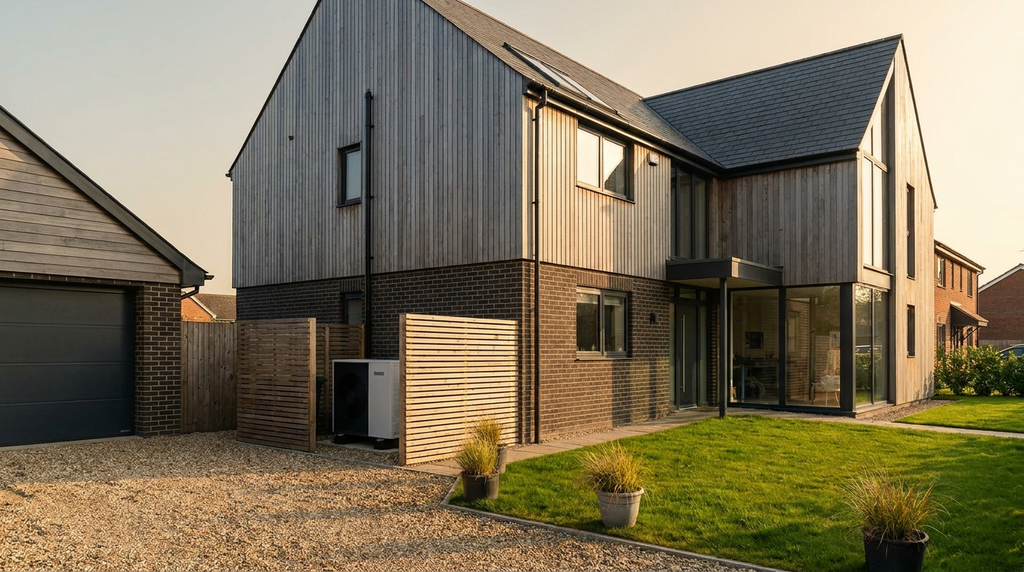
Air-source heat pumps are the most common choice. Installed costs range from £7,000 to £13,000 (DESNZ 2026), with a typical SCOP of 3.0–4.0. They work effectively in the UK climate down to -15°C, making them reliable even in cold winters. The outdoor unit requires a clear space on an external wall or on the ground.
Ground-source heat pumps have higher upfront costs of £14,000–£21,000 (DESNZ 2026) but achieve a higher SCOP of 3.5–4.5. They require land for ground loops, either horizontal trenches (typically 50–100 metres of land) or vertical boreholes (for smaller gardens). The higher efficiency means lower running costs of £450–£750 per year (EST 2026).
Hybrid heat pumps combine a heat pump with your existing oil or LPG boiler. The heat pump handles most of the heating load, with the boiler providing top-up heat during the coldest days. This system reduces running costs by 30–50% (EST 2026) and is useful for poorly insulated homes where a standalone heat pump may struggle.
What to Check Before Installing a Heat Pump in an Off-Grid Home
Before proceeding with a heat pump installation, several property checks are essential to ensure the system will perform efficiently.
Insulation is the single most important factor. Heat pumps work best in well-insulated homes with loft insulation of at least 270mm, cavity wall insulation, and double glazing. The Energy Saving Trust recommends a full retrofit assessment before installing a heat pump (EST, 2026). Without adequate insulation, running costs will be higher than expected.
Radiator sizing must be reviewed. Heat pumps operate at lower flow temperatures (45–55°C) compared to oil boilers (70–80°C). To deliver the same amount of heat, radiators need to be larger, typically 2–3 times the surface area of existing ones. Underfloor heating is an excellent match for heat pumps because it operates at even lower temperatures (30–40°C).
Hot water cylinder requirements differ from combi boilers. Heat pumps need a large unvented hot water cylinder (180–300 litres) with a dedicated heat pump coil. The cost for a new cylinder and associated pipework is £800–£1,500 (DESNZ 2026). If you currently have a combi boiler, you will need to install a cylinder, which may require additional space.
Electricity supply should be checked with your Distribution Network Operator (DNO). Most off-grid homes have a single-phase supply, which is suitable for the majority of heat pump installations up to about 12kW. Larger systems may require a three-phase supply, and the DNO can advise on whether your existing supply needs upgrading.
guide to heat pump radiator sizing and installation requirements
comparison of air-source vs ground-source heat pump running costs
Frequently Asked Questions
A heat pump for an off gas grid home costs £7,000–£13,000 installed, according to DESNZ 2026 data. The Boiler Upgrade Scheme reduces this by £7,500.
Yes, a heat pump is cheaper to run than oil heating. The Energy Saving Trust 2026 data shows average annual savings of £615 for a four-bedroom off gas grid home.
A typical off gas grid home needs a heat pump with 8–12 kW capacity. The MCS installer calculates the exact size based on your property's heat loss.
Yes, the Boiler Upgrade Scheme offers £7,500 off the installation cost for heat pumps in off gas grid homes in England and Wales. Apply through an MCS certified installer.
A heat pump for off gas grid homes typically has a SCOP of 3.0–4.0, meaning it produces 3–4 kWh of heat for each kWh of electricity. This is far more efficient than an oil boiler at 85–95%.