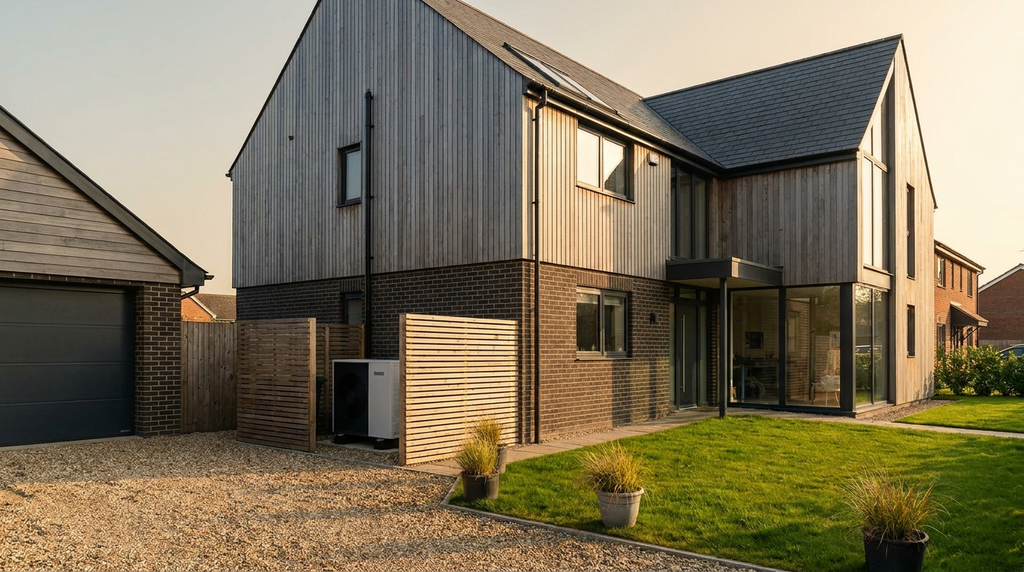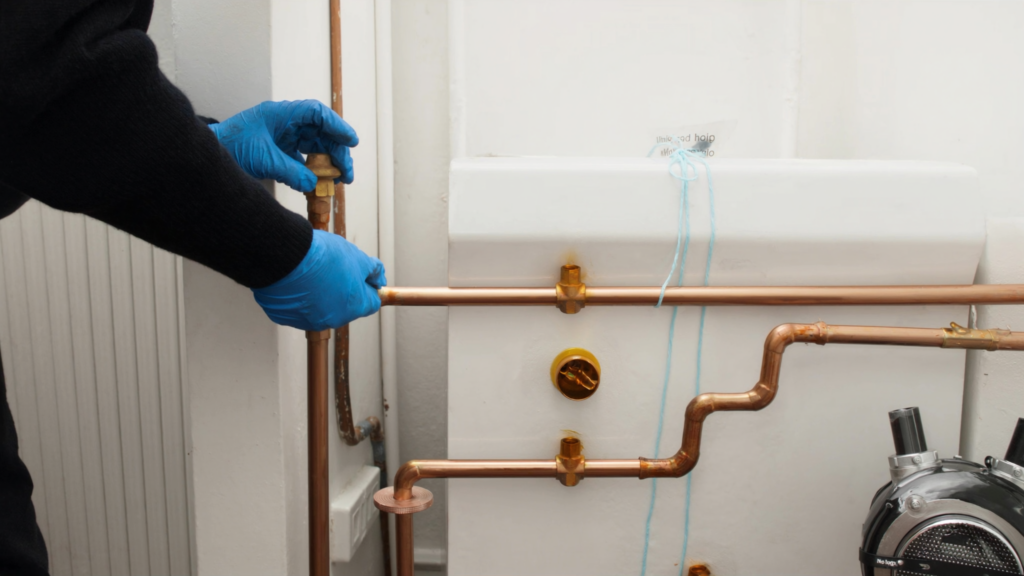
An air-to-water heat pump costs roughly twice as much as a gas boiler but can cut heating bills by 30–40% in a well-insulated home.
The typical installed cost for an air-to-water heat pump system in the UK is £10,000–£14,000, compared to £2,500–£4,000 for a new gas boiler (Energy Saving Trust, 2026). Annual savings on heating bills depend on the property’s insulation level, the efficiency of the heat pump (measured by SCOP), and the gas-to-electricity price ratio. The Boiler Upgrade Scheme (BUS) provides a grant of £7,500 to offset the upfront cost, reducing the net cost to £2,500–£6,500 (GOV.UK, DESNZ, 2026).
An air to water heat pump costs £10,000–£14,000 installed, but the £7,500 Boiler Upgrade Scheme grant cuts net cost to £2,500–£6,500. It can reduce heating bills by 30–40% in a well-insulated home.
- Installed cost is £10,000–£14,000, or £2,500–£6,500 after the £7,500 BUS grant.
- Cuts heating bills by 30–40% in a well-insulated home vs a gas boiler.
- Delivers 3–4 kWh of heat per 1 kWh electricity (SCOP 3.0–4.0).
- Connects to existing wet central heating, replacing gas or oil boilers.
- Works in outdoor temperatures as low as -15°C per MCS 023 Standard.
- An air-to-water heat pump costs roughly twice as much as a gas boiler but can cut heating bills by 30–40% in a well-insulated home.
- An air-to-water heat pump extracts heat from outside air and transfers it to your central heating and hot water system.
- The key performance metric is the Seasonal Coefficient of Performance (SCOP), which determines your running costs.
- Quick numbers
- Your home’s insulation and radiator size determine whether a heat pump will work efficiently.
- Eligibility for the Boiler Upgrade Scheme requires an MCS-certified installer and a valid EPC.
- The direct answer an air-to-water heat pump is a low-carbon heating system that uses outdoor air to heat your home and water, costing £10,000–£14,000 installed but eligible for a £7,500 grant.
An air-to-water heat pump extracts heat from outside air and transfers it to your central heating and hot water system.
The unit contains a refrigerant that absorbs heat from outdoor air, even at temperatures as low as -15°C (MCS 023 Standard). A compressor raises the temperature of the refrigerant, and a heat exchanger transfers that heat to water circulating through radiators or underfloor heating. The system runs on electricity but delivers 3–4 kWh of heat for every 1 kWh of electricity consumed (SCOP of 3.0–4.0) (Energy Saving Trust, 2026). Unlike an air-to-air heat pump, it connects to existing wet central heating systems. That makes it a direct replacement for a gas or oil boiler.
The key performance metric is the Seasonal Coefficient of Performance (SCOP), which determines your running costs.
SCOP is the average efficiency over a full heating season, expressed as a ratio of heat output to electricity input. A SCOP of 3.0 means for every £1 of electricity, you get £3 worth of heat; a SCOP of 4.0 means £4 worth of heat (MCS 023 Standard). The Energy Saving Trust estimates a typical SCOP of 3.2–3.5 for a well-installed system in a UK home (Energy Saving Trust, 2026). Lower flow temperatures (35–45°C) improve SCOP, which is why underfloor heating or larger radiators are often recommended.
Quick numbers
| Metric | Typical value | Source |
|---|---|---|
| Installed cost (before grant) | £10,000–£14,000 | Energy Saving Trust, 2026 |
| Boiler Upgrade Scheme grant | £7,500 | GOV.UK, DESNZ, 2026 |
| Net cost to homeowner | £2,500–£6,500 | Calculated from above |
| Typical SCOP | 3.2–3.5 | Energy Saving Trust, 2026 |
| Annual CO₂ saving vs gas boiler | Approx. 30–50% | Energy Saving Trust, 2026 |
| Suitable outdoor temperature range | -15°C to 35°C | MCS 023 Standard |
| System lifespan | 15–20 years | Energy Saving Trust, 2026 |
Your home’s insulation and radiator size determine whether a heat pump will work efficiently.
A heat pump operates at lower flow temperatures than a gas boiler, so radiators must be larger (or replaced) to deliver the same heat output (Energy Saving Trust, 2026). Insulation to at least 270mm loft insulation and cavity wall insulation is strongly recommended to reduce heat demand and improve efficiency. Underfloor heating is ideal because it requires water at 30–35°C, matching the heat pump’s optimal output temperature. A heat loss calculation (using the MCS 023 method) is required to size the system correctly, oversizing increases cost, undersizing leaves you cold.
Eligibility for the Boiler Upgrade Scheme requires an MCS-certified installer and a valid EPC.
The homeowner must have a valid Energy Performance Certificate (EPC) with no outstanding recommendations for loft or cavity wall insulation (GOV.UK, DESNZ, 2026). The installer must be certified under the Microgeneration Certification Scheme (MCS) and registered with TrustMark (MCS Register, 2026). The property must be in England or Wales (separate schemes exist in Scotland via Home Energy Scotland). The grant is deducted from the installer’s invoice, so the homeowner pays the net price (£7,500 less than the total cost).
The direct answer an air-to-water heat pump is a low-carbon heating system that uses outdoor air to heat your home and water, costing £10,000–£14,000 installed but eligible for a £7,500 grant.
It replaces a gas, oil, or LPG boiler and connects to existing radiators or underfloor heating. It is most cost-effective in well-insulated homes with low-temperature heating systems. The Boiler Upgrade Scheme (BUS) reduces the upfront cost significantly, making the net cost comparable to a new gas boiler. Annual running costs are typically 30–40% lower than a gas boiler, depending on electricity and gas prices.
compare air-to-water vs ground source heat pumps
guide to heat pump grants and eligibility in 2026
Frequently Asked Questions
Installed costs range from £10,000 to £14,000, according to the Energy Saving Trust (2026). The Boiler Upgrade Scheme (BUS) provides a £7,500 grant from GOV.UK, reducing your net cost to £2,500–£6,500.
Annual heating bill savings are typically 30–40% compared to a gas boiler in a well-insulated home, per the Energy Saving Trust (2026). Actual savings depend on your property’s insulation and the heat pump’s SCOP.
It extracts heat from outside air using a refrigerant, even at -15°C (MCS 023 Standard). A compressor raises the temperature, and a heat exchanger transfers it to your central heating water system.
SCOP (Seasonal Coefficient of Performance) measures average efficiency over a heating season. The Energy Saving Trust (2026) estimates a typical SCOP of 3.2–3.5 for a well-installed UK system, meaning 3.2–3.5 kWh of heat per 1 kWh of electricity.
Yes, the Boiler Upgrade Scheme (BUS) offers a £7,500 grant for air-to-water heat pumps in England and Wales (GOV.UK, DESNZ, 2026). This reduces the net installed cost to £2,500–£6,500.
An air-to-water heat pump connects to your existing wet central heating system (radiators or underfloor heating). An air-to-air heat pump blows warm air directly into rooms and cannot heat water or replace a boiler.