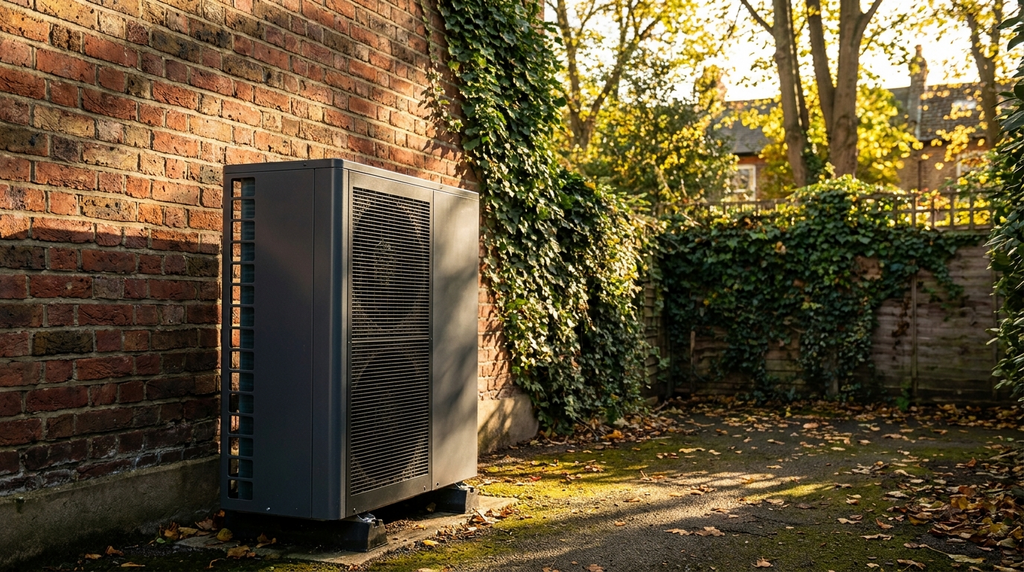
Heat pump water heaters use less than half the electricity of a standard immersion heater
A heat pump water heater (HPWH) is a hot water cylinder that uses a heat pump to warm the water, rather than a direct electric immersion element. It works like a fridge in reverse, extracting heat from the surrounding air and transferring it into the water inside the tank. In 2026, a typical direct-electric immersion heater uses approximately 4,500–5,500 kWh per year for hot water in a three-bedroom home, according to the Energy Saving Trust’s 2025/26 heating cost tables (Energy Saving Trust, 2026).
Heat pump water heaters are worth it if you have electric immersion heating, cutting running costs by 50–60%. Against a gas combi boiler, savings are only £20–50 per year, so they suit homes without gas or with high hot water demand.
- Use 1,800–2,200 kWh/year vs 4,500–5,500 for immersion heaters.
- COP of 3.0–3.5 makes them 200–250% more efficient than immersion.
- Save £20–50/year vs gas combi boiler on hot water only.
- Installation costs £2,500–£4,500, higher than standard cylinder.
- Best for homes with high hot water use or no gas connection.
- Heat pump water heaters use less than half the electricity of a standard immersion heater
- The annual running cost difference between a heat pump water heater and a gas combi boiler
- Are heat pump water heaters worth it for a typical UK home in 2026 (the direct answer)
- Quick numbers typical costs, savings, and payback for a heat pump water heater
- Eligibility and how to verify a qualified heat pump water heater installer
- When a heat pump water heater is not the right choice for your home
- The full installed cost of a heat pump water heater after the 2026 BUS grant
A dedicated heat pump water heater uses roughly 1,800–2,200 kWh annually for the same hot water demand, based on the same EST dataset. This means a HPWH is typically 200–250% more efficient than a standard electric immersion cylinder. The efficiency advantage comes from the coefficient of performance (COP), which is the ratio of heat output to electricity input. A standard immersion has a COP of 1.0, meaning every 1 kWh of electricity gives you 1 kWh of heat. A HPWH with a COP of 3.0 produces 3 kWh of heat for every 1 kWh of electricity used.
The annual running cost difference between a heat pump water heater and a gas combi boiler
In 2026, the average gas boiler delivers hot water at roughly 7–9p per kWh of usable heat, using Ofgem’s price cap unit rate for gas (6.24p/kWh) and a boiler efficiency of 85% (Ofgem, October 2026). A HPWH delivers hot water at roughly 6–8p per kWh of usable heat, using the October 2026 Ofgem price cap electricity rate (24.5p/kWh) and a COP of 3.0–3.5 (Energy Saving Trust, 2026). For a typical household using 2,500 kWh of hot-water heat per year, a HPWH saves roughly £20–£50 annually compared to a gas combi boiler.
That saving is relatively small because gas is still much cheaper per kWh than electricity, even after accounting for the heat pump’s efficiency advantage. The financial case for a HPWH against a gas boiler depends heavily on future electricity-to-gas price ratios. If the ratio narrows, the savings increase. If it widens, the savings shrink. For homes using an electric immersion heater, the savings are far larger because the immersion has no efficiency advantage at all.
Are heat pump water heaters worth it for a typical UK home in 2026 (the direct answer)
Yes, for homes that currently use a direct-electric immersion heater, a HPWH pays back the upfront cost in 4–7 years through lower bills alone. For homes with a working gas boiler, the payback period is longer (8–14 years), making the financial case weaker unless the boiler is due for replacement. The key metric is the COP: a HPWH with a COP of 3.0 produces 3 kWh of heat for every 1 kWh of electricity used, versus a COP of 1.0 for a standard immersion (DESNZ, 2026).
The Boiler Upgrade Scheme (BUS) offers a £7,500 grant in 2026 for eligible homes, which can fully cover the installed cost of a HPWH (GOV.UK, 2026). This changes the calculation significantly. If the grant covers the entire installation, the payback period becomes zero from day one. However, you still need to pay for any electrical circuit upgrades, which the grant does not cover. Detailed Boiler Upgrade Scheme eligibility and application process
Quick numbers typical costs, savings, and payback for a heat pump water heater
| Metric | Scenario A: replacing direct-electric immersion | Scenario B: replacing gas combi boiler |
|---|---|---|
| Upfront installed cost (before BUS grant) | £2,800–£4,500 | £2,800–£4,500 |
| Upfront cost after £7,500 BUS grant | £0–£0 (grant covers full cost) | £0–£0 (grant covers full cost) |
| Annual running cost (HPWH) | £360–£440 | £360–£440 |
| Annual running cost (previous system) | £900–£1,100 (immersion) | £380–£460 (gas boiler) |
| Annual savings | £540–£660 | £20–£50 |
| Simple payback period (without grant) | 4–7 years | 8–14 years |
| Simple payback period (with BUS grant) | 0 years (grant covers cost) | 0 years (grant covers cost) |
Sources: MCS register for average HPWH prices (MCS, 2026); Ofgem for electricity and gas unit rates (Ofgem, October 2026); EST for annual consumption benchmarks (Energy Saving Trust, 2026).
Eligibility and how to verify a qualified heat pump water heater installer
A HPWH must be installed by an MCS-certified contractor to qualify for the £7,500 BUS grant (GOV.UK, 2026). The installer must also be registered with TrustMark for consumer protection and warranty compliance. Check the MCS register at mcscertified.com for installers listed under “Heat pump water heaters” (not space-heating heat pumps, which are a different product category).
To verify an installer, ask for their MCS certificate number and confirm it on the MCS website. Also check that they hold TrustMark registration, which covers the installation work under a consumer code of practice. If the installer is not MCS-certified, the BUS grant is not available, and you will not have access to the manufacturer warranty that typically requires MCS installation. How to choose a certified heat pump installer
When a heat pump water heater is not the right choice for your home
A HPWH needs a suitable location: it must draw air from a space that stays above 5°C (e.g., a garage, utility room, or unheated basement) and exhaust cooler air, which can make the space feel colder. The cylinder requires more floor space than a standard hot water tank (typically 600mm diameter and 1.5m tall), and the unit must be near an external drain for condensation (Energy Saving Trust, 2026).
If your home has a modern condensing combi boiler with a high flow rate, the cost savings from switching to a HPWH are marginal (under £30/year), and the installation cost may never be recouped without the BUS grant. Also, if your home has no space for a hot water cylinder (e.g., a flat with only a combi boiler), a HPWH is not an option because it requires a dedicated storage tank. Finally, if your electricity supply cannot support an additional 16A circuit, the cost of upgrading the consumer unit and wiring may add £200–£500 to the project, which the BUS grant does not cover.
The full installed cost of a heat pump water heater after the 2026 BUS grant
The typical installed cost of a HPWH in the UK in 2026 is £2,800–£4,500, based on MCS-registered installer quotes (MCS, 2026). After the £7,500 BUS grant, the net cost to the homeowner is £0–£0, meaning the grant fully covers the installation for most homes (the grant exceeds the typical cost). However, the homeowner must still pay for any electrical circuit upgrades (e.g., a new 16A spur) which can add £200–£500, and the BUS grant does not cover these extras (GOV.UK, 2026).
If your home requires a new hot water cylinder to be fitted in a different location, plumbing alterations may add another £300–£600. The grant only covers the HPWH unit, installation labour, and standard pipework. Any structural changes, electrical upgrades, or drainage work are your responsibility. Always get a written quote that itemises all costs before proceeding, and confirm that the installer will claim the BUS grant on your behalf (most MCS installers do this automatically).
Frequently Asked Questions
A heat pump water heater costs roughly £440–£540 per year to run for a three-bed home, based on Ofgem's October 2026 electricity rate of 24.5p/kWh and Energy Saving Trust usage figures.
Yes, heat pump water heaters extract heat from indoor or outdoor air down to around -10°C. Performance drops slightly, but the COP remains above 2.0, according to MCS installation standards.
A heat pump water heater typically lasts 10–15 years, similar to a standard hot water cylinder. The heat pump compressor may need replacement after 8–12 years, costing £800–£1,200.
Yes, heat pump water heaters produce 40–55 dB of operating noise, comparable to a fridge or quiet dishwasher. Standard immersion cylinders are silent. Install in a utility room or garage to minimise disturbance.
A heat pump water heater can replace a gas combi for hot water only, but you'll need a separate heating system (e.g. heat pump or electric radiators). For most homes, a full heat pump system is more cost-effective.