Why Stroud Homeowners Are Turning to Double Glazing Right Now
Stroud sits in one of the most architecturally interesting parts of Gloucestershire, a former mill town clinging to steep Cotswold valleys, packed with Victorian terraces, Edwardian semis, and the occasional Georgian townhouse. Beautiful, yes. Energy efficient, not always.
If you live in one of those characterful older properties around Cainscross, Uplands, or Rodborough, there’s a good chance your windows are doing almost nothing to hold in the heat you’re paying good money to generate. Single glazing or ageing sealed units that have long since lost their gas fill are shockingly common here, and with Stroud’s average EPC sitting at Band D, there’s real, tangible room for improvement.
There’s also something quietly urgent happening right now. Energy costs have plateaued but remain significantly higher than they were five years ago, and Stroud District Council has been increasingly active around its climate emergency commitments. More locally-based installers are now operating across the Stroud-Gloucester–Cheltenham triangle, which means better competition, shorter lead times, and more realistic pricing than homeowners here have historically seen.
And if you’re in one of Stroud’s many conservation areas, more on that below, the good news is that specialist heritage glazing options have genuinely improved. You no longer have to choose between energy efficiency and keeping your home looking right for the street.
What Double Glazing Actually Involves for a Typical Stroud Home
Most homes in Stroud were built between 1870 and 1960, which means you’re typically dealing with timber frames, masonry reveals, and window openings that weren’t designed with modern sealed units in mind. That’s not a disaster, it just means the installation requires a bit more care than slotting units into a newer property.
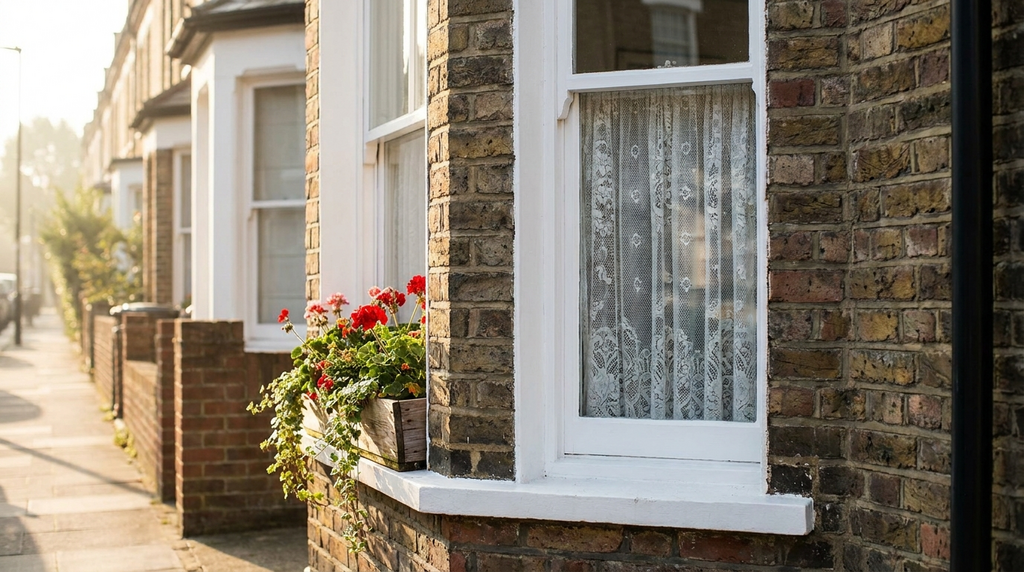
For the terraced houses that line streets in Stroud town centre and areas like Bisley Road or Slad Road, the key practical challenge is access. Many of these properties have no side access, minimal front gardens, and rear yards that back directly onto other properties. Installers need to plan carefully, sometimes windows need to come in and out through the front, which affects both logistics and the look of the finished job.
Semi-detached properties in areas like Cashes Green or Tuffley Road typically have better access but often come with the complication of shared party walls and sometimes shared window frames in the case of adjoining bay windows. Worth a conversation with your neighbour before you start, especially if you’re thinking about bay replacements.
Common challenges for Stroud’s typical housing stock include
- Out-of-square window openings in pre-war properties, timber frames settle over 100+ years
- Stone surrounds requiring specialist fixings rather than standard UPVC brackets
- Deep window reveals common in older Cotswold-style stonework, which affects frame depth choices
- Sash window originals that are legally or aesthetically important to preserve
- Steep approach roads limiting large vehicle access for delivery of units
None of these are dealbreakers, but they do affect your quote and your choice of installer. A good local tradesperson who knows Stroud’s housing stock will have dealt with all of these before, which is one very good reason to avoid purely national firms who send in a different crew every time.
How Much Double Glazing Costs in Stroud and the South West in 2026
Let’s talk real numbers. Pricing in Stroud sits broadly in line with the South West average, but slightly above what you’d pay in Gloucester or Chippenham, largely due to access challenges, the prevalence of older properties needing non-standard work, and the fact that Stroud is a smaller market than Cheltenham or Bristol.
| Window Type and Property Size | Stroud Typical Cost | South West Average | National Average |
|---|---|---|---|
| UPVC casement, 2-bed terrace (6 windows) | £2,800 – £3,800 | £2,600 – £3,600 | £2,400 – £3,400 |
| UPVC casement, 3-bed semi (8 windows) | £3,800 – £5,200 | £3,600 – £5,000 | £3,200 – £4,600 |
| Timber casement double glazed, 3-bed semi | £5,500 – £8,000 | £5,200 – £7,500 | £4,800 – £7,000 |
| Heritage/conservation sash (per window) | £900 – £1,500 | £850 – £1,400 | £800 – £1,300 |
| Aluminium slim-frame, 3-bed semi | £6,000 – £9,000 | £5,800 – £8,500 | £5,500 – £8,000 |
| Full house upgrade incl. doors, 4-bed detached | £8,000 – £14,000 | £7,500 – £13,000 | £7,000 – £12,000 |
These figures include supply and installation but not scaffolding, which you may need for first-floor or gable-end windows on steep-sided properties. Add roughly £400 – £900 for a typical scaffold in Stroud depending on access and duration. Properties on hillside streets in areas like Uplands or parts of the Slad Valley may also attract a small surcharge for difficult vehicle access.
One genuine insider tip, installers based in Gloucester or Cheltenham who cover Stroud regularly will often quote more competitively than firms based further away in Bristol or Swindon, simply because fuel and travel time costs less. Always ask where the installation crew is based.
How Stroud’s Weather and Location Shape Your Double Glazing Choices
Stroud’s position in the Cotswold valleys gives it a surprisingly mild but damp microclimate. The town is reasonably sheltered from the worst south-westerly weather that batters the coast, but the valleys funnel moisture, Stroud sees between 800mm and 950mm of rainfall annually, and low cloud and mist are frequent through autumn and winter.
What does this mean for your windows? Condensation management matters more here than in drier parts of England. If you’re upgrading from old single glazing, you’ll almost certainly notice condensation shifting, instead of forming on the inside glass (which you currently see), it may briefly appear on the outside of new units, which is actually a sign they’re working correctly. Don’t panic when this happens.
The valley geography also means some Stroud properties face predominantly north or are partially shaded by the hillside for much of the day. For these homes, solar gain isn’t the priority it might be in a south-facing property, so focusing your spend on thermal retention (U-values) rather than solar heat gain coefficient (SHGC) makes more sense.
Conversely, south and west-facing properties, particularly on the open slopes around Rodborough Common or Minchinhampton, get excellent solar exposure. The South West enjoys some of the best solar irradiance in the UK at around 1,100 – 1,200 kWh per square metre per year. For these homes, a higher SHGC glass can meaningfully contribute to passive solar heating through winter, trimming your gas bills further.
Wind-driven rain is worth taking seriously in exposed positions. Make sure your installer specifies frames with good weather seal ratings and that any new frame-to-reveal joints are properly siliconed and pointed, poorly finished installations around older stonework can allow water ingress that causes far more damage than the old windows ever did.
The Products and Options That Actually Perform Well in Stroud
Given Stroud’s housing mix and climate, here’s an honest steer on what works best rather than just listing everything on the market.
For most Victorian and Edwardian terraces in central Stroud
- Timber or timber-effect UPVC frames, aesthetically much better suited to older properties than pure white UPVC, and now available in convincing woodgrain finishes
- A-rated double glazed units with argon fill and low-E coating, standard specification that hits the right balance of cost and performance
- Target U-value of 1.2 W/m²K or better for the whole window unit (not just the glass)
For conservation areas and listed buildings around Stroud’s town centre
- Slim-profile heritage double glazed sash units, these sit within the existing box frame and are almost invisible from outside
- Secondary glazing as an alternative where planning won’t allow full replacement, highly effective and often overlooked
- Slimline triple glazing is now available in heritage profiles if you want maximum performance
For newer semis in Cashes Green, Eastington, or Stonehouse
- Standard UPVC casement is perfectly appropriate and offers the best value for money
- Triple glazing is worth considering on north-facing elevations where thermal performance is the priority
- Look for units certified to the British Fenestration Rating Council (BFRC) Window Energy Rating of A or above
One product worth calling out specifically, warm-edge spacer bars. This is the strip between the two panes of glass that maintains the gap. Older units used aluminium spacers, which conduct cold and cause condensation at the edges. Modern warm-edge spacers (made from materials like Super Spacer or ThermoBar) make a measurable difference in edge-of-glass temperatures and are standard on any decent unit now. Always confirm your installer is using them.
Finding a Trustworthy Double Glazing Installer Near Stroud
The installer market in Stroud and the surrounding area has matured considerably. You’ll find a good mix of local independent firms and regional companies covering the Gloucester-Stroud-Cheltenham corridor, as well as national brands with local franchisees. The key is knowing what to look for regardless of company size.
Certifications you should expect to see
- FENSA registration, legally required for window replacement work in England. A FENSA-registered installer self-certifies that work meets Building Regulations, saving you the hassle and cost of a local authority inspection
- TrustMark accreditation, the government-endorsed quality scheme for home improvement trades
- CERTASS membership, an alternative to FENSA, equally valid for Building Regulations compliance
- Which Trusted Traders or Checkatrade listings with verified reviews from local customers specifically
Questions worth asking before you sign anything
- Where exactly is your installation crew based, and have they worked on Victorian terraces in Stroud before
- What U-value will the complete window unit achieve (not just the glass)
- What is included in the guarantee, and is it backed by an insurance-backed guarantee (IBG) in case the company folds
- How do you handle non-standard reveals or out-of-square openings, what’s your process
Lead times from reputable installers covering the Stroud area currently run at four to eight weeks for standard orders. Bespoke sizes or conservation-grade units can push to ten to twelve weeks. Be wary of anyone promising to start next week on a full house job, either they’re not as busy as they should be, or corners will be cut.
Grants and Funding Available to Stroud Residents in 2026
The funding landscape for double glazing has tightened compared to a few years ago, but there are still real options if you know where to look.
ECO4 (Energy Company Obligation, Phase 4)
This is the main national scheme for lower-income households. If you receive qualifying benefits (Universal Credit, Pension Credit, Child Tax Credit and others) and your home is EPC Band D or below, which covers the majority of Stroud’s older housing stock, you may qualify for fully funded or heavily subsidised glazing. Apply through your energy supplier or a registered ECO4 broker. Stroud District Council’s housing team can also point you toward local qualifying routes.
Windows are sometimes included as part of a wider package alongside loft or cavity wall insulation. Worth enquiring about if you’re planning multiple upgrades at once.
Stroud District Council Warmer Homes initiatives
Stroud District Council has supported local retrofit programmes in recent years as part of its Climate Emergency Action Plan. Check directly with the council’s environmental services team for any current area-based schemes or referral routes to subsidised installers, these often aren’t widely advertised but can make a real difference.
Glazing is standard-rated for VAT at 20%. The zero rate for energy-saving materials covers insulation, heat pumps and solar panels; HMRC names secondary and double glazing as excluded (VAT Notice 708/6).
This applies to the full supply and installation cost. On a £4,500 job, that’s a saving of £900 that you simply shouldn’t miss, always confirm your installer is applying the correct VAT treatment.
Planning Permission and Regulations in Stroud
For most homeowners in Stroud, replacing like-for-like windows falls under permitted development rights, meaning you don’t need planning permission. But there are important exceptions that matter a lot in a town like Stroud.
Conservation areas
Stroud has several designated conservation areas including parts of the town centre and a number of the surrounding historic villages. In these areas, you generally cannot install UPVC frames without prior consent, and replacements must match the existing style, material, and appearance of the original windows. Stroud District Council’s planning department handles these applications and the team is generally approachable, a pre-application enquiry is free and well worth doing before you commission any work.
Listed buildings
If your home is Grade I or Grade II listed, and there are a good number in and around Stroud, you’ll need Listed Building Consent for any window changes. This is separate from planning permission and the bar is considerably higher. Secondary glazing is often the recommended route for listed properties as it involves no alteration to the original fabric.
Standard permitted development rules
- Replacements must be in a similar style and appearance to the originals
- New windows must meet current Building Regulations thermal performance standards
- Work must be carried out by a FENSA or CERTASS registered installer, or inspected by Stroud District Building Control
- Properties in Article 4 Direction areas may have additional restrictions, check with the council if you’re unsure about your street
What You Will Actually Save, Honest Numbers for Stroud Homes
Let’s work through this properly using Stroud’s actual energy data rather than v