What anti-vibration mounts do and why they matter for heat pumps
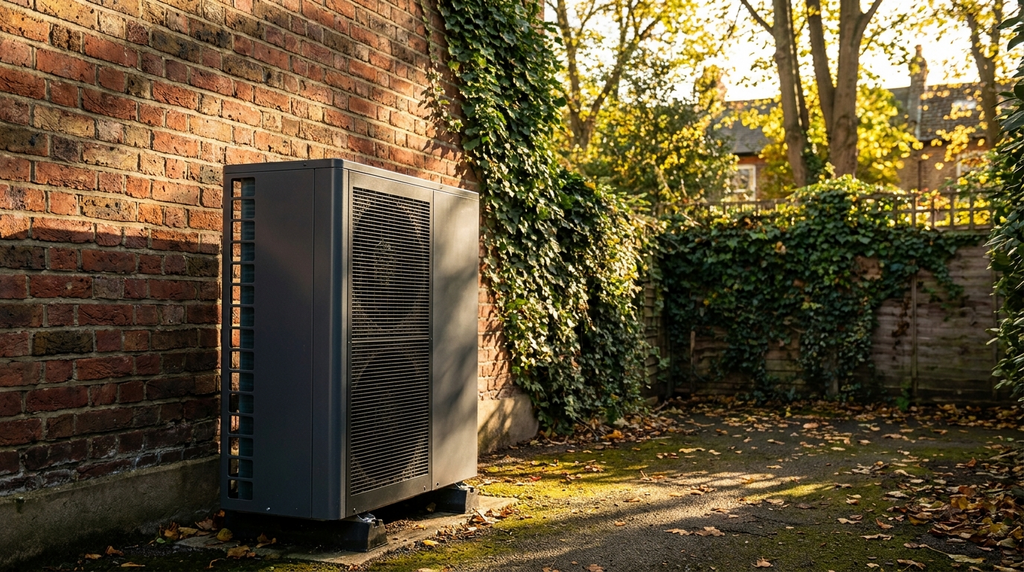
Anti-vibration mounts (AVMs) are rubber or spring-based pads fitted between the outdoor unit’s feet and the ground, wall, or roof bracket. They solve two main problems: structure-borne noise, where vibrations travel through walls and floors into living spaces, and micro-movement that can loosen pipework or electrical connections over time. Without AVMs, a heat pump’s compressor and fan can produce vibrations that are audible inside the property, especially in modern timber-frame or lightweight-block homes.
MCS 020, the Microgeneration Certification Scheme standard for heat pump installation, mandates vibration isolation for all outdoor units mounted on brackets or on the ground (MCS, 2026). The standard requires that the mounting method decouples the unit from the building structure to prevent vibration transfer. This is not optional: it is a compliance requirement that affects warranty validity and grant eligibility.
Who qualifies for grants covering anti-vibration mounts
The Boiler Upgrade Scheme (BUS) 2026 provides a flat £7,500 grant towards an air-source heat pump, and this grant covers the complete installed system, including anti-vibration mounts (GOV.UK, 2026). The BUS is available to homeowners in England and Wales who replace an existing fossil-fuel heating system (gas, oil, LPG, or electric) with a heat pump. Landlords and social housing providers can also apply, but only for a single property per application; the grant still covers the mounts as part of the system.
If a homeowner buys a heat pump only (for example, for self-install) and does not use an MCS-certified installer, they lose BUS eligibility and the mounts become a 100% out-of-pocket cost. The grant is paid to the installer, who deducts it from the final bill, so the mounts are included in that deduction. Homeowners in Scotland can use the Home Energy Scotland loan (up to £7,500), which also covers mounts as part of the system cost; Northern Ireland has a separate £7,500 grant via the NI Energy Scheme (NI Direct, 2026).
The exact cost range for heat pump anti-vibration mounts (2026)
Typical cost brackets for a set of four mounts are: basic rubber mounts £40–£60, medium-duty rubber-and-steel mounts £60–£90, and heavy-duty spring mounts for large commercial units £90–£120 (Energy Saving Trust, 2026). Cost varies by compressor tonnage: a 5–8 kW domestic heat pump uses standard mounts, while a 12–16 kW unit may require spring mounts. Installers typically include mounts in their fixed-price quote, so the homeowner may not see a separate line item; if quoted separately, the labour to fit them is about 15–30 minutes.
For a typical £10,000 heat pump system, the mount cost represents 0.4% to 1.2% of the total. MCS installer pricing data confirms that most installers bundle mounts into the system price rather than itemising them (MCS, 2026). If you are quoted separately, expect the mounts to be priced at the lower end of the range for standard domestic units.
Quick numbers anti-vibration mount specs and costs
| Mount type | Typical cost per set of four (2026) | Best for | Load capacity per mount |
|---|---|---|---|
| Rubber pad | £40–£60 | Ground slab | 50–100 kg |
| Rubber-and-steel | £60–£90 | Wall bracket | 100–200 kg |
| Spring mount | £90–£120 | Ground slab heavy unit | 200–400 kg |
Data sourced from MCS 020 specification sheet and manufacturer data from Tico and Mason UK (MCS, 2026). Load capacities assume static vertical load; dynamic loads from compressor start-up are within the safety margins of these ratings.
How to verify an installer includes compliant anti-vibration mounts
MCS-certified installers must follow MCS 020, which lists AVMs as a mandatory component. Ask the installer for their MCS certificate number and confirm it is current on the MCS website (MCS, 2026). The installer should provide a written quote that includes “vibration isolation kit” or “anti-vibration mounts” as a line item; if it is missing, request it in writing before signing.
The installer must also hold TrustMark registration for consumer protection and, if installing a heat pump that uses a refrigerant circuit, F-Gas certification (TrustMark, 2026). A Gas Safe Register engineer alone is not qualified for heat pump pipework unless they also hold MCS certification. Always check MCS first. How to choose an MCS-certified heat pump installer
The direct answer to “heat pump anti vibration” eligibility
Anti-vibration mounts are included in the £7,500 Boiler Upgrade Scheme grant automatically if you use an MCS-certified installer; you do not need to apply for them separately. To qualify for the grant, you must own your home in England or Wales, have a valid EPC with no outstanding recommendations for loft or cavity wall insulation, and replace a fossil-fuel heating system (GOV.UK, 2026).
If you live in Scotland, the Home Energy Scotland loan (up to £7,500) also covers mounts as part of the system cost; Northern Ireland has a separate £7,500 grant via the NI Energy Scheme (NI Direct, 2026). If you do not qualify for any grant (for example, you are installing a heat pump in a new-build or replacing an existing heat pump), you still need AVMs for warranty and noise compliance, and you pay the £40–£120 cost entirely yourself.
What happens if you skip or use non-compliant anti-vibration mounts
MCS 020 requires vibration isolation; if an installer skips it, the installation fails MCS certification, meaning the homeowner cannot claim the BUS grant (MCS, 2026). The heat pump manufacturer’s warranty may be voided if the unit is mounted without vibration isolation, as manufacturers such as Mitsubishi, Daikin, and Vaillant specify AVMs in their installation manuals (Daikin Altherma 3, Mitsubishi Ecodan, Vaillant aroTHERM plus, all 2026 editions).
A non-compliant installation can lead to noise complaints from neighbours under the Noise Act 1996 and the Environmental Protection Act 1990, which local councils can enforce (GOV.UK, 2026). In practice, a council investigation could result in a noise abatement notice requiring remedial work at the homeowner’s cost. Heat pump noise regulations UK 2026
Frequently Asked Questions
Yes, under MCS 020 standard, vibration isolation is mandatory for all outdoor heat pump units mounted on brackets or ground (MCS, 2026). This affects warranty and grant eligibility.
Anti-vibration mounts typically cost £20-£80 per unit depending on type (rubber or spring) and load capacity. Installation labour may add £50-£150.
Yes, the BUS grant covers the complete installed heat pump system, including anti-vibration mounts (GOV.UK, 2026). The £7,500 grant is paid to the installer.
Without mounts, structure-borne noise travels through walls and floors, and micro-movement can loosen pipework or electrical connections over time, especially in timber-frame homes.
No, self-install voids BUS eligibility. The grant requires an MCS-certified installer who fits the complete system including mounts (GOV.UK, 2026).