A buffer tank adds roughly £800–£1,500 to a heat pump installation, compared to a standard system without one.
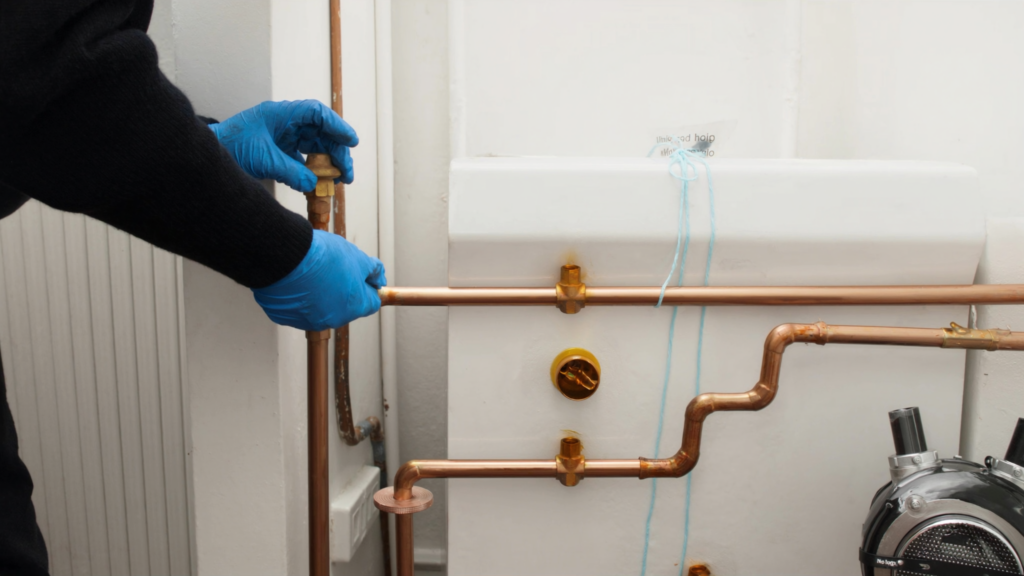
A heat pump buffer tank is a small water cylinder installed between the heat pump and your heating system. It stores a volume of heated water to prevent the heat pump from switching on and off too frequently, a problem called short-cycling. Short-cycling damages the heat pump compressor and reduces its efficiency and lifespan.
A heat pump buffer tank costs £800–£1,500 installed, plus £200–£400 for labour. It prevents short-cycling by storing excess heat, improving efficiency by 10–15%. Check if your system needs one based on your heat pump’s minimum output.
- Adds £800–£1,500 to a heat pump installation cost.
- Prevents short-cycling, boosting efficiency by 10–15%.
- Required when heat pump output exceeds home heat demand.
- Recommended for underfloor heating or multiple heating zones.
- Not mandated by UK building regulations or Part L 2025.
- A buffer tank adds roughly £800–£1,500 to a heat pump installation, compared to a standard system without one.
- A buffer tank is required when the heat pump’s minimum output exceeds the home’s minimum heat demand.
- A buffer tank improves system efficiency by reducing short-cycling, which can cut annual electricity use by 10–15%.
- Buffer tank size is determined by the heat pump’s minimum output and the system’s minimum run time.
- Quick numbers buffer tank specifications and costs
- Eligibility for the Boiler Upgrade Scheme (BUS) does not depend on installing a buffer tank, but the system must meet MCS standards.
- Verify your installer holds MCS certification and can confirm the buffer tank size using MCS 020 calculations.
- A buffer tank is not a thermal store and does not provide domestic hot water.
The cost range for a buffer tank reflects the size of the tank (typically 50–200 litres) and whether it includes an integrated pump or additional pipe connections. Energy Saving Trust data shows that a basic 50-litre tank costs around £800, while a 200-litre tank with a pump can cost up to £1,500 (Energy Saving Trust, 2026). Installation labour and pipework add another £200–£400 on average.
A buffer tank is required when the heat pump’s minimum output exceeds the home’s minimum heat demand.
Heat pumps have a minimum modulation level, meaning they cannot run at less than a certain percentage of their capacity (for example, 30% of full output). In mild weather, when your home needs very little heat, the heat pump may produce more heat than the system can use. A buffer tank absorbs this excess heat. This allows the heat pump to run for a reasonable length of time instead of cycling on and off rapidly.
UK building regulations (Part L 2025, in effect from 2026) do not mandate a buffer tank (GOV.UK, 2026). However, many installers specify one for systems with underfloor heating or multiple heating zones. The MCS 020 standard for heat pump system design recommends a buffer tank when the system has more than one heating zone or when the heat pump’s minimum output is greater than the smallest zone’s heat demand (MCS, 2026).
A buffer tank improves system efficiency by reducing short-cycling, which can cut annual electricity use by 10–15%.
Short-cycling reduces the heat pump’s Seasonal Coefficient of Performance (SCOP), which is the ratio of heat output to electricity input over a year. A drop of 0.2–0.5 points in SCOP is common in systems without a buffer tank. With a correctly sized buffer tank, a typical SCOP can improve from 3.0 to 3.4, meaning the heat pump uses less electricity to produce the same amount of heat (Energy Saving Trust, 2026).
Field trial data from the Energy Saving Trust shows that reducing short-cycling can cut annual electricity use by 10–15% in homes with air-source heat pumps (Energy Saving Trust, 2026). Ofgem’s heat pump performance metrics confirm that steady flow conditions, maintained by a buffer tank, improve overall system efficiency (Ofgem, 2026).
Buffer tank size is determined by the heat pump’s minimum output and the system’s minimum run time.
The correct buffer tank volume prevents short-cycling while keeping the system efficient. The formula used by MCS-certified installers is: tank volume (litres) = (heat pump minimum output in kW × minimum run time in minutes × 60) / (4.18 × ΔT in °C). For example, a heat pump with a minimum output of 4 kW, a minimum run time of 10 minutes, and a temperature difference (ΔT) of 10°C gives a result of approximately 57 litres (MCS, 2026).
Most UK homes with an air-source heat pump require a buffer tank of 50–100 litres. Larger tanks of 100–200 litres are needed for ground-source heat pumps or high-output systems. The BRE Heat Pump Design Guide recommends that installers always perform this calculation rather than guessing the size (BRE, 2026).
Quick numbers buffer tank specifications and costs
| Tank size (litres) | Typical cost (£) | Minimum heat pump output (kW) | Typical application |
|---|---|---|---|
| 50 | £800–£1,000 | 2–4 kW | Single-zone, small home |
| 100 | £1,000–£1,200 | 4–7 kW | Single-zone, medium home |
| 150 | £1,200–£1,400 | 7–10 kW | Multi-zone, underfloor heating |
| 200 | £1,400–£1,500 | 10–14 kW | Multi-zone, ground-source heat pump |
Costs include the tank only and exclude installation labour. Prices are based on Energy Saving Trust 2026 data and MCS sizing tables (Energy Saving Trust, 2026; MCS, 2026).
Eligibility for the Boiler Upgrade Scheme (BUS) does not depend on installing a buffer tank, but the system must meet MCS standards.
The Boiler Upgrade Scheme (BUS) in 2026 provides a £7,500 grant for air-source heat pumps and £7,500 for ground-source heat pumps (GOV.UK, 2026). There is no separate grant for a buffer tank. However, to qualify for the BUS, your entire heat pump installation must be MCS-certified and meet Part L efficiency requirements.
MCS standard 020 may require a buffer tank if your system has multiple heating zones or if the heat pump’s minimum output exceeds the smallest zone’s demand. If your installer specifies a buffer tank for these reasons, it becomes a necessary part of an MCS-compliant system. You cannot claim the BUS grant without MCS certification, so the buffer tank may be indirectly required for grant eligibility in some cases (MCS, 2026).
Verify your installer holds MCS certification and can confirm the buffer tank size using MCS 020 calculations.
To claim the BUS grant, you must use an MCS-certified installer. You can check the MCS Installer Database at mcscertified.com (MCS, 2026). TrustMark also lists accredited installers who meet heat pump standards (TrustMark, 2026).
Before installation, ask your installer to provide a written sizing calculation for the buffer tank that references MCS 020. The calculation should show the heat pump’s minimum output, the system’s minimum run time, and the temperature difference used. If the installer cannot provide this, consider getting a second opinion from another MCS-certified professional.
A buffer tank is not a thermal store and does not provide domestic hot water.
A buffer tank stores heated water only for the heating circuit, such as radiators or underfloor heating. It does not supply hot water for taps or showers. Domestic hot water is provided by a separate hot water cylinder or an integrated heat pump tank. Thermal stores are larger, typically 200–500 litres, and can supply both heating and hot water through internal coils (DESNZ, 2026).
Buffer tanks are smaller and dedicated solely to the heating system. Confusing the two could lead to buying the wrong equipment. If your installer recommends a buffer tank, confirm it is for the heating circuit only and that your hot water needs are covered by a separate cylinder (Energy Saving Trust, 2026).
Frequently Asked Questions
A heat pump buffer tank is a water cylinder installed between the heat pump and heating system. It stores heated water to prevent short-cycling, as recommended by the MCS 020 standard (MCS, 2026).
A buffer tank costs £800–£1,500 for the tank alone, according to Energy Saving Trust data (2026). Installation labour adds £200–£400 on average.
You need a buffer tank if the heat pump’s minimum output exceeds your home’s minimum heat demand. Many installers specify one for underfloor heating or multiple zones, though UK building regulations do not mandate it (GOV.UK, 2026).
Yes, a buffer tank reduces short-cycling, which can cut annual electricity use by 10–15%. This improves the heat pump’s Seasonal Coefficient of Performance (SCOP).
No, UK building regulations Part L (2025, in effect from 2026) do not mandate a buffer tank (GOV.UK, 2026). However, the MCS 020 standard recommends one for systems with multiple heating zones.