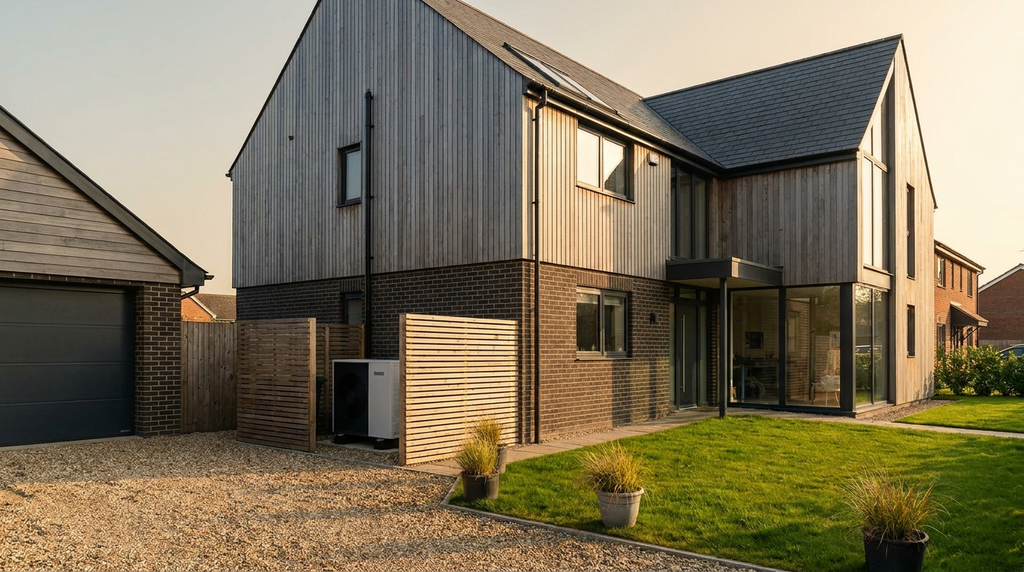
Heat pump efficiency in winter is lower than in summer
Many homeowners worry that heat pumps cannot cope with British winters. This concern is understandable, because all air-source heat pumps become less efficient as outdoor temperatures drop. The Seasonal Coefficient of Performance (SCOP) is the official measure of heat pump efficiency over a full heating season. The UK average SCOP for a properly sized air-source heat pump is between 2.8 and 3.5 (Energy Saving Trust, 2026).
At outdoor temperatures below 0°C, efficiency drops because the refrigerant must work harder to extract heat from colder air. A drop of roughly 0.1 to 0.2 SCOP points per 5°C fall is typical (DESNZ, 2026). Even at -5°C, a good modern heat pump still achieves a Coefficient of Performance (COP) of 2.0 to 2.5. This means it delivers at least twice the heat energy it uses in electricity (MCS 022 standard, 2026). The key metric for winter performance is the “low-temperature COP” listed on the MCS product database. Homeowners should look for a COP above 2.0 at -5°C (MCS register, product data sheets). The claim “heat pumps don’t work in UK winters” is false for any unit with a valid MCS certificate. The issue is sizing and installation, not the technology itself.
The single most important factor for winter efficiency is correct heat pump sizing, not the brand or model
An oversized heat pump short-cycles in mild winter weather, wasting energy and reducing COP by up to 30% (Energy Saving Trust, 2026). A properly sized heat pump should run for longer, steadier periods at lower power, which has a higher COP even when outside temperatures drop. The MCS installation standard requires a full heat loss calculation, room-by-room and not rule-of-thumb, before any unit is specified. This calculation must account for the home’s insulation levels, window types, and orientation (MCS 022, section 5.2, 2026).
Homeowners should ask for the heat loss calculation in kilowatts (kW) and compare it to the heat pump’s output at -3°C. If the output is more than 20% above the heat loss, the unit is likely oversized. A correctly sized heat pump for a typical 3-bed semi-detached UK home will have a heat loss of 6–9 kW and a heat pump output of 7–10 kW at -3°C (DESNZ, 2026).
Set the flow temperature as low as possible
Heat pump efficiency is strongly linked to the “flow temperature”, which is the temperature of water leaving the heat pump to the radiators or underfloor heating. Lower flow temperatures mean less electricity use per unit of heat. For a typical air-source heat pump, reducing the flow temperature from 55°C to 45°C can improve the COP by 0.3 to 0.5 points (EST, 2026).
The “weather compensation” control automatically adjusts the flow temperature based on outdoor temperature. A well-configured weather compensation curve can save 10–15% on winter electricity use compared to a fixed high flow temperature (DESNZ, 2026). Homeowners should check their heat pump’s control panel or ask their installer to set a “weather curve” that targets a flow temperature of 40–45°C when outdoor temperatures are above 2°C, and only rises to 50–55°C when outdoor temperatures fall below -2°C. Underfloor heating systems are ideal because they operate at flow temperatures of 30–40°C. Retrofit radiators may need to be oversized, meaning larger or more panels, to work efficiently at lower flow temperatures. guide to heat pump compatible radiators
Quick numbers typical winter COP
| Metric | Value (Winter, UK average) | Source |
|---|---|---|
| Typical SCOP (air-source heat pump) | 2.8–3.5 | Energy Saving Trust, 2026 |
| COP at -5°C (modern unit) | 2.0–2.5 | MCS register, product data |
| Electricity price (Oct 2026, per kWh) | £0.27 | Ofgem price cap, October 2026 |
| Annual heating cost (3-bed semi, 12,000 kWh heat demand) | £925–£1,157 | EST calculation using SCOP 2.8–3.5 |
| Boiler Upgrade Scheme grant (England & Wales) | £7,500 | GOV.UK, Boiler Upgrade Scheme, 2026 |
| Typical installation cost (air-source, 8 kW) | £9,000–£12,000 | EST, “Heat pump costs”, 2026 |
Defrost cycles are normal in winter but can be minimised with correct placement and settings
All air-source heat pumps go into defrost mode when ice forms on the outdoor coil, typically at temperatures between 0°C and 6°C with high humidity. This reverses the refrigerant flow for 2–5 minutes, using electricity but not heating the house. A poorly placed outdoor unit, for example in a wind tunnel, under a dripping roof, or too close to a wall, will ice up more frequently. This increases defrost cycles and reduces overall efficiency by 5–10% (MCS 022, installation guidance, 2026).
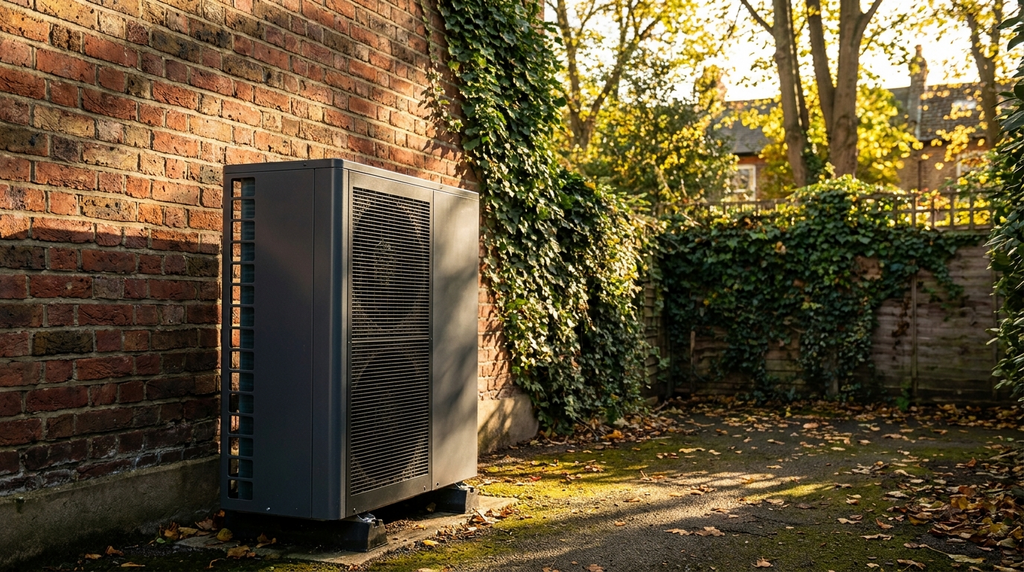
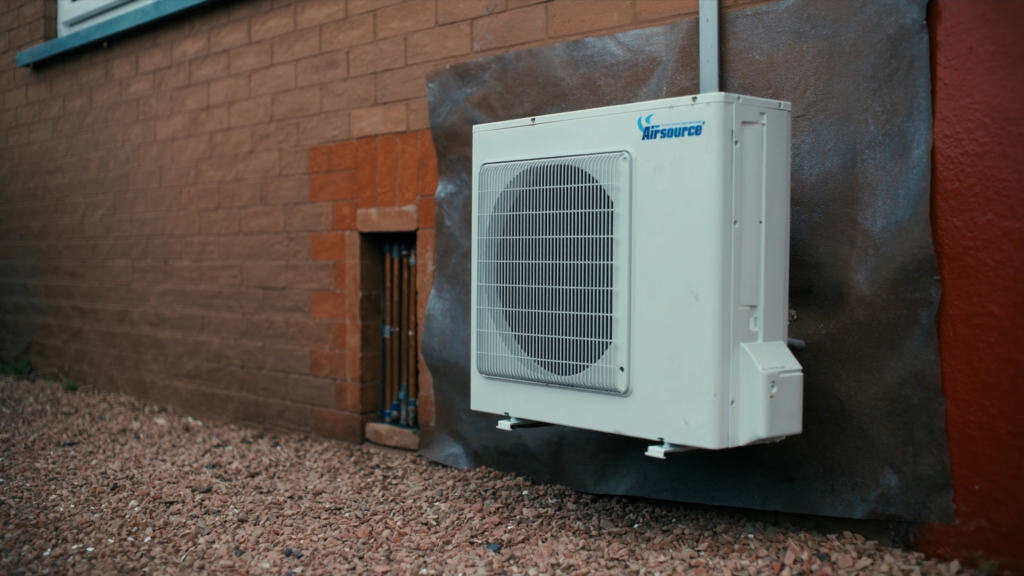
The outdoor unit should be mounted at least 30 cm from any wall, with clear airflow on three sides, and ideally on a south- or west-facing wall where it gets some winter sun. Some modern heat pumps have “intelligent defrost” controls that only defrost when necessary, rather than on a fixed timer. This can reduce defrost-related efficiency loss by up to 50% (DESNZ, 2026). Homeowners should not cover or enclose the outdoor unit in winter. The best way to reduce defrost cycles is to ensure the unit is clean, unobstructed, and properly sited from the start.
The direct answer a well-installed heat pump in a typical UK home will provide usable heat all winter, at a cost roughly 20–30% less than a gas boiler
This is the key fact for any homeowner searching “heat pump efficiency winter UK”. A properly sized, correctly installed air-source heat pump will keep a typical 3-bed semi-detached home warm at 21°C even when outdoor temperatures drop to -5°C. The running cost for that winter heating is approximately £925–£1,157 per year, based on 12,000 kWh heat demand and a SCOP of 2.8–3.5. This compares to roughly £1,300–£1,500 for a gas boiler at 90% efficiency, with a gas price of £0.06 per kWh under the October 2026 Ofgem cap (Ofgem, 2026).
The 20–30% cost saving is achieved only if the heat pump is correctly sized, the flow temperature is kept low, and the home has reasonable insulation, meaning at least 200 mm loft insulation and cavity wall insulation. Homes with poor insulation, such as single glazing or no loft insulation, will see smaller savings and may struggle to reach target temperatures on the coldest days. Upgrading insulation first is strongly recommended. The £7,500 Boiler Upgrade Scheme grant for England and Wales reduces the upfront cost gap significantly, making the lifetime cost of a heat pump competitive with a new gas boiler. how to apply for the Boiler Upgrade Scheme
To guarantee winter performance
The MCS, or Microgeneration Certification Scheme, is the UK’s quality mark for heat pump installations. An MCS certificate is required to claim the Boiler Upgrade Scheme grant and is the best guarantee of a properly designed and installed system. MCS 022, the installation standard, requires a full heat loss calculation, a flow temperature design, a weather compensation setup, and a commissioning report that includes the expected SCOP (MCS 022, 2026).
Homeowners should ask for the installer’s MCS certificate number and verify it on the MCS register at www.mcscertified.com. The register lists all certified installers and their current status. A non-MCS installation may still work, but it is not eligible for the £7,500 grant, and there is no independent check that the system was correctly sized or commissioned. Additional verification: check that the installer holds TrustMark registration for consumer protection and, if they are doing electrical work, NICEIC or NAPIT registration (TrustMark, 2026).
Frequently Asked Questions
Yes. Modern air-source heat pumps with a valid MCS certificate still achieve a COP of 2.0 to 2.5 at -5°C (MCS 022 standard, 2026). The technology works in UK winters when correctly sized and installed.
A good SCOP for winter performance is 2.8 or higher (Energy Saving Trust, 2026). For the coldest days, look for a low-temperature COP above 2.0 at -5°C on the MCS product database.
Efficiency drops by roughly 0.1 to 0.2 SCOP points per 5°C fall in outdoor temperature (DESNZ, 2026). Even so, a properly sized unit still delivers at least twice the heat energy it uses.
Your heat pump becomes less efficient in winter because the refrigerant must work harder to extract heat from colder outdoor air. A drop of 0.1 to 0.2 SCOP per 5°C is normal (DESNZ, 2026).
Ensure correct sizing via a full heat loss calculation (MCS 022, section 5.2, 2026). Run the pump for longer, steady periods rather than short cycles, and check your low-temperature COP on the MCS register.