The Most Important Fact About Heat Pumps in Victorian Terraces
The biggest barrier to installing a heat pump in a Victorian terrace is not the heat pump itself but the building fabric. Most Victorian terraces have solid brick walls, single-glazed sash windows, and suspended timber floors that lose heat much faster than a modern home (Energy Saving Trust, 2026).
A heat pump operates at lower flow temperatures (35–45°C) than a gas boiler (60–70°C). This means the home must retain heat well enough for the pump to keep it warm without running constantly. If your terrace has cavity walls (rare but possible in later Victorian builds) the retrofit is simpler. If solid brick, external or internal wall insulation is usually essential for the system to be cost-effective.
The single most important metric is the home’s heat loss calculation, measured in kilowatts (kW). This determines the size of the heat pump and whether your existing radiators can work with it. A heat loss calculation must be done by an MCS-certified installer before any quote is given (MCS, 2026).
How Insulation Upgrades Affect Your Heat Pump Feasibility
Solid-wall insulation, either external or internal, can reduce heat loss by 40–60% in a Victorian terrace. This makes a smaller, cheaper heat pump viable (Energy Saving Trust, 2026). External wall insulation is more effective but can alter the street appearance, which may be restricted in conservation areas.
Suspended timber floors can be insulated from below, between the joists, using rigid foam or mineral wool. This typically saves 10–15% on heat loss (Energy Saving Trust, 2026). Loft insulation to 270 mm is a prerequisite. If your terrace has a pitched roof with no insulation, adding it can cut heat loss by up to 25% (Energy Saving Trust, 2026).
Secondary glazing or draught-proofing is cheaper than full double glazing and can reduce heat loss through single-glazed sash windows by 30–50% (Historic England, 2026). These upgrades are often permitted on listed buildings where double glazing is not allowed.
Radiator Upgrades, Why You Likely Need Bigger or More Units
Heat pumps run at lower flow temperatures, so radiators must be larger or fan-assisted to deliver the same heat output. A standard radiator at 35°C flow gives roughly half the output it would at 60°C. A heat loss calculation for each room will tell you whether existing radiators are undersized. Most Victorian terraces with original radiators will need replacements (MCS 020, 2026).
Underfloor heating is the most efficient emitter for heat pumps. Retrofitting it into a Victorian terrace with suspended timber floors is possible using overboarding or between-joist systems. Cost typically ranges from £2,000 to £4,000 per floor. For rooms where underfloor heating is impractical, high-output radiators (such as Stelrad Compact or K2 models) can fit in the same space as old cast-iron ones but deliver more heat at lower temperatures.
Fan-assisted radiators are another option. They use a small fan to push air across the fins, increasing heat output by up to 50% at low flow temperatures. These cost £500–£1,000 per unit installed.
Quick Numbers, Cost, Grants, and Energy Savings
| Item | Low estimate | Mid estimate | High estimate | Source |
|---|---|---|---|---|
| Air source heat pump installation | £7,000 | £10,000 | £13,000 | Energy Saving Trust, 2026 |
| Ground source heat pump installation | £14,000 | £19,000 | £24,000 | Energy Saving Trust, 2026 |
| Boiler Upgrade Scheme grant | £7,500 | £7,500 | £7,500 | GOV.UK, 2026 |
| Annual running cost saving vs gas boiler | £200 | £350 | £500 | DESNZ, 2026 |
| Typical SCOP (Seasonal Coefficient of Performance) | 3.0 | 3.25 | 3.5 | MCS, 2026 |
The Seasonal Coefficient of Performance (SCOP) is the ratio of heat output to electricity input over a year. A SCOP of 3.0 means for every 1 kWh of electricity, the heat pump delivers 3 kWh of heat. Running cost savings apply only to a well-insulated Victorian terrace. Without insulation, the heat pump may cost more to run than a gas boiler.
Planning Permission and Permitted Development for Victorian Terraces
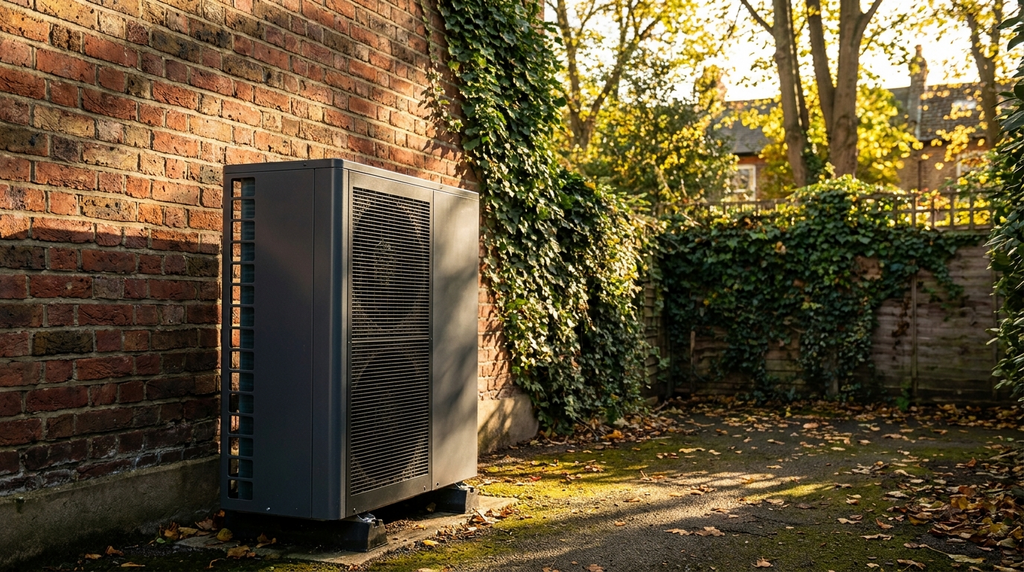
Air source heat pumps are usually permitted development in England. However, Victorian terraces in conservation areas or with Article 4 directions require planning permission. Check your local authority’s conservation area map before proceeding (GOV.UK, 2026). The permitted development rules state the unit must be at least 1 metre from the property boundary, must not face a road, and must not exceed 0.6 cubic metres in volume.
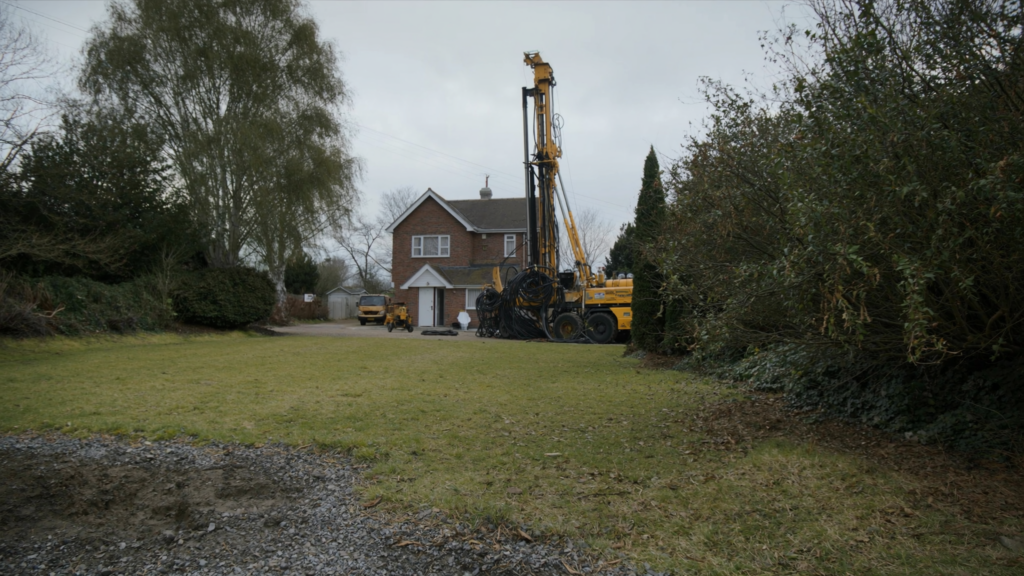
Ground source heat pumps, whether borehole or trench systems, always require planning permission in a terrace. This is due to proximity to neighbouring foundations and underground services. If you have a listed building (Grade I, II*, or II), you need listed building consent. English Heritage recommends using a conservation-accredited installer for listed properties.
If you live in Scotland, Wales, or Northern Ireland, permitted development rules differ. Contact your local planning authority for specific guidance.
How to Verify Your Installer, MCS Certification and TrustMark
The installer must be MCS-certified for you to claim the Boiler Upgrade Scheme grant (MCS Register, 2026). TrustMark registration is also required for government-backed schemes such as the Boiler Upgrade Scheme, ECO4, and the Great British Insulation Scheme (TrustMark, 2026).
Check the installer’s MCS certificate number on the MCS website before agreeing to any work. Ask for a heat loss calculation using MCS 020 methods before any quote. A verbal estimate is not acceptable. For gas boiler removal and reconnection, the installer must be Gas Safe registered (Gas Safe Register, 2026).
Get at least three quotes from different MCS-certified installers. Compare the heat loss calculations, not just the prices. How to compare heat pump quotes
The Direct Answer, Can a Heat Pump Work in a Victorian Terrace?
Yes, a heat pump can work in a Victorian terrace, but only if the building fabric is upgraded to reduce heat loss to below 100 W/m². Ideally, heat loss should be below 80 W/m². This is the threshold where a heat pump becomes cost-effective compared to a gas boiler (BRE, 2026).
The key steps are: insulate loft to 270 mm, insulate solid walls (internal or external), draught-proof windows and doors, insulate suspended timber floors, and replace radiators with larger or fan-assisted models. If your terrace has no insulation and you cannot add it (for example due to listed building restrictions), a heat pump will likely cost more to run than a gas boiler and may not keep the home warm in winter.
For most Victorian terraces, the total retrofit cost (insulation plus radiators plus heat pump) is £15,000 to £25,000 before the £7,500 Boiler Upgrade Scheme grant. Payback is 10–15 years at current energy prices. Heat pump running costs explained
Frequently Asked Questions
Yes, if the home is well-insulated. Most Victorian terraces need solid-wall insulation and draught-proofing first, as heat pumps run at lower temperatures than gas boilers (Energy Saving Trust, 2026).
Typically £7,000–£14,000 after the Boiler Upgrade Scheme grant of £7,500 (Ofgem, 2026). Costs vary based on insulation upgrades needed and system size.
Heat pumps are permitted development in England, but conservation areas or listed buildings may require planning permission (GOV.UK, 2026). Check with your local council before installing.
A 5–8 kW heat pump is typical for a Victorian terrace after insulation upgrades, but the exact size depends on a heat loss calculation by an MCS-certified installer (MCS, 2026).
Yes, but they may need upgrading to larger or more efficient models. Heat pumps run at lower temperatures, so radiators must be sized to deliver enough heat (Energy Saving Trust, 2026).