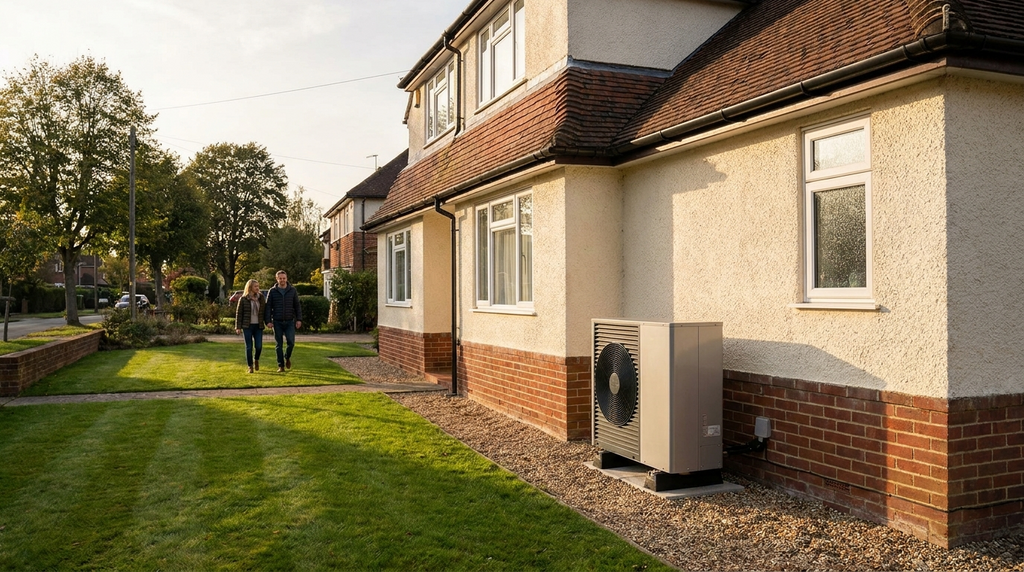
A well-maintained heat pump can save you up to £300 a year on your heating bills compared to a neglected one.
The potential saving is real and stems from a measurable drop in efficiency. A heat pump’s Coefficient of Performance (COP), which is the ratio of heat output to electricity input, declines as components get dirty or worn. The Energy Saving Trust estimates that a neglected unit can lose 0.3 to 0.5 points of COP annually, translating to roughly £300 in extra running costs for a typical three-bedroom home (Energy Saving Trust, 2026). That figure assumes an average-sized air-source heat pump operating for around 2,000 hours per heating season. The direct answer is that routine maintenance keeps your COP high and your bills low. Without it, you are effectively paying for heat you never receive.
Heat pump maintenance can save you up to £300 a year on bills. Clean filters every 1–2 months and book annual professional servicing for £100–£200 to keep your warranty valid and efficiency high.
- Clean air filters every 1–2 months to boost COP by 0.3–0.5 points.
- Book annual professional servicing for £100–£200 to keep warranty valid.
- Dirty filters can increase electricity use by up to 15% per Ofgem.
- Neglected heat pumps lose £300 a year in extra running costs.
- Check outdoor unit for debris monthly to maintain efficiency.
- A well-maintained heat pump can save you up to £300 a year on your heating bills compared to a neglected one.
- Cleaning your heat pump’s air filters every 1–2 months is the single most effective maintenance task
- Annual professional servicing is required by most manufacturers to keep your warranty valid
- Quick numbers typical maintenance costs, savings, and time commitments
- Clearing leaves and debris from the outdoor unit every autumn prevents airflow blockages
- Checking your heat pump’s flow temperature and defrost cycles can flag problems early
- Use an MCS-certified installer for your annual service to maintain grant eligibility
Cleaning your heat pump’s air filters every 1–2 months is the single most effective maintenance task
Dust and pet hair clog the indoor unit’s air filter quickly, forcing the fan motor to work harder and drawing more current. Ofgem states that a dirty filter can increase electricity consumption by up to 15% (Ofgem, 2026). Cleaning it restores airflow and can lift the COP by 0.3 to 0.5 points, which is the same efficiency gain lost by neglect. Most air-to-air and air-to-water heat pumps have removable, washable filters accessible at the indoor unit. Simply pull them out, rinse under lukewarm water, dry thoroughly, and replace. The task takes five to ten minutes and costs nothing. Mark a recurring reminder in your calendar for the first of every month.
Annual professional servicing is required by most manufacturers to keep your warranty valid
Manufacturers typically require an annual service by a qualified engineer to maintain the 7–10 year warranty on the compressor. A standard service costs between £100 and £200 and includes checking refrigerant levels, inspecting electrical connections, testing defrost cycles, and verifying the system’s overall pressure (MCS, 2026). Without this annual check, the compressor warranty becomes void, leaving you liable for a replacement that can cost £2,000 or more. The service also catches minor faults before they escalate into major repairs. Book your service in late summer, before the heating season begins.
Quick numbers typical maintenance costs, savings, and time commitments
| Task | Frequency | Cost | Time needed | Potential efficiency gain |
|---|---|---|---|---|
| Clean air filters | Every 1–2 months | £0 | 5–10 minutes | 10–15% COP improvement |
| Annual professional service | Annually | £100–£200 | 1–2 hours (professional) | Warranty protection, fault detection |
| Clear outdoor unit debris | Every autumn and after storms | £0 | 15–30 minutes | Up to 20% electricity saving in winter |
| Check flow temperature & defrost cycles | Monthly during heating season | £0 | 5 minutes | Early problem flagging |
Clearing leaves and debris from the outdoor unit every autumn prevents airflow blockages
The outdoor coil relies on unrestricted airflow to extract heat from the outside air. Leaves, grass clippings, and debris that accumulate in autumn can block up to 50% of the coil surface, reducing heat transfer and forcing the compressor to work harder. The Department for Energy Security and Net Zero reports that a blocked outdoor coil can increase electricity consumption by up to 20% during winter months (DESNZ, 2026). Maintain a 30 cm clearance around the unit on all sides. Trim back overhanging vegetation every September, and inspect the unit after heavy storms. A quick rinse with a garden hose on a low setting removes surface dirt without damaging the fins.
Checking your heat pump’s flow temperature and defrost cycles can flag problems early
The flow temperature, which is the temperature of the water leaving the heat pump, should match the manufacturer’s setting. For radiators this is typically 35–55°C, while underfloor heating runs at 30–35°C (Energy Saving Trust, 2026). A flow temperature that drifts significantly lower than the setpoint, or one that fluctuates wildly, points to a refrigerant leak, a faulty sensor, or a blocked filter. The defrost cycle, which reverses the refrigerant flow to melt ice off the outdoor coil, should run for no more than 5–10 minutes and then clear all ice. A cycle that runs longer, fails to clear ice, or activates too frequently indicates a refrigerant issue or a failed defrost sensor. Note these observations and report them to your servicing engineer.
Use an MCS-certified installer for your annual service to maintain grant eligibility
The Boiler Upgrade Scheme (BUS) provides a £7,500 grant toward the cost of a new heat pump. The grant terms require that the heat pump is serviced annually by an MCS-certified installer for at least five years after installation (GOV.UK, 2026). If you use an uncertified engineer, you risk losing the grant and may have to repay the full £7,500. The MCS Installer Database at mcscertified.com lists certified engineers in your area. Always check the database before booking. heat pump grants and funding eligibility how to choose an MCS-certified heat pump installer
Frequently Asked Questions
Clean your heat pump filters every 1–2 months. The Energy Saving Trust says this restores airflow and can lift the COP by 0.3 to 0.5 points, saving up to £300 a year.
Yes, most manufacturers require an annual service by a qualified engineer to keep your 7–10 year warranty valid. MCS states a standard service costs between £100 and £200.
Without maintenance, your heat pump's COP can drop by 0.3 to 0.5 points annually. Ofgem estimates this adds up to £300 in extra running costs for a typical three-bedroom home.
You can clean the air filters yourself, but annual professional servicing is required by most manufacturers to keep the warranty valid. MCS recommends a qualified engineer for refrigerant and electrical checks.
Annual professional servicing costs £100–£200. Filter cleaning is free and takes 5–10 minutes. The Energy Saving Trust says regular maintenance can save £300 a year on bills.