An air source heat pump typically runs at 40 to 60 decibels from 1 metre, similar to a quiet conversation or a refrigerator hum
If you are considering a heat pump, noise levels are a common concern. The most commonly cited figure from the Energy Saving Trust is 40–60 dB(A) at 1 metre for a properly installed unit (Energy Saving Trust, 2026). This range is similar to a quiet conversation or a refrigerator hum.
Heat pump noise levels are typically 40-60 dB(A) at 1 metre, similar to a quiet conversation. The MCS 020 standard limits noise to 42 dB(A) at the neighbour's boundary. Actual levels depend on the model and installation quality.
- Typical air source heat pump runs at 40-60 dB from 1 metre.
- MCS 020 standard limits noise to 42 dB at neighbour's boundary.
- Noise drops to 30-45 dB at 5 metres and 25-35 dB at 10 metres.
- Poorly maintained or older units can exceed typical noise ranges.
- Installers must provide a noise assessment for MCS certification.
- An air source heat pump typically runs at 40 to 60 decibels from 1 metre, similar to a quiet conversation or a refrigerator hum
- The MCS 020 standard sets a legal noise limit of 42 decibels at the neighbour's boundary, this is the key compliance figure
- Quick numbers, typical decibel levels for common scenarios
- Placement is the most effective way to reduce noise, keep the unit at least 1 metre from walls and windows, and avoid corners
- Noise levels depend on the specific model's sound power rating, check the manufacturer's data label before buying
- The direct answer to "what are heat pump noise levels?", at 1 metre, they are 40–60 dB, and at the neighbour's boundary, they must not exceed 42 dB under MCS rules
- To install a heat pump, you must use an MCS-certified installer, this ensures noise compliance and planning permission eligibility
- If noise is still a concern after installation, options include acoustic enclosures, repositioning, or upgrading to a quieter model
The actual noise depends on the specific model and the manufacturer’s sound power rating. At the property boundary, noise levels are usually much lower. The Microgeneration Certification Scheme (MCS) 020 standard requires a maximum of 42 dB(A) at the nearest neighbour’s window or boundary (MCS 020, 2026). Older or poorly maintained units can exceed these ranges, so the figure is not a guarantee for every installation.
The MCS 020 standard sets a legal noise limit of 42 decibels at the neighbour’s boundary, this is the key compliance figure
The MCS 020 standard (2023 revision) sets the noise limit for heat pump installations. This limit applies to the sound pressure level at the nearest neighbour’s habitable room window or property boundary, measured over a 5-minute period (MCS 020, 2026).
Installers must provide a noise assessment as part of the MCS certification process. Failure to comply can lead to planning enforcement or neighbour complaints. The 42 dB(A) limit is roughly equivalent to a quiet library or a bird chirping from 10 metres away, according to the World Health Organisation environmental noise guidelines (WHO Night Noise Guidelines for Europe, 2026).
Quick numbers, typical decibel levels for common scenarios
| Scenario | Typical sound level (dB(A)) | Equivalent everyday sound |
|---|---|---|
| Unit at 1 metre | 40–60 | Quiet conversation or refrigerator hum |
| Unit at 5 metres | 30–45 | Soft whisper or quiet library |
| Unit at 10 metres | 25–35 | Rustling leaves |
| Neighbour’s boundary (MCS limit) | Maximum 42 | Quiet library |
| Quiet bedroom at night | 30 | Soft whisper |
| Normal conversation | 60 | Two people talking at 1 metre |
Sources: Energy Saving Trust, 2026; MCS 020, 2026; WHO Night Noise Guidelines for Europe, 2026.
Placement is the most effective way to reduce noise, keep the unit at least 1 metre from walls and windows, and avoid corners
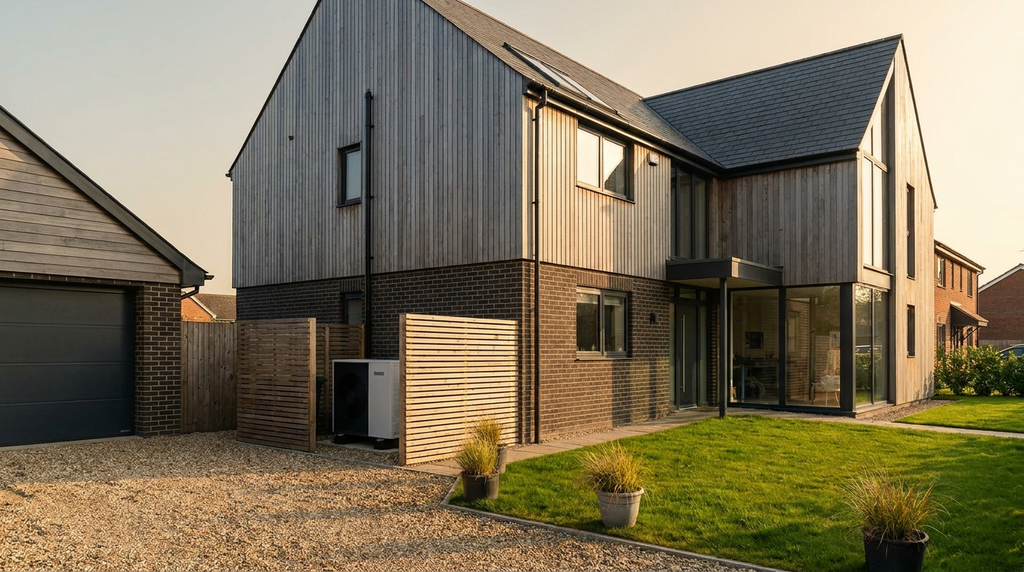
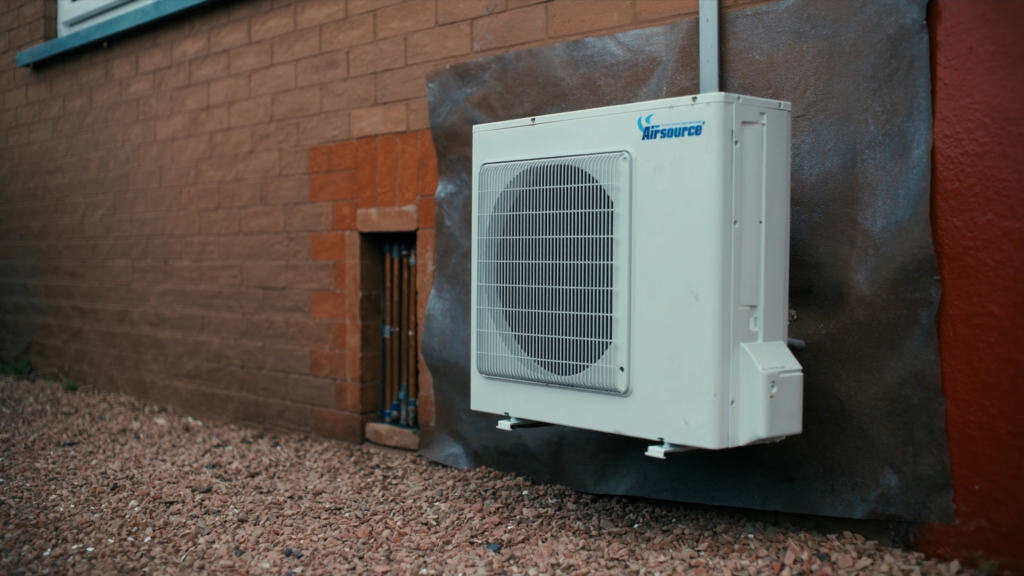
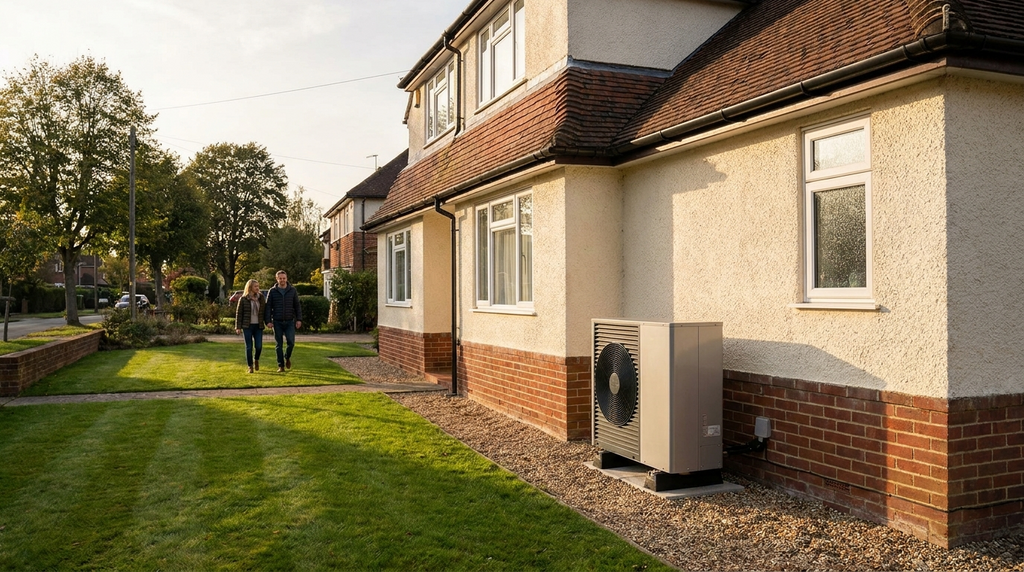
Where you place the heat pump makes a significant difference to noise levels. Placing the unit on a solid, level base, concrete or anti-vibration feet, reduces structural vibration noise (MCS 020, 2026). Avoid mounting the unit directly on timber decks or walls.
Position the unit away from bedroom windows, patio doors, and neighbour-facing boundaries. A distance of 3–5 metres is recommended where possible. Avoid placing the unit in a narrow alley or corner where sound can reflect and amplify. This is known as the “corner effect” and can increase perceived noise by 3–6 dB (Energy Saving Trust, 2026).
Noise levels depend on the specific model’s sound power rating, check the manufacturer’s data label before buying
Sound power level (Lw) is the total noise emitted by the unit. Sound pressure level (Lp) is what you hear at a distance. The two are not the same and can differ by 10–15 dB (MCS 020, 2026).
MCS requires all registered heat pumps to have a declared sound power level at standard test conditions, typically 7°C outdoor temperature at full load. Compare models by their sound power rating in the MCS product directory. A difference of 3 dB is noticeable to the human ear (MCS Product Directory, 2026).
At 1 metre, they are 40–60 dB, and at the neighbour’s boundary, they must not exceed 42 dB under MCS rules
The 40–60 dB range is for the unit itself, measured at 1 metre. The 42 dB limit is for the nearest neighbour’s property. These figures apply to air source heat pumps only (Energy Saving Trust, 2026).
Ground source heat pumps are typically quieter, 30–50 dB at 1 metre, because the compressor is indoors. The MCS 020 standard applies to both types, but ground source models rarely cause noise complaints (GOV.UK, 2026).
To install a heat pump, you must use an MCS-certified installer, this ensures noise compliance and planning permission eligibility
MCS certification is required for the unit and the installer to qualify for the Boiler Upgrade Scheme (BUS) grant and permitted development rights (GOV.UK, 2026). The installer must complete a noise assessment on site before installation, using the MCS 020 method. They cannot rely solely on manufacturer data.
Check an installer’s MCS registration via the MCS register. Also verify TrustMark registration for consumer protection (TrustMark, 2026). If the heat pump is within 1 metre of a boundary or a neighbour’s window, planning permission may be required even with MCS certification.
Compare heat pump installation costs and grants
If noise is still a concern after installation, options include acoustic enclosures, repositioning, or upgrading to a quieter model
Acoustic enclosures or louvred panels can reduce noise by 5–10 dB, but they must not block airflow or reduce efficiency. Only use products specifically designed for heat pumps (Energy Saving Trust, 2026).
Repositioning the unit further from the boundary or adding a solid fence, not a slatted one, can help. A solid 1.8-metre fence can block 5–10 dB of sound. Upgrading to a newer model with a lower sound power rating is the most effective long-term solution, but typically costs £500–£1,500 more than a standard unit (MCS 020, 2026).
Learn about heat pump maintenance to keep noise levels low
Frequently Asked Questions
An air source heat pump typically runs at 40 to 60 dB(A) from 1 metre, according to the Energy Saving Trust (2026). This is similar to a quiet conversation or a refrigerator hum.
The MCS 020 standard sets a maximum of 42 dB(A) at the nearest neighbour's window or property boundary (MCS 020, 2026). This is the key compliance figure for UK installations.
Yes, you can reduce heat pump noise by ensuring proper installation, using acoustic enclosures, and maintaining the unit regularly. The Energy Saving Trust recommends siting the unit away from bedrooms and boundaries.
There is no fixed distance, but the MCS 020 standard requires noise levels not exceed 42 dB(A) at the neighbour's boundary. Installers measure this during the noise assessment, and distances of 5-10 metres often achieve compliance.
No, a heat pump is generally quieter than a gas boiler. A boiler can run at 60-70 dB indoors, while a heat pump is 40-60 dB at 1 metre outdoors, as reported by the Energy Saving Trust.