The loudest part of a heat pump is the outdoor fan unit, not the indoor components
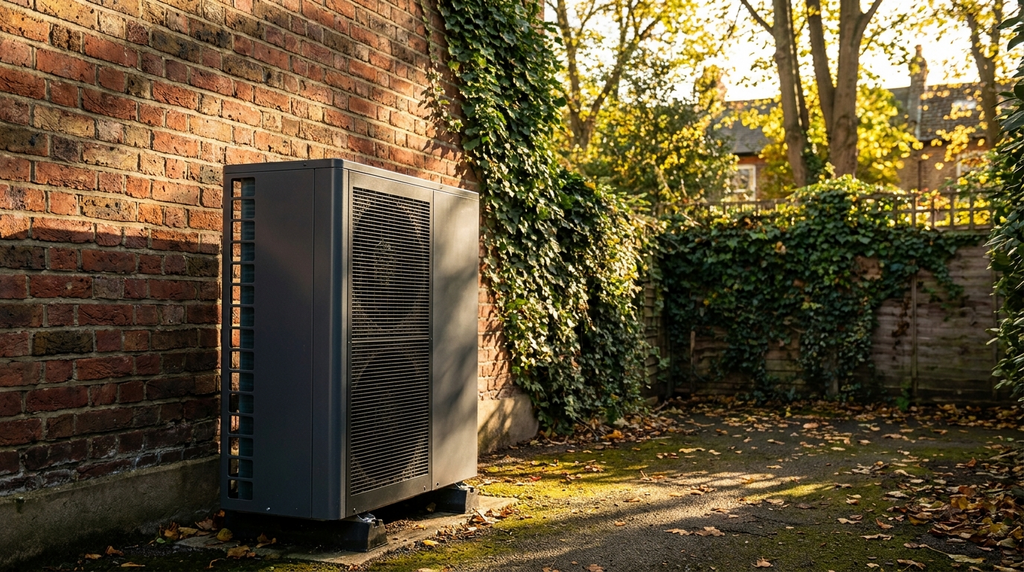
An air-source heat pump (ASHP) has two main parts: an outdoor unit and, in many systems, an indoor unit. The outdoor unit contains a compressor and a fan, which generate the majority of operational noise. Indoor units, if present, are typically much quieter and comparable to a modern boiler’s circulation pump.
Heat pump noise levels range from 40 dB (fridge hum) to 60 dB (normal conversation). The outdoor fan unit is the loudest component. UK planning rules limit sound power to 42 dB at 1 metre from the neighbour's boundary for permitted development.
- Outdoor units are the loudest part, not indoor components.
- Sound power level (not pressure) is the key figure to compare.
- UK planning limit is 42 dB at 1 metre from neighbour's boundary.
- Check the MCS product database for declared sound power levels.
- Indoor units are typically as quiet as a modern boiler's pump.
- The loudest part of a heat pump is the outdoor fan unit, not the indoor components
- UK planning rules set a specific noise limit that most modern heat pumps meet
- Heat pump noise varies by brand, model, and installation quality, not just the unit itself
- Quick numbers, typical heat pump noise levels compared to common household sounds
- The direct answer to "how loud are heat pumps", most are quieter than a gas boiler at full power
- Eligibility and certification, how to verify a quiet heat pump and its installer
- How to reduce heat pump noise after installation, simple, low-cost fixes
- The real-world noise risk is not the unit itself but poor installation and siting
Sound is measured in decibels (dB) using a logarithmic scale. This means a 3 dB increase is a doubling of sound energy. A quiet ASHP operating at 40 dB is about as loud as a refrigerator’s hum, while a louder unit at 60 dB is comparable to normal conversation (Energy Saving Trust, 2026).
The UK’s Microgeneration Certification Scheme (MCS) requires outdoor units to be tested under standard conditions to a declared sound power level. This is the figure homeowners should compare, not the sound pressure level, which changes with distance from the unit (MCS, 2026).
UK planning rules set a specific noise limit that most modern heat pumps meet
Under the 2026 updated Permitted Development rights (Town and Country Planning (General Permitted Development) (England) Order 2015, as amended), an ASHP must not exceed a sound power level of 42 dB when measured at 1 metre from the property boundary of the nearest neighbour’s dwelling (GOV.UK, 2026). This is the legal noise limit for installations that do not require full planning permission.
Homeowners should check the MCS product database for the declared sound power level of any model they consider. This is the figure used for planning compliance. If the unit is closer than 1 metre to the boundary, or if the property is in a conservation area or listed building, planning permission is required and the noise assessment will be more detailed.
The MCS 020 standard (2026) also specifies how the sound power level must be measured. This ensures consistency across manufacturers (MCS, 2026).
Heat pump noise varies by brand, model, and installation quality, not just the unit itself
Premium manufacturers such as Mitsubishi Electric, Daikin, and Vaillant typically produce units with sound power levels between 45 and 55 dB. Budget models can be louder, sometimes exceeding 60 dB. The MCS product directory lists the declared sound power level for every certified model (MCS Product Directory, 2026).
Installation factors significantly affect perceived noise. A unit mounted on a solid concrete base with anti-vibration pads and placed away from bedroom windows will sound quieter than one bolted to a timber frame or close to a wall. The distance from the unit to the neighbour’s boundary or window is critical: a 42 dB unit 1 metre away will be quieter than a 45 dB unit 0.5 metres away, due to the inverse-square law (MCS 020 standard, 2026).
Homeowners should ask their installer for a written noise assessment that accounts for these factors before installation begins.
Quick numbers, typical heat pump noise levels compared to common household sounds
| Sound source | Typical dB level (A-weighted) | Perceived loudness |
|---|---|---|
| Quiet ASHP (e.g., Mitsubishi Ecodan 40kW) | 40 dB | Refrigerator hum |
| Standard ASHP (e.g., Daikin Altherma 8kW) | 50 dB | Quiet office |
| Loud ASHP (e.g., older budget model) | 60 dB | Normal conversation |
| Gas boiler (outdoor flue) | 55 dB | Dishwasher |
| Human whisper | 30 dB | Very quiet |
| Traffic at 10 metres | 70 dB | Vacuum cleaner |
Sources: World Health Organisation guidelines for community noise (WHO, 2018) and manufacturer datasheets from the MCS Product Directory, 2026.
Most are quieter than a gas boiler at full power
A typical modern ASHP operates at 45 to 55 dB sound power level. This is comparable to or quieter than a gas boiler’s flue noise, which often measures 55 to 60 dB at the same distance (Energy Saving Trust, 2026).
The key difference is that a heat pump runs for longer periods at lower power, producing a constant, lower-pitched sound. A gas boiler cycles on and off at higher volume. This makes heat pump noise less intrusive to many people.
The MCS 020 standard (2026) requires that the unit’s sound power level, when measured at 1 metre from the boundary, must not exceed 42 dB. This ensures it is no louder than a quiet conversation (MCS, 2026).
Eligibility and certification, how to verify a quiet heat pump and its installer
The installer must be MCS-certified for heat pump installation, and the unit must be listed on the MCS product directory. This is a requirement for the Boiler Upgrade Scheme grant (GOV.UK, 2026).
For noise compliance, the installer should provide a sound power level certificate from the manufacturer and a site-specific noise assessment if the unit is within 1 metre of the boundary. Check that the installer is also registered with TrustMark for consumer protection (TrustMark, 2026).
The installer must follow the MCS 020 installation standard, which covers siting, vibration isolation, and distance-from-boundary rules (MCS, 2026).
How to choose a heat pump installer
How to reduce heat pump noise after installation, simple, low-cost fixes
The most effective fix is relocation. Moving the unit further from the boundary or a bedroom window can cut perceived noise by 3 to 6 dB, which is a halving of sound energy (MCS 020 standard, 2026).
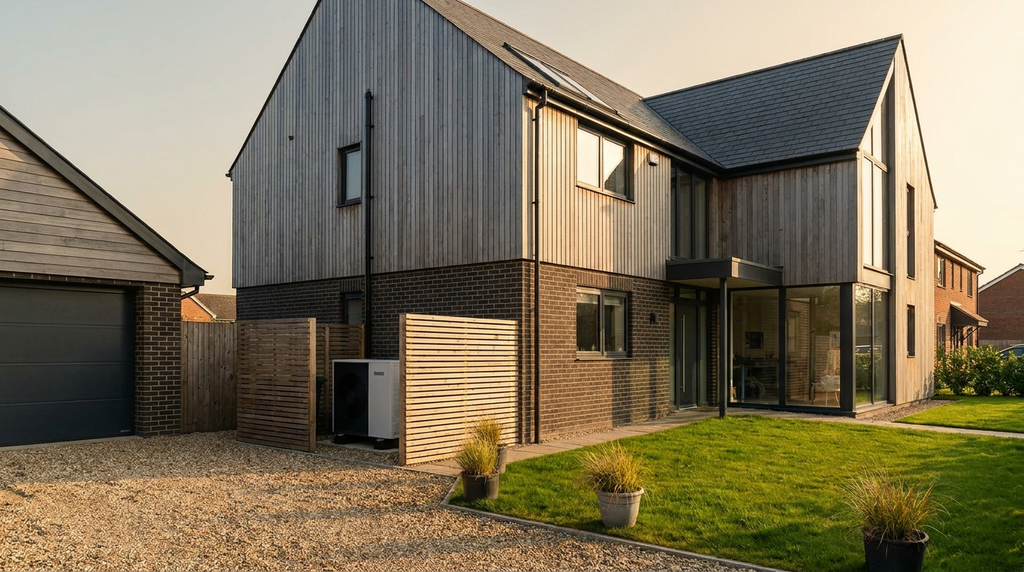
Adding a solid acoustic barrier, such as a timber fence or dense planting, between the unit and the neighbour can reduce sound by 2 to 5 dB. The barrier must not block the unit’s airflow, as this can reduce efficiency and cause overheating.
Anti-vibration pads, costing £50 to £150, placed under the unit’s feet can eliminate low-frequency hum transmission through the ground. This is a simple fix that many installers can add after installation (MCS 020 standard, 2026).
The real-world noise risk is not the unit itself but poor installation and siting
The majority of noise complaints about heat pumps arise from units placed too close to a neighbour’s bedroom window or on a flimsy structure, not from the unit’s inherent loudness (DESNZ, 2025).
A 2025 UK Government-commissioned study found that 80% of complaints were resolved by moving the unit or adding vibration isolation, not by replacing it (DESNZ, “Heat pump noise and neighbour satisfaction”, 2025).
Homeowners should insist that the installer provides a written noise assessment before installation. The unit should be sited at least 1 metre from the boundary, or 3 metres if the neighbour’s window faces it (MCS 020 standard, 2026).
Heat pump planning permission rules
Frequently Asked Questions
A quiet air-source heat pump operates at around 40 dB, similar to a fridge hum, while louder models reach 60 dB, comparable to normal conversation. The Energy Saving Trust notes the logarithmic scale means a 3 dB increase doubles sound energy.
Under 2026 Permitted Development rights, an air-source heat pump must not exceed 42 dB sound power level at 1 metre from the nearest neighbour's dwelling. GOV.UK confirms this is the legal limit for installations not requiring full planning permission.
Modern heat pumps meeting MCS standards are generally quiet for neighbours, with the 42 dB limit equivalent to a quiet library. The MCS 020 standard ensures consistent measurement, and proper siting further reduces disturbance.
Choose a model with a low declared sound power level from the MCS product database, install it at least 1 metre from boundaries, and use anti-vibration mounts. The Energy Saving Trust advises positioning away from windows and bedrooms.
If your heat pump's sound power level is 42 dB or below at 1 metre from the neighbour's boundary, it usually falls under Permitted Development. For closer installations, conservation areas, or listed buildings, full planning permission is needed per GOV.UK.