Heat pumps use the same vapour-compression cycle as your fridge, but reversed
A heat pump does not generate heat by burning fuel. Instead, it moves heat from one place to another, using the same basic technology as your refrigerator. The key difference is that a fridge extracts heat from inside the box and dumps it into your kitchen, while a heat pump extracts heat from the outside air, ground, or water and transfers it into your home’s heating and hot water system.
Heat pumps work by moving heat from outside air or ground into your hot water cylinder, using a reversed fridge cycle. They are 3-4 times more efficient than gas boilers, but produce water at 50-55°C, so you may need a larger cylinder. Compare installation costs and running savings.
- Heat pumps move heat rather than burning fuel, using a vapour-compression cycle.
- Refrigerant boils at low temperature, then is compressed to 50-65°C for hot water.
- Hot gas transfers heat to water via a heat exchanger inside your cylinder.
- Air-source heat pumps operate down to -15°C, ground-source gives more consistent output.
- Hot water typically reaches 50-55°C, so you may need a larger cylinder.
- Heat pumps use the same vapour-compression cycle as your fridge, but reversed
- The two main types are air-source and ground-source, with different hot-water performance
- Quick numbers typical hot-water performance, costs, and efficiency
- To get hot water from a heat pump, you need a compatible cylinder, not a combi boiler
- The Boiler Upgrade Scheme (BUS) gives a £7,500 grant, but eligibility has income and property limits
- You must use an MCS-certified installer to qualify for the BUS grant, here is how to check
- How a heat pump heats your hot water, the simple answer for homeowners
- Confirming your home is suitable for a heat pump hot-water system
The system uses a refrigerant fluid that boils at a very low temperature. Outside air (or ground heat) passes over a coil containing this cold refrigerant, causing it to evaporate into a gas. A compressor then squeezes that gas, raising its temperature and pressure significantly, typically to between 50°C and 65°C, which is hot enough to heat your hot water cylinder (Energy Systems Catapult, 2023). This hot gas then flows through a heat exchanger inside your cylinder, transferring its heat to the water. The refrigerant cools, condenses back into a liquid, and the cycle repeats (DESNZ, 2024).
Some heat pump models include a reversing valve. This allows the same unit to provide space heating in winter and cooling in summer. However, for hot water production, the cycle is always one-directional: heat moves from the refrigerant into the water. The hot water output typically reaches 50–55°C, which is sufficient for a standard cylinder, but you may need a larger cylinder than with a gas boiler because the water is stored at a lower temperature.
The two main types are air-source and ground-source, with different hot-water performance
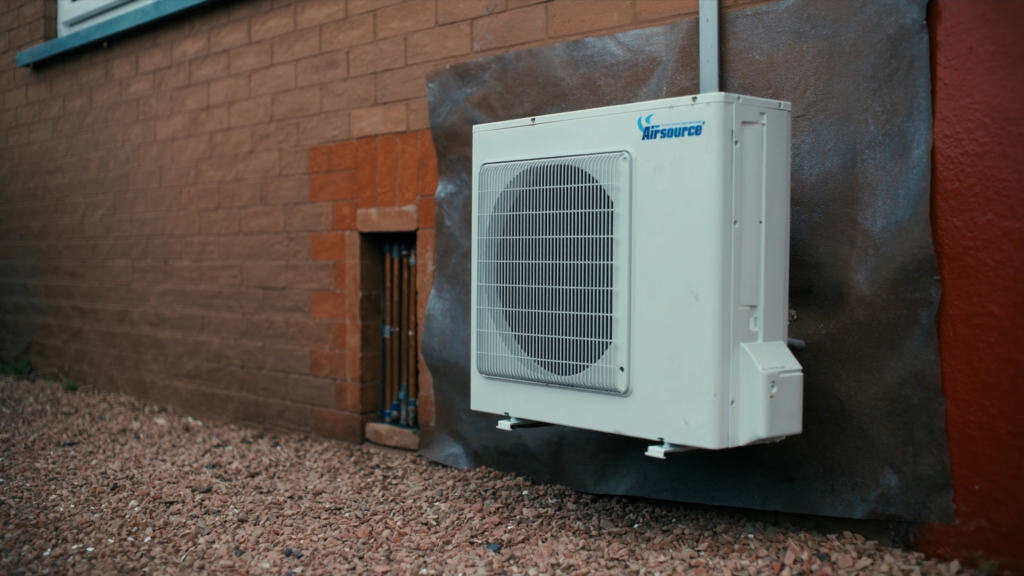
Air-source heat pumps (ASHPs) extract heat from outside air and can operate down to about -15°C. Their efficiency drops as outdoor temperature falls, but they still produce hot water throughout a UK winter. Ground-source heat pumps (GSHPs) use buried loops to extract stable ground temperature, typically 8–12°C year-round, giving more consistent hot-water output and higher efficiency in cold weather.
ASHPs are the most common UK installation, accounting for around 90% of new heat pump installations according to MCS data for 2025 (MCS, 2025). However, GSHPs can achieve higher coefficients of performance (COP), the ratio of heat output to electricity input. GSHPs typically achieve a COP of 3.5–4.5, while ASHPs achieve 2.5–3.5 (Energy Saving Trust, 2024). A higher COP means lower running costs for the same amount of hot water.
For hot water specifically, GSHPs can reach higher flow temperatures (55–60°C) more easily than ASHPs in very cold weather, but both require a well-insulated hot water cylinder. The choice between the two depends on your available outdoor space, budget, and whether you prioritise lower running costs (GSHP) over lower upfront cost (ASHP).
Quick numbers typical hot-water performance, costs, and efficiency
| Metric | Air-Source Heat Pump | Ground-Source Heat Pump | Gas Boiler (for comparison) |
|---|---|---|---|
| Typical hot water flow temperature (°C) | 50–55 | 55–60 | 60–65 |
| COP for hot water (annual average) | 2.5–3.5 | 3.5–4.5 | 0.9 (efficiency, not COP) |
| Annual hot water running cost (3-bed semi, 2026) | £300–£450 | £250–£350 | £350–£500 |
| Cylinder size needed (litres) | 180–250 | 180–250 | 120–180 (combi boiler has no cylinder) |
| Estimated system cost installed (2026, after BUS grant) | £2,500–£5,500 | £10,000–£18,000 | £1,500–£3,000 (replacement boiler only) |
Source: DESNZ (BUS Scheme Statistics, Q4 2025) for grant amounts (GOV.UK, 2025); Ofgem (BUS Data, 2025) for average installation costs (Ofgem, 2025); EST (Heat Pump Running Cost Model, 2026) for running cost estimates (Energy Saving Trust, 2026).
Running costs assume a typical 3-bed semi-detached home with 4 occupants, using approximately 2,500 kWh/year for hot water. Actual costs vary depending on your electricity tariff, insulation levels, and hot water usage patterns.
To get hot water from a heat pump, you need a compatible cylinder, not a combi boiler
Heat pumps heat water slowly at lower temperatures than gas boilers, so they require a hot water cylinder. They cannot work with a combi boiler system, which heats water on demand at high flow rates. If you currently have a combi boiler, you will need to install a hot water cylinder as part of the heat pump system.
The cylinder must be “heat-pump ready”: well-insulated, with a large internal coil (or a plate heat exchanger) to maximise heat transfer from the refrigerant to the water. For a typical 3-bedroom home, you will need a cylinder of 180–300 litres (Energy Saving Trust, 2024). You can keep your existing cylinder if it is less than 15 years old and has a large enough coil, but many older cylinders need replacement.
A thermal store (buffer tank) may be needed if you have underfloor heating or multiple heating zones, but it adds cost and takes up additional space. The MCS installation standard (MIS 3005) sets out the technical requirements for cylinder compatibility and system design (MCS, 2025). heat pump cylinder sizing guide
The Boiler Upgrade Scheme (BUS) gives a £7,500 grant, but eligibility has income and property limits
The Boiler Upgrade Scheme (BUS) in England and Wales provides a flat £7,500 grant toward an air-source or ground-source heat pump installation. This amount has been in effect since October 2023 and continues in 2026 (GOV.UK, 2026). The grant is deducted by the installer at the point of sale, you do not apply for the money yourself; the installer claims it from Ofgem after installation.
To be eligible, you must own your home (or have landlord permission), have a valid Energy Performance Certificate (EPC) with no outstanding recommendations for loft or cavity wall insulation, and use an MCS-certified installer. The property must not be a new-build home, and you cannot have had a heat pump or biomass boiler installed since 2022 under a previous renewable heating scheme.
The grant is not means-tested, so there is no income cap. However, if your EPC shows that loft or cavity wall insulation is recommended but not installed, you will need to complete those upgrades before the installer can claim the grant. This may add £1,000–£3,000 to your upfront costs depending on your home’s current insulation level (Ofgem, 2026).
You must use an MCS-certified installer to qualify for the BUS grant, here is how to check
MCS (Microgeneration Certification Scheme) certification is mandatory for any heat pump installation to qualify for the BUS grant. Most mortgage lenders and home insurance policies also require MCS certification for warranty validity. To verify an installer, search the MCS online register at mcscertified.com by postcode or company name, check that their certification is current, typically valid for 1–5 years depending on audit results (MCS, 2025).
All MCS-certified installers must also be registered with TrustMark, which provides consumer protection and a dispute resolution process if something goes wrong (TrustMark, 2024). If the installer also works on gas boilers, check they are on the Gas Safe Register for safety compliance (Gas Safe Register, 2026).
Ask the installer for a written quote that includes their MCS certificate number, the heat pump model and its estimated COP, and a breakdown of costs. The BUS requires this information for the grant claim, and it also helps you compare quotes fairly between installers.
How a heat pump heats your hot water, the simple answer for homeowners
A heat pump uses electricity to run a compressor that squeezes refrigerant gas, raising its temperature high enough to heat water in your cylinder. It does not burn fuel. The outside air (or ground heat) passes over a coil containing cold refrigerant; the refrigerant absorbs that heat and evaporates into a gas. The compressor then compresses that gas to 50–65°C (DESNZ, 2024).
The hot refrigerant gas flows through a heat exchanger, the coil inside your cylinder, transferring its heat to the water. The refrigerant then cools, condenses back to liquid, and the cycle repeats. The system is most efficient when the outdoor temperature is above 0°C. Below that, the heat pump still works but uses more electricity per unit of heat delivered (Energy Saving Trust, 2025).
In plain terms: the heat pump collects free heat from outside, uses a small amount of electricity to concentrate that heat to a higher temperature, and then transfers it to your hot water cylinder. The result is hot water at 50–55°C, which is adequate for showers, baths, and washing up, but not quite as hot as a gas boiler can deliver.
Confirming your home is suitable for a heat pump hot-water system
A professional heat loss calculation is essential before installation. The installer measures insulation levels, window glazing, floor area, and room sizes to determine the heat pump size needed in kilowatts (kW) output. This calculation is required under the MCS installation standard (MCS, 2025).
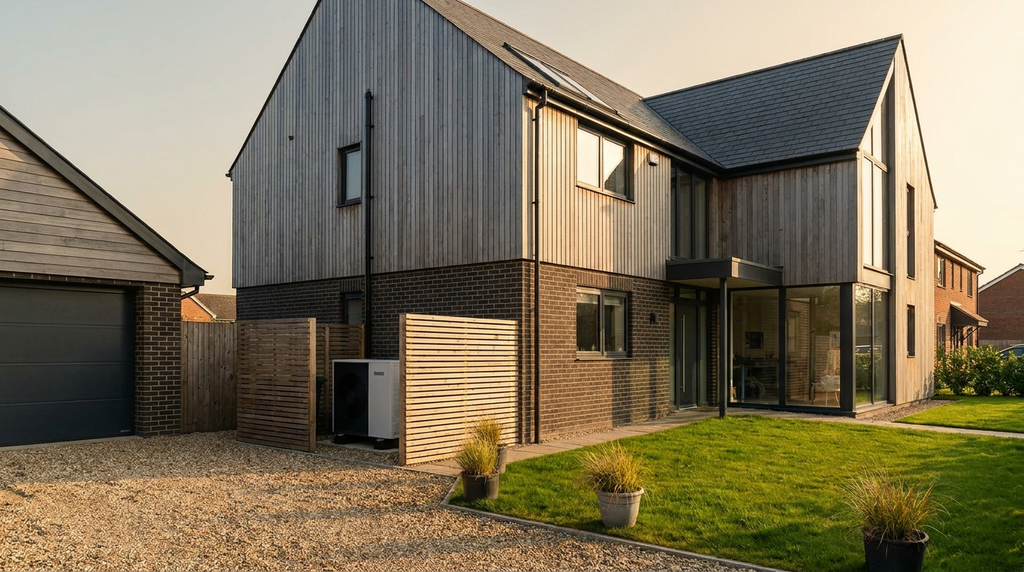
You need external space for the outdoor unit (ASHPs) or garden/land for ground loops (GSHPs). ASHPs require 1–2 metres clearance from walls and windows for airflow. GSHPs need a trench or borehole, typically 50–100 metres of pipework buried horizontally or 80–150 metres vertically (DESNZ, 2024).
Your hot water cylinder must be in a heated space, an airing cupboard or utility room, to minimise heat loss. Unheated garages or lofts are not suitable without additional insulation and pipe lagging. If your home has poor insulation (EPC band D or below), you may need to upgrade loft insulation to 270mm and install cavity wall insulation before a heat pump can work efficiently. These upgrades may add £1,000–£3,000 to upfront costs (Energy Saving Trust, 2026). heat pump suitability checklist
Frequently Asked Questions
Heat pumps use a refrigerant cycle: outside heat evaporates the refrigerant, a compressor raises its temperature to 50-65°C, then a heat exchanger transfers that heat to your hot water cylinder. The Energy Saving Trust states this process can be 3-4 times more efficient than a gas boiler.
Yes, heat pumps typically heat water to 50-55°C, which is sufficient for a normal shower. Ofgem notes that a larger hot water cylinder may be needed compared to a gas boiler because the water is stored at a lower temperature.
Heat pumps heat water to 50-55°C for standard cylinders, with some models reaching up to 65°C. The Department for Energy Security and Net Zero (DESNZ) confirms this range is adequate for most UK homes.
Air source heat pumps can extract heat from outside air down to -15°C, though efficiency drops as temperature falls. The MCS installation standard requires them to still produce hot water reliably throughout a UK winter.
Yes, heat pump cylinders are typically larger (200-300 litres) and have a larger heat exchanger coil to maximise heat transfer at lower temperatures. The Energy Saving Trust recommends a cylinder sized for your household's peak demand.