Two quotes for the exact same house can differ by thousands of pounds, yet neither company will volunteer an explanation. This is one of the most common, and most frustrating, experiences homeowners face when replacing windows in the UK. The reason is not always that one company is overcharging or cutting corners. More often, the quotes simply describe entirely different products, different installation scopes, and different levels of after-care. Without knowing what to look for, it is almost impossible to compare them fairly.
To compare window quotes UK installers provide fairly, ensure each quote lists the same glazing specification including whole-window U-value, frame material, BFRC energy rating, and full installation scope with VAT stated separately. According to FENSA guidance, all replacement window work in England and Wales must meet a minimum whole-window U-value of 1.4 W/m²K under current Building Regulations, so any quote that does not state this figure cannot be properly evaluated.
- Always request itemised written quotes that list glazing specification, U-values, frame material, hardware grade, and installation scope separately so you can match them line by line
- Check that every quote meets the minimum whole-window U-value of 1.4 W/m²K required under current UK Building Regulations before comparing prices
- Ask each company to confirm whether VAT, building notice fees, scaffolding, and old window disposal are included, as these extras regularly add £300 to £800 to the final bill
- Collect at least three written quotes from FENSA or CERTASS registered installers so any outlier, high or low, becomes immediately visible
- Request the BFRC energy rating label reference or the exact centre-pane and whole-window U-value for every product quoted so you are comparing equivalent thermal performance
- Treat same-day or pressure-close discounts with scepticism, reputable installers will hold a written quote open for at least 30 days without penalty
- Check whether each quote includes a manufacturer guarantee and a separate installation workmanship guarantee, as these are distinct and both matter for long-term protection
- Why Window Quotes Vary So Much From Company to Company
- Getting Your Home Ready Before Requesting Any Quotes
- How to Request Quotes That Are Actually Comparable
- The Key Specifications That Actually Affect Quality and Running Costs
- Hidden Costs That Can Make a Cheap Quote Expensive
- Typical Window Replacement Costs in the UK in 2026
- Comparing Common Window Types for UK Homes in 2026
- How to Evaluate Installers, Not Just Prices
- Deposits, Payment Terms, and Contracts
- A Side-by-Side Quote Comparison Template
- When the Cheapest Quote Is the Right Choice, and When It Is Not
Learning how to compare window quotes UK installers provide is a practical skill that can save you a significant amount of money and prevent costly surprises down the line. This guide walks you through exactly how to do it. You will learn what information to gather before a single salesperson sets foot in your home, which technical specifications actually matter and why, which hidden costs routinely inflate cheap quotes, what realistic 2026 prices look like across different window types, and which questions to ask every company so you are always comparing like with like.
This article is written for homeowners replacing anywhere from one window to a full house of ten. You do not need any technical background, just a willingness to ask the right questions and insist on proper written answers before signing anything.
Why Window Quotes Vary So Much From Company to Company
When you receive two quotes for the same property and one is £2,000 more than the other, the natural assumption is that someone is being greedy. Sometimes that is true. But more often, the gap comes down to legitimate differences in what is actually being offered, differences that are rarely explained upfront.
The most significant driver of price variation is glazing specification. One company may be quoting standard double glazing with a whole-window U-value of 1.4 W/m²K, the minimum required under current Building Regulations, while another is quoting A-rated double glazing with a U-value of 1.2 W/m²K and low-emissivity glass as standard. These are meaningfully different products that perform very differently over time, yet a short quote document may not make this obvious.
Frame material is another frequent source of confusion. uPVC, aluminium, and timber sit in very different price brackets, and some companies simply list “windows” without making the material prominent. A quote for aluminium-framed windows will almost always cost more than uPVC, not because anything is wrong, but because aluminium costs more to manufacture and finish. If you are comparing quotes without knowing which frame material each covers, you are comparing entirely different products.
Installation scope varies enormously too. Some quotes include the pre-installation survey, removal and disposal of old frames, making good the internal plasterwork around each opening, and Building Regulations certification through a registered scheme such as FENSA or Certass. Others price labour as a bare minimum and add everything else separately. The Energy Saving Trust advises homeowners to always request full written specifications before signing, precisely because these differences are so commonly obscured.
Finally, company overheads play a role. Large national firms with showrooms, branded vans, and commissioned salespeople carry costs that smaller local installers do not. This feeds directly into pricing without necessarily reflecting any difference in product quality or workmanship. Neither model is inherently better, local firms can be excellent, but understanding this helps you evaluate what you are actually paying for.
Practical tip, before you invite a single company to quote, write down exactly what you want included and hand the same document to every installer. This single step eliminates the majority of apples-to-oranges comparisons.
Getting Your Home Ready Before Requesting Any Quotes
The quality of the quotes you receive is directly related to the quality of the information you provide. Companies that receive a vague enquiry, “I need some windows done”, will give vague responses. Companies that receive a clear, detailed brief will give you something you can actually work with.
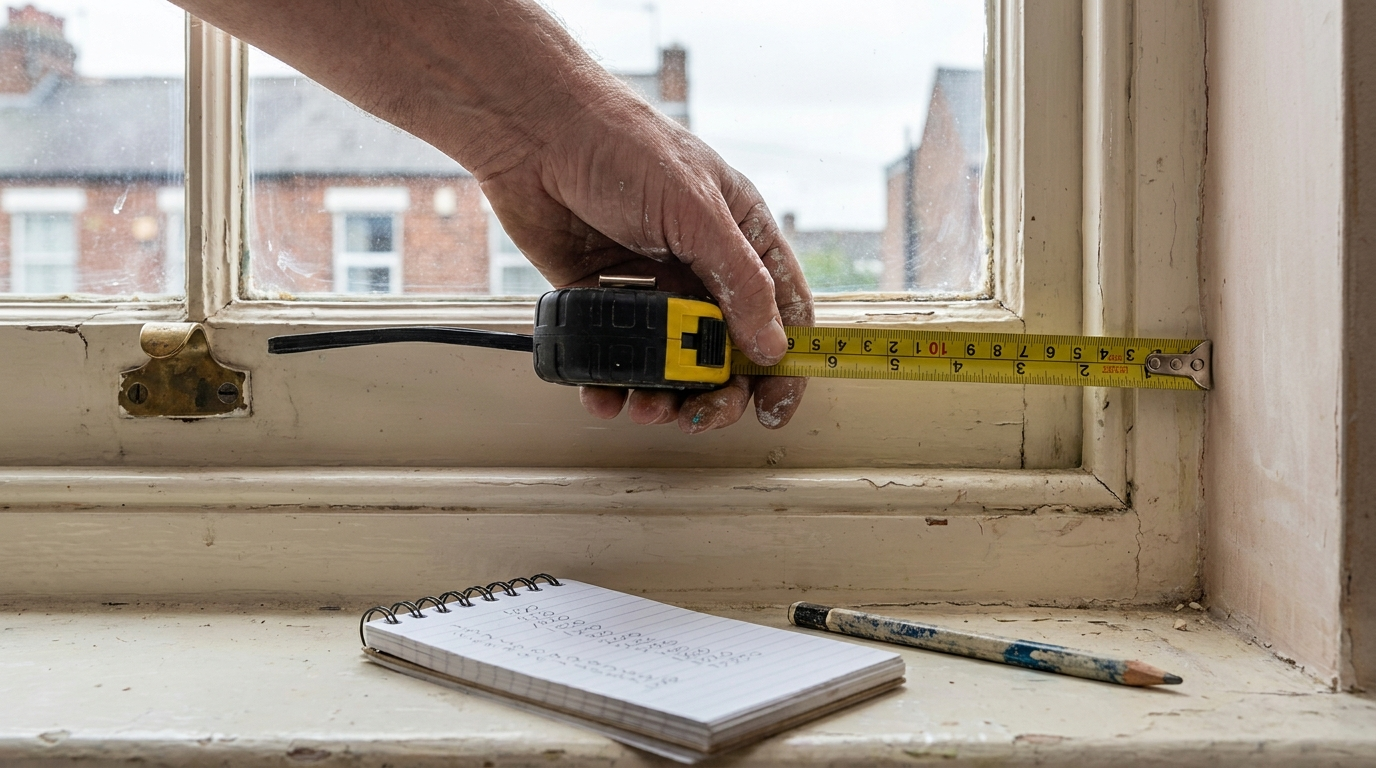
Start by walking around your home and listing every window you want replaced. For each one, note the room it is in, its approximate size, and the opening style, casement (hinged at the side), tilt-and-turn, top-hung, sash, or fixed. You do not need precise measurements at this stage; that is the installer’s job. But having a clear list prevents companies from giving vague “ballpark” figures that shift significantly once they actually look at the job.
Take photographs of your existing windows before anyone arrives. Capture the frame condition, any visible damage, the depth of the reveal, and the surrounding wall both inside and out. When every company starts from the same visual information, you reduce the risk of one quoting for a straightforward job and another pricing in additional work you will only hear about afterwards.
Decide in advance what your priorities are. Are you replacing windows primarily to reduce heating bills? To cut noise from a busy road? To improve the look of the property? To upgrade security? Being clear on this helps you ask targeted questions and avoid paying for upgrades that do not address your actual needs.
If your home is in a conservation area or is a listed building, you may need planning permission or listed building consent before replacing windows. Standard permitted development rights do not apply in these situations. Check via the Planning Portal (planningportal.gov.uk) before inviting anyone to quote, discovering this constraint after the fact wastes everyone’s time and can result in quotes that are entirely unsuitable for what your local planning authority will actually approve.
If you are a leasehold flat owner, check your lease and contact your freeholder or managing agent before proceeding. Many leases require written consent for alterations including window replacement. Getting quotes before securing this permission is a common and frustrating mistake.
Practical tip, create a simple one-page brief listing your window count, approximate sizes, required styles, and any special requirements such as obscure glass for bathrooms or heritage-style frames for a period property. Email this to every company you approach so they are all pricing the same job.
How to Request Quotes That Are Actually Comparable
Most homeowners accept whatever format a company chooses to use for their quote. This is understandable, it feels awkward to dictate terms to someone you have just invited into your home. But accepting inconsistent quote formats is the single biggest reason why comparisons become so difficult. A few simple requests, made politely and consistently, make an enormous difference.
The most important request is for a written specification document, not just a price. Every quote you receive should clearly state the frame material, glazing type (double or triple), the glass U-value, the whole-window U-value, the BFRC energy rating, the hardware grade, and whether installation includes removal of old frames, making good, and Building Regulations certification. If any of these items are missing, ask for them in writing before proceeding. A company that is reluctant to provide this information is one worth being cautious about.
Give every installer the same written brief, your window list, sizes, styles, and any specific requirements. This ensures that every company is pricing the same scope of work. Otherwise, one company might include scaffolding for a first-floor window while another omits it entirely, making their quote look cheaper when it is actually incomplete.
Ask for itemised pricing, a cost per window rather than one lump sum. Itemised quotes make it easier to compare individual windows across suppliers, to identify where one company is significantly more or less expensive on a particular item, and to adjust the order if your budget needs trimming. A company that refuses to itemise should prompt you to ask why.
Ask each company about their survey process. A reputable installer will conduct a proper pre-installation survey, either paid or free, before confirming a final price. Any quote given without a site visit and measurement should be treated as an indicative estimate only, not a binding price. Many homeowners are caught out when an estimate given over the phone or after a brief walk-around turns out to be substantially lower than the final invoice.
The Competition and Markets Authority and Which? both consistently advise homeowners to get a minimum of three quotes for any significant home improvement. Three quotes is the minimum, four or five is reasonable for a full house replacement where the total spend could reach £8,000 or more.
Practical tip, ask every company to provide their quote in a format that includes a full specification, itemised pricing, and confirmation of what is and is not included in the installation scope. If they use their own template and it does not cover these points, follow up in writing with specific questions before making any decision.
The Key Specifications That Actually Affect Quality and Running Costs
Window specifications are full of technical language that companies often use without explaining. Understanding a handful of key terms puts you in a much stronger position when comparing quotes, not because you need to become an expert, but because you need to know whether two quotes are actually describing the same standard of product.
U-values explained simply
The U-value is the single most important performance figure for a window. It measures how much heat escapes through the window per square metre for every degree of temperature difference between inside and outside. The lower the number, the better the window retains heat. Under the current version of Approved Document L, still in force in England in 2026, replacement windows must achieve a whole-window U-value of 1.4 W/m²K or below. Better-performing windows typically achieve 1.2 or 1.0 W/m²K, and high-specification triple-glazed units can reach 0.8 W/m²K or lower.
When comparing quotes, confirm that each one specifies the whole-window U-value rather than just the centre-pane U-value, which is always lower and therefore more flattering. The whole-window figure accounts for the frame, the glass, and the edges together, it is the honest number.
BFRC energy ratings
The British Fenestration Rating Council rates windows on a coloured label from A++ down to E, in a similar way to appliances. The rating accounts for U-value, solar gain, and air leakage together. For most UK homes, an A-rated window or above is a solid balance of cost and performance. A++ and A+ ratings are available for triple glazing and high-specification double glazing; these are worth considering if you are in a colder part of the UK or have particularly high heating costs.
Frame profiles and reinforcement
Not all uPVC frames are equal. The number of chambers within the frame profile affects how well it insulates, more chambers generally means better thermal performance. Five-chamber profiles are common in mid-range products; six-chamber and above represent a higher specification. Ask each company how many chambers their standard profile contains. Also ask whether the frames are steel-reinforced; this affects structural rigidity, particularly in larger windows.
Glass specification
Low-emissivity coatings, known as low-E glass, reflect heat back into the room rather than allowing it to escape through the glass. Argon gas fills the space between panes, insulating better than air alone. Both of these should be included as standard in any quality double-glazed unit in 2026. If a quote does not explicitly mention low-E coatings and argon fill, ask whether they are included, and if not, what the upgrade cost would be.
Security ratings
Look for PAS 24 certification on any windows you purchase. This British Standard covers enhanced security requirements for windows and doors and is referenced directly by Secured by Design, the national police initiative supporting safer homes. PAS 24 should be included as standard in any reputable quote, not presented as an optional upgrade.
Practical tip, create a simple checklist with these five specifications and tick them off against each quote you receive. Any quote that cannot confirm all five in writing deserves a follow-up call before you proceed.
Hidden Costs That Can Make a Cheap Quote Expensive
A low headline price can be genuinely competitive, or it can be the result of stripping out items that you will end up paying for separately once the work is underway. Knowing which costs are commonly omitted from initial quotes helps you spot the difference before you commit.
Removal and disposal of old frames is one of the most frequently omitted line items. In 2026, disposal fees for uPVC frames typically add £20 to £40 per window depending on the contractor and your location. On a ten-window job, that could mean an additional £200 to £400 appearing on your final invoice. Ask each company explicitly whether removal and disposal is included, and ask for written confirmation.
Making good after installation refers to plastering or redecorating the internal window reveals, the area of wall immediately surrounding the window frame, after the new units are fitted. This work is almost never included as standard unless you specifically ask. If your existing plasterwork is in poor condition or the new frames sit differently to the old ones, this can become a significant additional cost. Clarify in writing what the installer will and will not do once the windows are in.
Scaffolding or specialist access equipment is sometimes required for upper-floor windows, particularly on three-storey properties or where the roof line restricts ladder access. This cost can run to several hundred pounds and is routinely omitted from initial quotes because companies prefer to raise it once the job has been agreed. Ask upfront whether scaffolding will be needed and whether it is included in the quoted price.
Building Regulations certification is a legal requirement for replacement windows in England, Wales, and Scotland. Your installer must either apply for a Building Regulations notice with the local authority or self-certify through a registered competent person scheme such as FENSA or Certass. This certification matters, without it, you may face difficulties when you sell the property, as solicitors routinely check for it. Confirm in writing that certification is included and which scheme the company uses.
Warranty terms and exclusions deserve careful scrutiny. Some companies advertise ten or twenty-year warranties but charge extra for the full term, exclude hardware from coverage, or include clauses that make the warranty void if annual maintenance is not carried out. Ask each company to provide the warranty terms in writing before you sign, and pay attention to what is and is not covered.
Practical tip, ask every company for a written breakdown that explicitly confirms whether removal and disposal, making good, scaffolding if required, and Building Regulations certification are included. If any item is not confirmed in writing, assume it is not included and factor it into your comparison.
Typical Window Replacement Costs in the UK in 2026
Cost ranges for window replacement vary by region, property type, window size, frame material, and glazing specification. The figures below reflect the UK average for fully installed windows including standard hardware and Building Regulations certification. Costs in London and the South East typically run 15 to 25 per cent higher than these figures.
Standard uPVC casement windows typically cost between £400 and £900 per window fully installed, depending on size and specification. This range covers A-rated double glazing with low-E glass and argon fill, the specification most homeowners should be aiming for as a minimum.
Aluminium windows are typically priced between £800 and £1,800 per window installed. The premium over uPVC reflects the slimmer sightlines, greater durability, and more complex manufacturing process. Aluminium is particularly popular in contemporary homes and extensions where a sleek, modern appearance is a priority.
Timber windows vary most widely, typically ranging from £900 to £2,500 per window installed. The range is large because timber windows are often made to bespoke sizes, and the choice between softwood and hardwood, as well as whether the frames are factory-painted or finished on-site, significantly affects the price.
Triple glazing adds approximately 15 to 25 per cent to the cost of any frame type. The energy saving benefit is most noticeable in colder regions of the UK, in homes with large north-facing glazing, and in properties where residents have very high heating costs.
For a typical three-bedroom semi-detached home with eight to ten windows, a full uPVC double-glazed replacement typically costs between £4,500 and £10,000. The wide range reflects genuine variability in window sizes, styles, and the scope of installation work involved. These figures are consistent with guidance published by the Energy Saving Trust and cost data ranges from trade comparison services. Always obtain site-specific quotes, no published average should be used as a budget figure for your specific property.
For guidance on whether your home might qualify for financial support towards window upgrades, see energy efficiency grants for UK homeowners in 2026 for a full overview of current schemes.
Comparing Common Window Types for UK Homes in 2026
| Window Type | Typical Installed Cost Per Window | Typical Whole-Window U-Value | Energy Rating Achievable | Typical Lifespan | Best Suited To |
|---|---|---|---|---|---|
| uPVC Double Glazing | £400 to £900 | 1.2 to 1.4 W/m²K | A or B | 20 to 25 years | Most property types, budget-conscious buyers |
| uPVC Triple Glazing | £500 to £1,100 | 0.8 to 1.0 W/m²K | A+ or A++ | 20 to 25 years | Cold regions, high-energy-cost homes, north-facing aspects |
| Aluminium Double Glazing | £800 to £1,500 | 1.2 to 1.4 W/m²K | A or B | 30 to 40 years | Contemporary homes, extensions, large glazed areas |
| Aluminium Triple Glazing | £1,100 to £1,800 | 0.8 to 1.0 W/m²K | A+ or A++ | 30 to 40 years | Premium contemporary builds, Passivhaus-standard refurbishments |
| Timber Double Glazing (Softwood) | £900 to £1,600 | 1.2 to 1.4 W/m²K | A or B | 20 to 30 years with maintenance | Period and traditional properties, conservation areas |
| Timber Double Glazing (Hardwood) | £1,400 to £2,500 | 1.2 to 1.4 W/m²K | A or B | 40 to 60 years with maintenance | Listed buildings, high-end traditional refurbishments |
For more detail on aluminium versus uPVC for modern properties, see aluminium vs uPVC windows for UK homes.
How to Evaluate Installers, Not Just Prices
The cheapest quote from an unqualified or unreliable installer will almost always cost more in the long run than a fair price from a reputable one. Once you have comparable written quotes in front of you, the final decision should weigh up the installer’s credentials alongside the price.
FENSA or Certass registration is the baseline requirement for any window installer working in England and Wales. Both are government-authorised competent person schemes that allow installers to self-certify compliance with Building Regulations. Registration is not optional, it is the mechanism through which you receive the certification you will need when you sell the property. Check registration on the FENSA website (fensa.org.uk) or the Certass website before signing anything.
TrustMark registration is a government-endorsed quality scheme that covers broader standards of workmanship, trading practice, and customer care. TrustMark-registered window installers have agreed to meet a defined standard and are subject to audit. It is not mandatory but it is a meaningful indicator of a company that takes quality seriously.
Ask to see examples of recent comparable work, particularly if you have an unusual property type or a heritage-style window requirement. Reputable companies will have no hesitation in sharing references or photographs of completed projects.
Check independent reviews on platforms such as Trustpilot, Google Reviews, or Checkatrade. Look at the pattern of reviews over time rather than focusing only on the most recent ones. Pay particular attention to how the company responds to negative reviews, a measured, professional response tells you more about how they handle problems than a collection of five-star ratings.
Establish clearly what happens if something goes wrong. Ask about the company’s complaints procedure and whether they are members of a trade association such as the Glass and Glazing Federation (GGF) or the British Woodworking Federation (BWF) for timber windows. Membership of these bodies does not guarantee quality, but it does mean there is a formal route for escalating unresolved disputes.
Practical tip, before signing any contract, look up the company on Companies House to confirm they are an active registered business and check how long they have been trading. A company that has been in business for fewer than three years deserves closer scrutiny, particularly if they are asking for a large deposit.
Deposits, Payment Terms, and Contracts
Payment terms are a frequently overlooked part of any window quote, and they can significantly affect your position if something goes wrong. A few straightforward checks protect you before any money changes hands.
A deposit of 25 to 30 per cent of the total contract value is standard practice in the window industry. This covers the cost of manufacturing windows to your specific measurements. Any company asking for more than 50 per cent upfront before work begins should be approached with caution. Never pay the full amount before installation is complete and you are satisfied with the result.
Pay by credit card where the total is over £100 and under £30,000. Section 75 of the Consumer Credit Act means your card provider is jointly liable with the trader if something goes wrong, this is a meaningful protection worth using. Debit card payments provide weaker protection, and bank transfers provide almost none at all.
Ask for a written contract before any deposit is paid. The contract should confirm the full specification, total price, payment schedule, installation date, what happens if there are delays, and the warranty terms. Any verbal promise made during the sales visit that is not in the written contract should be treated as if it does not exist.
Check the cancellation terms. Under the Consumer Contracts Regulations, you have a 14-day cooling-off period for contracts signed in your home. If a salesperson pressures you to sign before this period expires, particularly if they offer a discount that is only available “today”, treat this as a warning sign rather than a genuine offer.
For a full overview of what to check in a home improvement contract before signing, see home improvement contracts what to check UK.
A Side-by-Side Quote Comparison Template
The table below shows the kind of comparison you should be able to build once you have received written, itemised quotes from each company. Filling in a table like this for your own quotes will immediately show where the differences lie and where you need to ask further questions.
| Item to Compare | What to Look For | Questions to Ask If Unclear |
|---|---|---|
| Frame material | uPVC, aluminium, or timber, clearly stated | What profile depth and how many chambers in the frame |
| Glazing type | Double or triple, with low-E coating and argon fill confirmed | Is low-E glass included as standard or a chargeable upgrade |
| Whole-window U-value | 1.4 W/m²K or below as a minimum; 1.2 or lower preferred | Is this the whole-window figure or centre-pane only |
| BFRC energy rating | A-rated or above recommended | Can you provide the BFRC certificate or window energy label |
| Security standard | PAS 24 certification included as standard | Is PAS 24 included or a paid upgrade |
| Installation scope | Removal and disposal, making good, and certification confirmed | Is scaffolding included if required for upper-floor windows |
| Building Regs certification | FENSA or Certass certificate issued after completion | Will I receive a certificate I can use when selling the property |
| Warranty | Full terms in writing, covering frames, glass, and hardware | Are there conditions that could make the warranty void |
| Deposit and payment terms | No more than 30 to 50 per cent upfront | What is the cancellation policy and when is the balance due |
| Total installed cost | Itemised per window, inclusive of all the above | Are there any costs not included in this figure |
For advice on specific window styles including sash windows for Victorian and Edwardian homes, see sash window replacement options for period properties UK. For guidance on planning permission for window changes in conservation areas, see planning permission for windows in conservation areas UK.
When the Cheapest Quote Is the Right Choice, and When It Is Not
There is nothing wrong with choosing the lowest quote if it is genuinely like-for-like and the company is properly registered and reputable. Price competition is healthy, and a local installer with lower overheads and a solid local reputation can absolutely be the right choice over a national company charging a premium for brand recognition.
However, the cheapest quote should raise questions, not just celebration. If one quote is significantly lower than the other two or three, the most likely explanations are that it includes a lesser specification, it omits items the other quotes include, the company has priced the job incorrectly and will seek to recover margin through extras, or the company is cutting corners on materials or certification. None of these outcomes is in your interest.
The goal of gathering and comparing multiple detailed, itemised quotes is not necessarily to find the cheapest option, it is to find the best value for money. That means the right specification for your home, from a properly registered installer, at a price that reflects genuine competition for the work.
According to the Energy Saving Trust, well-specified replacement double glazing can meaningfully reduce draughts and heat loss compared with original single-glazed windows. The long-term benefit of choosing the right specification, installed correctly and certified properly, consistently outweighs any short-term saving from a cut-price quote that compromises on these fundamentals.
If you are uncertain about any aspect of a quote, if something seems vague, a specification is missing, or a salesperson is pressuring you to decide before you are ready, step back. A reputable company will not object to being asked for clarification in writing, and they will not pressure you into signing on the same day. The time you spend getting this right before committing is always worthwhile.
Practical tip, once you have your final shortlist of comparable quotes, do not make the decision alone. Ask a trusted friend or family member to review the quotes with you. A fresh pair of eyes often spots questions you have not thought to ask, and having someone to discuss the decision with helps you move from information to confidence.
Frequently Asked Questions
The most common reason is that cheaper quotes specify lower-grade glazing, thinner frames, or basic hardware that meets only the minimum legal standard rather than a higher-performing product. Other times the quote excludes VAT, disposal of old windows, or building notice fees, which can add several hundred pounds. It is worth asking the cheaper company to confirm the U-value, BFRC rating, and exactly what is included in the installation scope before assuming it is a better deal.
For a typical three-bedroom semi-detached home, full window replacement in 2026 costs roughly £4,500 to £9,000 depending on frame material, glazing specification, and number of windows. Individual casement windows start at around £400 to £700 fitted for uPVC and £700 to £1,400 for timber or aluminium. These figures include standard installation but may exclude extras such as scaffolding or made-to-measure sizing, so always confirm what is covered.
In most cases you do not need to apply for planning permission, but the work must comply with Part L of the Building Regulations regarding energy efficiency. Using a FENSA or CERTASS registered installer means they self-certify compliance on your behalf and notify the local authority automatically, which is the simplest route. If you use an unregistered installer you will need to apply for a building notice through your local council, which typically costs £150 to £300 and requires a separate inspection.
A FENSA certificate is proof that replacement windows were installed by a registered company that has self-certified the work complies with current Building Regulations. Solicitors routinely request this document during a property sale, and its absence can delay or complicate a conveyancing transaction. If a certificate was not issued at the time of installation you can apply for a retrospective certificate from FENSA for around £25, though this only applies to work carried out by a registered member.
Triple glazing typically adds 20 to 40 percent to the cost of double glazing but delivers a whole-window U-value of around 0.8 to 1.0 W/m²K compared to 1.2 to 1.4 W/m²K for high-performance double glazing. The Energy Saving Trust notes that the payback period through heating bill savings alone can be lengthy in the UK climate, so triple glazing is most worthwhile in exposed northern locations, rooms with large glazed areas, or highly insulated homes where windows become the dominant heat loss point.