Insulating a log cabin costs £1,200–£4,500 depending on the material and size
The total cost to insulate a UK log cabin depends on its size, the insulation material chosen, and whether you install it yourself or hire a professional. For a typical 4m x 6m cabin, you will need 60–80m² of insulation coverage.
Insulating a UK log cabin costs £1,200–£4,500 total. Sheep's wool is the best choice for breathability at £15–£22/m², while PIR boards offer higher thermal performance for DIY fitting.
- Insulating a 4m x 6m log cabin costs £1,200–£4,500 total.
- Sheep's wool costs £15–£22/m² and is vapour-permeable.
- PIR boards achieve 0.22 W/m²K U-value at 100mm thickness.
- Closed-cell spray foam costs £35–£50/m² but needs professional fitting.
- DIY installation suits rigid boards and natural fibres.
- Insulating a log cabin costs £1,200–£4,500 depending on the material and size
- The three insulation materials most homeowners choose for UK log cabins
- Quick numbers, U-values, costs, and thickness for log cabin insulation
- The direct answer, sheep’s wool is the best insulation for UK log cabins
- How to verify an installer for log cabin insulation, MCS certification is the key
- Government grants and funding for log cabin insulation in 2026
- The one mistake that ruins log cabin insulation, ignoring the vapour control layer
- How to calculate the exact insulation thickness for your log cabin
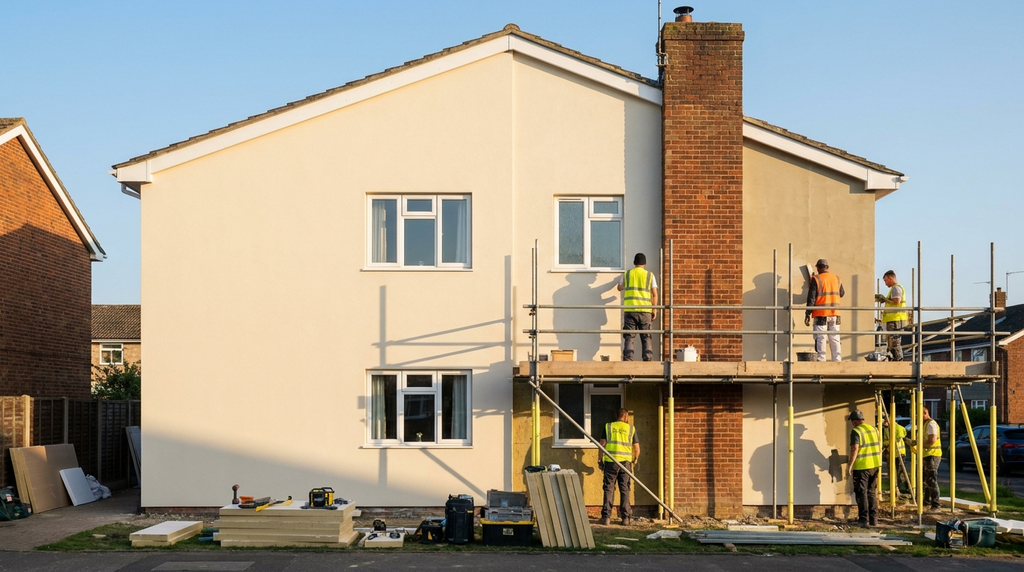
Spray foam insulation costs £2,500–£4,500 for the same cabin, while PIR boards cost £1,800–£3,000 and sheep’s wool costs £1,200–£2,000 (DESNZ, 2026). Labour adds 30–50% if you use an MCS-certified installer, but DIY installation is common for rigid boards and natural fibres (Energy Saving Trust, 2026).
The three insulation materials most homeowners choose for UK log cabins
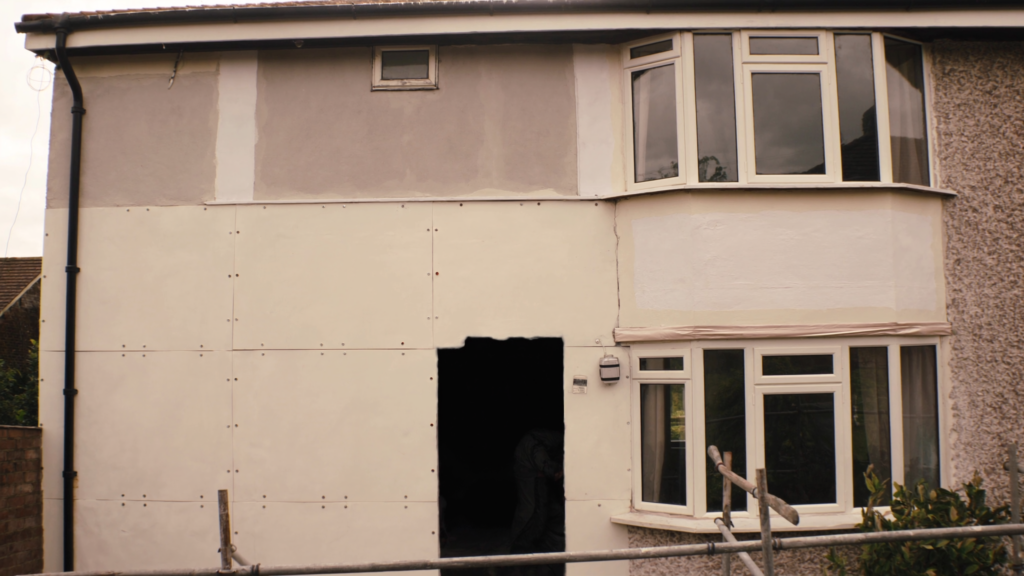
PIR (polyisocyanurate) boards offer the highest thermal performance per thickness, with a U-value of 0.22 W/m²K at 100mm (MCS, 2026). These rigid foam boards are widely available and relatively easy to cut and fit between timber studs.
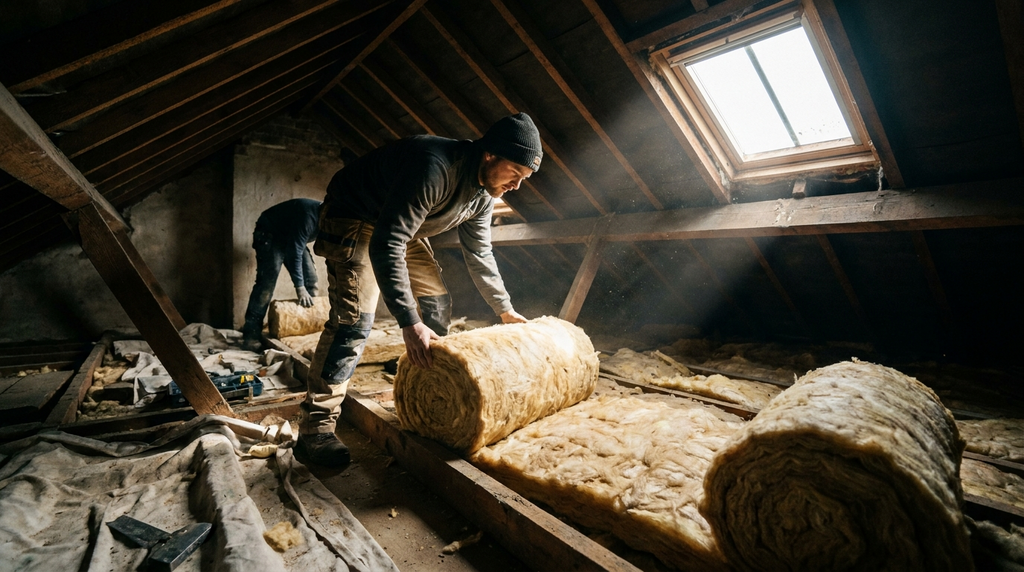
Sheep’s wool is the most popular natural option, with a U-value of 0.35 W/m²K at 100mm, and it manages moisture well in timber buildings (Energy Saving Trust, 2026). It is vapour-permeable, meaning it allows moisture to escape rather than trapping it inside the timber structure.
Closed-cell spray foam achieves a U-value of 0.18 W/m²K at 100mm, but it is non-breathable and requires professional installation (BRE, 2026). Spray foam expands to fill gaps. That makes it effective for irregular spaces, but it can trap moisture against timber if not applied correctly.
Quick numbers, U-values, costs, and thickness for log cabin insulation
| Insulation material | Thickness required for 0.30 U-value | Cost per m² (materials only) | Vapour-permeable? | DIY-friendly? |
|---|---|---|---|---|
| PIR board | 80mm | £18–£25 | No | Yes |
| Sheep’s wool | 130mm | £15–£22 | Yes | Yes |
| Mineral wool | 140mm | £10–£16 | Yes | Yes |
| Closed-cell spray foam | 75mm | £35–£50 | No | No |
Source for U-value calculations: DESNZ, 2026.
Sheep’s wool is the best insulation for UK log cabins
Sheep’s wool is vapour-permeable. This allows moisture to escape from the timber structure, which prevents rot and condensation, the most common issue in log cabins. It has a thermal conductivity of 0.038 W/mK, comparable to mineral wool, and is available in rolls or batts for easy DIY installation (Energy Saving Trust, 2026).
Unlike spray foam, sheep’s wool does not trap moisture, and unlike PIR boards, it does not require a separate vapour control layer in most log cabin constructions. This makes it the simplest and most forgiving option for a timber building where moisture management is critical.
How to verify an installer for log cabin insulation, MCS certification is the key
MCS (Microgeneration Certification Scheme) certification is required for any installer claiming government funding, but not mandatory for general insulation work (GOV.UK, 2026). For spray foam, check the installer holds a valid NICEIC or NAPIT accreditation and has specific spray foam certification (NICEIC, 2026).
For DIY installation of PIR boards or sheep’s wool, no certification is needed, but you must follow Building Regulations Part L for thermal performance and ventilation. Building Regulations Part L compliance guide
Government grants and funding for log cabin insulation in 2026
The Great British Insulation Scheme closed on 31 March 2026. It funded insulation measures only and never covered windows or glazing. ECO4 funding applies to log cabins that are the primary residence, with a minimum EPC rating of E or below (Ofgem, 2026).
No VAT is payable on insulation materials for log cabins installed by a registered installer, reducing costs by 20% (HMRC, 2026). This applies to both materials and labour when the installer is VAT-registered.
The one mistake that ruins log cabin insulation, ignoring the vapour control layer
Without a vapour control layer on the warm side of the insulation, moisture from inside the cabin condenses inside the timber, leading to rot within 2–5 years (BRE, 2026). Sheep’s wool and wood fibre boards are vapour-permeable and do not need a separate vapour control layer, but PIR boards and mineral wool do (Energy Saving Trust, 2026).
The vapour control layer must be installed on the interior side of the insulation, sealed at all joints with tape, and checked annually for tears (DESNZ, 2026). How to install a vapour control layer in a log cabin
How to calculate the exact insulation thickness for your log cabin
Use the formula: Thickness (mm) = (target U-value x thermal conductivity) / 1,000 (DESNZ, 2026). For a log cabin with 50mm timber walls, you need 100mm of PIR board or 130mm of sheep’s wool to achieve a U-value of 0.30 W/m²K (BRE, 2026).
Always add 10–15% extra thickness to account for thermal bridging at joints and around windows (Energy Saving Trust, 2026). This ensures the insulation performs as intended and meets Building Regulations requirements.
Frequently Asked Questions
Sheep's wool is the best insulation for UK log cabins. It is vapour-permeable. This allows moisture to escape and preventing timber rot, with a U-value of 0.35 W/m²K at 100mm (Energy Saving Trust, 2026).
Insulating a typical 4m x 6m log cabin costs £1,200–£4,500 depending on the material. Sheep's wool costs £1,200–£2,000, PIR boards £1,800–£3,000, and spray foam £2,500–£4,500 for materials only (DESNZ, 2026).
Yes, you can insulate a log cabin yourself if using rigid boards or natural fibres. DIY installation is common for PIR boards and sheep's wool, but spray foam requires a professional MCS-certified installer (Energy Saving Trust, 2026).
For log cabin insulation, aim for a U-value of 0.30 W/m²K or lower. PIR boards need 80mm thickness, sheep's wool requires 130mm, and mineral wool needs 140mm to achieve this (DESNZ, 2026).
Spray foam insulation achieves a low U-value of 0.18 W/m²K at 100mm, but it is non-breathable. Incorrect application can trap moisture against timber, so professional installation is essential (BRE, 2026).