The room before, the room after
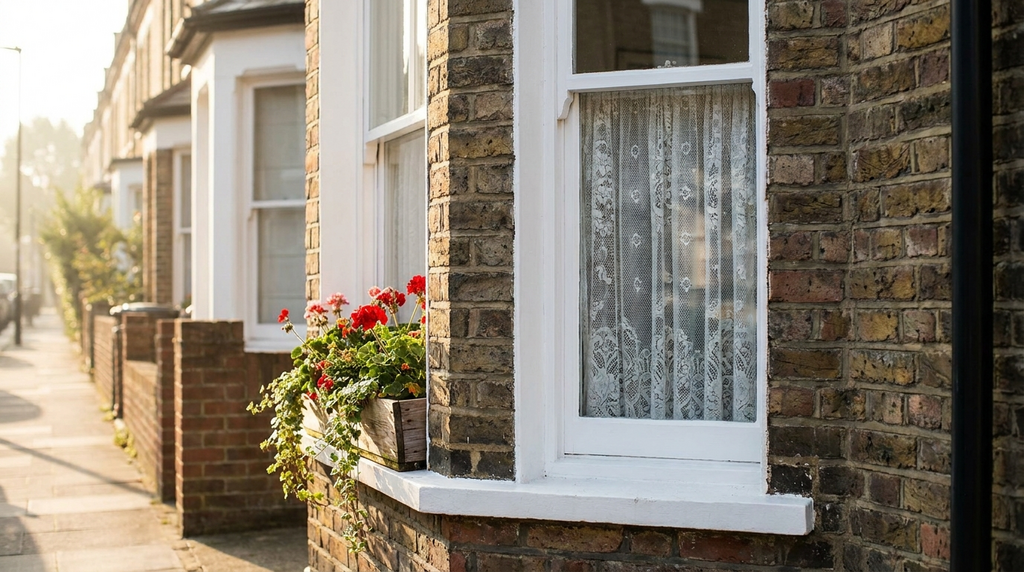
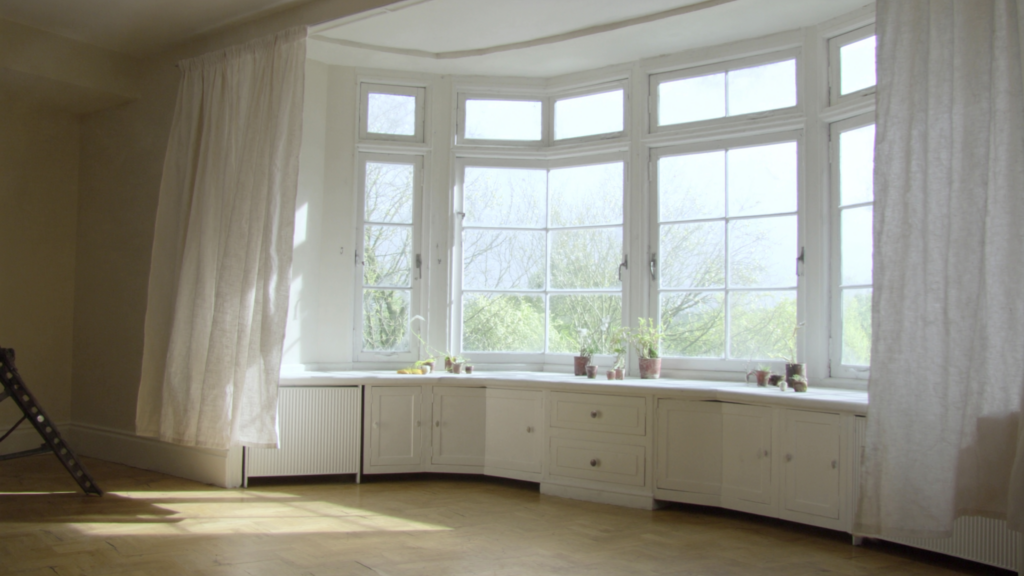
Before: a narrow Victorian extension with a small UPVC casement that blocked half the light and made the garden feel like a postage stamp. The frame was beige, the glass was small, and the whole thing sat there like a reluctant afterthought, a hole in the wall rather than a connection to the outside. You’d stand at the sink and feel the room shrink around you, the view chopped into a rectangle barely worth looking at.
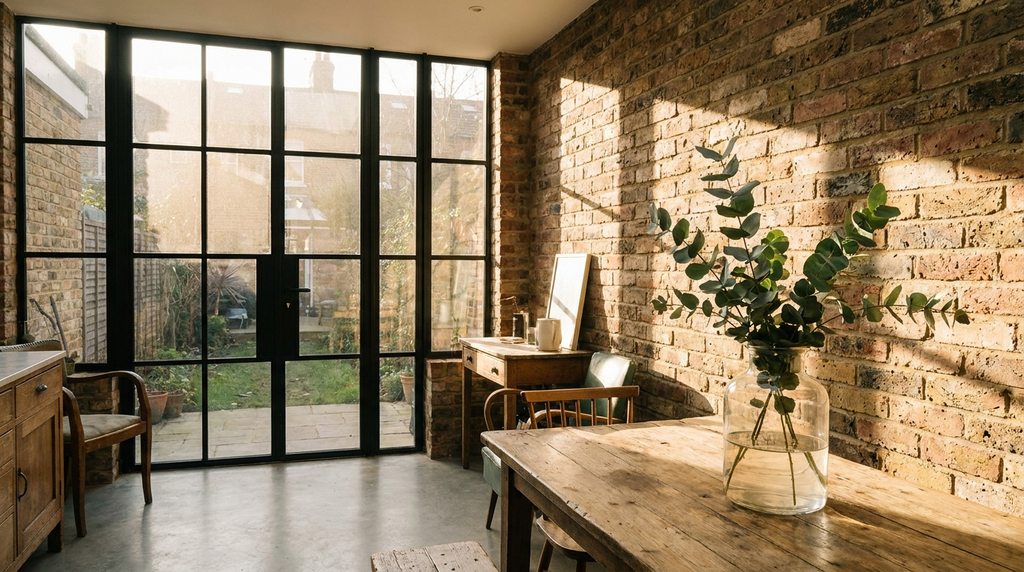
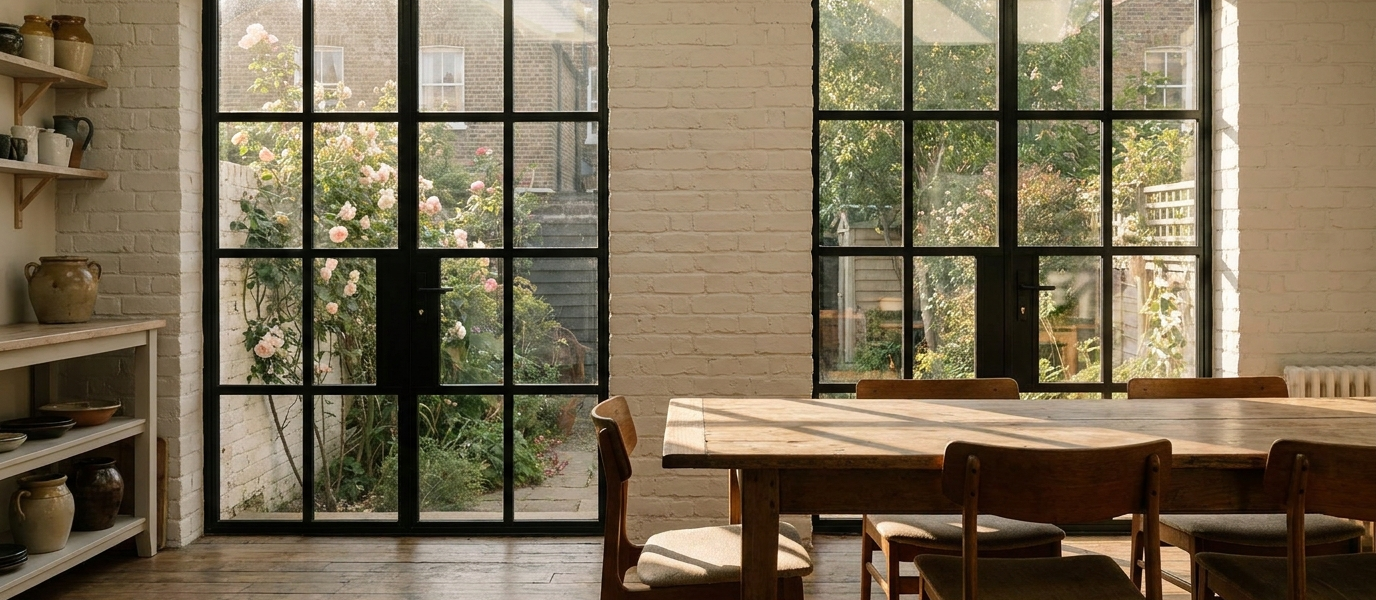
After: Crittall-style frames dividing the same wall into three tall panes, the garden now an extension of the kitchen, the steel lines holding the view like a Rothko frame. The morning light lands differently, longer, softer, pooling on the floorboards in stripes that shift as the sun moves. And the shift isn’t just aesthetic. It changes how you move through the house. You pause at the window. You lean toward it. The room breathes.
Why Crittall frames feel both old and new at once
The original factory in Smethwick supplied thousands of schools, council blocks, and Tube stations, utilitarian, honest, built to last. These weren’t luxury items. They were workhorses: steel windows that could take a kick, hold a seal, and let light pour into the most functional spaces. That’s the irony of the revival. It isn’t nostalgia for some glamorous past. It’s a craving for material truth after years of plastic simulation.
What you gain with a Crittall-style window is permanence. The frame isn’t pretending to be something else. It’s steel, painted, bolted into the brick. It feels like a permanent part of the house, not a temporary fix you’ll replace in a decade. And because the original design was so stripped back, no ornament, no fuss, it fits a Georgian terrace as naturally as a 1970s bungalow. That’s rare. That’s worth paying for.
Let the frame do the talking
The beauty of a Crittall-style window is that it asks for very little else. No fussy curtains, no heavy blinds, no patterned glass. The grid of black steel is enough. It replaces the need for wall art, turning the outside into the feature, the tree branch against a grey sky, the neighbour’s cat on the wall, the way the evening light catches the brick opposite.
Pair it with pale plaster, raw timber, terracotta, materials that let the metal sing without competing. A Farrow & Ball Drop Cloth wall, a simple oak shelf, a clay pot on the sill. The frame is the anchor. Everything else is there to support it, not shout over it. If you’re tempted to add a patterned blind or a busy wallpaper, stop. The window is already doing the work.
Pick a finish that shifts with the light
Black is classic, and for good reason. It reads as graphic, architectural, almost drawn onto the wall. But dark bronze, charcoal, or even a muted olive can soften the industrial edge without losing the structure. The same frame reads differently at noon, sharp, precise, a black line against the sky, versus dusk, when it almost disappears into the glass, leaving only the view.
On maintenance: powder-coated steel lasts decades if you keep the seals happy. A wipe-down, a check on the hinges, a small ritual for a long return. It’s not the zero-effort promise of UPVC, but the payoff is a window that ages well, developing a quiet patina rather than going brittle and yellow.
Eight ways to soften a tall sash window
A tall Crittall-style window can feel severe if you let it. Here’s how to bring it back to human scale without undermining its bones:
- Introduce a single linen Roman blind pulled halfway, not for privacy, for texture. The fold catches the light.
- Place a low bench or shelf beneath to break the vertical drop. Something you can lean on, rest a cup on.
- Use the sill as a stage for one sculptural object: a ceramic vase, a stack of books, a trailing plant.
- Paint the surrounding wall a deep tone, a dark green or slate, so the frame feels carved into the room, not stuck on.
- Hang a single pendant light at eye level to mirror the window’s geometry. A simple glass globe, nothing ornate.
- Choose furniture with visible legs, sofas, chairs, tables that let the eye travel through the room to the glass.
- Add a mirror opposite to double the light without another window. It reflects the steel grid back at itself.
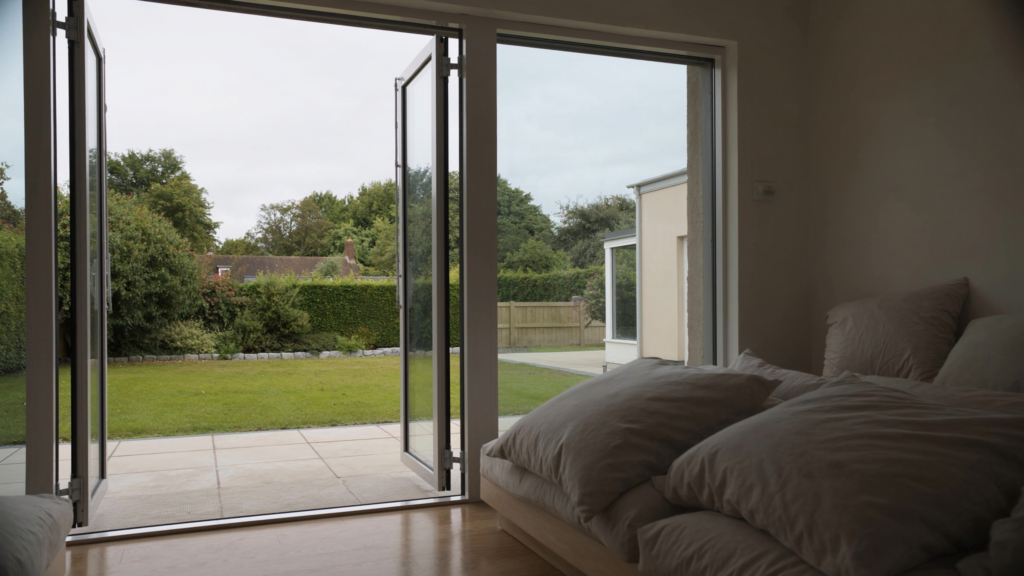
- Let the floor run uninterrupted. No rug that stops at the frame line. The space should flow straight through to the garden.
Why texture matters more than colour when the frame is black
A Crittall window is a line drawing. The room has to supply the texture. Rough linen, brushed brass, matte clay, unvarnished oak, each surface catches the light differently against the steel. That’s where the warmth comes from, not from adding a splash of colour.
The risk of going too minimalist is that the room becomes a sketch, all outline, no depth. The remedy is tactility. Things you want to touch. A chunky wool throw, a stone mortar, a wooden bowl. The black frame provides the structure; the textures provide the life. If you get that balance right, the room feels calm without feeling cold.
The room that changed, what the homeowner learned
The window didn’t just change the light. It changed the pace of the room. No need to fill every wall with art, no urge to clutter the surfaces. The view became the focal point, and everything else fell into place behind it. The lesson is counterintuitive: good windows ask you to edit, not add.
What you gain is a quiet confidence that the hardest-working element in the room is the one you look through. The steel frame holds the outside in place, turns the garden into a living painting, and lets the morning light land exactly where it should. You don’t need to decorate around it. You just need to let it be what it is: the best thing in the room.