The quiet art of seeing through, not past
There’s a particular kind of peace that comes from a window that doesn’t shout its presence. You’re standing in the kitchen, washing up, and the light falls across the sink in soft, watery stripes. Outside, the neighbour’s fence is a blur of green and grey. You can tell it’s a sunny day, but the detail is softened, like a watercolour left out in the rain. That’s the gift of patterned glass. It doesn’t block the world, it filters it, turning your windows into living screens that breathe light and air while keeping the prying gaze at bay.
Most of us reach for curtains or blinds when we want privacy. But those solutions come with compromises: the daily chore of pulling cords, the shadowy gloom of heavy drapes, the way a closed blind can make a small room feel like a box. Patterned glass offers a different deal. It’s permanent, yes, but also liberating, you never have to think about it again. The room stays bright, open, and connected to the garden or street, even when the curtains are drawn and the blinds are up. This piece will walk you through how to choose the right pattern, where to place it, and why texture matters more than colour when you’re after that elusive balance of privacy and light.
Why glass can do what curtains can’t
Curtains and blinds are reactive. You close them when you need privacy, and in doing so, you sacrifice light. Patterned glass is proactive. It lets light pass through while scattering it, so your rooms stay bright without the harsh glare of a clear pane. Think of it as a permanent soft-focus filter for your home. The light that enters is diffused, gentle, and even, no more squinting at your phone in the afternoon or moving your chair to avoid a strip of direct sun.
Unlike adhesive frosted film, which can bubble, peel, or yellow over time, patterned glass is part of the window itself. It’s low-maintenance, never needs adjusting, and won’t fade or warp. Your privacy is built in, not added on. What you gain is a home that feels both private and open, without the daily tug of cords or the shadow of heavy drapes. It’s the kind of solution that, once installed, you forget is there, until you notice how good the room feels.
Choosing a pattern that suits your room’s mood
The pattern you choose sets the tone of the room. Fine geometric patterns, reeded, fluted, linear, work beautifully in bathrooms and hallways. They’re clean, calm, and modern, offering a sense of order without being sterile. A reeded glass panel in a bathroom, for instance, casts vertical stripes of light that feel almost architectural, like the shadow of a Venetian blind.
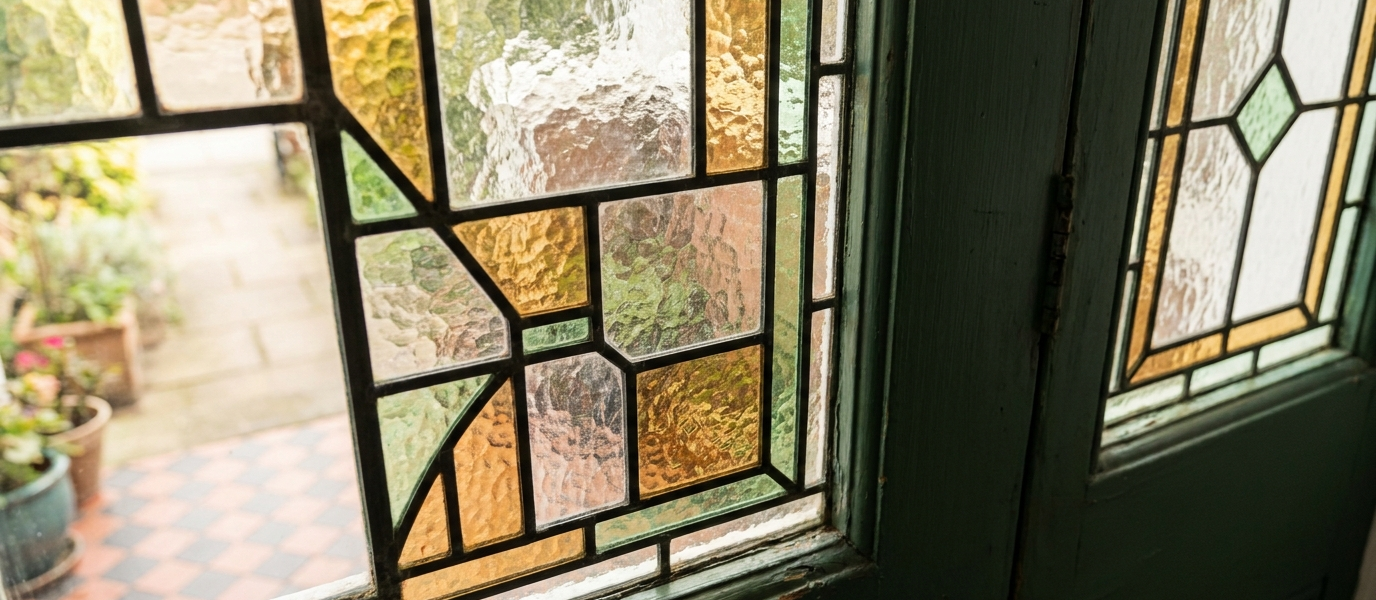
For living rooms and kitchens, where you want a softer, more natural feel, organic patterns are the way to go. Look for leaf-like or dappled textures that mimic the play of light through foliage. These patterns blur the boundary between inside and out, making a small garden feel like it’s part of the room. Scale matters too. Small patterns disappear into the glass at a distance, you see the effect, not the motif. Large motifs, on the other hand, become a feature in their own right, like a piece of textile art stretched across the window.
How light behaves differently with each finish
Not all patterned glass casts the same light. Reeded glass, with its vertical ridges, bends light into crisp stripes that shift across the floor as the sun moves. It’s almost like a sunlit blind, casting gentle shadows that change by the hour. Ripple or textured patterns, by contrast, scatter light evenly, reducing glare and making rooms feel warmer and more diffuse. This is ideal for a south-facing kitchen where the afternoon sun can feel aggressive.
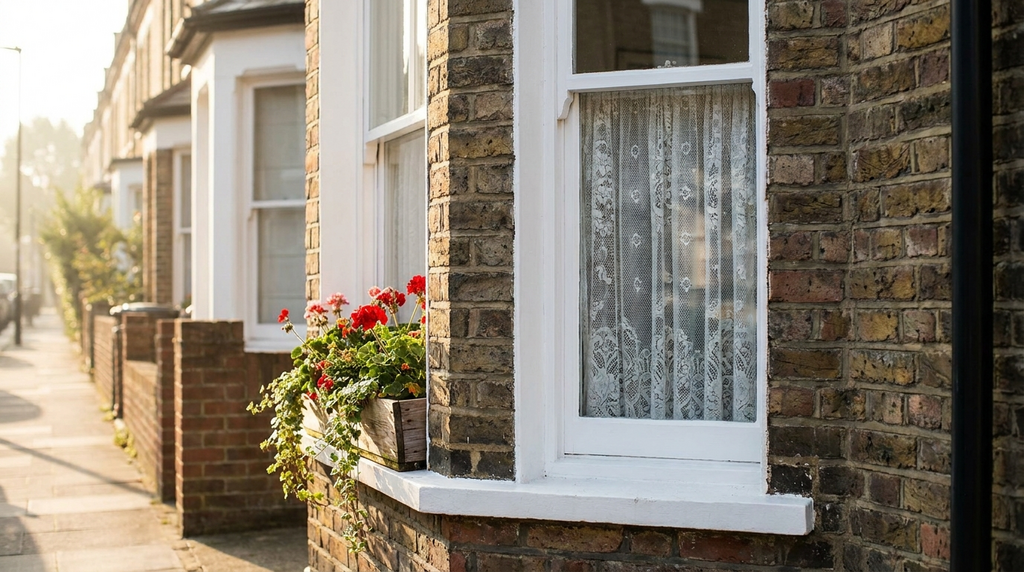
One clever approach is to use clear glass with a subtle sandblasted band at eye level. You get privacy where you need it, at standing or sitting height, while keeping the rest of the pane bright and clear. This works especially well in a Victorian sash window, where you want to preserve the original character but add modern privacy. The band can be narrow or wide, depending on your sightlines, and it’s barely noticeable from inside.
Pairing patterned glass with your window style
The way you use patterned glass depends on your window type. For casement windows, consider patterned glass in the lower pane only, keeping the top clear for sky views. You get privacy at eye level while maintaining a connection to the outdoors. For sash windows, a single patterned sash, often the bottom one, preserves the classic look while adding modern privacy. The top sash remains clear, so you can still see the treetops and clouds.
Fixed panels and fanlights are ideal for a full sheet of pattern. These windows don’t open, so the glass becomes the view itself. A fanlight above a front door, for instance, can be a single sheet of reeded or ripple glass, flooding the hallway with soft light while obscuring the view from the street. It’s a small detail that transforms the entrance of your home.
Six ways to use patterned glass in unexpected places
- A bathroom window that overlooks a neighbour’s wall. Instead of a frosted film that looks cheap, install a full sheet of ripple glass. It turns a dead view into a soft, luminous feature that catches the morning light.
- A front door panel. A narrow panel of reeded glass beside the door lets in light but obscures the hallway from the street. It’s welcoming without being exposed.
- A kitchen splashback window behind the sink. Patterned glass hides splashes and smears while keeping the room bright. Choose a textured finish that’s easy to wipe clean.
- A small landing window. Where a blind would feel cramped and awkward, patterned glass solves the problem without adding clutter. The light still floods in, but the view is softened.
- A side window in a narrow corridor. These windows often face a neighbour’s wall or a fence. Patterned glass adds privacy without blocking the only light source, making the corridor feel wider and brighter.
- A conservatory or orangery roof lantern. Patterned glass softens harsh midday sun while maintaining a sense of height. The light that falls is gentle and even, perfect for a reading nook or dining area.
For more ideas on how to match glass patterns to your home’s style, take a look at our guide on door colour ideas, the same principles of texture and light apply to your front door.
Why texture matters more than colour
Colour fades, dates, and can feel heavy. A tinted glass panel in blue or green might look great now, but in ten years, it could feel dated and oppressive. Texture, on the other hand, is timeless. A reeded or ripple finish works with any palette, from a minimalist grey scheme to a warm terracotta and cream interior. It doesn’t compete with your decor, it enhances it.
A textured surface catches the light differently throughout the day. Morning shadows are crisp and cool; afternoon glow is warm and diffuse; evening gleam is soft and golden. This changing quality means your window never looks the same twice. Patterned glass for privacy isn’t about hiding, it’s about adding a layer of interest that changes with the sun. It’s a quiet, living element in your home, one that rewards you with a different view every hour.
If you’re considering patterned glass for a specific room, our article on choosing window styles offers practical advice on how to integrate it with your existing frames. And for those thinking about a full renovation, bathroom window ideas has more inspiration for turning a functional space into a light-filled retreat.