The dog knows before you do
Your dog’s ears twitch a full three seconds before you hear the post van. Their nose lifts to a shift in air pressure you’ll never feel, and their whole body tenses at the exact moment the morning sun clears the fence line. The patio door is the hinge between their two worlds, the warm kitchen and the damp grass, the safe den and the exciting beyond. And every morning, they press their nose against the glass and wait.
The real question isn’t which door suits your house, it’s which door suits the creature who greets it at dawn. A door that works for your pet works better for you: less noise, less dirt, less negotiation at 7am when the garden calls and you’re still holding a coffee. Here’s how to choose one that treats both of you fairly.
Let the nose guide the threshold design
The critical measurement isn’t the glass or the frame. It’s the bottom track height and the gap beneath the door. A low threshold, ideally a flush track that sits level with your floor, means an old Labrador with stiff hips can wander into the garden unassisted. A high aluminium track becomes a daily obstacle course: front paws up, back legs scramble, a small whimper of frustration. You watch it happen three times a day and feel a little worse each time.
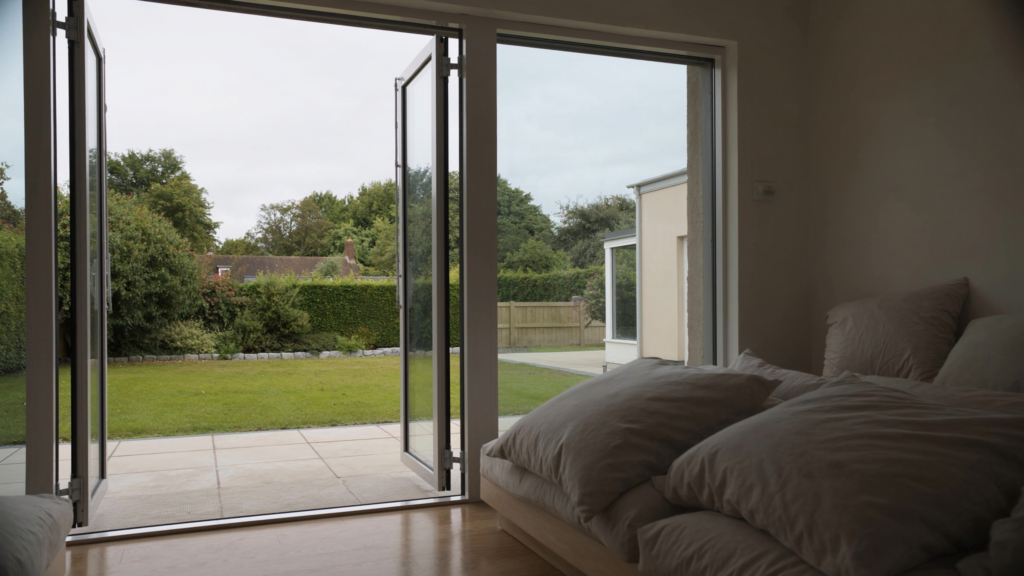
For large breeds, a sliding door with a low threshold is the quietest solution. The dog pushes through with their chest, the door glides, and they’re out. For small breeds, think Jack Russells and dachshunds, a bi-fold with a slightly raised track can actually help. They learn to hop, which builds confidence, and the narrow panels give them a clear sightline to the garden. The difference isn’t about style; it’s about whether the door encourages independence or invites frustration.
Glass that forgives the wet nose
Standard single glazing turns every greeting into a smudge crisis. Nose prints at nose height, paw marks where they’ve pressed against the glass to see the cat next door, a fine film of drool when they’ve been watching the postman. You can clean it twice a day and it still looks like a window in a kennel.
Tempered or coated glass offers something better. A low-iron glass with a hydrophobic coating means moisture beads and runs off rather than drying into a smear. Self-cleaning glass, the kind with a titanium dioxide layer that breaks down dirt in sunlight, is a genuine help if your dog’s nose-height coincides with the middle panel. It’s not magic, but it cuts the cleaning frequency by about two-thirds.
For pets who don’t understand that glass is solid, young puppies, anxious rescues, or cats who’ve never seen a pane before, consider a frosted film or etched pattern at nose height. It provides a visual cue that says stop here. It saves the door from scratches and the animal from a startling bump.
Eight ways to soften a tall sash window
- Add a low-level ledge. A wide oak shelf at cat height turns a boring window into a perch. They watch the garden from above, and you keep the sill clean.
- Install a mesh guard. A tension-fit mesh panel that sits inside the frame lets air in but keeps paws out. Ideal for warm days when you want the door open but the dog contained.
- Swap to trickier handles. Child-safe but dog-proof, a handle that requires a thumb-press rather than a lever push. Stops the clever spaniel who’s learned to open the door themselves.
- Fit secondary glazing. It dampens the sound of the postman, the bin lorry, the neighbour’s dog. A quieter world outside means a calmer dog inside.
- Plant a lavender pot just outside. The scent drifts in when the door opens, making the threshold a sensory invitation rather than a barrier. Your dog learns to associate the door with calm, not anxiety.
- Add a doorstop or draft excluder. A weighted fabric sausage at the bottom stops the door slamming in the wind. Less noise, less startle, less barking.
- Fit a cat flap in the glazing. A door-mounted pet flap that sits in the glass panel rather than the frame. Cleaner installation, fewer drafts, and your cat comes and goes without you noticing.
- Paint the frame a contrasting colour. A dark frame against a light wall helps a dog with failing eyesight see the door opening. It’s a tiny change that makes a daily difference.
Each option costs differently, from a £20 draft excluder to a £400 secondary glazing insert, but all share one thing: they treat the door as a shared object, not a human-only interface.
Why the handle height matters more than you think
A lever handle at waist height is fine until a large dog learns to push it down with their nose. Suddenly your back door opens itself. You come downstairs to find the garden gate swinging and the dog halfway down the street. It’s not mischief, it’s intelligence. They worked out the mechanism, and now they use it whenever they please.
The case for a lift-and-turn mechanism is strong here, especially for terriers and spaniels who treat doors as puzzles. You lift the handle to engage the lock, turn it to open. A nose push does nothing. Alternatively, a handle with a lockable thumb-turn, one that requires a human thumb to press a button before turning, stops the escape artist without making the door awkward for you.
A small shift in hardware can mean the difference between a door that stays shut and a dog who lets themselves out at 3am. It costs around £50 to £150 to swap a handle, and it’s the cheapest peace of mind you’ll buy.
The season the door learns to live with
A pet door insert, whether temporary or permanent, changes the microclimate of your kitchen. The draught that slips through the flap in winter. The light that shifts when the cat comes home at dusk. The sound of the garden arriving indoors: birdsong, rain, the neighbour’s mower. You notice it for the first week, then you stop. Your pet never stops noticing; they read the flap as a portal, a permission slip, a way to move between worlds.
The choice between a door-mounted pet flap and a wall-mounted alternative comes down to your situation. A door-mounted flap suits renters, you remove it when you leave, fill the hole with a new glazing panel, and your deposit is safe. A wall-mounted flap suits anyone with a listed building or a specific window they don’t want to cut. It costs more, around £400 to £1,200 depending on size and finish, but it’s permanent, insulated, and invisible from the street.
The best pet door is the one you forget is there, because your cat or dog already knows how to use it. They don’t scratch. They don’t whine. They just go, and you only remember the door exists when you see the flap move out of the corner of your eye.
A door that opens both worlds
Choosing a patio door that acknowledges the animal life of your house isn’t an afterthought, it’s a primary design decision. The dog who waits at the door every morning is telling you something: this threshold matters. It’s the line between inside and outside, between safety and freedom, between your world and theirs.
The gain isn’t just convenience. It’s a home that feels less like a barrier and more like a shared threshold. A door that opens easily, quietly, and exactly when they need it to. A door that doesn’t fight them, doesn’t frustrate them, doesn’t shut them out.
And the dog waiting at the door, tail wagging, because the door opens when they need it, that’s the image worth designing for.