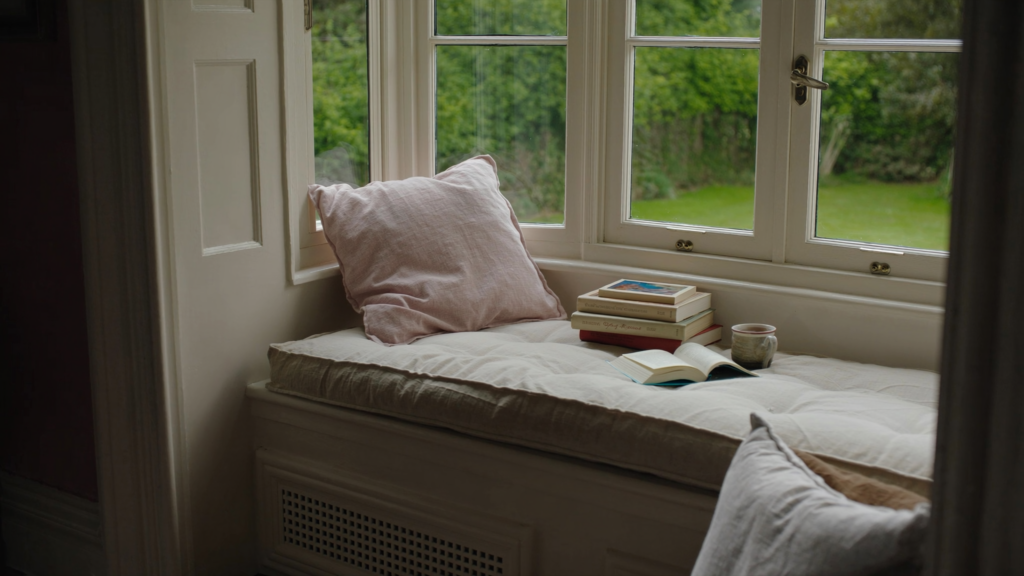
The room that never quite settles
You know the one. It’s often the front room, the one with the bay window that catches the afternoon sun so beautifully you bought the house for it. And yet, there’s a low hum beneath everything. The rumble of a delivery van idling, the clatter of a wheelie bin being dragged across pavement, the indistinct thrum of a neighbour’s radio drifting through the sash like a ghost you can’t quite shake. It’s not loud enough to complain about, not really, but it’s there, a persistent, low-grade agitation that stops the room from ever feeling like a sanctuary.
This isn’t about noise pollution in the dramatic sense. It’s about the erosion of quiet. That subtle, almost imperceptible way street noise keeps your shoulders slightly raised, your attention half-cocked. It makes a room feel busy even when it’s empty. Acoustic glass isn’t a technical upgrade for the spec-obsessed homeowner. It’s a restoration. A way to reclaim the room’s intended atmosphere, that dim, quiet hour just before dusk when the room should feel like a held breath, not a traffic junction.
What a pane of glass can really do
The construction is deceptively simple: two panes of glass with a wider air gap than standard double glazing, plus a laminated inner layer that absorbs vibration rather than transmitting it. The result isn’t a decibel war you can quantify in a chart, it’s a change in the quality of silence. The drone of traffic loses its edge. The sharpness of a horn or a shout is blunted. Rain on the glass becomes a hush, a soft percussion, rather than a frantic rattle that pulls you from a book.
This matters because the room stops feeling like a compromise between beauty and peace. You don’t have to choose the view over the quiet. You can have the wide, light-filled sash and the sense that the world outside is a film playing on mute. The room finally matches the feeling you wanted when you first walked into it.
The front room test, where street noise hits hardest
The street-facing room is almost always the most characterful in the house. A Victorian bay with its generous proportions, a 1930s suntrap with original Crittall frames, a Georgian sash with its elegant vertical proportions. And it is almost always the noisiest. The moment of decision comes when you realise that standard double glazing, while excellent for thermal efficiency, does surprisingly little to stop the low-frequency rumble of a bus or the thud of a bassline from a passing car. You can layer curtains and rugs, hang heavy drapes, even stuff the frames with acoustic seals, but you still feel the vibration through the frame, a ghost of the street’s pulse.
Acoustic glass is the quiet intervention that doesn’t change the room’s proportions or its period features. It doesn’t require a new window shape or a different opening mechanism. It simply changes how the room feels. The first time you close the window and the world outside is suddenly a painting, you’ll wonder why you waited so long.
Eight ways a quieter window changes the room
- You can leave the window open without the room becoming part of the street. The air moves, the sounds don’t.
- The sound of rain becomes a backdrop, not a distraction. A soft, steady hush that invites you to stay put rather than reach for the remote.
- Morning light feels softer when it arrives without the rush-hour hum. The first cup of coffee tastes better when the world isn’t already competing for your attention.
- You stop tensing at every lorry that passes. That involuntary shoulder-hitch disappears after a week.
- The room becomes a place for conversation, not competition. You no longer have to raise your voice or pause mid-sentence for a delivery van to pass.
- Curtains can be sheer. You no longer need heavy velvet or thick lined drapes for sound damping. The window can be dressed for light and texture alone.
- The house feels deeper, more private, even on a busy road. The street is still there, but it feels like it belongs to someone else.
- You notice birdsong you didn’t know was there. That’s the real measure of success.
The frame matters as much as the glass
Acoustic glass is a remarkable thing, but it is only as good as the seal and the frame it sits in. A draughty Victorian sash with gaps you could slide a coin through will undo every benefit the glass provides. The vibration travels through the frame, the air moves through the gaps, and you’re left with a room that is still part of the street, just with better-looking windows.
If you’re retrofitting existing frames, the work is fiddly but transformative. A specialist can upgrade the glazing units and replace the seals without altering the external appearance. If you’re installing new windows, the whole assembly, frame, glass, seal, ironmongery, works together. The pleasure of a well-fitted window is tactile: it closes with a solid, final sound, a decisive thunk that seals the room from the world. That sound alone is worth the investment.
Let the quiet guide the rest of the room
With the noise gone, the room can be furnished differently. You no longer need layers of heavy fabric for dampening. The thick wool rug, the lined curtains, the upholstered headboard, they were doing double duty, absorbing sound as much as they were adding comfort. Now you can choose for texture and light alone. A linen blind, a sisal rug, a simple wooden chair by the window. The room breathes.
The window becomes a frame for the street rather than a source of intrusion. You find yourself looking at the passing cars rather than reacting to them. The room feels like an observatory, not a buffer. And then, one evening, you sit down with a book and realise you haven’t noticed a single car pass by for the last hour. The house feels like yours again. choosing paint colours for a quiet room