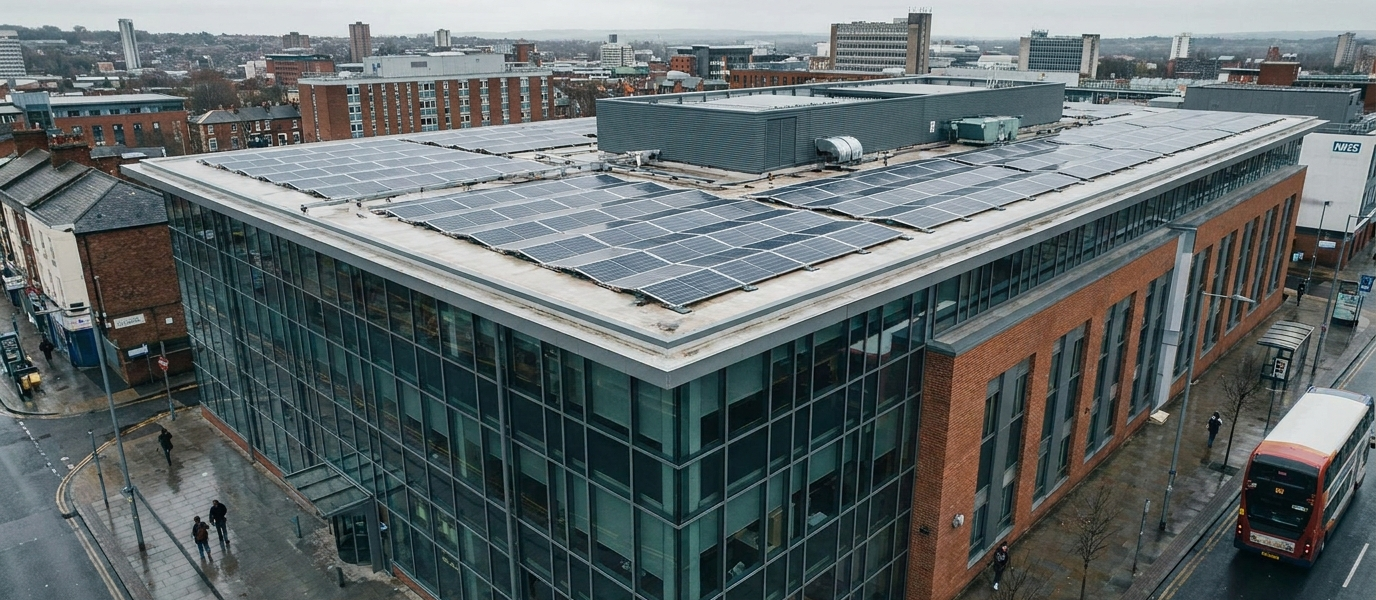
1,000 tonnes of CO₂ a year, that is what the UK’s last coal-heated hospital will save after switching to heat pumps and solar panels. The Royal Victoria Infirmary in Newcastle, a sprawling Victorian site, has ditched coal for good. For every UK homeowner still burning gas or oil, the question is not whether to follow, but when, and at what cost.
As reported by BusinessGreen, the hospital’s new system includes air-source heat pumps and rooftop solar panels. The project cost £4.5 million and will cut the site’s energy bills by roughly £400,000 a year. That is a payback period of about 11 years, not dissimilar to what a typical 3-bed semi might expect from a heat pump installation, assuming current gas and electricity prices.
Who qualifies, and who doesn’t
The hospital is a single large customer, but the technology scales down. Air-source heat pumps now work in homes built before 1900, provided the fabric is improved first. Ofgem data shows over 50,000 heat pump installations in the UK last year, up 40% from 2022. Yet the big blocker remains cost: a typical heat pump install runs £7,000–£13,000, according to the Energy Saving Trust. The Boiler Upgrade Scheme covers £7,500 of that, but only for homes with an EPC rating of D or better. That rules out roughly a third of UK homes.
What it costs a typical 3-bed semi
For a semi-detached house using 12,000 kWh of gas a year, switching to a heat pump could save £200–£400 annually on heating bills, depending on the existing boiler’s efficiency and the heat pump’s SCOP. Add solar panels generating 3,500 kWh a year, and the saving rises to £500–£700. The combined upfront cost, heat pump plus solar, is typically £15,000–£20,000 before grants. After the £7,500 BUS grant and 0% VAT (saving roughly £1,500), the net cost drops to £6,000–£11,000. Payback: 9–15 years, depending on future energy prices.
But, and this is the catch, few homeowners have that capital lying around. The government’s proposed low-interest loan scheme, first floated in 2021, still has no launch date. Meanwhile, gas prices are volatile: Ofgem’s price cap rose 10% in October 2024, and another increase is expected in January 2025. Every delay in switching locks households into that volatility.
EPC impact and resale value
Adding a heat pump and solar panels can lift an EPC rating from D to C or even B, depending on insulation levels. A 2023 study by Nationwide found that homes with an EPC rating of C or above sell for 5–8% more than equivalent D-rated properties. On a £300,000 house, that is £15,000–£24,000 of added value, enough to cover the net installation cost. The hospital’s switch also improved its energy performance, though as a non-domestic building it uses a different metric.
What homeowners should do next
First, get an EPC assessment if you have not had one in the last five years. Second, check cavity wall and loft insulation, heat pumps work best in well-sealed homes. Third, apply for the Boiler Upgrade Scheme through gov.uk before March 2027, when the current funding round ends. Fourth, get at least three quotes from MCS-certified installers, prices vary wildly. The Royal Victoria Infirmary’s 11-year payback shows this is a long-term investment, not a quick fix. But with gas prices rising and grants finite, the window to act is narrowing.
Frequently Asked Questions
A typical heat pump installation in the UK costs between £7,000 and £13,000, according to the Energy Saving Trust. The Boiler Upgrade Scheme provides a grant of £7,500 towards this cost, but only for homes with an EPC rating of D or better.
Yes, the Boiler Upgrade Scheme offers a £7,500 grant for heat pump installations in England and Wales. However, your home must have an EPC rating of D or above, which excludes roughly a third of UK homes.
For a typical 3-bed semi-detached house using 12,000 kWh of gas a year, switching to a heat pump can save £200–£400 annually on heating bills. Adding solar panels generating 3,500 kWh a year increases the saving to £500–£700 per year.
Yes, air-source heat pumps now work in homes built before 1900, provided the building's fabric is improved first with proper insulation and draught-proofing. The Royal Victoria Infirmary in Newcastle, a Victorian site, successfully switched to heat pumps and solar panels.
Yes, installing a heat pump and solar panels can lift your EPC rating from D to C or B, which adds 5–8% to a home's resale value. On a £300,000 house, that equates to £15,000–£24,000 of added value, potentially covering the net installation cost after grants.





