Glazing is standard-rated for VAT at 20%. The zero rate for energy-saving materials covers insulation, heat pumps and solar panels; HMRC names secondary and double glazing as excluded (VAT Notice 708/6).
Before you order any replacement windows, the first step is to check whether you qualify for financial relief. The Great British Insulation Scheme closed on 31 March 2026. It funded insulation measures only and never covered windows or glazing. They only fund windows when installed alongside a primary heating or insulation measure, such as a heat pump or loft insulation (DESNZ, ECO4 guidance, GOV.UK).
Most homeowners pay 20% VAT and must use a FENSA-registered installer to meet Part L standards. Compare registered installers to get started.
- Glazing is standard-rated for VAT at 20%. The zero rate for energy-saving materials covers insulation, heat pumps and solar panels; HMRC names secondary and double glazing as excluded (VAT Notice 708/6).
- Replacement windows must meet a U-value of 1.6 W/m²K or better.
- Use a FENSA or CERTASS registered installer or submit a Building Notice.
- Listed buildings need consent; conservation areas may require planning permission.
- The legal requirements you must meet before ordering replacement windows
- Quick numbers – typical costs, savings, and U-value requirements for replacement windows
- The step-by-step replacement windows process from survey to final sign-off
- How to verify your installer is certified and insured (and why it matters)
- The direct answer what is the replacement windows process in 2026?
- What happens if you skip the process or use an uncertified installer
Glazing is standard-rated for VAT at 20%. The zero rate for energy-saving materials covers insulation, heat pumps and solar panels; HMRC names secondary and double glazing as excluded (VAT Notice 708/6). Homeowners who do not meet these criteria must pay the full 20% VAT on replacement windows. No standard consumer-funded scheme offers direct subsidies for replacing single glazing with double glazing.
To confirm your eligibility, check your property’s EPC rating and whether you receive any means-tested benefits, such as Pension Credit or Universal Credit, using the GOV.UK benefits checker.
The legal requirements you must meet before ordering replacement windows
Building Regulations Part L (energy efficiency), Part F (ventilation), and Part B (fire safety) apply to all replacement window installations in England, Scotland, and Wales. You must use a FENSA-registered or CERTASS-registered installer, or submit a Building Notice to the local authority (Ministry of Housing, Communities & Local Government, Approved Document L).
Replacement windows must achieve a minimum U-value of 1.6 W/m²K for the whole window, including frame and glazing, under current Approved Document L 2021 standards (DESNZ, Approved Document L 2021). If you live in a listed building or conservation area, you must apply for listed building consent or planning permission before replacing windows; standard permitted development rights do not apply (Historic England, Planning Portal).
All replacement windows must also comply with Document B for fire safety if the property has more than one storey, particularly for escape windows in bedrooms (Ministry of Housing, Communities & Local Government, Approved Document B).
Quick numbers – typical costs, savings, and U-value requirements for replacement windows
| Window type | Cost per window (installed) | U-value (W/m²K) | Annual saving (£) | VAT rate |
|---|---|---|---|---|
| Double-glazed uPVC | £800–£1,500 | 1.4–1.6 | £100–£150 | 0% or 20% |
| Double-glazed timber | £1,200–£2,000 | 1.4–1.6 | £100–£150 | 0% or 20% |
| Triple-glazed uPVC | £1,200–£2,200 | 0.8–1.2 | £130–£180 | 0% or 20% |
| Triple-glazed timber | £1,800–£3,000 | 0.8–1.2 | £130–£180 | 0% or 20% |
Cost figures are based on Energy Saving Trust 2026 published typical costs. U-value data comes from Approved Document L 2021 (DESNZ). VAT rates are from HMRC VAT Notice 708/6. Annual savings are estimates from the EST replacement windows savings table.
The step-by-step replacement windows process from survey to final sign-off
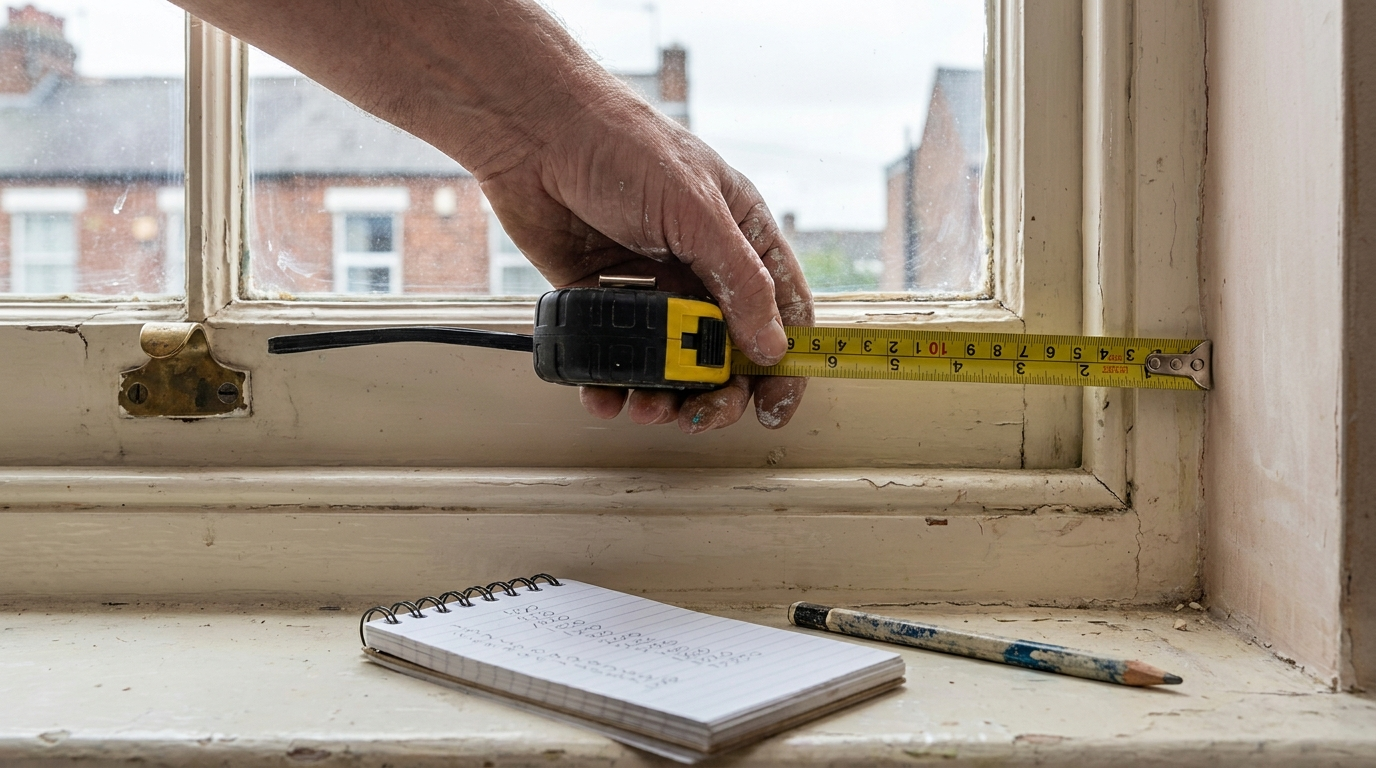
Step 1: Arrange a site survey. A FENSA-registered installer measures all window openings and checks for structural issues such as rotten frames or damp. You must be present during the survey (FENSA guidance for homeowners).
Step 2: Receive a written quotation. The quote must include the product specification, U-value, installation date, and FENSA registration number. Compare at least three quotes (Which? consumer advice, 2026).
Step 3: Building Regulations notification. The installer submits a notification to FENSA or the local authority at least 48 hours before installation begins (Building Regulations 2010, Regulation 20).
Step 4: Installation day. The installer removes old windows, fits new ones, seals and insulates the cavity, and tests for air-tightness. Do not pay the full balance until the job is complete and you have the FENSA certificate (FENSA homeowner checklist).
Step 5: Receive the FENSA certificate. The installer provides a FENSA certificate within 14 days. Keep this certificate for future property sales as proof of compliance (FENSA).
How to verify your installer is certified and insured (and why it matters)
Only use an installer registered with FENSA, CERTASS, or a competent person scheme that covers windows. This is the only way to avoid needing a separate Building Regulations application (GOV.UK, “Competent person schemes for building work”).
Check the installer’s FENSA or CERTASS registration number on the official register at fensa.org.uk or certass.co.uk before you pay any deposit. The register will confirm their trading address and insurance status (FENSA, CERTASS).
Verify that the installer holds public liability insurance of at least £2 million and employer’s liability insurance if they have employees. Ask for a copy of the insurance certificate (TrustMark, 2026). Do not accept an installer who cannot provide a FENSA certificate or who asks you to self-certify the work – this is a red flag for non-compliant installations (FENSA).
The direct answer what is the replacement windows process in 2026?
Glazing is standard-rated for VAT at 20%. The zero rate for energy-saving materials covers insulation, heat pumps and solar panels; HMRC names secondary and double glazing as excluded (VAT Notice 708/6). The process is legally required because all replacement windows must meet Part L energy-efficiency standards and Part B fire safety rules; you cannot skip the FENSA certification step.
The process takes 4 to 8 weeks from initial quote to final certificate, depending on window availability and installer schedule (EST typical timeline, 2026). Glazing is standard-rated for VAT at 20%. The zero rate for energy-saving materials covers insulation, heat pumps and solar panels; HMRC names secondary and double glazing as excluded (VAT Notice 708/6).
What happens if you skip the process or use an uncertified installer
If you install replacement windows without a FENSA certificate, you will need to submit a retrospective Building Regulations application to the local authority, which costs £150–£300 and may require a structural inspection (Local Authority Building Control, 2026). When selling your home, conveyancers will ask for the FENSA certificate. If you cannot provide one, the buyer’s solicitor may demand a retrospective indemnity insurance policy costing £100–£300, or refuse to proceed (Law Society, 2026 conveyancing guidance).
Uncertified installations risk voiding your home insurance if a fire or structural failure occurs. Insurers may reject claims for non-compliant windows (Association of British Insurers, 2026). The only legal way to avoid penalties is to use a FENSA-registered installer. DIY installation is not permitted for replacement windows under Building Regulations (Ministry of Housing, Communities & Local Government).
guide to FENSA certificates for homeowners
how to compare window quotes like an expert
Frequently Asked Questions
Yes. Building Regulations Part L, Part F, and Part B apply to replacement windows in England, Scotland, and Wales. You must use a FENSA or CERTASS registered installer or submit a Building Notice to the local authority, as per DESNZ guidance.
Not as a standalone measure. The Great British Insulation Scheme closed on 31 March 2026. It funded insulation measures only and never covered windows or glazing.
The standard VAT rate is 20%.Glazing is standard-rated for VAT at 20%. The zero rate for energy-saving materials covers insulation, heat pumps and solar panels; HMRC names secondary and double glazing as excluded (VAT Notice 708/6).
Replacement windows must achieve a whole-window U-value of 1.6 W/m²K or better under current Approved Document L 2021 standards from DESNZ.
Not typically for like-for-like replacements. However, if you live in a listed building or conservation area, you may need listed building consent or planning permission. Check with your local authority first.