Twenty-nine million homes already exist in the UK. By 2050, roughly 80% of the housing stock that will be standing then is built now. That single fact, from the Climate Change Committee, should frame every conversation about eco-homes.
This week, Somerset Council marked a milestone with new eco-homes in Minehead, as reported by Somerset Council. The development, built to high energy standards, represents one end of the spectrum: zero-carbon from the start. But for every Minehead, there are hundreds of Victorian terraces, 1960s semis, and 1990s executive estates that need upgrading, not replacing.
The new-build eco premium
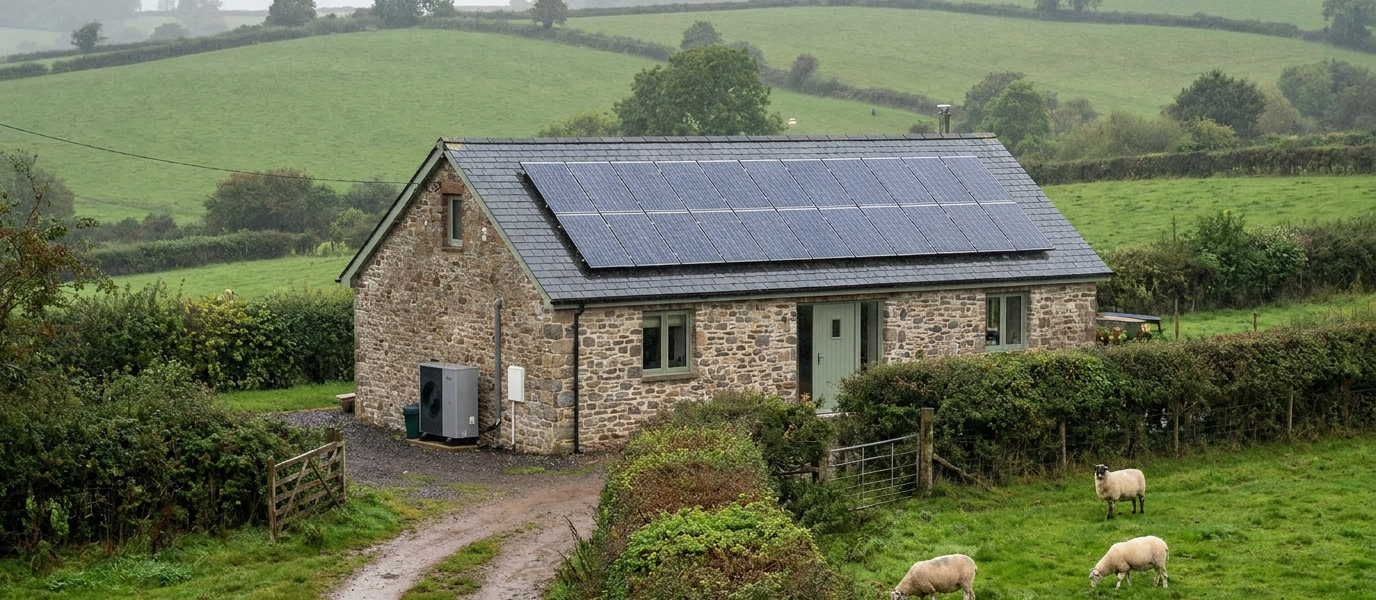
New eco-homes like those in Minehead typically achieve EPC A or B without the headache of retrofitting solid walls or suspended floors. The cost premium over a standard new build is often modest, builders say 3–8%, because the design is integrated from the start: better insulation, triple glazing, heat pump ready, solar PV on the roof.
Somerset Council has not published the exact specification, but similar projects by other councils include mechanical ventilation with heat recovery (MVHR), airtightness levels below 3 m³/h·m² at 50 Pa, and no gas connection. The result: heating bills of £300–£500 a year for a 3-bed home, compared to £1,200–£1,800 for a typical existing property on gas.
Yet the catch is scale. The UK builds about 200,000 homes a year. Even if every new home were a Passivhaus, it would take 145 years to replace the existing stock at that rate.
Retrofit: the harder, more common path
For the homeowner reading this, the relevant question is not “Should we build new?” but “How do I make my current home perform like a Minehead eco-home?” The answer is a staged retrofit, and it is neither cheap nor simple.
A fabric-first approach, loft insulation to 300 mm, cavity wall fill, floor insulation, draught-proofing, costs £2,000–£6,000 for a typical 3-bed semi and can improve the EPC by 1–2 bands. Adding a heat pump under the Boiler Upgrade Scheme costs £7,500 after the grant (the grant rose to £7,500 in October 2023). Solar panels add £5,000–£6,500 for a 4 kW system. The total: £14,500–£20,000, with payback over 10–15 years at current energy prices.
But here the government’s own figures show a gap. The Energy Saving Trust estimates that only 1.5 million homes have had cavity wall insulation. Solid-wall homes, 8 million of them, require external or internal insulation at £8,000–£15,000. The Great British Insulation Scheme, launched in 2023, has been slow to reach those who need it most.
Who pays, and who benefits
Somerset Council’s Minehead project was funded through a mix of central government grants, local authority borrowing, and developer contributions. For individual homeowners, the financial landscape is different. The Boiler Upgrade Scheme is the most generous: £7,500 off a heat pump, no income test. The Great British Insulation Scheme closed on 31 March 2026. It funded insulation measures only and never covered windows or glazing.
What this misses is the middle: households with an EPC of C who want to reach A or B. No grant covers the full cost of triple glazing, MVHR, or solar. The government’s own Net Zero Strategy assumes household spending of £5,000–£15,000 per home by 2035, but has not yet mandated a timeline.
For now, the lesson from Minehead is this: if you can afford a deep retrofit, do it in stages, loft first, then heating, then solar. If you cannot, the best single step is draught-proofing and insulation, which cost the least and save the most per pound spent. And if you are buying new, ask for the EPC and the design SAP, not just the headline rating, but the airtightness and heat-loss figures.
The UK needs both new eco-homes and retrofitted ones. Minehead shows what is possible from scratch. The harder work, making the existing 29 million homes perform like new, is still ahead, and it starts with a single wall, a single loft, a single boiler upgrade.
Frequently Asked Questions
For a typical 3-bed semi in the UK, a fabric-first retrofit including loft insulation, cavity wall fill, floor insulation, and draught-proofing costs between £2,000 and £6,000. Adding a heat pump under the Boiler Upgrade Scheme costs £7,500 after the £7,500 grant, while solar panels add £5,000–£6,500, bringing the total to £14,500–£20,000.
The Boiler Upgrade Scheme offers a £7,500 grant off the cost of installing a heat pump, with no income test required. This grant increased from £5,000 to £7,500 in October 2023, making heat pumps more affordable for UK homeowners.
New eco-homes typically cost 3–8% more than standard new builds because energy-efficient features like triple glazing, heat pump readiness, and solar PV are integrated from the start. For a 3-bed eco-home, annual heating bills are around £300–£500, compared to £1,200–£1,800 for a typical existing gas-heated property.
For most UK homeowners, retrofitting is the more practical option because the UK builds only about 200,000 homes a year, and it would take 145 years to replace all existing stock. A staged retrofit of your current home can achieve similar energy performance to a new eco-home, with payback over 10–15 years at current energy prices.




