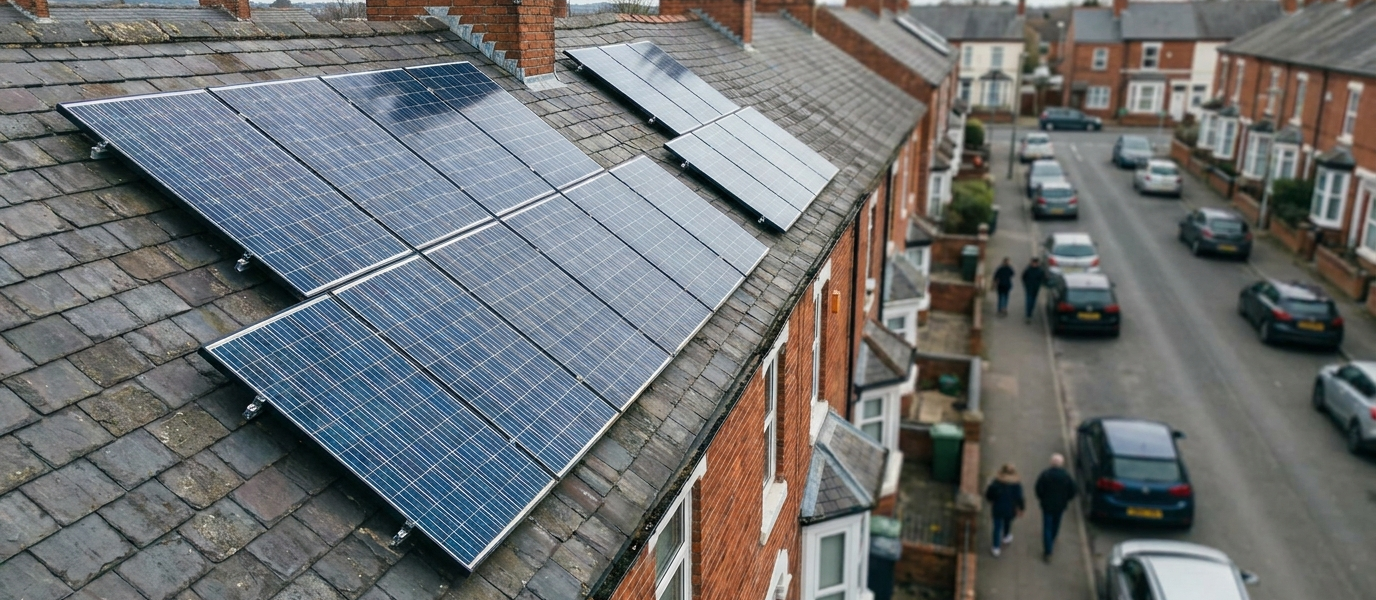
The number of UK households planning to install solar panels has hit 3 million, roughly one in ten homes, according to a survey reported by renewableenergymagazine.com. That is not a fringe trend. It is a mass-market shift that will reshape how Britain generates electricity, and who profits from it.
What it costs a typical 3-bed semi
A standard 4kW solar panel system, enough for a three-bedroom semi-detached house with average consumption, now costs between £5,000 and £8,000 installed, including VAT at 0% under the government’s temporary relief. The Energy Saving Trust estimates that such a system can cut annual electricity bills by £300 to £600, depending on orientation and location. At the midpoint, payback takes about 10 years. Panels typically last 25 years, meaning 15 years of near-free electricity after breakeven.
Who qualifies, and who doesn’t
The catch is that not every roof works. South-facing roofs with a pitch of 30-40 degrees are ideal; east-west arrays lose about 15-20% efficiency. Renters and flats are largely locked out unless landlords invest. And the Smart Export Guarantee (SEG) pays only 4-15p per kWh exported, a fraction of the 24p you save by not importing. Ofgem figures show most households still export at the lower end, making self-consumption the real prize. Battery storage, at £1,500-£3,000 extra, can double self-consumption rates.
EPC impact and house value
Solar panels can lift an Energy Performance Certificate rating by up to 10 points, from a D to a C in many cases. That matters because from 2025, landlords cannot let properties with EPC ratings below C. For homeowners, a higher EPC can add 2-5% to resale value, according to Nationwide research. But only if the system is certified by the Microgeneration Certification Scheme (MCS), without it, the EPC uplift does not apply and SEG payments are unavailable.
Grants and schemes
The Boiler Upgrade Scheme, run by Ofgem, offers £7,500 for heat pumps but nothing for solar alone. However, the Home Upgrade Grant (HUG) in England covers solar-plus-battery for low-income households in off-gas areas. Scotland’s Home Energy Scotland provides interest-free loans up to £5,000 for solar. Northern Ireland has the NI Sustainable Energy Programme. Most schemes require MCS certification and a minimum EPC rating before installation, check eligibility on gov.uk before signing a contract.
What this misses: the grid. National Grid ESO has warned that rapid solar uptake without battery storage could cause voltage spikes on sunny afternoons. The solution, time-of-use tariffs like Octopus Flux, pays higher export rates during peak solar hours but requires a smart meter. Households without smart meters miss out on the best export deals.
Households planning solar should act before April 2027, when the 0% VAT rate on panels is due to revert to 5%. Get at least three quotes from MCS-certified installers, check your roof orientation on Google’s Project Sunroof, and apply for any local grants now. The next five years will see 3 million roofs turn into power stations, yours can be one of them.
Frequently Asked Questions
A standard 4kW system for a three-bed semi typically costs between £5,000 and £8,000 installed, including 0% VAT under the current temporary relief. This can cut annual electricity bills by £300 to £600, with payback around 10 years and panels lasting 25 years.
The Boiler Upgrade Scheme offers £7,500 for heat pumps but not solar alone. The Home Upgrade Grant covers solar-plus-battery for low-income off-gas households in England, while Scotland provides interest-free loans up to £5,000. Most require MCS certification and a minimum EPC rating.
Yes, solar panels can lift an EPC rating by up to 10 points, often from D to C, which is important for landlords from 2025. This can add 2-5% to resale value, but only if the system is MCS-certified.
Yes, through the Smart Export Guarantee (SEG), you get paid 4-15p per kWh exported, but self-consumption saves you 24p per kWh. Time-of-use tariffs like Octopus Flux offer higher export rates during peak solar hours but require a smart meter.
Solar panels currently have 0% VAT under temporary relief, but this is due to revert to 5% in April 2027. Households planning installation should act before this date to benefit from the full saving.




