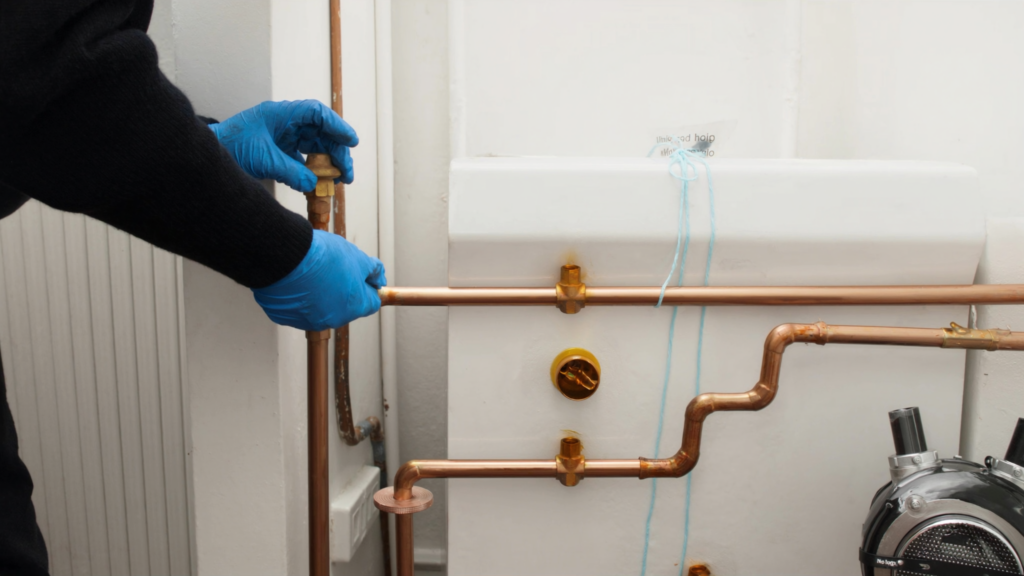
A cold towel rail usually means trapped air or a balancing problem, not a broken boiler
A towel rail that stays cold while the rest of your radiators heat up is a common and fixable issue. It is part of the same central heating circuit and relies on the same flow of hot water from your boiler. If the boiler is working and other radiators are hot, the problem is localised to the rail itself. The most frequent cause is air trapped inside the rail, which physically blocks hot water from circulating. A second possibility is that the system is out of balance, meaning hot water bypasses the towel rail in favour of other radiators. Neither of these problems indicates a boiler fault (Ofgem, 2026; Energy Saving Trust, 2026).
A cold towel rail when the heating is on is most often caused by trapped air or an unbalanced system, not a broken boiler. Bleed the rail first; if no air escapes, balance the system by adjusting lockshield valves. Both fixes are simple and DIY-friendly.
- Bleed the towel rail first using a radiator key or pliers.
- Trapped air blocks hot water circulation; listen for a hiss.
- Hot top and cold bottom indicates a balancing issue.
- Balance the system by adjusting lockshield valves on all radiators.
- A cold towel rail does not mean your boiler is faulty.
- A cold towel rail usually means trapped air or a balancing problem, not a broken boiler
- Bleeding the towel rail is the first fix, but the bleed valve may be hidden
- Balancing the system solves a cold bottom or cold rail when others are hot
- Quick numbers what bleeding and balancing cost versus a plumber call-out
- A cold towel rail can also be a sign of a sludge or blockage problem
- The direct answer to "towel rail cold" is bleed it first, then balance the system
- When to call an MCS-certified installer or Gas Safe engineer for a cold towel rail
- Verifying an installer and what to check before they arrive
Bleeding the towel rail is the first fix, but the bleed valve may be hidden
Bleeding a towel rail is identical to bleeding a standard radiator. Locate the bleed valve, which is a small square or slotted spindle usually at the top or side of the rail. It is often concealed behind a plastic cap that can be pried off with a fingernail or flathead screwdriver. Use a radiator key or a pair of pliers to turn the valve anticlockwise by a quarter-turn. Hold a cloth underneath to catch any water. You should hear a hiss of escaping air. When water begins to trickle out steadily, close the valve again. If no air comes out and the rail remains cold, the problem is not trapped air but a balancing issue (Energy Saving Trust, 2026).
Balancing the system solves a cold bottom or cold rail when others are hot
Balancing your central heating means adjusting the lockshield valves on every radiator so that hot water flows evenly throughout the system. A towel rail that is hot at the top and cold at the bottom is a classic sign of poor balance: water takes the path of least resistance and bypasses the rail. To balance the system, turn off every radiator in the house using the thermostatic radiator valves. Then fully open the valves on the towel rail. Next, turn on each other radiator one at a time, starting with the one furthest from the boiler, and adjust its lockshield valve until the flow is even. This process takes 30–60 minutes and costs nothing (Ofgem, 2026; Energy Saving Trust, 2026).
Quick numbers what bleeding and balancing cost versus a plumber call-out
| Task | Typical cost (2026) | Typical time | When to do it |
|---|---|---|---|
| DIY bleed | £0 | 10 minutes | First step for any cold towel rail |
| DIY balance | £0 | 30–60 minutes | If bleeding fails and rail is hot at top only |
| Plumber call-out | £60–£120 per hour | 1 hour | If DIY fixes do not work or you prefer a professional |
| Professional system flush | £300–£500 | 2–4 hours | If sludge or blockage is suspected |
Costs for plumber call-outs are based on 2026 rates from Checkatrade and Which? (Checkatrade, 2026; Which?, 2026).
A cold towel rail can also be a sign of a sludge or blockage problem
Over time, rust and debris known as sludge can settle in the lowest point of a towel rail, blocking water flow entirely. This is more common in systems older than ten years or those without a magnetic filter. If bleeding and balancing have no effect, a professional system flush may be needed to clear the blockage. A magnetic filter fitted to the boiler return pipe can prevent future sludge buildup (Energy Saving Trust, 2026; Ofgem, 2026).
The direct answer to “towel rail cold” is bleed it first, then balance the system
If your towel rail is cold, start by bleeding it. If that does not work, balance the system. If the rail is cold but the pipe feeding it is hot, the lockshield valve may be closed or the rail is airlocked. If both pipes are cold, the valve at the boiler or the pump may be the issue (Ofgem, 2026; Energy Saving Trust, 2026).
When to call an MCS-certified installer or Gas Safe engineer for a cold towel rail
Most towel rail problems are DIY fixes. However, if the boiler itself is cold or making unusual noises, a professional is needed. For gas boilers, the engineer must be Gas Safe registered, which you can verify on the Gas Safe Register website. For electric towel rails, the installer should be registered with NICEIC or NAPIT for electrical work (Gas Safe Register, 2026; NICEIC, 2026; NAPIT, 2026).
Verifying an installer and what to check before they arrive
Before hiring, check the Gas Safe Register online for gas work, MCS for heat pump or solar thermal installations, and TrustMark for general trades. Ask for a fixed quote before work begins, and confirm whether the cost includes bleeding or balancing. A reputable installer will not charge for a simple bleed visit but may charge a call-out fee (Gas Safe Register, 2026; TrustMark, 2026; MCS, 2026).
Frequently Asked Questions
Trapped air inside the towel rail is the most common cause, blocking hot water flow. If no air comes out when bleeding, the system likely needs balancing so water doesn't bypass the rail. This is not a boiler fault, according to the Energy Saving Trust (2026).
Locate the bleed valve at the top or side of the rail, often behind a plastic cap. Use a radiator key or pliers to turn it anticlockwise a quarter-turn. Hold a cloth underneath; you'll hear a hiss of air. Close the valve when water trickles out steadily. The Energy Saving Trust (2026) recommends this as the first fix.
This is a classic sign of an unbalanced central heating system. Hot water takes the path of least resistance and bypasses the towel rail. Balancing the system by adjusting lockshield valves on all radiators ensures even flow, as advised by the Energy Saving Trust (2026).
Turn off every radiator using thermostatic valves, then fully open the towel rail valves. Turn on each other radiator one by one, adjusting lockshield valves until all heat evenly. This forces hot water through the towel rail. Ofgem (2026) confirms this corrects flow issues without a boiler fix.
No, a cold towel rail while other radiators heat up indicates a localised problem, not a boiler fault. Common causes are trapped air or an unbalanced system, both fixable without professional help. The Energy Saving Trust (2026) states the boiler is usually working fine.
The bleed valve is typically at the top or side of the towel rail, often concealed behind a small plastic cap. Pry the cap off with a fingernail or flathead screwdriver to access the square or slotted spindle. Use a radiator key or pliers to turn it, as per the Energy Saving Trust (2026).