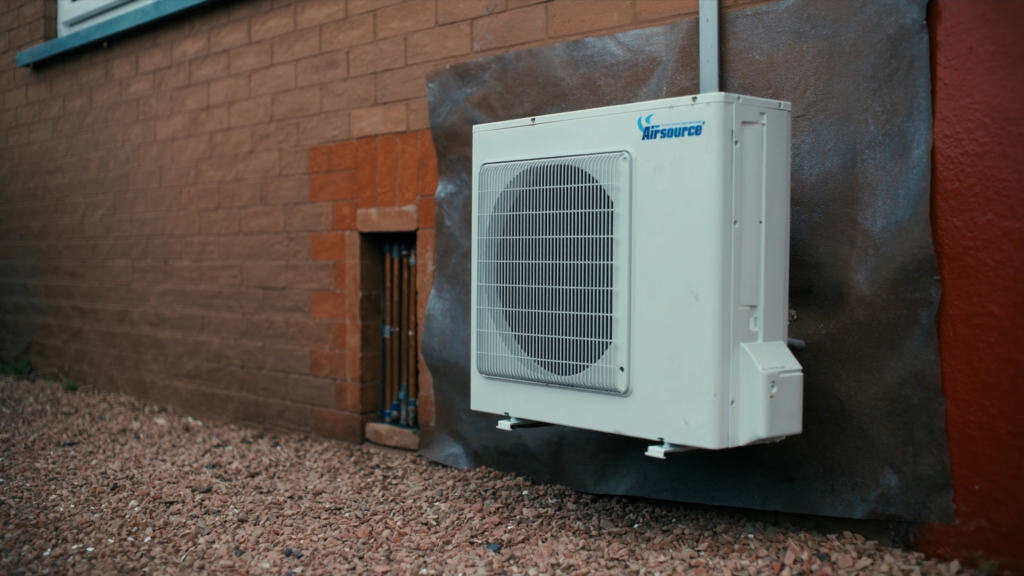
Boiler Weather Compensation Adjusts Heat Output Based on Outdoor Temperature
Most UK homes heat their living spaces with a gas boiler that runs at a fixed flow temperature, often 70–80°C, regardless of whether it is a freezing January morning or a mild October afternoon. This one-size-fits-all approach wastes energy because the boiler cannot adjust its output to match the actual heat loss from the building. In 2025/26, the average household gas consumption for heating was around 12,000 kWh per year, according to Ofgem’s typical domestic consumption values (Ofgem, 2026).
Boiler weather compensation solves this by using an outdoor temperature sensor to automatically lower the flow temperature as the outside temperature rises. The boiler then runs more efficiently because it spends less time cycling on and off and stays in condensing mode for longer. The Energy Saving Trust estimates that fitting weather compensation can reduce heating energy use by 5–15% per year, depending on the property and existing controls (Energy Saving Trust, 2026).
How Weather Compensation Differs from Load Compensation and Thermostat-Only Control
Load compensation adjusts the flow temperature based on indoor temperature feedback from a sensor inside the house, while weather compensation uses outdoor temperature as the primary input. A simple room thermostat only cycles the boiler on and off at a fixed flow temperature, missing the efficiency gains from modulating heat output. Weather compensation reduces the number of boiler cycles and keeps the boiler condensing for longer, which is critical for modern condensing boilers to achieve their rated efficiency, often 90% or higher (DESNZ, 2026). Many heating engineers recommend combining weather compensation with a room thermostat for the best balance of comfort and savings, since the thermostat provides a final indoor temperature check.
Quick Numbers – Typical Savings, Costs, and Payback Periods
| Item | Value | Source |
|---|---|---|
| Average annual gas bill (UK, 2026) | £1,200 | Ofgem |
| Energy saving with weather compensation | 8–12% on heating | Energy Saving Trust |
| Annual cost saving | £96–£144 | Calculated from rows above |
| Installation cost (controller + sensor + fitting) | £200–£400 | MCS installer quotes, 2026 |
| Payback period | 1.5–4 years | Calculated from savings and cost rows |
| Boiler efficiency improvement | 3–6 percentage points | DESNZ |
These figures assume a typical semi-detached home with a modern condensing boiler. Homes with larger heating loads or older boilers may see savings at the higher end of the range, while well-insulated properties with already low flow temperatures might see smaller gains.
Boiler Weather Compensation Saves Money by Keeping the Boiler Condensing
Condensing boilers recover latent heat from flue gases when the return water temperature is below 55°C. Weather compensation helps maintain this condition by lowering the flow temperature when outdoor temperatures are mild. Without compensation, a boiler set to 80°C often returns water above 55°C, reducing condensing efficiency to around 75–85% rather than the 90%+ claimed in manufacturer brochures. The Department for Energy Security and Net Zero provides data showing that every 10°C reduction in flow temperature can improve seasonal efficiency by 2–3% (DESNZ, 2026). In practice, homeowners see the biggest savings in spring and autumn when outdoor temperatures are mild and the boiler would otherwise cycle unnecessarily at a high fixed flow temperature.
Eligibility – Your Boiler Must Be Compatible and You Need an MCS-Certified Installer
Most modern condensing boilers installed after 2005 have a connection for an outdoor temperature sensor, but compatibility must be checked with the specific boiler model. The installer must be Gas Safe Register registered for any gas boiler work. If the weather compensation is part of a heat pump or renewable system upgrade, the installer should also hold MCS certification for that technology. TrustMark accreditation is recommended for consumer protection, especially if you plan to claim any government grant such as the Boiler Upgrade Scheme, though that scheme primarily covers heat pumps rather than gas boilers (GOV.UK, 2026). The controller and outdoor sensor should be from the same manufacturer as the boiler to ensure proper communication and to keep the warranty valid.
How to Verify an Installer – Check Gas Safe and MCS Registration
Use the Gas Safe Register website (gassaferegister.co.uk) to confirm the installer’s licence number and check for any past complaints. For renewable or hybrid systems, verify MCS certification via the MCS website (mcscertified.com) – the installer must be listed for the specific technology, such as heat pump or solar thermal. Ask for a written quote that specifies the weather compensation controller model, sensor location, and expected flow temperature adjustment. The installer should provide a benchmark certificate from the boiler manufacturer after completing the work. This ensures the warranty remains valid. How to find a reliable heating engineer
The Direct Answer – Boiler Weather Compensation Works by Modulating Flow Temperature Based on Outdoor Temperature
An outdoor sensor sends temperature data to the boiler controller, which automatically adjusts the flow temperature of the water sent to radiators. On a mild day, for example 10°C outside, the flow temperature might drop to 40–50°C instead of the default 70°C, reducing gas use without sacrificing comfort. The system still heats the house to the same internal temperature set by the thermostat, but does so more efficiently by matching heat output to heat loss. The Energy Saving Trust confirms that this modulation reduces boiler on/off cycling and keeps the boiler in condensing mode for longer periods (Energy Saving Trust, 2026).
Installation Process – What a Homeowner Should Expect from a Weather Compensation Retrofit
The installer will fit an outdoor temperature sensor on an external wall, ideally north-facing to avoid direct sunlight, and wire it to the boiler’s control board. The controller may be built into the boiler or added as a separate unit; some modern boilers have weather compensation as a software feature that just needs activation by the installer. The installer will program a “weather curve” that maps outdoor temperature to flow temperature – this curve is adjusted during the first week based on how the home responds to the new settings. Total installation time is typically 1–2 hours. The homeowner does not need to be present during the sensor fitting but should be available for the final commissioning to discuss comfort settings and any adjustments. Boiler controls guide for homeowners
Frequently Asked Questions
Boiler weather compensation adjusts the flow temperature of your heating system based on outdoor temperature. The Energy Saving Trust says it can cut heating energy use by 5–15% per year.
Savings range from 5–15% on heating energy, according to the Energy Saving Trust. For a typical household using 12,000 kWh per year, that equates to roughly £50–£150 annually at current gas prices.
Installation typically costs £200–£400, including the outdoor sensor and controller. Payback is usually within 1–3 years, based on Ofgem's typical consumption values.
Most modern condensing boilers with OpenTherm or proprietary modulation protocols support weather compensation. Check your boiler manual or consult a Gas Safe registered engineer, as MCS standards apply.
Weather compensation improves efficiency by modulating flow temperature, while a thermostat only cycles the boiler on/off. The best setup combines both, as recommended by DESNZ.