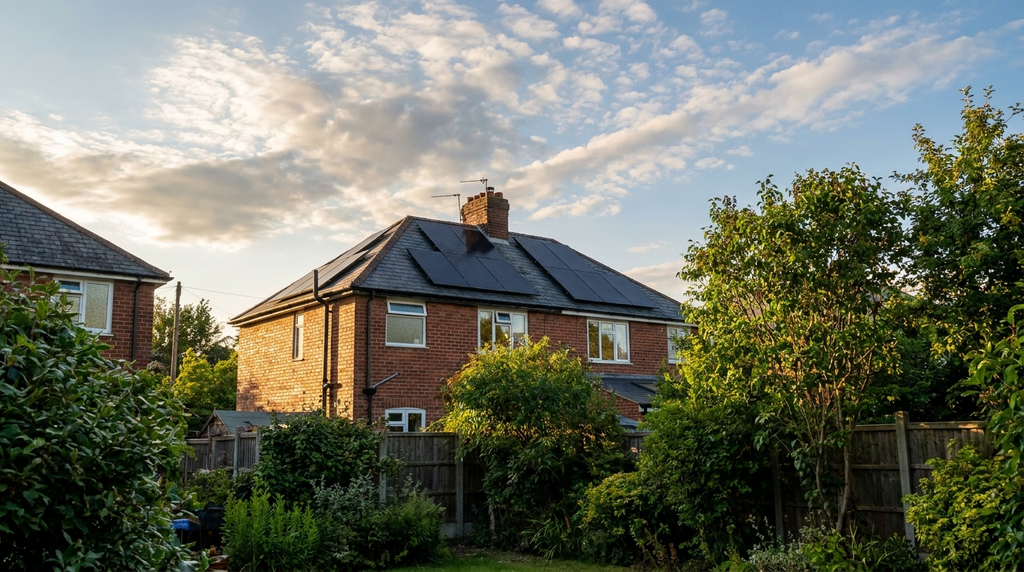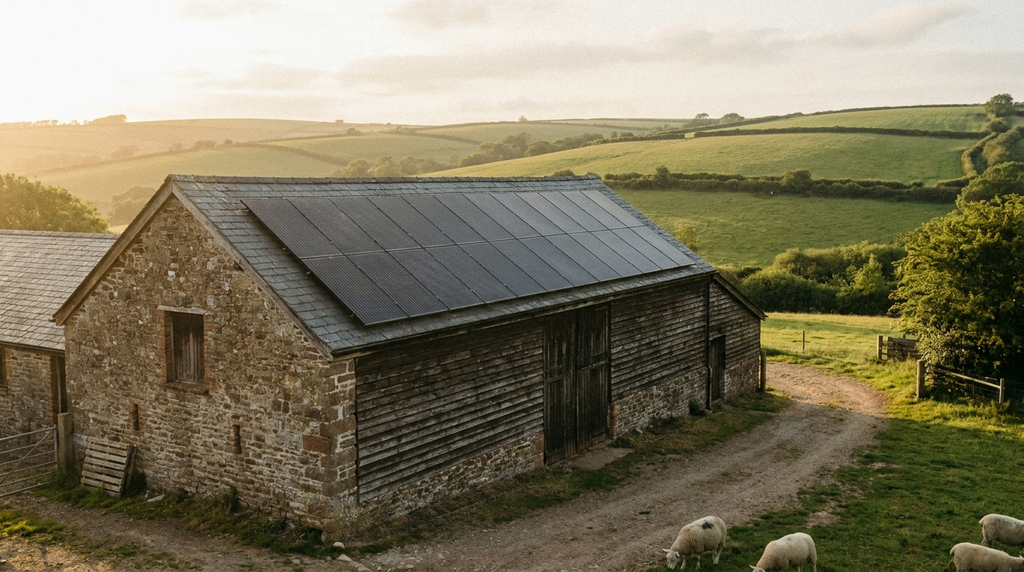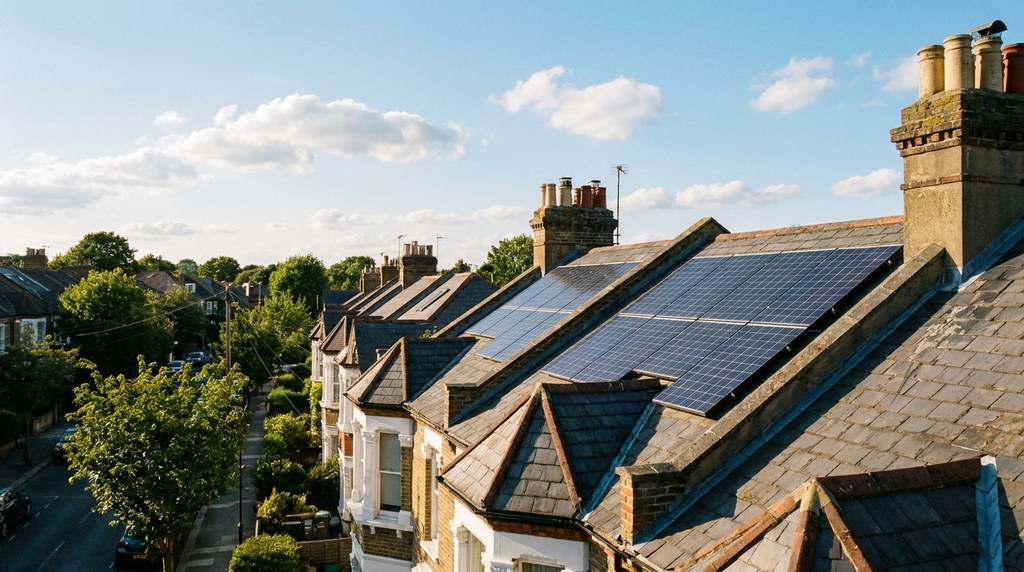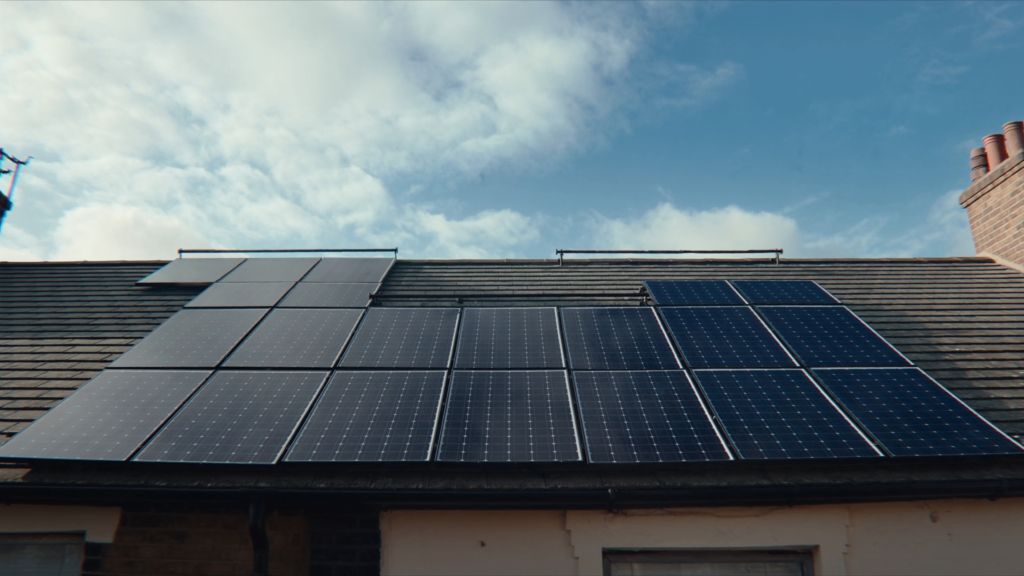
Yes, most UK homeowners can install solar panels on their house, with around 95% of properties deemed suitable according to the Energy Saving Trust (Energy Saving Trust, 2026). The key requirements are a south-facing roof with minimal shading and enough structural strength to support the panels. If you own your home, planning permission is rarely needed unless the property is listed or in a conservation area.
Your roof orientation, pitch, and available space are the main deciding factors. A south-facing roof at a 30-40 degree angle is optimal, but east or west-facing roofs still work, you will generate around 15-20% less electricity. Shading from trees, chimneys, or nearby buildings reduces output, though micro-inverters or optimisers can mitigate this. Rented properties generally require landlord permission, which is rarely given unless the tenant pays for installation.
Roof condition and structural capacity
Your roof must be in good condition with at least 15-20 years of life left, as panels typically last 25 years. A structural survey is recommended, Energy Saving Trust notes that most roofs built after 2000 can support the extra weight of panels, but older roofs may need reinforcement (Energy Saving Trust, 2026). If your roof needs replacing, consider doing both at once to save on scaffolding costs. The Microgeneration Certification Scheme (MCS) requires installers to check roof integrity before fitting (MCS, 2026).
Permitted development rights and exceptions
In England, solar panels are classed as permitted development under the Town and Country Planning Act, so you do not need planning permission if panels do not protrude more than 200mm from the roof surface (GOV.UK, 2026). Exceptions include listed buildings, homes in conservation areas, and World Heritage Sites, here, you must apply for planning permission. For flats or maisonettes, the same rules apply but you need landlord or freeholder consent. Scotland and Wales have slightly different rules; check local council guidance.
Grid connection and export payments
You can connect your solar panels to the National Grid under the Smart Export Guarantee (SEG), which obligates licensed suppliers to pay you for excess electricity exported (Ofgem, 2026). Typical SEG rates range from 4p to 15p per kWh, depending on your supplier. You do not need battery storage to export, any surplus power is automatically sent to the grid. However, you must use an MCS-certified installer to qualify for SEG payments. A typical 3.5kWp system can earn around £100-£200 annually from exports.
A worked example
A typical 1930s semi-detached house in Manchester with a south-facing roof can install a 4 kW solar panel system for roughly £6,500 after the 0% VAT reduction (in place until March 2027). This system generates around 3,400 kWh per year, saving approximately £540 annually on electricity bills based on current Ofgem price cap rates. With the Smart Export Guarantee paying about £120 per year for excess power exported to the grid, total yearly savings reach £660. The upfront cost is recouped in under 10 years, and over the system’s 25-year lifespan, total savings exceed £16,500. For households on certain benefits, ECO4 scheme funding may reduce the installation cost further. The Energy Saving Trust provides a free online tool to estimate your property’s specific generation potential.
| Item | Figure |
|---|---|
| Upfront cost after grants | £6,500 |
| Yearly savings | £660 |
| Payback period | 10 years |
| 25-year lifetime savings | £16,500 |
What homeowners often get wrong
The most common mistake is assuming solar panels need direct sunlight all day to be worthwhile. Here are the top misunderstandings homeowners have about solar panel suitability.
- Believing north-facing roofs are useless A north-facing roof generates about 50% less electricity than a south-facing one, but it still produces roughly 1,700 kWh per year for a 4 kW system, enough to save £300 annually on bills. Many homeowners miss out on these savings by dismissing a north-facing roof entirely.
- Thinking panels are too heavy for older roofs A typical solar panel weighs 18-22 kg each, and a full system adds about 150-200 kg total, similar to a single heavy person standing on the roof. The Energy Saving Trust confirms most roofs built after 2000 can handle this weight, but a structural survey costing £300-£500 prevents costly mistakes like voided warranties.
- Assuming planning permission is always needed Solar panels are considered permitted development for most homes in England and Wales, meaning no application is required. However, for a listed building or conservation area, failing to check can lead to enforcement action and removal costs of £2,000 or more, always verify with your local council first.
Quick reference
- Roughly 95% of UK homes are suitable for solar panels according to the Energy Saving Trust.
- A south-facing roof at a 30-40 degree pitch generates the most electricity, but east or west-facing roofs still produce 80-85% of that output.
- You qualify for 0% VAT on solar panel installations until March 2027, saving you £300 on a typical £6,000 system.
- Most solar panel systems pay for themselves within 8-12 years and last 25-30 years with minimal maintenance.
- Rented properties require landlord permission, tenants who install panels without consent risk removal costs and legal disputes.
Frequently Asked Questions
No, not usually. Permitted development rights apply in England unless your home is listed or in a conservation area. Check with your local council if unsure.
Yes, but you will generate 15-20% less electricity than a south-facing roof. East or west-facing roofs also work well.
Most roofs built after 2000 can support the extra weight, but a structural survey is recommended. Older roofs may need reinforcement (Energy Saving Trust, 2026).
Yes, but you need landlord permission. Landlords rarely agree unless the tenant pays for installation.