Why Rotherham Homeowners Are Looking at Double Glazing Right Now
There’s a quiet revolution happening across Rotherham’s housing estates, and it’s not hard to spot once you know what to look for. Drive through Kimberworth, Maltby, or the streets around Wickersley and you’ll notice scaffolding up on terraced rows, installers’ vans parked outside semis, new frames gleaming against the South Yorkshire sky. Double glazing upgrades are absolutely surging here right now, and there are some very specific reasons why.
Rotherham sits on average EPC Band D across its housing stock, which tells its own story. The town grew rapidly during the industrial era, producing streets and streets of brick terraces and inter-war semis that were built for practicality rather than energy efficiency. Single-glazed sash windows, steel-framed originals, and degraded sealed units from 1980s and 90s retrofits are all common across the borough. These homes are haemorrhaging heat, and with gas usage running at around 12,000 kWh per year, Rotherham households are right at the national average, meaning the savings potential from a proper upgrade is very real.
There’s also the noise factor. Rotherham’s town centre fringe, think Masbrough, Eastwood, and the roads feeding off the A630, carries significant traffic, and residents there are increasingly choosing acoustic-rated double glazing as much for the peace and quiet as for the warmth. It’s one of those upgrades that pays dividends the moment the installer packs up and leaves.
What Double Glazing Actually Involves for a Typical Rotherham Home
Most Rotherham homes fall into two broad categories, Victorian and Edwardian terraces built between roughly 1880 and 1914, concentrated in areas like Masbrough, Parkgate, and parts of Rawmarsh, and the interwar and postwar semis that spread across estates in Thurcroft, Brinsworth, Maltby, and Wickersley. Both present their own challenges for double glazing.
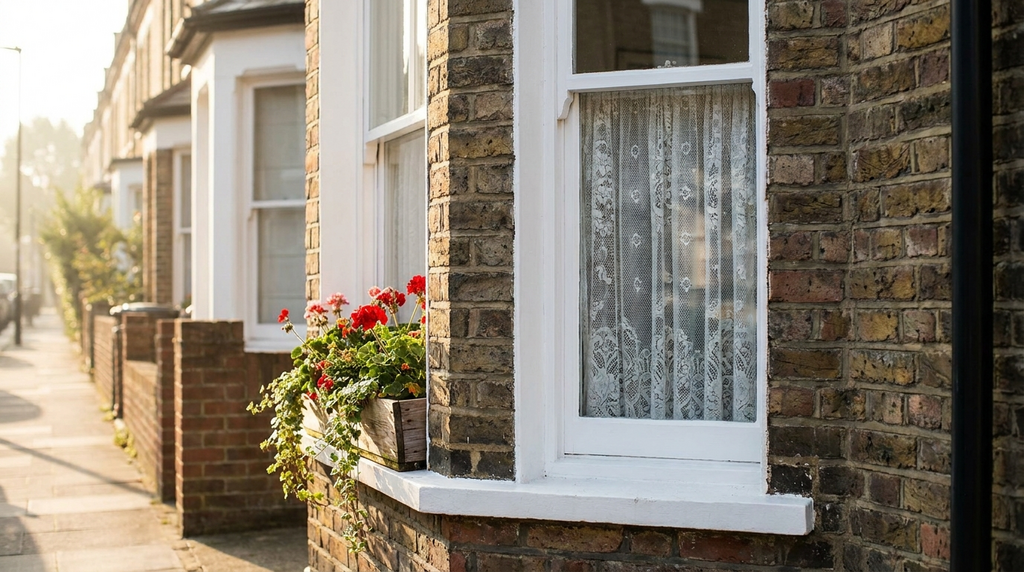
In the older terraced properties, you’re typically dealing with bay windows, sash configurations, or original timber frames. The key issue here is whether to retain the timber frame and fit slim-profile double glazing within it (a technique often required in conservation-adjacent streets), or to remove the frame entirely and go for a full uPVC replacement. Slim double glazing units (around 12mm total thickness) can be retro-fitted into original timber, but they won’t perform as well thermally as a full-cavity unit in a modern frame.
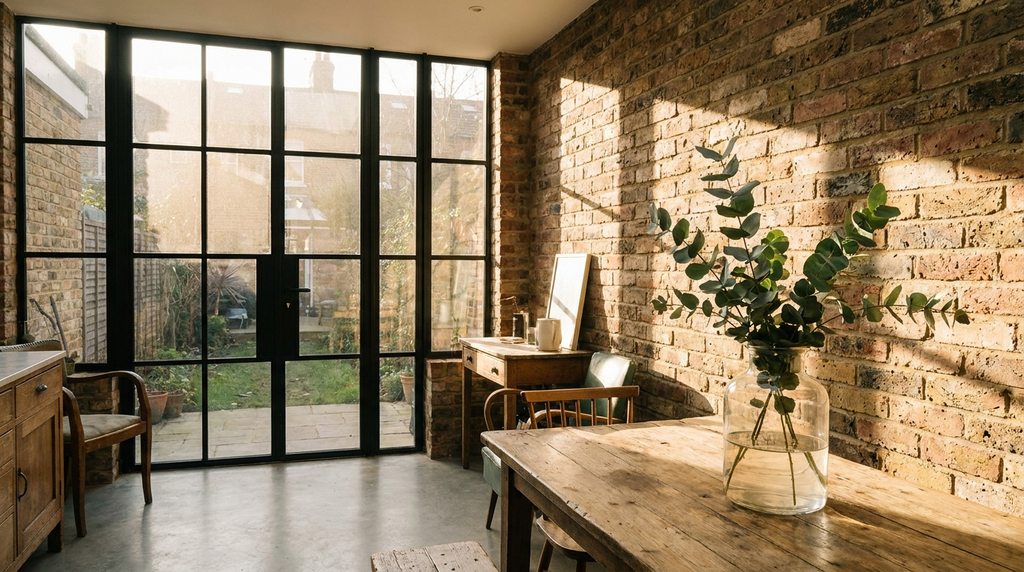
For the interwar semis, particularly the 1930s brick-built homes so common in places like Moorgate and East Herringthorpe, you’re usually looking at replacing original steel Crittall-style frames, or upgrading ageing uPVC that was first fitted in the late 1980s and is now well past its sealing life. The good news is that these properties tend to have standardish window openings, which makes the job more straightforward and slightly cheaper than the bespoke work needed on Victorian bays.
- Victorian terraces, Often require custom sizing, potential structural consideration around bay supports, and careful frame matching for kerb appeal
- Interwar semis, More standardised openings, but watch for original steel frames that need specialist removal
- Postwar council-built properties, Often have non-standard sizing; check whether your tenure (if leasehold or part of a managed estate) requires landlord or freeholder approval
- Modern estates (post-1990s), Typically already have double glazing; these homes are more likely looking at upgrades to triple glazing or replacement of failed sealed units
Access can be a surprisingly big factor across Rotherham. Many of the terraced streets in the older parts of town have limited frontage and no off-road parking for installer vans. If scaffolding is needed for upper-floor windows, which it sometimes is on taller Victorian properties, there can be a logistics challenge, and this gets factored into your quote.
How Much Double Glazing Costs in Rotherham and the Yorkshire and the Humber Area in 2026
Let’s talk real numbers. Labour costs in Rotherham are moderately priced by national standards, you’re not paying Sheffield city-centre premiums, but you’re also not in a rural area where installers travel hours between jobs. The concentration of installers covering Rotherham, Mexborough, Barnsley, Sheffield, and Doncaster within a roughly 18-kilometre radius creates healthy competition, which generally keeps prices reasonable.
| Property Type | Window Count | Standard uPVC (Low-E) | Flush Sash uPVC | Aluminium Frame | Triple Glazing Upgrade |
|---|---|---|---|---|---|
| 2-bed mid-terrace | 5–7 windows | £2,800–£4,200 | £3,800–£5,400 | £4,500–£6,500 | Add £600–£900 |
| 3-bed semi-detached | 8–10 windows | £4,200–£6,000 | £5,500–£7,500 | £6,500–£9,200 | Add £900–£1,400 |
| 3-bed end-of-terrace | 9–12 windows | £4,800–£6,800 | £6,000–£8,200 | £7,200–£10,000 | Add £1,000–£1,600 |
| 4-bed detached | 12–16 windows | £6,500–£9,500 | £8,500–£12,000 | £10,500–£15,000 | Add £1,400–£2,200 |
These figures include supply, installation, and disposal of old frames. They assume standard ground-floor access; if scaffolding is needed for upper floors on a taller Victorian terrace, budget an additional £300–£600 depending on the scaffold hire duration.
Compared to the Yorkshire and the Humber regional average, Rotherham sits roughly 5–8% below Sheffield city prices and broadly in line with Barnsley and Doncaster. Mexborough installers, being very close by, often quote identically for Rotherham jobs. You’re unlikely to be overcharged here, but equally, extremely low quotes (anything more than 25% below these ranges) should prompt questions about unit quality and warranty terms.
How Rotherham’s Weather and Location Affect Your Double Glazing Choices
Rotherham sits in the Don Valley, and that geography matters more than most people realise for window performance. The valley creates a channelling effect for wind, particularly when southwesterly weather systems roll in from the Pennines. Streets running north-south through Rotherham, especially in areas like Herringthorpe and along the A631, can experience noticeably gustier conditions than the town-centre streets running east-west.
Annual rainfall sits in the 700–1,000mm range, which is moderate by UK standards. You’re not dealing with the relentless battering that coastal Yorkshire towns face, but you do get sustained periods of wet weather through autumn and winter. This makes quality weather sealing on your frames critically important, a poorly fitted or cheap frame will start to weep and show condensation between the panes within a few years.
Rotherham gets around 1,000–1,200 sunshine hours annually, which is typical for inland South Yorkshire. It is not Devon, but it still gets enough sun for solar gain to matter. South and southwest facing rooms, often the living rooms and kitchen extensions on Rotherham’s typical semi-detached layout, can benefit from glass with a slightly higher solar gain coefficient (g-value) to capture free warmth on bright winter days. Ask your installer specifically about g-value options rather than just U-value.
The heating degree day count for the Rotherham area (roughly 1,500–1,800 annually) puts it firmly in the “moderate winter” category. You don’t need the ultra-high-specification triple glazing that someone in the Scottish Highlands requires, but you do benefit meaningfully from quality double glazing over single-glazed or degraded sealed units. The sweet spot here is good-quality double glazing with a centre-pane U-value of 1.0 W/m²K or better, rather than the legal minimum 1.6 W/m²K.
The Products and Options That Work Best Here
Based on Rotherham’s housing stock, climate, and the typical property layouts you’ll encounter across the borough, here are the recommendations that genuinely make sense, not a generic list, but what an experienced installer familiar with this area would actually suggest.
For Victorian and Edwardian Terraces
A flush-sash uPVC window is the smart choice for most of Rotherham’s pre-1914 terraces. These sit flush within the frame (unlike the standard butt-jointed uPVC) and visually much closer to the timber originals. Paired with a 4-16-4 argon-filled unit and a warm-edge spacer bar, you’ll hit a centre-pane U-value around 1.1 W/m²K, significantly better than the minimum standard, and respectful of the streetscape.
For Interwar and Postwar Semis
Standard chamfered or sculptured uPVC in a white or light grey finish works well here and represents excellent value for money. Specify a 28mm sealed unit (rather than the thinner 24mm that some budget installers offer) with argon fill and a Low-E coating. This gives you a centre-pane U-value of around 1.0–1.2 W/m²K and noticeably reduces cold radiation from the window surface on winter evenings.
For Homes Facing Busy Roads
If you’re on the A630, the A631, or any of the busier roads feeding Rotherham town centre, seriously consider acoustic laminated glass in your specification. A 6.4mm laminated inner pane paired with a standard outer pane dramatically reduces traffic noise without compromising thermal performance. It adds roughly £80–£120 per window but delivers an immediate, noticeable quality-of-life improvement.
- Minimum to specify, 28mm double-glazed unit, argon fill, Low-E coating, warm-edge spacer, centre-pane U-value 1.2 W/m²K or better
- Better specification, As above but with 1.0 W/m²K centre-pane U-value; worth the modest extra cost on principal rooms
- Triple glazing, Worth considering for north-facing bedrooms and any room currently suffering severe cold; marginal gain elsewhere but not wasteful in Rotherham’s climate
- Frame colours, Anthracite grey (RAL 7016) is enormously popular across South Yorkshire right now and suits both Victorian brick and 1930s semi styles; carries a 5–10% price premium over white
How to Find a Trustworthy Double Glazing Installer Near Rotherham
Rotherham and its surrounding cluster of towns, Sheffield, Barnsley, Doncaster, and Mexborough, are well served by double glazing installers. Many companies based in Sheffield’s industrial estates cover all of South Yorkshire as a standard area, meaning you have genuine choice and shouldn’t feel pressured into going with the first firm that knocks on your door (and some will).
The key certification to look for is FENSA registration. In England, any installer replacing windows in an existing home is legally required to self-certify the work against Building Regulations, and FENSA is the main competent person scheme for this. A FENSA-registered installer issues you a certificate after completion, which you absolutely need when you come to sell your home. Without it, you’ll need to obtain a Local Authority Building Control certificate retrospectively, which costs money and causes delays.
TrustMark registration is a secondary but valuable indicator of quality, as it involves vetting, insurance checks, and customer satisfaction monitoring. For larger jobs, also check that the company carries adequate public liability insurance (minimum £2 million) and offers a backed guarantee, not just a company guarantee, but one underwritten by an insurance scheme that survives if the company folds.
Practical questions to ask any installer quoting for your Rotherham home:
- Are you FENSA registered, and will you provide the certificate on completion?
- Is your guarantee insurance-backed, and with which provider?
- What centre-pane U-value will the units you’re quoting achieve?
- Are the sealed units manufactured in the UK or imported, and what’s the lead time?
- Do you have experience working on Victorian bay windows and original timber frame removal?
- What’s your process if a sealed unit fails within the warranty period?
Red flags include high-pressure same-day discounts, prices contingent on signing before the installer leaves, and any quote that doesn’t specify the U-value of the units being installed. Lead times across Yorkshire and the Humber currently run at around 4–8 weeks for standard orders, and anything dramatically shorter might indicate the company is using stock units rather than custom-manufactured frames to fit your openings.
Grants and Funding That Could Reduce Your Costs in 2026
This is where it gets genuinely exciting for some Rotherham households, because there is real money available, though you need to know where to look and whether you qualify.
ECO4 (Energy Company Obligation 4) remains the most significant route to funded double glazing for lower-income households. Under ECO4, if you’re on qualifying benefits (including Universal Credit, Pension Credit, Child Tax Credit, or Working Tax Credit) and your home is currently EPC rated Band D or below, you may be eligible for fully-funded or heavily subsidised window upgrades. Rotherham’s concentration of older Band D housing and mixed-income communities means a meaningful proportion of residents qualify. Rotherham Metropolitan Borough Council can be a route into the scheme, check their current Home Energy Improvement pages for active referral pathways.
The Great British Insulation Scheme closed on 31 March 2026. It funded insulation measures only and never covered windows or glazing. However, as part of a whole-house package, windows can sometimes be included. The Great British Insulation Scheme closed on 31 March 2026. It funded insulation measures only and never covered windows or glazing.
Rotherham Metropolitan Borough Council periodically runs its own area-based improvement schemes targeting specific wards or housing types. These have historically focused on the older terraced housing in wards like Boston Castle, Rotherham East, and Rawmarsh. Contact the council’s housing improvement team directly, schemes open and close, and the most current information won’t always be prominently advertised.
For households not on benefits, the honest answer is that direct grant funding for double glazing is limited in 2026.Glazing is standard-rated for VAT at 20%. The zero rate for energy-saving materials covers insulation, heat pumps and solar panels; HMRC names secondary and double glazing as excluded (VAT Notice 708/6).