Why Norfolk Is a Fascinating Place to Think About Eco Homes
Norfolk is one of those counties that quietly does things its own way. Stretching from the windswept beaches of Cromer and Hunstanton right down to the Breckland forests around Thetford, it covers an enormous variety of landscapes, and an equally varied range of homes. Big skies, flat terrain, cold easterly winds off the North Sea, and some of the best sunshine hours in England all combine to create a very particular set of conditions for eco home improvements.
What makes Norfolk genuinely different from neighbouring counties is the mix of challenges and opportunities. A significant chunk of the population lives off the main gas grid, particularly in rural areas between market towns like Dereham, Wymondham, and Wells-next-the-Sea. That means oil boilers and electric storage heaters are common, and energy bills here can be noticeably higher than the national average before any improvements are made.
At the same time, Norfolk is brilliant territory for solar panels and heat pumps. The flat topography suits ground source heat pump installations beautifully. The dry climate and lower-than-average rainfall mean external wall insulation goes on well and lasts well. And the sunshine hours, higher than much of England, mean solar PV genuinely earns its keep here in a way it simply doesn’t in parts of the north and west.
If you’re a Norfolk homeowner thinking about making your home warmer, cheaper to run, and more environmentally friendly, you’re starting from a pretty good position. The county has real momentum around sustainability, and there’s a growing network of local installers, council schemes, and national grants to help you get there.
What the Average EPC Band D Means for Norfolk Homes
Norfolk’s average EPC rating sits at Band D, right at the national average, but that headline figure hides a lot of variation across the county. Band D means a home is scoring somewhere between 55 and 68 on the energy efficiency scale. It’s not terrible, but most homes need to be far more efficient to be genuinely warm and affordable to heat.
In practical terms, a Band D home in Norfolk with average gas usage of 12,100 kWh per year is spending roughly £1,300 to £1,500 per year on gas alone, plus around £700 to £900 on electricity based on average usage of 3,220 kWh per year. That’s total energy bills in the region of £2,000 to £2,400 annually for a typical property.
Homes in older parts of Norwich city centre, the historic fishing villages along the coast, and estate villages throughout the Broads and north Norfolk tend to be the least efficient. Many were built before cavity walls were standard, use single or thin double glazing, and have minimal or no loft insulation.
Newer developments on the edges of King’s Lynn, Thetford, and Norwich tend to perform better, often Band C or above. But even these homes benefit from solar panels and smart energy management, particularly given Norfolk’s strong solar potential.
The really eye-catching gap is between off-gas homes in rural Norfolk and their grid-connected counterparts. An older farmhouse or rural cottage near Dereham or Downham Market running on oil heating can easily face annual bills of £3,000 to £4,000 or more. Replacing that oil boiler with an air source heat pump and adding insulation can transform the economics completely.
The Full Range of Eco Home Services Available Across Norfolk
If you’re in a Victorian terrace in Norwich, a 1960s semi in Great Yarmouth, or a detached farmhouse near Wells-next-the-Sea, there’s a full menu of eco home improvements available across the county. Here’s a practical overview of what’s on offer.
Solar Panels
Norfolk is genuinely one of the better counties in England for solar, with sunshine hours regularly outpacing much of the country. A typical 4kWp system costs around £6,000 to £8,000 installed and can generate roughly 3,400 to 3,800 kWh per year, enough to cover most of an average home’s electricity needs. Battery storage, typically adding £3,000 to £5,000, lets you use more of what you generate rather than exporting it to the grid.
Air Source Heat Pumps
These are increasingly popular across Norfolk, especially in off-gas areas. A well-insulated home can be heated for significantly less than with oil or electric storage heaters. Installed costs typically run from £8,000 to £14,000 before the Boiler Upgrade Scheme grant (more on that below), which can knock £7,500 off the price.
Ground Source Heat Pumps
Norfolk’s flat terrain and large rural plot sizes make it genuinely well-suited to ground source systems, which are more efficient than air source but require space to lay ground loops. Costs range from £15,000 to £25,000, but running costs are lower and the BUS grant applies here too.
Loft and Cavity Wall Insulation
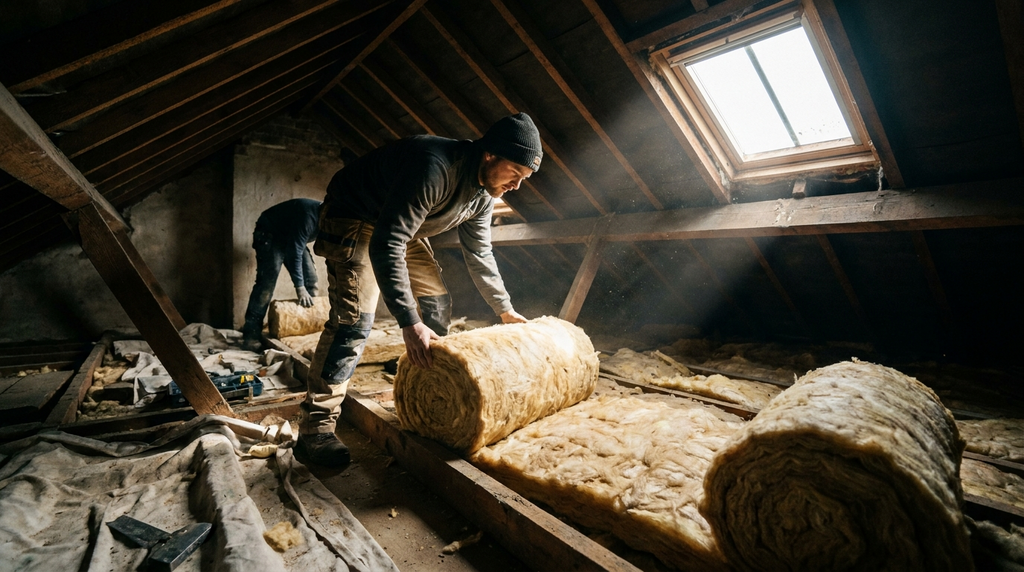
Often the quickest win for a Band D home. Loft insulation costs as little as £300 to £600 for a standard semi and can save £200 to £300 per year. Cavity wall insulation typically costs £500 to £1,200 and saves a similar amount. Many Norfolk homes qualify for free or heavily subsidised insulation through ECO4.
Solid Wall Insulation
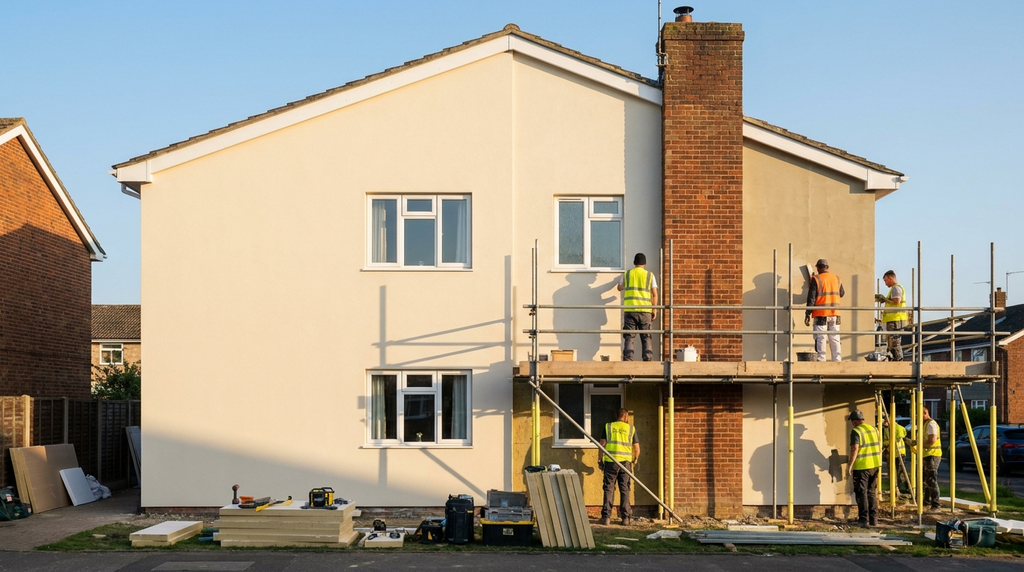
For older homes without cavity walls, common in Norwich’s inner suburbs and the older parts of coastal towns, external or internal wall insulation is the answer. External wall insulation costs £8,000 to £20,000 for a typical semi, but the savings (up to £500 to £700 per year) and comfort improvements are significant.
Double and Triple Glazing
Replacing single-glazed windows with A-rated double glazing costs around £4,000 to £8,000 for a typical house and reduces heat loss noticeably, as well as cutting draughts and noise. Triple glazing adds around 20% to the cost but performs better in cold easterly winds.
Smart Heating Controls and Heat Interface Units
Often overlooked but surprisingly cost-effective. A smart thermostat and room controls can save £100 to £200 per year for a few hundred pounds outlay.
Typical Costs and Savings Across Different Norfolk Property Types
| Improvement | Semi-Detached | Terraced | Detached | Typical Annual Saving | Approximate Payback |
|---|---|---|---|---|---|
| Loft Insulation | £400 to £600 | £300 to £500 | £500 to £800 | £200 to £300 | 2 to 3 years |
| Cavity Wall Insulation | £700 to £1,000 | £500 to £800 | £900 to £1,400 | £200 to £350 | 3 to 4 years |
| External Wall Insulation | £10,000 to £14,000 | £8,000 to £12,000 | £14,000 to £20,000 | £400 to £700 | 18 to 28 years |
| Solar Panels (4kWp) | £6,500 to £8,000 | £6,000 to £7,500 | £7,000 to £9,000 | £500 to £750 | 9 to 14 years |
| Air Source Heat Pump | £10,000 to £13,000 | £9,000 to £12,000 | £12,000 to £15,000 | £400 to £900 | 10 to 18 years |
| Double Glazing | £4,500 to £6,500 | £3,500 to £5,500 | £6,000 to £9,000 | £150 to £250 | 20 to 30 years |
| Battery Storage | £3,500 to £5,000 | £3,000 to £4,500 | £4,000 to £5,500 | £200 to £400 | 10 to 18 years |
All costs are installed prices including VAT. Savings are estimates based on typical Norfolk energy usage and 2026 energy tariffs. Your actual figures will vary depending on your home’s current condition, your energy tariff, and how you use the improvements.
Grants and Funding Available to Norfolk Homeowners in 2026
This is where it genuinely gets exciting, because there’s more funding available than most people realise, and Norfolk homeowners are well-placed to access it.
The Boiler Upgrade Scheme
The Boiler Upgrade Scheme (BUS) offers £7,500 towards an air source heat pump and £7,500 towards a ground source heat pump. It’s available to homeowners across Norfolk, including rural off-gas properties, and applies regardless of income. Your installer claims it on your behalf, you just pay the reduced price. Given how many Norfolk homes run on oil, this is one of the most valuable grants in the county.
ECO4, The Energy Company Obligation
ECO4 is the big one for lower-income households. If you receive qualifying benefits, including Universal Credit, Pension Credit, or certain tax credits, you may be entitled to free insulation, glazing upgrades, or even a free heat pump. Properties need to be at EPC Band D or below to qualify, which covers the majority of Norfolk’s housing stock. Your energy supplier administers this, but local councils can refer you too.
The Great British Insulation Scheme
The Great British Insulation Scheme closed on 31 March 2026. It funded insulation measures only and never covered windows or glazing. It covers homes in Council Tax Band A to D (or A to E in Scotland) regardless of benefit status, targeting the least efficient homes. For many Norfolk families in older semis and terraces, this means significantly subsidised loft and cavity wall insulation even if your income is comfortable.
Norfolk County Council and District Council Programmes
Norfolk County Council has been active in supporting the county’s transition to cleaner energy, working alongside the seven district councils, Breckland, Broadland, Great Yarmouth Borough Council, King’s Lynn and West Norfolk Borough Council, North Norfolk District Council, Norwich City Council, and South Norfolk. Keep an eye on the council websites for the Warm Homes Fund allocations and any area-based retrofit schemes targeting specific towns or parishes.
Norwich City Council in particular has run targeted energy efficiency programmes for its housing stock and private rental sector. The Great British Insulation Scheme closed on 31 March 2026. It funded insulation measures only and never covered windows or glazing.
Warm Homes Plan Funding
The national Warm Homes Plan continues to channel funding into low-income and off-gas households. Norfolk, with its significant rural off-gas population, is a priority area. Check with your local council or an MCS-certified installer to find out what’s currently open for applications in your postcode.
Planning Permission and Local Authority Considerations Across Norfolk
Most everyday eco home improvements fall under Permitted Development in Norfolk, which means you can go ahead without a planning application. But there are important exceptions, and it’s always worth checking before you commit.
Solar Panels
Solar panels on a standard house roof are usually Permitted Development as long as panels don’t protrude more than 200mm and don’t face a highway on a principal elevation. If your home is a listed building, and Norfolk has thousands of listed properties, particularly in the Broads, along the coast, and in historic market towns, you’ll need Listed Building Consent before installing anything on the exterior.
Conservation Areas
Norfolk has a large number of conservation areas, covering everything from the historic core of Norwich to the flint-built villages of north Norfolk. In a conservation area, solar panels on a roof slope visible from the street may require planning permission. External wall insulation that changes the external appearance of a property will almost certainly need consent. Check with your relevant district council before proceeding.
Norfolk Broads
Homes within the Norfolk Broads National Park (administered by the Broads Authority rather than a district council) may face additional restrictions, particularly around external alterations. If your home is in or near the Broads, it’s worth contacting the Broads Authority directly before starting any external work.
Which Council Handles Your Application
Planning applications in Norfolk are handled at district or borough level. The relevant authorities are Breckland District Council, Broadland District Council, Great Yarmouth Borough Council, King’s Lynn and West Norfolk Borough Council, North Norfolk District Council, Norwich City Council, and South Norfolk District Council. For properties within the Broads, the Broads Authority takes the lead on planning.
A practical tip, most MCS-certified installers working in Norfolk are familiar with local planning requirements and can advise you as part of the quote process. Always ask upfront whether your specific property will need any consents.
How Norfolk’s Climate and Geography Shape Your Best Eco Choices
Geography matters more than people think for choosing the right eco improvements. Norfolk’s particular combination of climate, landscape, and housing history creates a genuinely distinct set of priorities.
Make the Most of Norfolk’s Solar Advantage
Norfolk sits in one of the sunnier parts of England, with 1,000 to 1,200 sunshine hours per year, outperforming much of the Midlands and North. Solar PV is one of the highest-return investments you can make here. South-facing roofs with minimal shading will generate the most, but east-west split systems are increasingly popular and still perform well across the county.
Cold Easterly Winds Make Draught-Proofing Essential
The easterly winds that blow off the North Sea in winter are one of Norfolk’s most characterful features, and one of its biggest sources of heat loss. Older homes throughout the county, particularly those with timber frames, single-glazed windows, or suspended timber floors, can lose enormous amounts of heat through draugh