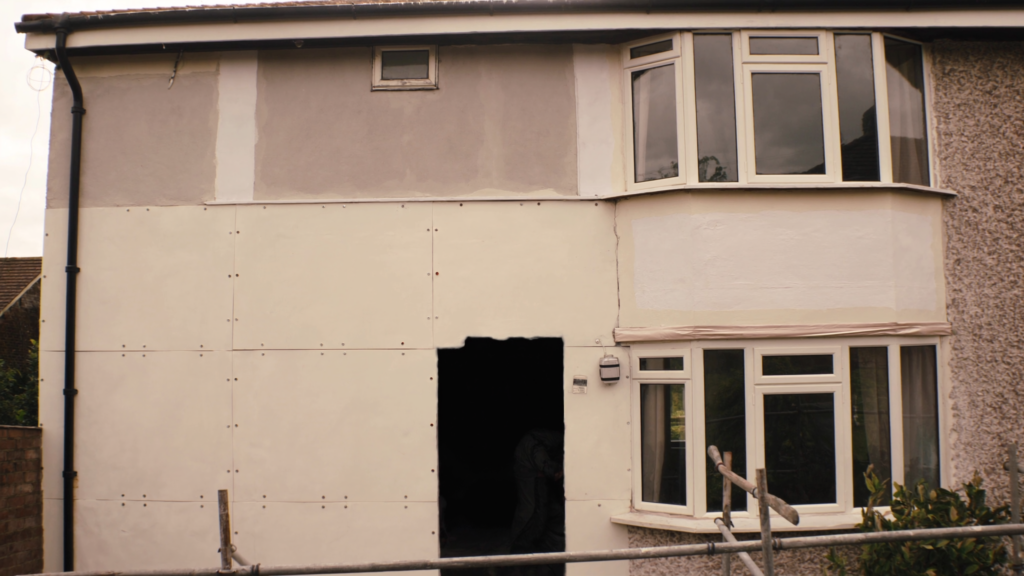
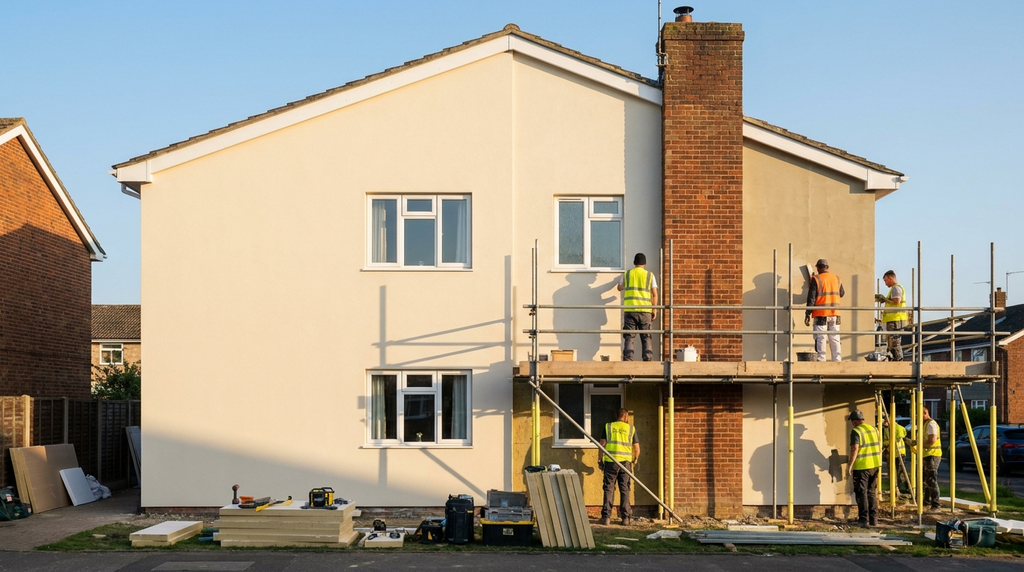
The average Northern Irish home loses 35% of its heat through the walls – DESNZ data shows this is the largest single source of heat loss in the region.
If you are a homeowner in Northern Ireland wondering whether you can get help paying for wall or loft insulation, the answer is yes, but the route depends on your household income and your home’s energy efficiency. Two main schemes exist: the Northern Ireland Sustainable Energy Programme (NISEP) and the Great Britain-wide Energy Company Obligation (ECO4), which also applies in Northern Ireland. Both offer grants for cavity wall, solid wall, and loft insulation, but eligibility and installer requirements differ significantly. This article breaks down the costs, savings, and qualification criteria for each scheme so you can decide which one fits your circumstances.
NISEP grants can cover up to 100% of insulation costs for low-income households, while ECO4 pays based on your home’s Energy Performance Certificate (EPC) rating, not your income. A typical fully funded package of cavity wall and loft insulation could save you up to £345 a year on heating bills (Energy Saving Trust, 2026).
NISEP grants cover up to 100% of insulation costs for low-income households
The Northern Ireland Sustainable Energy Programme (NISEP) is administered by the Northern Ireland Housing Executive and local energy suppliers, with funding allocated through the Department for the Economy. Eligible low-income households can receive fully funded cavity wall insulation (up to £2,000) or solid wall insulation (up to £8,000) (NISEP 2026 scheme guidance, gov.uk). Loft insulation grants typically cover 100% of the cost for homes with less than 60mm of existing insulation. To qualify, your household income must generally be below £20,000 per year, or you must be in receipt of certain means-tested benefits. The scheme is administered locally, so you apply through your local council or housing association, not directly to a supplier.
ECO4 grants pay for insulation based on your home’s energy efficiency rating
The Energy Company Obligation (ECO4) covers cavity wall, solid wall, and loft insulation for homes with an EPC rating of D, E, F, or G (Ofgem, ECO4 scheme rules 2026). Funding is not a fixed amount – it depends on the property’s current EPC band and the estimated carbon savings. Unlike NISEP, ECO4 is not income-based; it is property-based, meaning any owner-occupier or private tenant in a low-rated home can apply. However, the scheme prioritises homes with the lowest ratings (E, F, G) and those in fuel poverty. You apply through your energy supplier, who will arrange a pre-installation survey to assess eligibility and the work required.
Quick numbers NISEP vs ECO4 insulation grants in Northern Ireland
| Grant type | NISEP maximum funding | ECO4 typical funding | Annual saving on heating bill |
|---|---|---|---|
| Cavity wall insulation | Up to £2,000 | £1,500–£2,500 depending on EPC band | £160/year |
| Solid wall insulation | Up to £8,000 | £4,000–£8,000 depending on EPC band | £275/year |
| Loft insulation (270mm top-up) | 100% of cost (typically £300–£500) | 100% of cost (typically £300–£500) | £185/year |
| Loft insulation (full install) | 100% of cost (typically £600–£1,000) | 100% of cost (typically £600–£1,000) | £185/year |
Savings estimates are from the Energy Saving Trust’s 2026 insulation savings calculator and assume a gas-heated, three-bedroom semi-detached house in Northern Ireland (Energy Saving Trust, 2026). NISEP funding caps are from the 2026 scheme guidance (NISEP 2026 scheme guidance, gov.uk). ECO4 funding ranges are based on Ofgem’s ECO4 annual report 2025-26 (Ofgem ECO4 annual report 2025-26).
Insulation grants are available for homes of any age
Both NISEP and ECO4 prioritise homes built before 1996, where cavity walls are likely unfilled or solid walls uninsulated (DESNZ, “Home insulation: eligibility for grants” 2026 guidance). For post-1996 homes, grants are only available if the EPC rating is below C and the insulation is absent or inadequate. Loft insulation grants apply to any home with less than 60mm of existing insulation, regardless of age. This means that even if your home is newer, you may still qualify if your loft is poorly insulated or your walls were left unfilled during construction.
To qualify for either scheme, your installer must hold MCS certification or TrustMark registration
Both NISEP and ECO4 require installers to be accredited under the Microgeneration Certification Scheme (MCS) or registered with TrustMark (MCS Register, 2026; TrustMark, 2026). NISEP requires installers to be MCS certified for the specific insulation product (e.g., cavity wall, solid wall). ECO4 requires TrustMark registration for all insulation work, plus MCS certification for solid wall and external wall systems. Always verify your installer’s credentials on the MCS register or TrustMark website before signing a contract. Using an unaccredited installer will void your grant eligibility and may leave you with no recourse if the work is faulty.
Applying for a grant one application per property, choose your scheme carefully
You cannot claim both NISEP and ECO4 for the same insulation measure on the same property (NISEP application portal, gov.uk; ECO4 application via energy supplier, Ofgem). NISEP applications are processed by your local council or housing association; ECO4 applications go directly to your energy supplier. Both schemes require a pre-installation survey – expect a 4-8 week wait for assessment. If you are on a low income and your home has an EPC rating below D, NISEP is usually the better option because it covers 100% of costs. If your income is higher but your EPC rating is low, ECO4 is your only route.
The maximum annual saving from a fully funded insulation package is £345 on heating bills
A home with cavity wall insulation (saving £160/year) plus loft insulation (saving £185/year) achieves the combined figure of £345 per year (Energy Saving Trust, “Insulation savings table” 2026). Solid wall insulation saves up to £275/year on average in Northern Ireland’s climate. These savings assume a gas-heated, three-bedroom semi-detached house; savings vary for oil or electric heating. For homes with electric heating, savings can be up to 40% higher because electricity is more expensive per kWh. If you have solid walls and cannot get cavity wall insulation, the upfront cost is higher but the payback period is still within 10-15 years with a grant covering most of the expense.
Check our guide on cavity wall insulation costs and savings in Northern Ireland for more detail on payback times.
See our article on solid wall insulation grants for older homes to understand the full eligibility criteria.
Frequently Asked Questions
Low-income households earning under £20,000 or on means-tested benefits qualify for NISEP. For ECO4, eligibility depends on your home's EPC rating of D or below, regardless of income (Ofgem, 2026).
NISEP covers up to £2,000 for cavity wall insulation and up to £8,000 for solid wall insulation. Loft insulation is fully funded for homes with less than 60mm of existing insulation (NISEP 2026 scheme guidance, gov.uk).
No, both NISEP and ECO4 grants are non-repayable. They cover the full cost of installation for eligible households, with no obligation to repay (Energy Saving Trust, 2026).
For NISEP, apply through your local council or housing association. For ECO4, contact your energy supplier directly. Both schemes require an assessment of your home's energy efficiency first.
NISEP is income-based and covers 100% of costs for low-income households. ECO4 is based on your home's EPC rating (D or below) and is funded by energy suppliers. Both cover cavity wall, solid wall, and loft insulation (Ofgem, 2026).