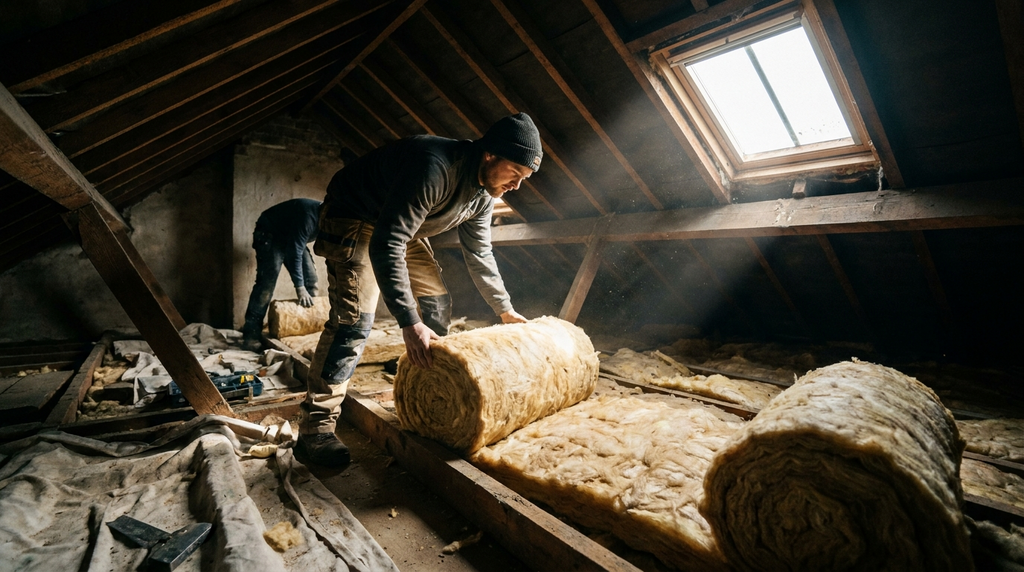
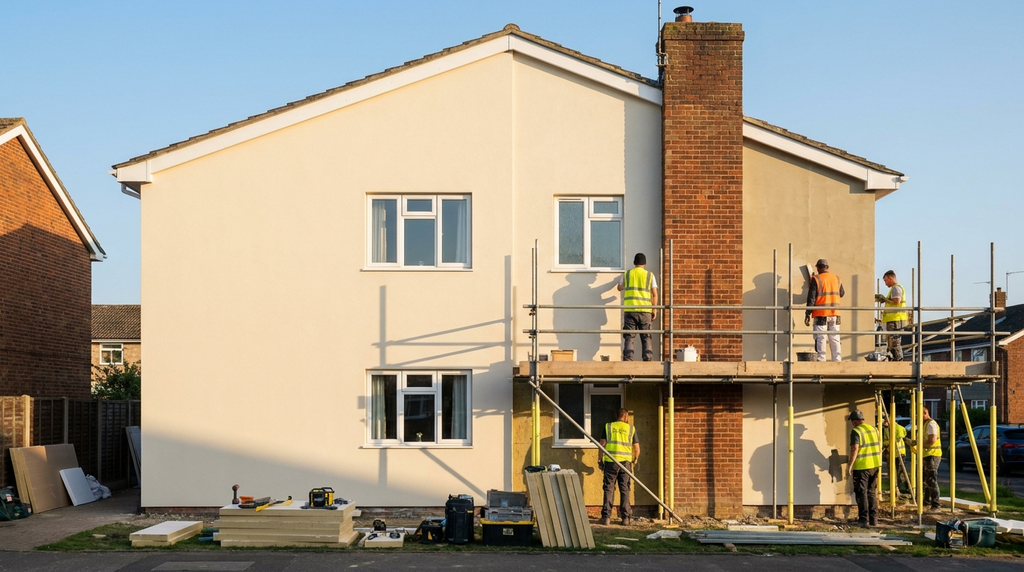
Cavity wall insulation can cut a typical semi-detached home’s heating bill by up to £300 a year.
Many homeowners ask whether cavity wall insulation is worth the upfront cost. The answer depends on your specific property, heating system, and eligibility for government support. For a typical gas-heated semi-detached house, the average annual saving is around £300 on heating bills (Energy Saving Trust, 2026).
Yes, cavity wall insulation is worth it for most UK homes. A typical semi-detached house saves £300 per year on heating, with installation costing £1,200–£2,200 and a payback period of 4–7 years. Savings continue for 25 years or more.
- Saves a typical semi-detached home £300 a year on heating.
- Installation costs £1,200 to £2,200 for a standard three-bed semi.
- Payback period is 4 to 7 years based on average savings.
- Insulation lasts 25 years or more, saving money long-term.
- The Great British Insulation Scheme closed on 31 March 2026. It funded insulation measures only and never covered windows or glazing.
- Cavity wall insulation can cut a typical semi-detached home’s heating bill by up to £300 a year.
- The typical installation cost and payback period for a 2026 homeowner
- Quick numbers savings, costs, and energy performance
- Who qualifies for fully funded or part-funded cavity wall insulation grants in 2026
- How to confirm your cavity wall is suitable before applying for a grant or paying an installer
- The direct answer cavity wall insulation is worth it if your walls are suitable and you qualify for a grant
- How to verify an approved installer under the MCS and TrustMark schemes
- The main risks that reduce the long-term value of cavity wall insulation
This £300 figure is a mid-range estimate. Actual savings vary depending on property size, heating system efficiency, and fuel type. A larger detached home with electric heating could save more, while a smaller mid-terrace with a modern gas boiler might save less.
The typical installation cost and payback period for a 2026 homeowner
Installation costs for cavity wall insulation in a standard three-bedroom semi-detached home typically range from £1,200 to £2,200. This includes a professional survey, all materials, and fitting (Energy Saving Trust, 2026). Under the Great British Insulation Scheme, installer pricing data from Ofgem confirms these figures for standard properties (Ofgem, 2026).
Based on a £300 annual saving, the typical payback period is 4 to 7 years. After that point, the insulation continues to save money for the lifetime of the product, which is usually 25 years or more. Costs can be higher for detached homes (often £2,500 or more) and for properties with stone walls or difficult access.
Quick numbers savings, costs, and energy performance
The table below shows typical figures for common property types. All data comes from the Energy Saving Trust’s 2026 domestic insulation data tables and the Department for Energy Security and Net Zero’s 2026 household energy efficiency statistics (DESNZ, 2026).
| Property type | Annual saving (£) | Installation cost (£) | Payback period (years) | Annual CO₂ saving (kg) |
|---|---|---|---|---|
| Semi-detached | £300 | £1,200–£2,200 | 4–7 | 610 |
| Detached | £400 | £2,000–£3,000 | 5–8 | 820 |
| Mid-terrace | £200 | £800–£1,500 | 4–8 | 410 |
| Bungalow | £250 | £1,000–£1,800 | 4–7 | 510 |
Figures assume gas central heating and a standard cavity wall with 50mm or wider cavity. Savings will be higher for homes using electric or oil heating.
Who qualifies for fully funded or part-funded cavity wall insulation grants in 2026
Two main government schemes provide funding for cavity wall insulation in 2026. Under the Energy Company Obligation (ECO4) scheme, households receiving certain means-tested benefits can get 100% funded installation. Eligible benefits include Pension Credit, Universal Credit, Income Support, and others listed on the GOV.UK eligibility page (GOV.UK, 2026).
The Great British Insulation Scheme closed on 31 March 2026. It funded insulation measures only and never covered windows or glazing. Under GBIS, the household typically pays a reduced contribution, not the full cost.
Self-funders with higher incomes and no qualifying benefits generally do not qualify for grants. They must pay the full installation cost, though the payback period still makes it financially worthwhile for most suitable homes.
How to confirm your cavity wall is suitable before applying for a grant or paying an installer
A professional cavity wall survey is mandatory before any installation. The survey checks three main things: that the wall has a cavity (not solid brick or stone), that the cavity is at least 50mm wide, and that the cavity is free from rubble, debris, or existing damp (Energy Saving Trust, 2026).
Some walls are unsuitable. These include homes with severe penetrating damp, cavities narrower than 50mm, and properties in high exposure zones with driving rain (as defined by BRE guidance). Homes in western Scotland, coastal Wales, and exposed upland areas are more likely to need a water-repellent treatment before insulation can be installed safely.
You can check your property’s EPC rating online via the GOV.UK EPC register. The register shows whether cavity wall insulation is already present or recommended. However, a site survey by an MCS-certified installer is the only definitive way to confirm suitability. how to read your EPC certificate
The direct answer cavity wall insulation is worth it if your walls are suitable and you qualify for a grant
Cavity wall insulation is worth it for the majority of UK homeowners with suitable cavity walls, because it typically pays for itself within 4 to 7 years through lower energy bills and can reduce heat loss by up to 35% – but it is only worth it if a professional survey confirms your walls are dry, clean, and the cavity is wide enough (Energy Saving Trust, 2026).
For households eligible for a fully funded grant under ECO4, the financial benefit is immediate. For part-funded or self-funded installations, the payback period of 4 to 7 years still is a strong return, especially with energy prices remaining high in 2026. The 35% heat loss reduction figure comes from Energy Saving Trust data on uninsulated cavity walls.
How to verify an approved installer under the MCS and TrustMark schemes
The Great British Insulation Scheme closed on 31 March 2026. It funded insulation measures only and never covered windows or glazing. You can verify an installer by checking their MCS certificate number on the official MCS register at mcscertified.com (MCS, 2026).
Even for self-funded work, using an MCS-certified installer is strongly recommended. It ensures compliance with building regulations and gives access to the Cavity Insulation Guarantee Agency (CIGA) 25-year guarantee. You should also check that the installer is registered with TrustMark, which provides consumer protection and a complaints process (TrustMark, 2026).
For any associated gas work, such as boiler modifications, the installer must also be on the Gas Safe Register (Gas Safe Register, 2026). Always ask for the installer’s MCS and TrustMark numbers before agreeing to any work.
The main risks that reduce the long-term value of cavity wall insulation
Poor installation is the most common risk. If insulation is not fitted correctly, gaps or bridging can create cold spots, leading to condensation, damp, and mould. The CIGA 25-year guarantee covers remedial work, but only if the installer was MCS-certified at the time of installation (BRE, 2026).
In exposed, high-rainfall areas such as western Scotland and coastal Wales, retrofitted cavity insulation can increase the risk of damp if the wall is not treated with a water-repellent coating. A professional survey must assess this risk before work begins. According to BRE data, the overall risk of damp problems after cavity wall insulation is low, affecting under 5% of installations (BRE, 2026).
To reduce these risks, always insist on a written survey report before installation, use an MCS-certified installer, and ensure you receive a CIGA guarantee certificate after the work is completed. how to spot damp in cavity walls
Frequently Asked Questions
The Energy Saving Trust estimates a typical gas-heated semi-detached home saves around £300 per year on heating bills. Actual savings vary by property size and fuel type.
Installation costs for a standard three-bed semi-detached home range from £1,200 to £2,200, including survey and fitting, according to Energy Saving Trust 2026 data. Detached homes may cost £2,500 or more.
Based on typical £300 annual savings, payback takes 4 to 7 years for a semi-detached home. After that, the insulation continues saving money for 25 years or more.
Yes, although costs are higher at around £2,500 or more, annual savings can be greater too. The Energy Saving Trust confirms detached homes often see payback within 5 to 8 years.
Check eligibility on the Ofgem website.