The light that lands differently
Late autumn, around three in the afternoon. The sun has dropped just low enough to drag long, buttery shadows across the cill of a bay window, and the room holds three distinct moods depending on where you sit. In the left pane, the light is sharp and golden, catching dust motes and warming the floorboards. In the centre, it’s a softer, almost milky glow, the kind that makes a teacup look like a still life. On the right, the shadow of the sash falls diagonally, and the corner feels like a retreat. This is the magic of a bay window: it doesn’t just let light in; it sculpts it.
And yet, we panic. We inherit these glorious architectural features, a Victorian sash, a 1930s suntrap bay, and then stuff them with whatever fits. A sofa that blocks the cill. A tangle of dried flowers. A row of tiny ornaments that look like a car-boot sale. The tension is real: bay windows are the most loved, least understood feature in a British home. The best bay window styling doesn’t fight the architecture, it listens to the light, the view, and the room’s natural rhythm.
Let the window decide the furniture, not the other way around
The most common mistake is also the most forgivable: you measure the space, find a sofa that fits, and push it against the bay. Suddenly the cill is hidden, the view is blocked, and the room feels like a waiting area. The better approach is slower, almost meditative. Sit in the bay at different times of day before buying anything. Morning light might tell you a reading chair belongs in the left corner; afternoon shadows might whisper that a desk would feel like a perch rather than a workspace.
When the furniture follows the light, the room settles. No arrangement anxiety, just instinct. A low armchair angled toward the glass, a small side table for a cup of coffee, a footstool that catches the last of the sun. The bay becomes a destination, not a dead zone.
Layered blinds that move with the British weather
British light is not Italian light. We don’t need drama; we need control. A single Roman blind in a pale linen looks lovely in a magazine, but on a July afternoon when the sun is low and aggressive, it’s useless. The solution is a two-layer system: a Roman blind in a textured linen for softness, paired with a discreet roller blind in a blackout fabric for the days when you need to banish the glare entirely.
The trick is to keep the blind stack within the window recess. Let the bay’s shape remain visible, no pelmets, no fuss. A Roman blind that sits neatly inside the frame, with a roller blind tucked behind it, gives you three settings: full light, soft light, and darkness. It’s not glamorous, but it works. And on those grey January mornings when the light is thin and watery, the linen alone is enough.
The cill as a stage, not a shelf
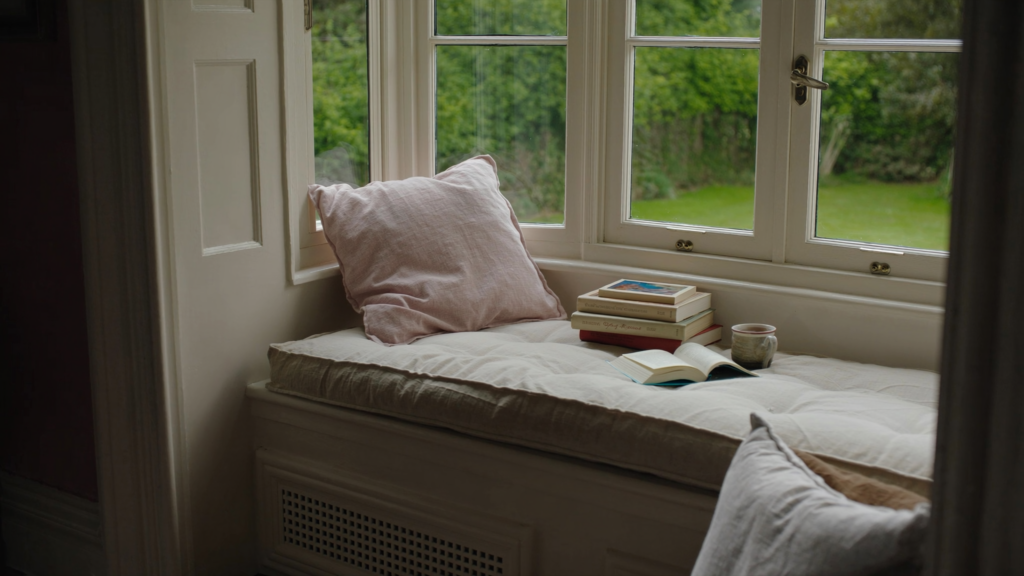
A bay window cill is a natural display surface, but clutter kills the architecture. The rule is simple: one large object per pane. A ceramic vase, a sculptural lamp, a stack of books, each pane gets a single, considered piece. No rows of tiny knick-knacks that look like a mantelpiece exploded.
Seasonal rotation keeps it alive. Dried grasses in autumn, a single branch of blossom in spring, a warm-toned glass vessel catching the low winter light. The cill becomes a stage, not a shelf. And if you have a deep cill, the kind you can sit on, a cushion and a small tray for a teapot turns it into a perch.
Seating that makes the bay a room within a room
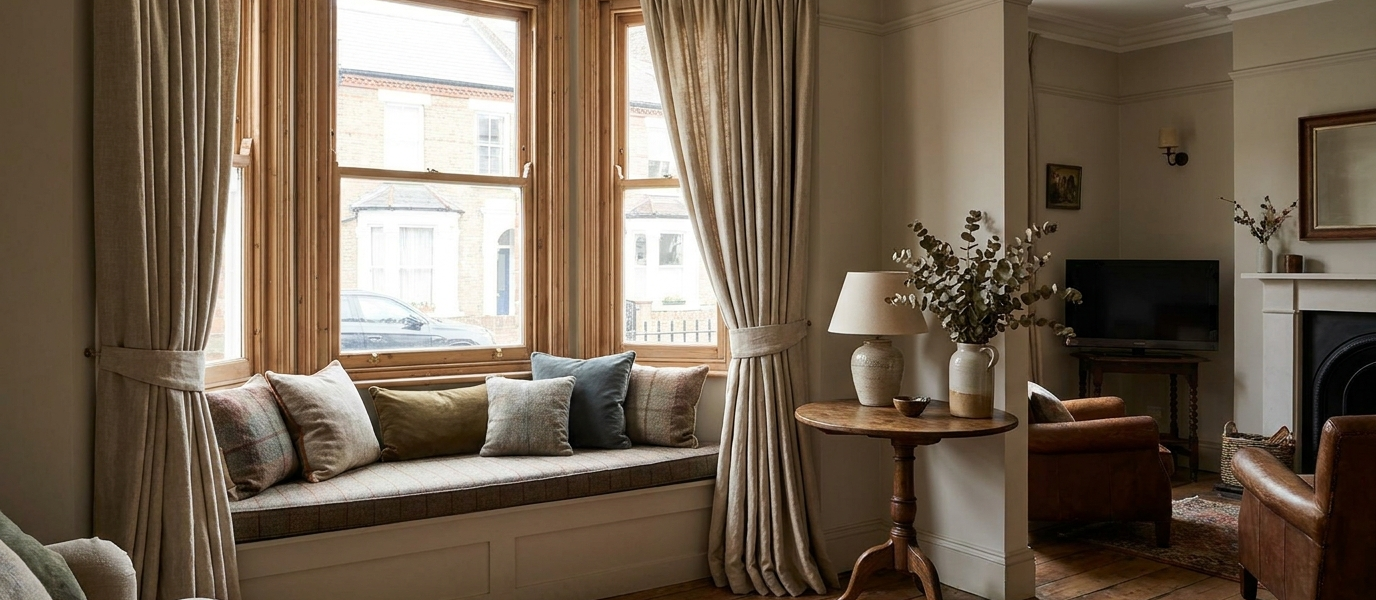
The classic built-in window seat is not just charming; it’s practical, especially for narrow Victorian bays where floor space is tight. A custom bench with storage underneath, books, blankets, the things you don’t want to look at, turns the bay into a room within a room. For shallower bays, a low bench with a deep cushion works, or two small armchairs angled toward each other and the view.
The fabric matters more than you think. A hard-wearing wool or velvet can handle direct sun without fading in a season. A pale cotton will look tired by August. And if you’re renting, a bench with a removable cushion and a washable cover is your friend. The point is to make the bay feel like a destination, not a leftover space.
Why the curtain track is worth getting wrong twice
A bay window demands a curved or jointed track. A straight pole is a visual betrayal, it cuts across the window’s shape like a bad haircut. The two options are simple: a bespoke curved track that follows the bay’s exact angle, or a series of overlapping curtains on separate poles. The latter is more forgiving for DIY, but the payoff with a custom track is worth the trouble.
Curtains that stack back cleanly, revealing the window’s full shape rather than bunching awkwardly at the corners, that’s the goal. A good track is invisible; a bad one is all you see. Spend the money, get it measured twice, and your bay will thank you every morning.
Three ways to soften a tall sash bay without losing height
Tall sash bays are a gift, but they can feel imposing. Here are three approaches, each changing the room’s proportions:
Floor-length curtains with a generous header. A deep pleat or eyelet heading adds weight and softness, drawing the eye down and anchoring the bay to the floor. Choose a fabric with some drape, a heavy linen or a wool blend, and hang the track high, almost to the ceiling, to elongate the window further.
A Roman blind hung above the frame. Mount the blind above the window, not inside it, to add height. The blind stacks neatly at the top, revealing the full sash below. This works best for bays with a shallow cill or where curtains would feel too heavy.
A single sheer panel drawn across the whole bay. A wide, floor-to-ceiling panel in a soft voile or linen gauze blurs the view without blocking it. The effect is airy, almost ethereal, and it softens the bay’s geometry without cutting it short.
The through-line: never cut the window short. A bay that ends before the floor feels amputated. Let it breathe.
The one thing that makes a bay window feel finished
It’s not the curtains, the furniture, or the cushions. It’s the light fitting. A pendant light hung low in the centre of the bay, or a wall-mounted sconce on each side, anchors the seating area and makes the bay feel intentional after dark. Without it, the bay is just a hole in the wall, a dark void you walk past. With it, the bay becomes a room you want to sit in at 9pm with a glass of wine and a book.
A warm, dimmable bulb. A shade that casts a soft glow. That’s all it takes. The bay window goes from being a problem to being the best room in the house. And isn’t that what we’re all after?