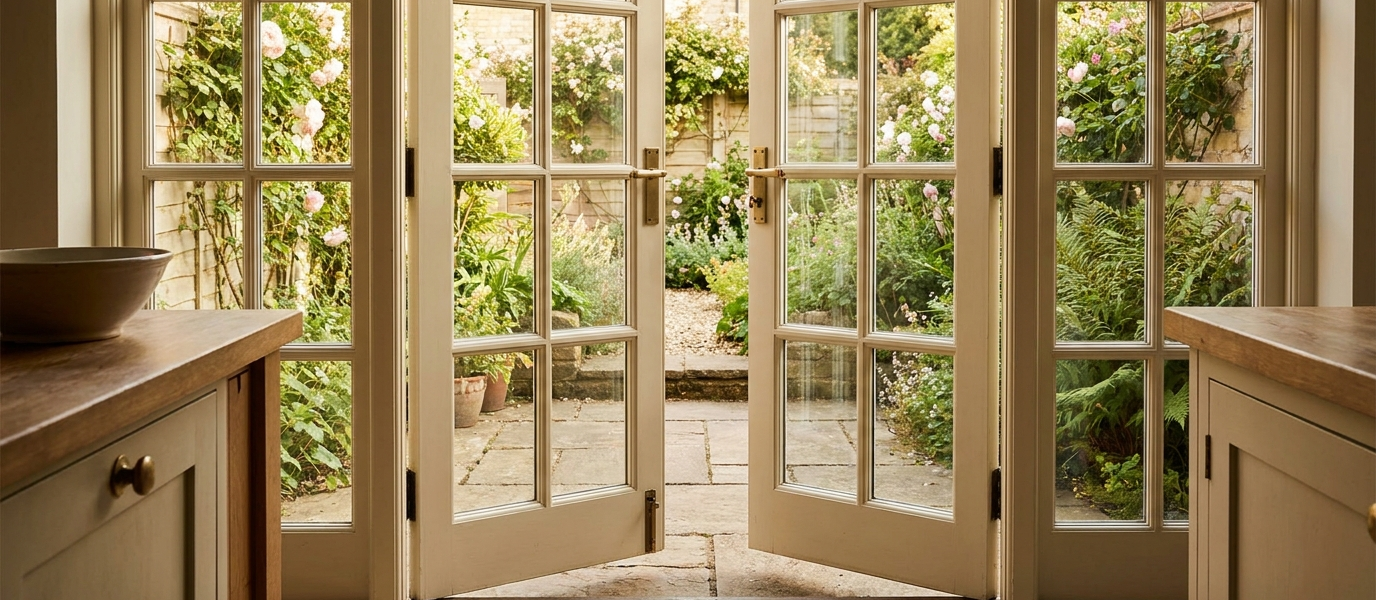
The moment you walk into a room with French doors, something shifts. The light lands differently. The garden feels closer. But that first thrill can curdle when the space around them stays unresolved, a chair that blocks the swing, a blind that fights the handle, a view that feels too exposed. The doors themselves are only half the story. The real work begins at the threshold.
What follows is a quiet kind of alchemy: arranging a room so the doors feel inevitable, not accidental. It’s about how the floor meets the garden, how the curtains behave at dusk, and why a single potted topiary can be worth more than any new paint job. Let’s walk through it.
Let the light decide the layout
French doors change a room’s axis. The natural path from door to opposite wall becomes a sightline, not a traffic lane, and if you place a sofa across that line, you’re effectively blocking the view with upholstery. Instead, let the light dictate where furniture lands. A low bench or narrow console opposite the doors draws the eye outward, framing the garden like a painting hung at the far end of the room. Keep that zone clear for flow; measure the door’s swing radius and mark it in your mind as sacred ground. A chair that catches the handle every time you enter will grate within a week.
Dressing the glass without dimming the view
Curtains and blinds for French doors are a puzzle of handle heights, door thicknesses, and the awkward reality that most off-the-rack solutions assume a window. Top-fixed roman blinds work well, they stack neatly above the glass and clear the handles entirely. Sheer panels, hung on a track that runs the full width of the opening, can be drawn aside to sit in soft folds beside the frame. For privacy without sacrifice, a frosted film in a delicate botanical or geometric pattern softens the glass while keeping the garden visible; it’s the difference between a cage and a veil. Layering is the quiet hero here: a light linen curtain over a roller blind gives you day, night, and everything between.
The floor is part of the frame
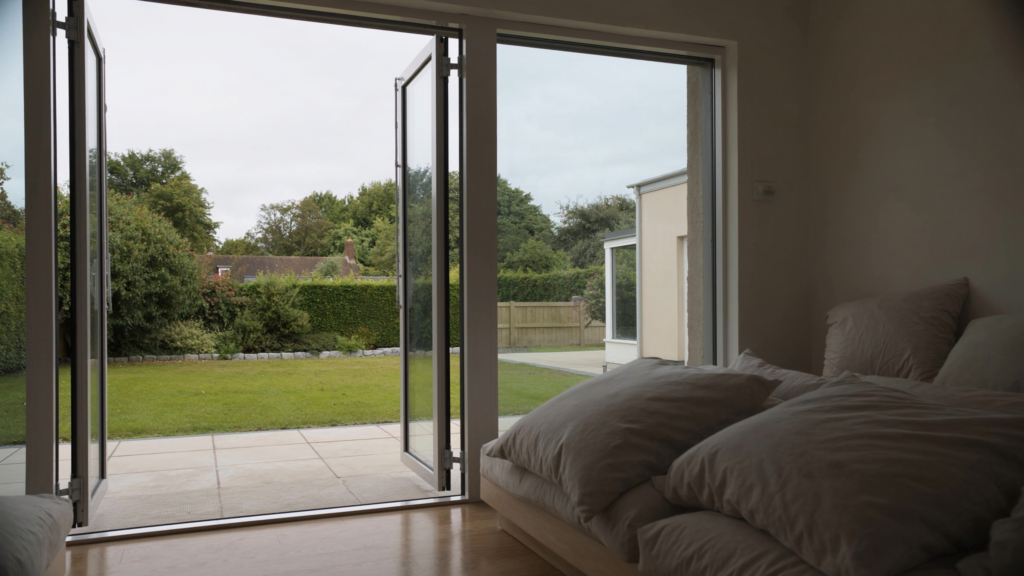
Where the interior floor meets the threshold is a moment most people rush. Extend the same flooring from inside to just beyond the door, a continuous tile or stone creates the illusion of a single, larger space that spills into the garden. If the garden is grass or deck, a slim transition strip in a complementary tone (warm oak, slate grey) anchors the door visually. Avoid a sharp carpet-to-grass edge; the eye needs a pause, a moment to register the change. That strip is your comma.
Eight ways to soften a tall sash window (when French doors aren’t an option)
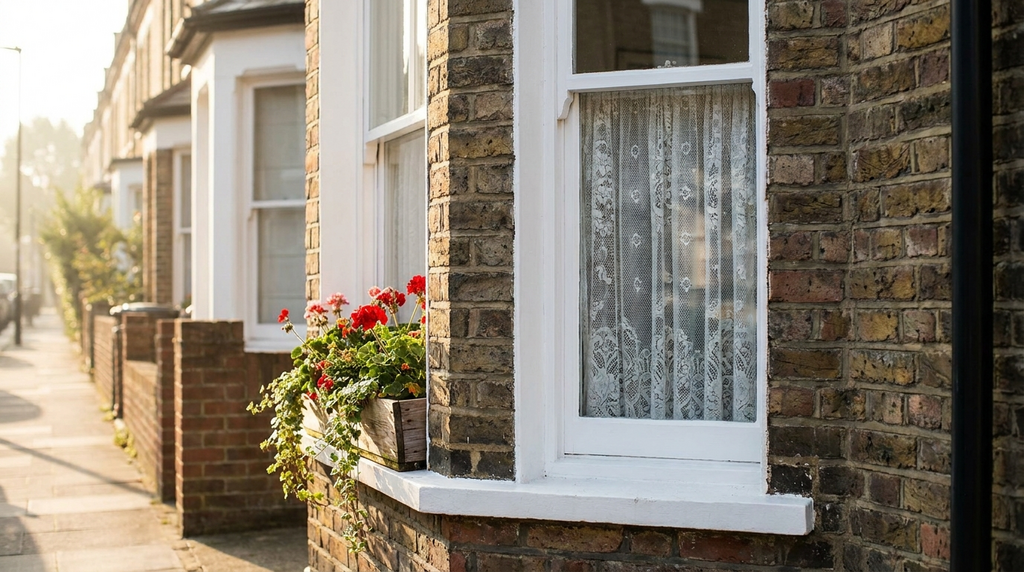
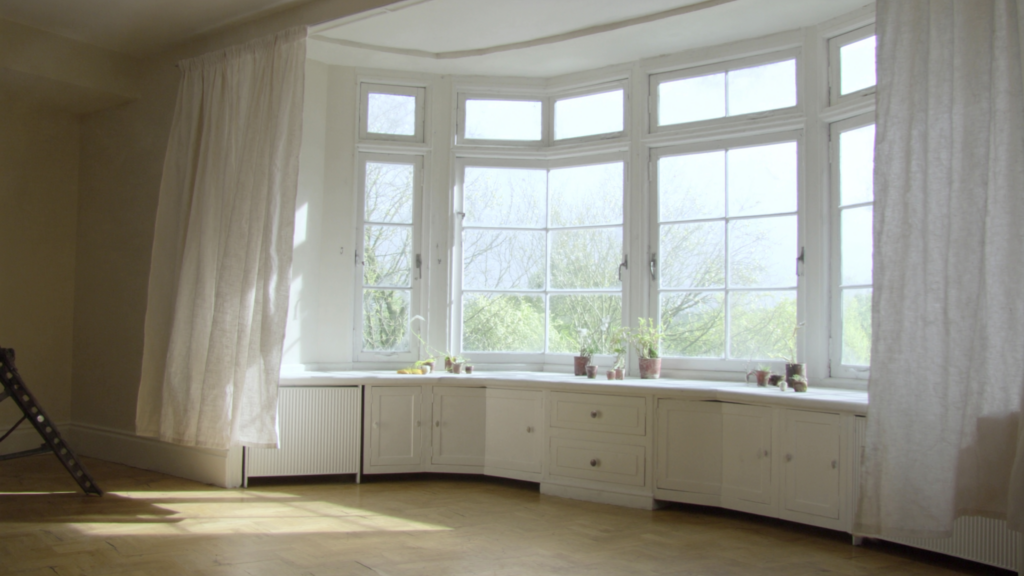
Not every room can have French doors. But a tall sash window can borrow their spirit with a little sleight of hand.
- Use floor-length curtains hung from the ceiling to mimic the vertical drama of doors.
- Place a mirror opposite to double the daylight and suggest an opening where there is none.
- Add a low shelf or window seat beneath the sill to create a perch that feels intentional, not leftover.
- Choose a single, oversized pendant light centred in the window bay to echo the symmetry of French doors.
- Install a pair of narrow, full-height panels on either side of the window, they read as door frames.
- Paint the window frame and surrounding wall in the same deep tone (charcoal, olive) to blur the boundary.
- Hang a sheer curtain halfway down, tied back at the centre, to suggest a door left ajar.
- Place a tall plant (ficus, olive tree) beside the window to add the weight and presence of a door.
Why texture matters more than colour
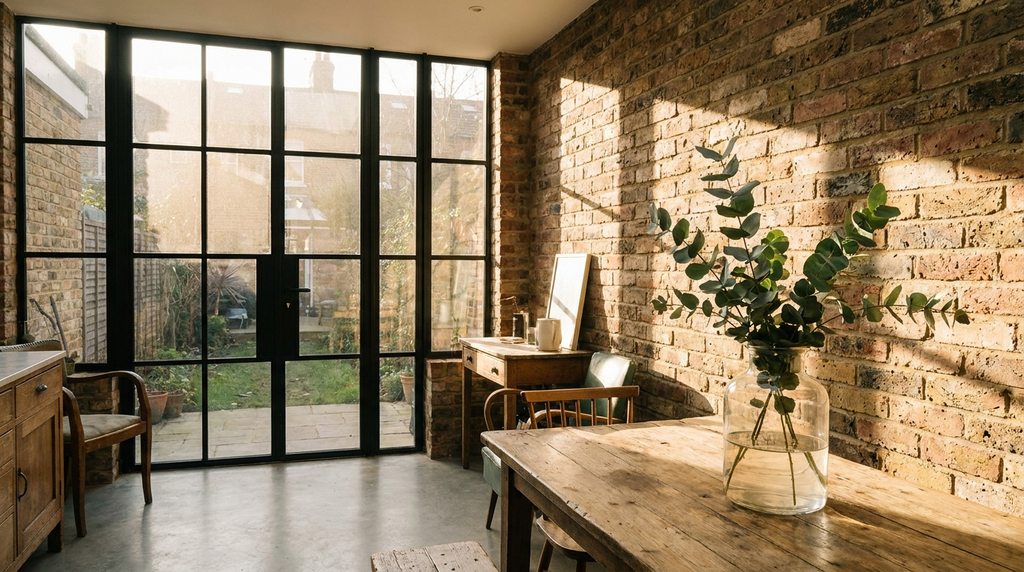
A smooth, glossy door frame against a rough brick or render wall creates a tactile tension that reads as deliberate design. Inside, layer woven blinds, a wool rug, and a linen armchair near the doors, each surface catches the light differently, breaking up the glare that bare glass throws into the room. The goal is a room that feels lived-in, not staged. Texture absorbs the hard edges; it makes the light feel warm rather than surgical. If you’re tempted to paint the frames a bold colour, pause. A soft Farrow & Ball Drop Cloth or a deep Setting Plaster pink will recede, letting the garden hold the drama.
A threshold that asks to be crossed
Create a visual invitation just outside: a potted topiary, a single lantern, or a low stone step that mirrors the interior floor material. Inside, place a small console or shelf beside the door for keys, a vase, or a stack of books, it signals that this is a place to pause, not just pass through. The best French doors don’t frame a view; they frame a moment you want to step into. That moment begins not at the handle, but at the arrangement of things around it.
You gain a room that feels larger, calmer, and more connected to the outdoors, not because you bought new doors, but because you thought about what happens around them. That’s the threshold worth crossing.