Let the Window Decide the Light’s Job
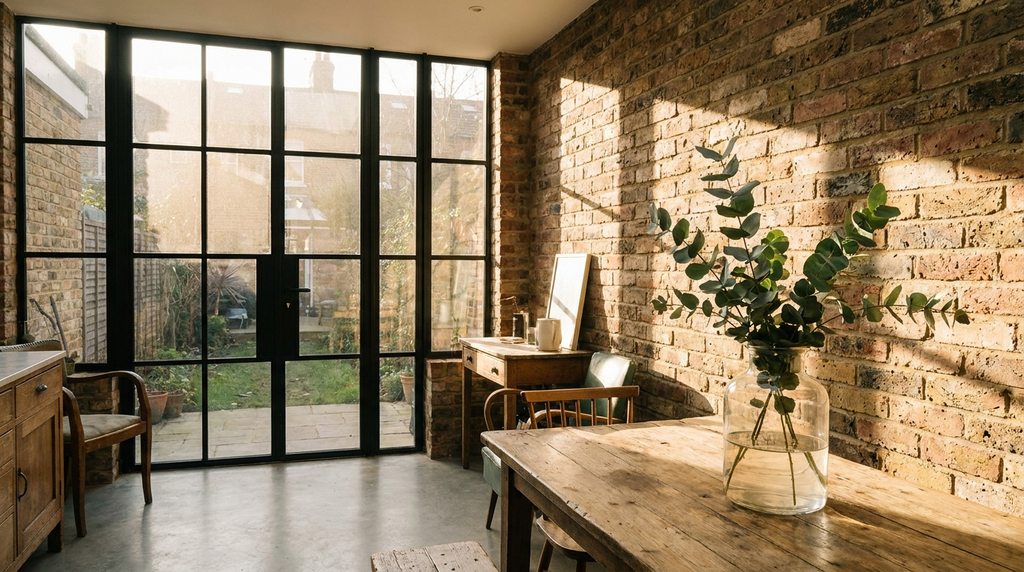
Before you reach for a single switch, stand at your big window at dusk. Watch how the last of the daylight pools on the sill, how it catches the grain of the floorboards or the weave of a curtain. That fading light is your cue. Artificial light should never fight it, it should echo it, extend it, or quietly step aside.
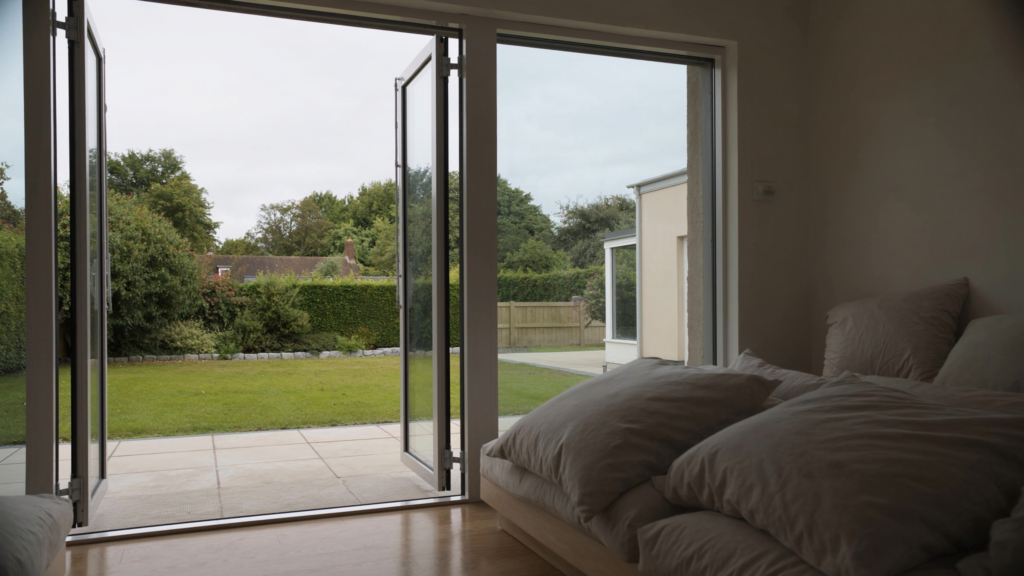
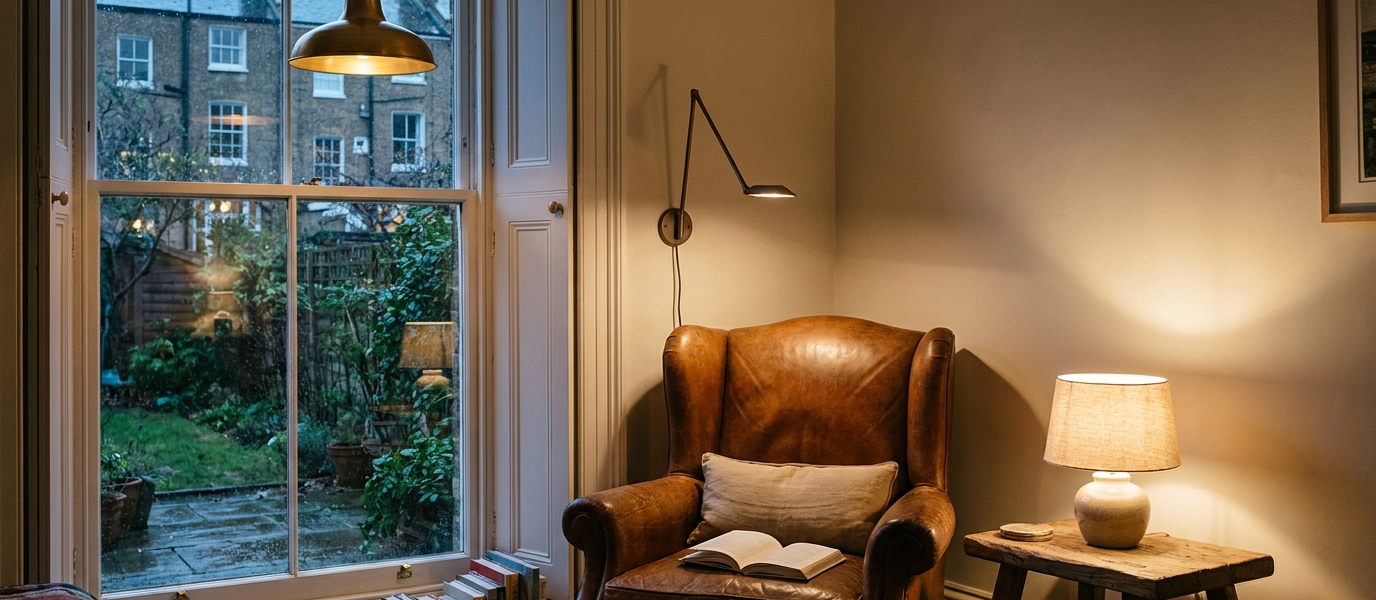
The scale of the window dictates everything. A tall Victorian sash wants light near the floor, not the ceiling. A wide 1930s bay wants it pulled into the room, not pressed against the glass. A small casement in a boxy extension wants light that drifts, not blasts. One rule holds: never light the glass itself. Light what the window frames, a plant, a chair, the floor beneath, and the window becomes a view, not a black mirror.
Three Layers, Not One Switch
The mistake is to think one ceiling fixture will do. It won’t. A single overhead light flattens everything, the window becomes a hole, the room a box. You need three layers, and they need separate switches.
- Ambient: A soft wash from above or behind, a track or cove light that grazes the curtain, never a glaring ceiling rose. The light should feel like it’s coming from the window itself, not from a fixture.
- Task: A reading lamp or small desk light placed just off the sill, angled toward the room, not the glass. This is the light you actually use, for a book, a cup of tea, a late-night email.
- Accent: A single uplight on the floor or a picture light on the wall beside the window, catching a texture or a plant. This is the light that makes the room feel finished, not just lit.
The Sill as a Stage, Not a Shelf
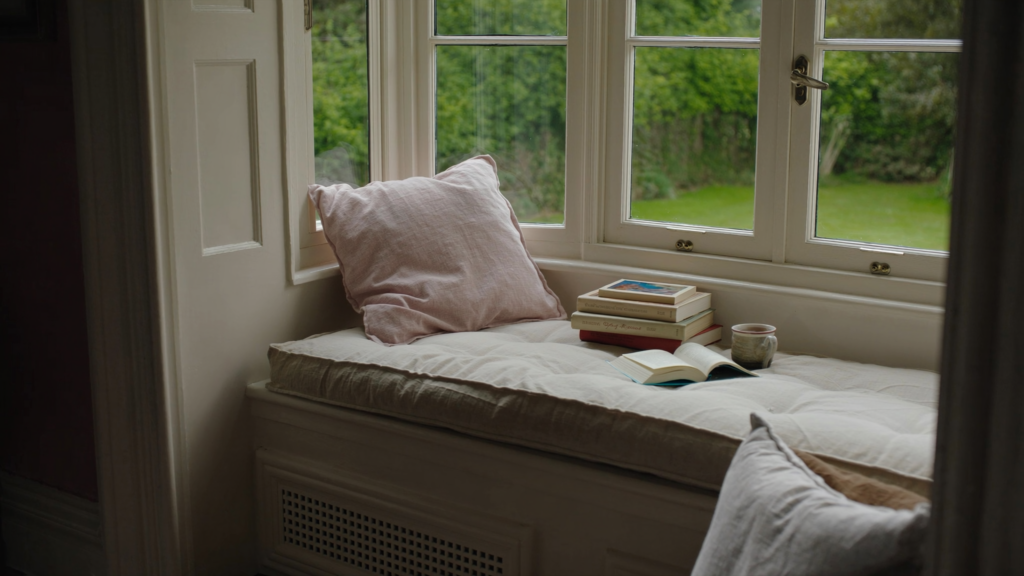
A wide sill is a gift. Treat it like a stage, not a dumping ground. A low, warm lamp, ceramic base, linen shade, placed at one end turns the window into a lantern at dusk. Pair it with something reflective: a small mirror propped against the frame, a brass vase, a polished stone. The reflected glow doubles the light without doubling the wattage.
Avoid a bare bulb or a spotlight aimed at the glass. You want the sill to glow, not the pane. A dim, warm lamp on the sill is the difference between a room that feels abandoned and one that feels inhabited.
Why Texture Matters More Than Colour
Colour gets all the attention, but texture does the real work. A rough linen shade diffuses light into a soft bloom, the kind of light that makes a room feel like it’s exhaling. A smooth cotton shade throws a sharper edge, more precise, more modern. A matte ceramic base absorbs and softens; a glossy one bounces and scatters.
The big window amplifies every choice. A glossy shade in a room with a south-facing bay will throw hard, dancing highlights across the walls. A matte linen in a north-facing sash will gather the light and hold it, warm and still. Texture becomes the quiet layer that makes the light feel lived in, not designed, but grown.
Place a Floor Lamp Where the Light Can Breathe
A floor lamp pushed flush against the wall does nothing but take up floor space. Pull it a foot into the room, just enough that the light falls across the floor and up the curtain, not straight down the wall. A tall, slim lamp with a wide shade, an arc or a tripod, lets the light spread without crowding the window.
The effect is subtle but immediate: the window feels deeper, the room wider. The light becomes a second source, balancing the natural light from the glass. If you have a tall sash, try a lamp with a frosted globe at eye level, it softens the transition between the bright window and the darker room beyond.
Eight Ways to Soften a Tall Sash Window
Tall sash windows are beautiful, but they can feel stark at night. Here are eight ways to soften them, in no particular order:
- A single pendant hung low, off-centre, near the frame, a paper lantern or a fabric drum, warm and dim.
- A pair of wall sconces flanking the window, aimed inward, not out, the light crosses the glass, not hits it.
- A dimmable LED strip tucked behind the curtain track, invisible during the day, a soft glow at night.
- A small table lamp on a console table below the sill, low, warm, and grounding.
- A cluster of candles on the sill, real or LED, warm flame, placed at varying heights.
- A floor lamp with a frosted globe, placed in the corner, pulling the light into the room.
- A picture light above a low shelf or a piece of art beside the window, the light catches the frame, not the glass.
- A single, oversized paper lantern hung from a ceiling hook, drifting near the glass, soft, sculptural, almost cloud-like.
Dimmers Are the Real Hero
Without a dimmer, layered lighting is just more light, brighter, harsher, more expensive. With one, it becomes a tool. The window’s natural light shifts through the day: bright and cool at noon, warm and low at dusk. Artificial light should follow, not fight. A simple rotary dimmer on the ambient layer changes the room’s mood from crisp to cosy in seconds.
If you have a dimmer on the accent layer too, even better. A single uplight turned down to a whisper feels like candlelight. A reading lamp turned up feels like morning. The window stays the same; the light around it changes everything.
A big window is a privilege. Layered lighting beside it is not a luxury, it’s the difference between a room that is merely bright and one that is alive.