Let the window breathe, why the frame matters first
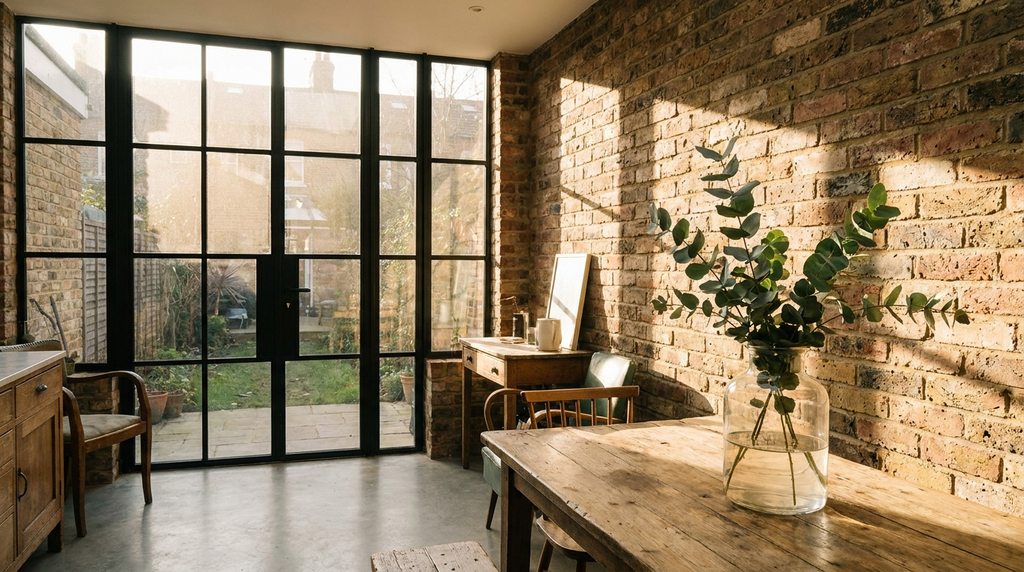
Stand in a small room with a standard uPVC casement and you’ll notice something odd: the frame seems to be doing all the talking. The glass sits back, pinched by thick white plastic, as though the window is apologising for its size. Now imagine the same opening fitted with a slim-profile timber or aluminium frame. The glass-to-frame ratio shifts dramatically. Suddenly the light arrives without apology.
A side-hung casement helps here, too. It opens fully, erasing the visual barrier of a top-hung restrictor. Your eye registers the full aperture, not a half-open slot. This isn’t about adding square footage, it’s about making the light feel like it was invited, not squeezed in through a gap. A frame swap costs around £400 to £1,200 depending on size and finish, but the perceptual gain is immediate. The room reads as larger because the window finally reads as generous.
Eight ways to soften a tall sash window
Tall sash windows in Victorian and Edwardian houses have a particular problem: they’re often narrow, vertical slots that feel more like arrow loops than sources of light. But you can soften them without touching the brickwork.
- Hang floor-length curtains from ceiling height, not window height, the vertical line pulls the eye up, making the room feel taller and the window more substantial.
- Fit a Roman blind outside the recess, so the fabric extends beyond the frame. The window borrows the wall space around it.
- Angle a mirror opposite the pane, catching the light at an oblique angle rather than reflecting the room back at itself.
- Paint the surrounding wall a pale, muted tone, a soft Farrow & Ball Drop Cloth or Little Greene Rolling Fog, to blur the edge between wall and window.
- Paint the window frame one shade lighter than the wall tone. The glass appears to float, untethered from the wall.
- Use a single, full-length curtain panel rather than two halves, no break in the fabric, no visual stop.
- Keep the sill clear of clutter (more on that later) so the eye travels straight to the glass.
- Add a slender shelf at ceiling height painted to match the wall, it extends the vertical line without adding weight.
Each trick works because it tricks the eye into seeing a larger opening. No structural work required.
Pick a colour that softens with the seasons, not shouts
Walk into a room where the window frame is painted a muted sage or a chalky off-white, and something quiet happens. The frame recedes. Now imagine a stark white frame against a dark wall, the contrast is so sharp it shrinks the perceived size of the opening. The window becomes a hard-edged hole, not a soft transition.
A tone that shifts in daylight, a grey-green that warms in afternoon sun, a deep Setting Plaster pink that glows in low light, makes the window feel like a living element. It belongs to the room, not the other way around. Try a colour such as Paint & Paper Library’s Slate 4 or a custom-mixed clay-based paint. The frame stops being a border and starts being a bridge between inside and out.
Why texture matters more than colour when light is scarce
In a small bathroom or hallway with a single small window, light is a precious commodity. Smooth plaster walls bounce light once and then let it die. But a limewash or a matte clay paint, something with a slight grain, catches and scatters what little light there is. The surface becomes a soft diffuser, not a dead end.
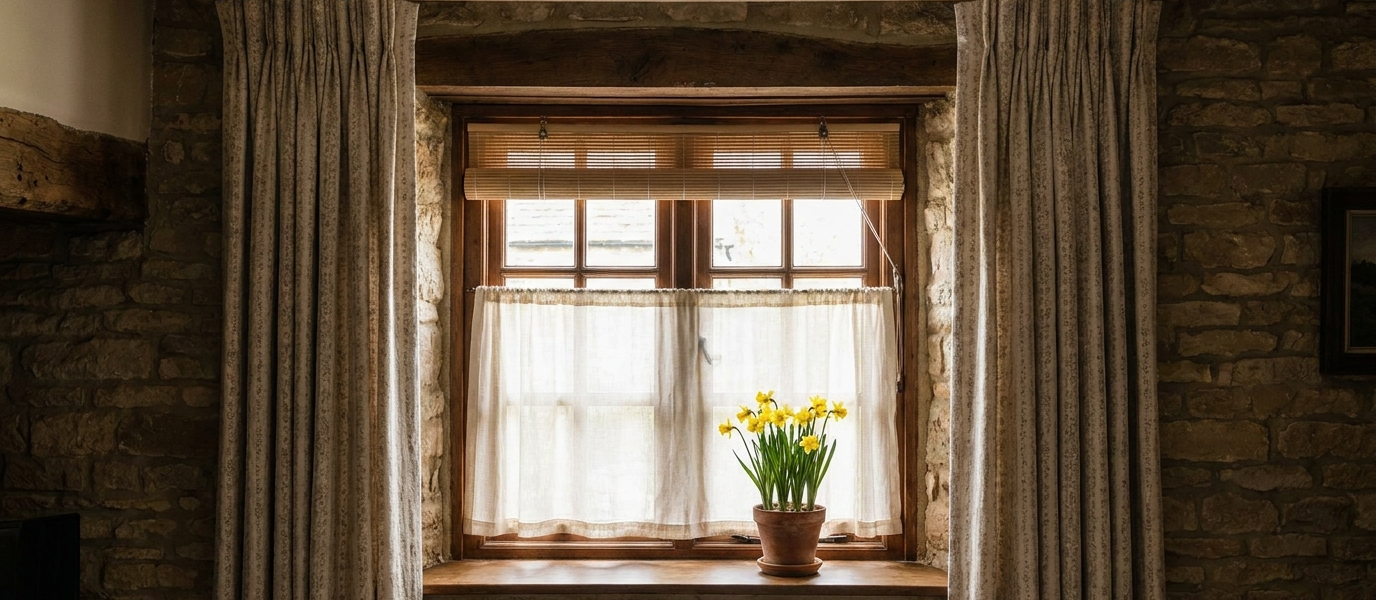
Texture matters on the window itself, too. A linen or bamboo blind adds depth without blocking light. The window reads as a layered object, not a flat cut-out. The gain is subtle but real: a room that feels fuller, softer, and less boxed-in, even with the same aperture. A limewash finish costs around £30 to £60 per square metre applied, but the effect is transformative in a room that gets only morning light.
Let the sill become a stage, not a shelf
A windowsill cluttered with plant pots, dried flowers, and a forgotten mug of tea makes the window recede behind the objects. The sill reads as a catch-all, not a feature. Now imagine a single, low-profile vase, a simple ceramic cylinder, or a stack of books arranged horizontally. The sill becomes an intentional ledge. It invites you to lean into the window, making the glass feel closer and the outside world more accessible.
A deep sill helps, whether real or an illusion created with a painted board that extends the ledge by a few inches. The trick is to treat the sill as architecture, not storage. When you do, the window gains presence without enlargement. It becomes a place to pause, not a hole to look through.
Mirror the light, not the room, a deliberate placement
Most people hang a mirror opposite the window, hoping to bounce light around the room. But this usually reflects the sofa, the rug, the dust on the bookshelf, nothing that expands the space. Instead, position a mirror perpendicular to the window. The reflection catches the sky, not the furniture. The room borrows a view that isn’t there.
Walk past and you see the reflection first, then the real window. Your brain registers two sources of light, two glimpses of the outside. The room feels wider, airier, as though the walls have quietly stepped back. No wall was touched. No window was enlarged. But the space reads as larger, and that’s the only measurement that matters.