The trick that estate agents never write down
Walk into a room with truly clean windows and something shifts. The ceiling feels higher. The sofa looks better placed. The whole space exhales. Yet most of us treat glass as a background task, a quick spray, a frantic wipe, done. Professional home sellers know different. They understand that a clean window doesn’t just let light in; it changes the perceived square footage of a room. And they achieve it not with a miracle product, but with a specific rhythm.
The premise is simple. Sellers who stage homes professionally borrow a particular sequence, a timing trick, a tool swap, a mental shift, that gives windows a depth you can feel. In photographs, that depth reads as “expensive.” In person, it reads as calm. Here’s the good news: you can borrow that same window cleaning routine without spending a penny on new glazing. Your home will feel bigger, brighter, and more intentional by the end of the week.
Wash on a Tuesday, polish on a Thursday
Here’s the timing secret that estate agents never write down: professional home stagers never clean windows on the day of a viewing or photoshoot. Fresh glass attracts dust and streaking within hours. The polish that made the pane sing at 10 a.m. looks dull and smudged by 2 p.m., especially if the sun has moved across the sky.
Instead, they separate the wash from the polish by roughly 48 hours. Wash the glass on a Tuesday evening, letting the frame and sill dry completely. Then return on a Thursday morning for the final buff. That gap allows any moisture trapped in the corners to evaporate, so your polishing cloth isn’t just moving damp dirt around. The result is a finish that holds for days, not hours.
How do you build this into a weekly window cleaning routine without it feeling like a chore? Anchor it to something you already do. Wash on bin day, polish on the morning you change the bedsheets. The rhythm becomes automatic, and the payoff, a home that looks staged, even when no one’s selling, is worth the two-step effort.
Why the squeegee is a crutch
Most people reach for a squeegee first. It’s satisfying, efficient, and feels like the “proper” tool. But watch a professional seller clean a window for a listing photograph, and you’ll notice something: they rarely use one. The squeegee is a crutch. It leaves behind tide marks, those faint, milky lines at the edges that photographers spend hours editing out. On a bright day, those marks catch the light and read as dirt.
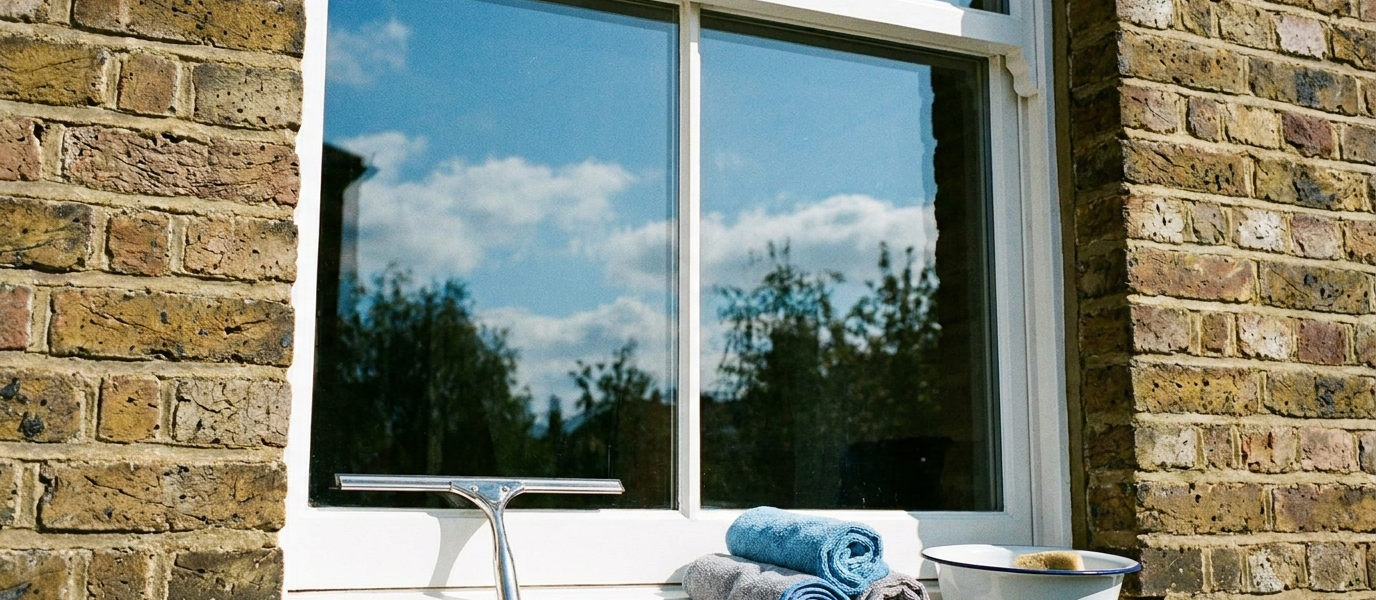
Professional sellers use a two-cloth method instead. Microfiber for the wash, which lifts grease and grime without scratching. Lint-free cotton for the dry, which buffs the glass to a clarity that looks almost liquid. The squeegee gets reserved for ground-floor, full-height panes where speed genuinely matters, think patio doors or a Victorian sash that runs floor-to-ceiling.
The payoff is a streak-free finish that holds for a full week, not just until the next morning’s condensation. Your windows stop looking “cleaned” and start looking clean. It’s a small swap, but it changes everything about how a room feels at 8 a.m. on a grey Tuesday.
Eight ways to soften a tall sash window
Sash windows are beautiful, but they’re also magnets for dust, pollen, and the kind of grime that collects in the tracks. Here are eight techniques drawn from the routines of sellers who have had their windows photographed for premium listings.
- Work from the inside out on a cloudy day. Direct sunlight dries your cleaning solution before you’ve had a chance to buff it, leaving streaks. Overcast light gives you time.
- Use distilled water for the final rinse. Tap water leaves mineral spots that show up in photographs like tiny white freckles. A jug of distilled water costs pennies and solves it.
- Clean the frame before the glass. Dirt on the frame migrates onto the glass the moment you start wiping. Clean the wood or uPVC first, then the pane.
- Run a dry cloth along the bottom edge last. Water pools there and, if left, dries into a tide mark. A final, deliberate sweep along that bottom edge is the difference between “good” and “photographed.”
- Angle your cloth in a single direction per pane. Random swirls catch the light. Choose top-to-bottom or left-to-right, and stick to it for that pane.
- Let the sill dry before replacing any blinds. Blinds trap moisture against the glass, creating condensation spots that look like failed cleaning. Give the sill a full hour.
- Use a soft toothbrush on the sash cords. Those cords collect dust that blows onto the glass every time you open the window. A dry brush once a month keeps them clean.
- Finish with a microfibre buff in a figure-eight pattern. This catches any remaining haze and polishes the glass to the kind of clarity that makes you stop and stare.
The one pane that changes the whole room’s mood
Not all windows are equal. The one that matters most isn’t the largest in the house. It’s the window that catches the morning or afternoon light at eye level, often a kitchen window above the sink, or a stair landing window that throws light onto a hallway. Professional sellers identify this “hero pane” first and clean it before any other window in the house.
Why? Because the brain registers the cleanest, brightest surface in a room as its anchor. When you walk into a kitchen and the window over the sink is flawless, your perception of the entire space shifts. The room feels lighter, larger, more intentional. The other windows matter, but they matter less.
Here’s how to find your hero pane. Stand in the room you use most at the time of day you’re there longest. Which window catches your eye first? Which one throws the most light onto a surface you look at, a dining table, a counter, a reading chair? That’s your hero. Clean it first, with the full two-step routine. Then work outward. The effect is immediate: the room feels staged, even if the rest of the house is a mess.
Let your frames do the heavy lifting
The glass gets all the attention, but the frame and sill condition is what tells the story of a well-maintained home. Sellers know this. Chipped paint on a Victorian sash or grimy uPVC on a modern casement undermines the cleanest glass. A buyer, or a guest, will register that dirt before they register the sparkle.
A simple monthly wipe-down of frames with a mild soap solution keeps the whole window looking freshly staged. Avoid vinegar, which can dull certain finishes, especially on uPVC. A drop of washing-up liquid in warm water is all you need. Run a soft cloth along the top of the frame, where dust settles invisibly, and along the sill, where pollen collects.
Here’s the sequence that mirrors professional house-prep checklists: clean the frame first, then the glass, then the frame again as a final pass. That last wipe catches any water that has dripped onto the sill during the glass cleaning. It takes an extra thirty seconds and makes the difference between a window that looks “done” and one that looks “staged.”
The morning rinse that saves you a full clean
This is a five-second habit borrowed from sellers who show homes daily. Before the sun hits your south- and west-facing windows, give them a quick spray of water from a handheld bottle. That’s it. No cloth, no soap, no buffing. The water lifts the pollen and dust that settled overnight, and because the glass is still cool, it rinses clean without baking into a film.
This isn’t a replacement for a full window cleaning routine. But in warmer months, it extends the time between deep cleans by up to two weeks. The pollen that would have baked onto the glass by noon is gone before it has a chance to stick. The dust that would have caught the low evening light is washed away.
The psychological effect is real. Coming downstairs to windows that already look “done” sets a calmer, more intentional tone for the day. It’s the same feeling as making the bed before you leave the bedroom, a small act of order that ripples outward. And when you do settle in for a full clean, using the two-step rhythm and the hero-pane priority, your home will feel like it’s ready for its close-up, even if the only person looking is you. window cleaning routine