Low-temperature heating requires larger pipework than old high-temperature systems
If you are replacing a gas or oil boiler with a heat pump, the pipework in your home may not be suitable. Low-temperature heating systems operate at flow temperatures of 50–55°C or below, whereas traditional boilers typically run at 70–80°C (Energy Saving Trust, 2026). To deliver the same amount of heat, the system must move a greater volume of water, which requires larger-diameter pipes.
A low temp pipework upgrade typically costs £1,500-£4,000 for a 3-bed semi. If your home has microbore or pre-2010 pipework, an upgrade is often essential for heat pump efficiency. Compare quotes from MCS-certified installers.
- Low-temperature systems need 28mm or larger pipework for adequate flow.
- Microbore pipes (8-12mm) almost always require an upgrade for heat pumps.
- Pipework upgrades cost between £1,500 and £4,000 for a typical 3-bed home.
- MCS installers must check pipe sizes as part of heat pump design.
- Homes with pre-1990 heating systems are most likely to need pipework changes.
- Low-temperature heating requires larger pipework than old high-temperature systems
- Who is most likely to need a pipework upgrade for low-temperature heating
- Quick numbers, pipe sizes, flow rates, and upgrade costs
- The direct answer, you need a pipework upgrade if your existing pipes are too small for the required flow rate
- How to confirm your eligibility for a grant with a pipework upgrade
- How to verify an installer for pipework upgrades, MCS, TrustMark, and Gas Safe Register
- What a pipework upgrade typically involves and how long it takes
The direct answer is that standard 15mm or 22mm copper pipework, which is common in UK homes built before 2020, may be undersized for the increased flow rate. If your existing pipes are too narrow, you could experience heat loss, noisy flow, or poor system performance. A pipework upgrade is often the single most important step to ensure your low-temperature heating system works efficiently.
Department for Energy Security and Net Zero (DESNZ) guidance states that a heat pump installation must be designed for low-temperature operation, and this includes checking that pipe sizes can handle the required flow rate (DESNZ, “Heat pump ready: A guide for homeowners,” 2025).
Who is most likely to need a pipework upgrade for low-temperature heating
Homes with microbore pipework are the most common candidates for an upgrade. Microbore pipes typically have an internal diameter of 8mm to 12mm and were widely installed in UK homes from the 1970s to the 1990s. These small pipes cannot carry the higher flow volumes that low-temperature systems require (MCS, “Heat pump installation best practice,” 2025).
Properties built before 1990 with original heating systems are also likely to need pipework changes. Older heating systems were designed for high-temperature flow, and the radiators were often paired with pipework that is too small for low-temperature operation. If your home has a combi boiler installed before 2010, the pipework may also be undersized for a heat pump.
Ofgem’s technical requirements for the Boiler Upgrade Scheme (BUS) state that the installer must confirm the system is designed for low-temperature operation, which may include a pipework upgrade if existing pipes are insufficient (Ofgem, “Boiler Upgrade Scheme: Technical requirements,” 2026).
Quick numbers, pipe sizes, flow rates, and upgrade costs
| Pipe diameter (mm) | Max heat output at ΔT 10°C (kW) | Typical flow rate (litres/min) | Estimated upgrade cost per metre (installed, £) |
|---|---|---|---|
| 8mm microbore | 1.5–2.0 | 2–3 | £25–£35 |
| 10mm microbore | 2.5–3.5 | 3–5 | £30–£40 |
| 15mm standard | 5.0–7.0 | 6–9 | £15–£25 |
| 22mm standard | 10.0–14.0 | 12–18 | £20–£30 |
| 28mm standard | 18.0–24.0 | 22–30 | £25–£35 |
These figures are based on the Energy Saving Trust’s technical report on pipe sizing for low-temperature heat pumps (EST, “Pipe sizing for low-temperature heat pumps,” 2024) and the MCS 010 standard (MCS, 2025). Cost estimates come from the EST heat pump cost calculator and average installer quotes from the MCS installer database (2026).
You need a pipework upgrade if your existing pipes are too small for the required flow rate
A pipework upgrade is necessary when the existing pipe diameter cannot deliver the heat output your home needs at the low flow temperature (e.g., 50°C) without exceeding the system’s maximum pressure drop or flow velocity. The Chartered Institution of Building Services Engineers (CIBSE) low-temperature heating design guide states that flow velocity should not exceed 1.5 metres per second in copper pipes (CIBSE, “Low-temperature heating design guide,” 2024).
To confirm whether an upgrade is needed, a heating engineer will calculate the heat loss of each room, typically measured in kilowatts (kW), then determine the required flow rate. If the existing pipework’s capacity falls short, an upgrade is required. DESNZ’s homeowner guide advises that a full system design, including pipe sizing calculations, must be provided by the installer (DESNZ, “Heat pump installation: A homeowner’s guide,” 2026).
In practice, if your home has microbore pipes (8mm or 10mm), you almost certainly need an upgrade. If you have 15mm pipes feeding multiple radiators, the main trunk to the first branch may need to be 22mm or 28mm. A heating engineer will measure the existing pipework and compare it to the required flow rate for your heat pump.
How to confirm your eligibility for a grant with a pipework upgrade
The Boiler Upgrade Scheme (BUS) in England and Wales provides a grant of £7,500 for air-source heat pumps in 2026 (Ofgem, “Boiler Upgrade Scheme: Applicant guidance,” 2026). The Home Energy Scotland grant and loan scheme also offers support for heat pump installations, including pipework upgrades where required (Home Energy Scotland, “Grant and loan scheme,” 2026).
To be eligible, the installer must be MCS-certified and provide a full system design, including pipe sizing calculations, as part of the grant application. If a pipework upgrade is required, the grant covers the eligible heat pump and installation, but not necessarily the pipework work itself. You should check with the installer whether the pipework upgrade is included in their quote or charged separately.
Check whether your heat pump installer is MCS-certified and what the BUS covers for pipework upgrades.
How to verify an installer for pipework upgrades, MCS, TrustMark, and Gas Safe Register
For any low-temperature heating system, the installer must be MCS-certified for heat pump installation. MCS certification ensures that the installer can correctly size pipework and design the system for low-temperature operation (MCS, “Find an installer” database).
TrustMark registration is a secondary indicator of quality for all heating work, including pipework upgrades. TrustMark vets traders for competence and customer service (TrustMark, “Trade standards”). Gas Safe Register is not required for heat pump installation, but if the upgrade involves gas boiler pipework (e.g., replacing a gas system), the installer must be Gas Safe registered (Gas Safe Register, “Find a registered engineer”).
Find out how to check an installer’s MCS certification and what to ask before hiring.
What a pipework upgrade typically involves and how long it takes
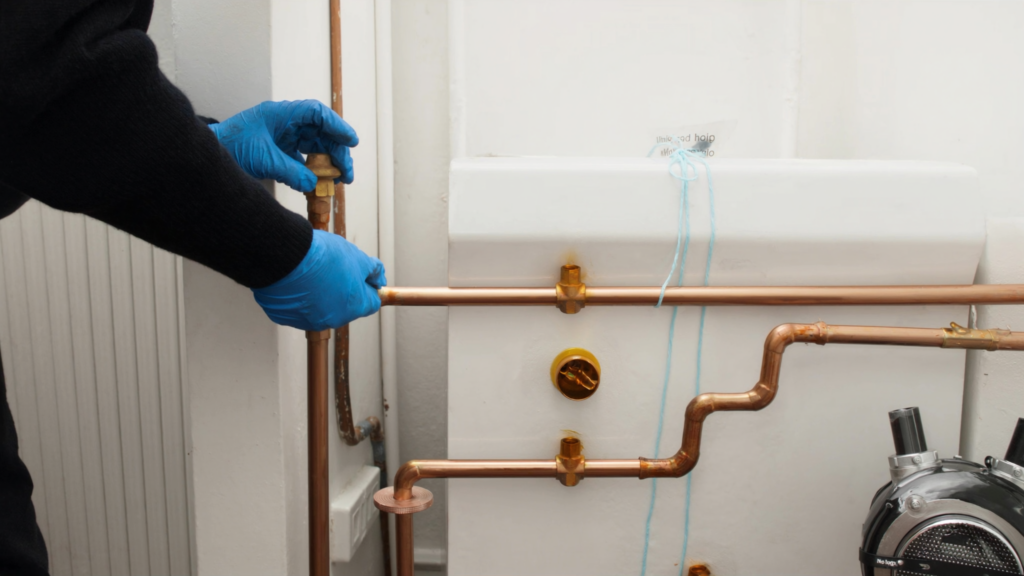
A standard pipework upgrade replaces undersized microbore or 15mm pipes with 22mm or 28mm copper or plastic pipework. The upgrade typically runs from the heat pump to the first radiator branch, and often to individual radiators. The Energy Saving Trust’s guide to heat pump installation states that the work may require lifting floorboards, drilling through walls, and re-connecting radiators (EST, “Heat pump installation: What to expect,” 2024).
For a typical three-bedroom house, the work usually takes 1–3 days. A full pipework upgrade, including replacing all microbore pipes, can be completed in 2–3 days for a semi-detached property (MCS, installer case studies, 2025). The cost varies depending on the length of pipework and access conditions, but typical costs per metre are shown in the table above.
Read our guide to heat pump installation timelines and what to expect during the work.
Frequently Asked Questions
Yes, if your existing pipes are 15mm or smaller, especially microbore (8-12mm). Energy Saving Trust advises that low-temperature systems (50-55°C) require larger diameters to move enough water, so an upgrade is often essential.
Costs range from £1,500 to £4,000 for a 3-bed semi, according to MCS installation data. The final price depends on pipe length, access, and whether radiators are also upsized.
Low-temperature systems typically need 28mm or larger copper pipework for the main runs. DESNZ guidance states that pipe sizes must be calculated based on flow rate and pressure drop for efficient operation.
Only if your pipes are 22mm or larger and the system is designed for low flow temperatures. Ofgem's Boiler Upgrade Scheme requires a technical check, and undersized pipes can cause noise and heat loss.
Microbore pipework has an internal diameter of 8-12mm and was common in UK homes from the 1970s-1990s. MCS best practice states it cannot carry the higher flow volumes needed for low-temperature heating.