Replacing a back boiler costs roughly £4,000–£8,000, compared to £7,500–£12,000 for a full heat-pump installation.
The average cost to replace a back boiler with a modern combi boiler system in the UK is between £4,000 and £8,000, including removal and new pipework (Checkatrade, 2026). A full heat-pump installation averages £7,500–£12,000 after the Boiler Upgrade Scheme grant, making the back-boiler swap the cheaper option for most homes (DESNZ, 2026).
This guide covers the costs, grants, and installer requirements for replacing a back boiler in 2026. See our full guide on boiler replacement costs for more detail on combi vs system boiler prices.
You must remove the back boiler before any heat-pump or hydrogen-ready boiler grant applies
The Boiler Upgrade Scheme (BUS) in 2026 grants £7,500 toward an air-source heat pump, but the back boiler must be decommissioned first (GOV.UK, 2026). The Clean Heat Grant, if replacing a fossil-fuel system, also requires the back boiler to be removed; you cannot run both (Ofgem, 2026). A hydrogen-ready boiler swap, if available in your region, does not require back-boiler removal, but the boiler itself must be decommissioned and replaced.
In all cases, the old back boiler must be physically disconnected and its gas supply capped by a Gas Safe registered engineer before any grant-funded work begins. The installer will confirm this step in writing as part of the grant application.
Who qualifies for a back-boiler replacement grant in 2026?
The Boiler Upgrade Scheme is available to homeowners and small landlords in England and Wales who own a property with an existing fossil-fuel heating system, including a back boiler (GOV.UK, 2026). The Energy Company Obligation (ECO4) can fund a full back-boiler replacement for low-income households or those receiving specific benefits, but only if the property has an EPC rating of D, E, F, or G (Ofgem, 2026). Scotland offers Home Energy Scotland loans and grants for back-boiler removal, with no means test but an income cap for grants (Home Energy Scotland, 2026).
To qualify for ECO4, you must be receiving one of the following: Universal Credit, Pension Credit, Child Tax Credit, Working Tax Credit, Income Support, or Housing Benefit. The BUS has no income test, but you must own the property and it must have a valid MCS certificate for the heat pump installation. Contact your energy supplier or a local TrustMark-approved installer for a free eligibility check.
Quick numbers back-boiler replacement costs, grants, and timeframes
| Metric | Typical value | Source |
|---|---|---|
| Average cost (combi swap) | £4,000–£6,000 | Checkatrade, 2026 |
| Average cost (system boiler swap) | £5,000–£8,000 | Boiler Guide, 2026 |
| BUS grant amount (heat pump) | £7,500 | GOV.UK, 2026 |
| ECO4 maximum grant (back-boiler removal) | Up to £15,000 (property-dependent) | Ofgem, 2026 |
| Typical installation time (days) | 2–4 days | Gas Safe Register, 2026 |
| Gas Safe Register fee for decommissioning | £100–£250 (part of total cost) | Gas Safe Register, 2026 |
How to verify your installer is certified for back-boiler removal
The installer must be Gas Safe Registered to decommission a gas back boiler; check their registration on the Gas Safe Register website (Gas Safe Register, 2026). For a heat-pump replacement, the installer must be MCS certified (Microgeneration Certification Scheme) to get the BUS grant (MCS, 2026). For an electric boiler swap, the electrician must be registered with NICEIC or NAPIT for Part P compliance (NICEIC, 2026). Always confirm the installer holds public liability insurance and offers a manufacturer-backed warranty on the new system.
You can verify a Gas Safe registration by entering the engineer’s licence number on the Gas Safe Register website. For MCS certification, search the MCS installer database. Never accept a verbal claim of certification without checking it online first. Read our guide on how to find a certified heating installer.
The direct answer you can replace a back boiler with a combi, system boiler, or heat pump, but only a Gas Safe engineer can legally decommission it
Replacing a back boiler means removing the old unit from the fireplace opening, capping the gas supply, and fitting a modern wall-hung boiler or heat pump (Gas Safe Register, 2026). The back boiler itself is a gas appliance; only a Gas Safe registered engineer can disconnect and cap the gas pipe (Health and Safety Executive, 2026). A heat-pump replacement requires MCS certification for the installer and a BUS grant application before work begins.
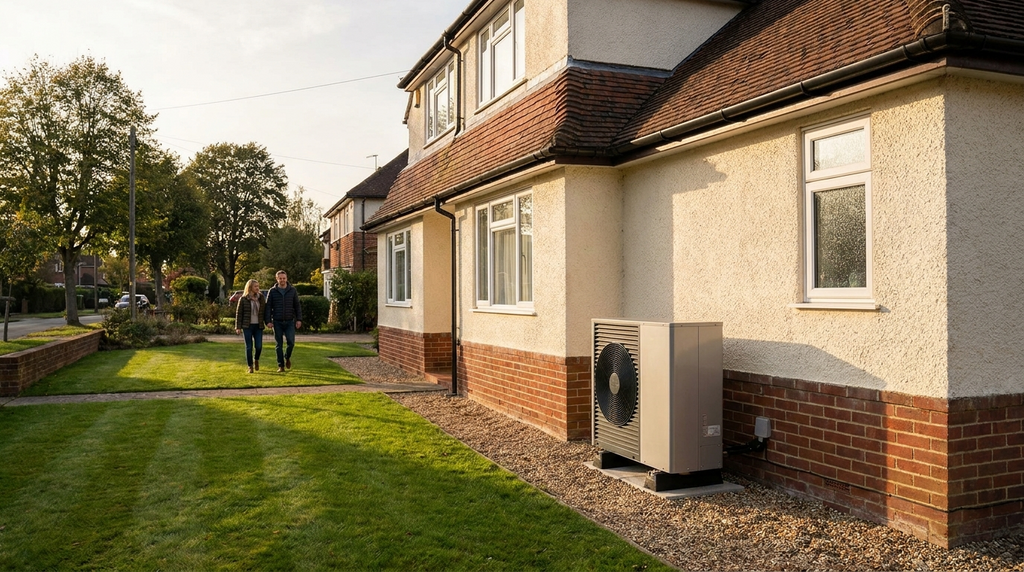
Once the back boiler is removed, you have three main options: a combi boiler (most common), a system boiler with a hot water cylinder, or a heat pump. Each option has different space requirements and costs. A combi boiler is usually the cheapest and fastest installation, while a heat pump requires external space for the outdoor unit and a larger indoor hot water cylinder.
What happens to your fireplace and chimney after back-boiler removal
The fireplace opening is typically left empty or fitted with a gas fire, electric fire, or log burner after the back boiler is removed (HETAS, 2026). If the back boiler used a balanced flue (through the wall), the flue hole must be sealed by a competent builder or Gas Safe engineer (Building Regulations Approved Document J, 2026). A chimney liner may be required if you install a wood-burning stove, but this is not needed for a gas fire or electric fire.
If you plan to leave the fireplace opening empty, you can fit a simple blanking plate or decorative cover. For a gas fire, the installer must check the flue is intact and properly sized. For an electric fire, no flue is needed. If you install a log burner, HETAS recommends a stainless steel liner to meet building regulations and improve efficiency.
How to confirm your property is eligible for a back-boiler replacement grant
Check your EPC rating: ECO4 requires D, E, F, or G; the BUS has no EPC minimum for heat pumps in 2026 (GOV.UK, 2026). Confirm your income or benefits status for ECO4: Universal Credit, Pension Credit, Child Tax Credit, etc. (Ofgem, 2026). For the BUS, ensure you own the property and it has a valid MCS certificate for the heat pump installation (GOV.UK, 2026). Contact your energy supplier or a local TrustMark-approved installer for a free eligibility check.
You can find your EPC rating on the government’s EPC register website. For ECO4, your energy supplier will verify your benefits status and arrange a free survey. For the BUS, you apply through Ofgem after receiving a quote from an MCS-certified installer. The installer will handle the paperwork for you in most cases.
Frequently Asked Questions
Replacing a back boiler with a modern combi system costs between £4,000 and £8,000, including removal and new pipework, according to Checkatrade (2026). A full heat-pump installation averages £7,500–£12,000 after the Boiler Upgrade Scheme grant.
Yes, the back boiler must be physically disconnected and its gas supply capped by a Gas Safe registered engineer before any heat-pump grant applies, as required by GOV.UK (2026). You cannot run both systems.
The Boiler Upgrade Scheme offers £7,500 toward an air-source heat pump, but only after back-boiler removal. ECO4 can fund a full back-boiler replacement for low-income households with an EPC rating of D-G, as set by Ofgem (2026).
Yes, a hydrogen-ready boiler swap does not require back-boiler removal, but the old boiler must still be decommissioned and replaced by a Gas Safe engineer. Availability depends on your region.
ECO4 funds back-boiler replacement for low-income households or those receiving specific benefits, provided the property has an EPC rating of D, E, F, or G, as confirmed by Ofgem (2026). Homeowners and tenants on qualifying benefits may apply.