Why Aberdeenshire homeowners are choosing Solar Panel Battery Storage in 2026
If you live in Aberdeenshire, you already know the drill. Long, dark winters with biting winds, and then those glorious summer evenings where the sun barely sets. That contrast is exactly why Solar Panel Battery Storage has become so popular here in 2026.
Your average electricity bill in Aberdeenshire sits at around 3,450 kWh per year. That is slightly above the Scottish average because of our colder climate. But here is the thing. With a battery system, you can store the energy your panels generate during those long summer days and use it when the sun disappears behind the North Sea clouds.
Home Energy Scotland has been pushing the message hard. Interest free loans of up to £15,000 have made battery storage accessible for thousands of households across the county. And with energy prices still volatile, locking in your own power makes more sense than ever.
Another driver is the growing number of electric vehicle owners in towns like Inverurie and Peterhead. Charging your car overnight from a battery that was charged by the sun during the day feels like a cheat code. And it is completely legal.
Let me be honest with you. Aberdeenshire is not the sunniest spot in the UK. We get around 700 to 900 sunshine hours per year, which is below the national average. But modern solar panels are far more efficient in low light than older models. And because our summers are long and bright, you can still generate a surprising amount of power between April and September.
The real big improvement is battery storage. Without a battery, you lose about half the potential savings from solar panels. With a battery, you can capture that energy and use it when you need it most. That is why installations have doubled across Aberdeenshire since 2024.
How much Solar Panel Battery Storage costs across Aberdeenshire in 2026
Let us talk money. The cost of Solar Panel Battery Storage in Aberdeenshire varies depending on your property type, the size of the system, and which installer you choose. I have broken this down into a clear table so you can see what to expect.
| Property Type | System Size (Panels + Battery) | Typical Cost (Aberdeenshire) | National Average Cost | Price Difference |
|---|---|---|---|---|
| Semi detached (3 bed) | 10 panels + 5 kWh battery | £9,200 – £11,500 | £8,800 – £10,800 | +5% to +8% |
| Terraced (2 bed) | 8 panels + 3.5 kWh battery | £7,500 – £9,200 | £7,000 – £8,800 | +5% to +7% |
| Flat (1 bed) | 6 panels + 2.5 kWh battery | £5,800 – £7,200 | £5,500 – £6,800 | +5% to +6% |
| Detached (4 bed) | 14 panels + 10 kWh battery | £12,500 – £15,800 | £11,800 – £14,500 | +6% to +9% |
| Detached (5 bed) | 18 panels + 13.5 kWh battery | £16,200 – £19,500 | £15,000 – £18,000 | +8% to +10% |
You might notice that Aberdeenshire prices are slightly above the national average. There are a few reasons for this. Installers have to travel further between towns like Fraserburgh and Aberdeen, which adds to labour costs. The stronger winds here also mean more solid mounting systems are required, which costs a bit more.
But here is the good news. The Scotland specific grants and loans we will cover later can bring your net cost down significantly. Many homeowners in Inverurie and Peterhead end up paying less than the national average after claiming support.
Here is a more detailed breakdown showing different product options for a typical semi detached home in Aberdeenshire.
| Product Package | Panels (kW) | Battery (kWh) | Installed Cost | Annual Generation (kWh) |
|---|---|---|---|---|
| Budget package | 3.5 kW (10 panels) | 3.5 kWh | £8,400 | 3,100 |
| Mid range package | 4.0 kW (12 panels) | 5.0 kWh | £10,200 | 3,600 |
| Premium package | 5.0 kW (14 panels) | 9.5 kWh | £13,800 | 4,500 |
| Large family package | 6.0 kW (18 panels) | 13.5 kWh | £16,900 | 5,400 |
The premium package is becoming very popular in Aberdeenshire. The larger battery means you can store enough power to run your home through a typical winter evening. And if you have an electric vehicle, you can still have some charge left for the morning commute.
County specific considerations for Solar Panel Battery Storage
Aberdeenshire is not a one size fits all county. Your home in Aberdeen city centre will have different needs compared to a farmhouse near Fraserburgh or a modern estate in Inverurie. Let me walk you through what matters most.
Climate and light levels, We get around 700 to 900 sunshine hours per year. That is lower than the UK average of about 1,100 hours. But here is the trick. Modern solar panels using half cell technology can generate useful power even in overcast conditions. And because our summer days are so long, you can still generate 60% of your annual solar power between May and August.
Wind and weather, Aberdeenshire can be windy. Really windy. That means your solar panel mounting system needs to be solid. Most installers in the county use reinforced roof hooks and extra fixings. This adds about £200 to £400 to the installation cost, but it is essential for safety and longevity.
Building regulations in Scotland, Scotland has its own building regulations under Section 6 of the Scottish Building Standards. These cover energy performance and structural safety. Your installer must comply with these. If you live in a conservation area or a listed building anywhere in Aberdeenshire, you will need planning permission for solar panels. This includes parts of Old Aberdeen and some villages around Inverurie.
National parks and scenic areas, Aberdeenshire has parts of the Cairngorms National Park within its boundaries. If your home is in or near the park, solar panel installations are more restricted. You may need to use slate coloured panels that blend in better with the roof. Your installer should handle the planning application for you.
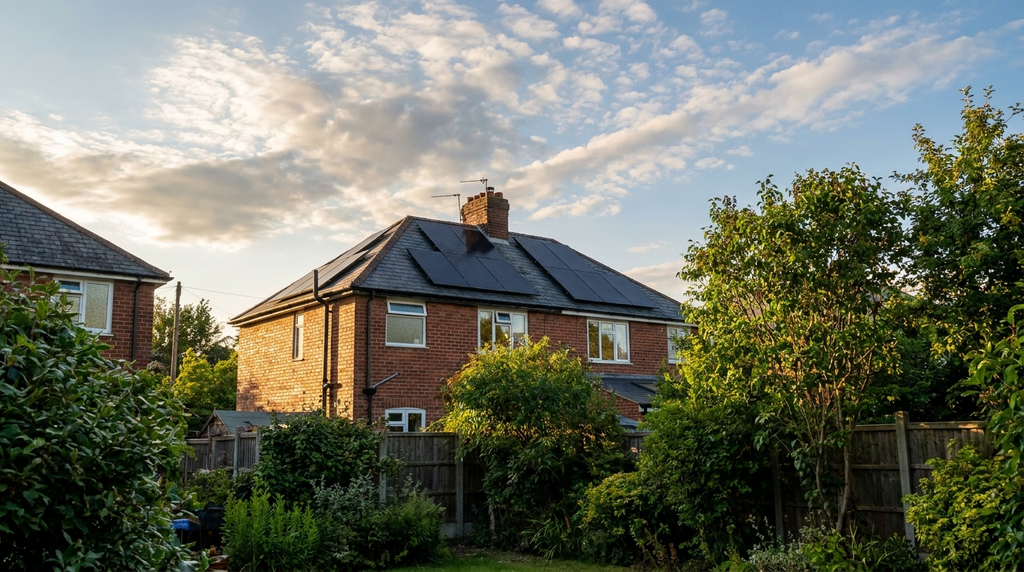
Property types across the county, The mix of homes in Aberdeenshire is diverse. Detached houses make up about 40% of the housing stock, which is higher than the Scottish average. That is great for solar because you have more roof space and fewer shading issues. Semi detached and terraced homes in towns like Peterhead and Fraserburgh work well too, especially if they have south facing roofs.
Flats are trickier. If you own a flat in Aberdeen city centre, you might not have exclusive roof rights. You would need permission from the building owner or factor. Some blocks are starting to install shared solar systems with battery storage for all residents. This is becoming more common in 2026.
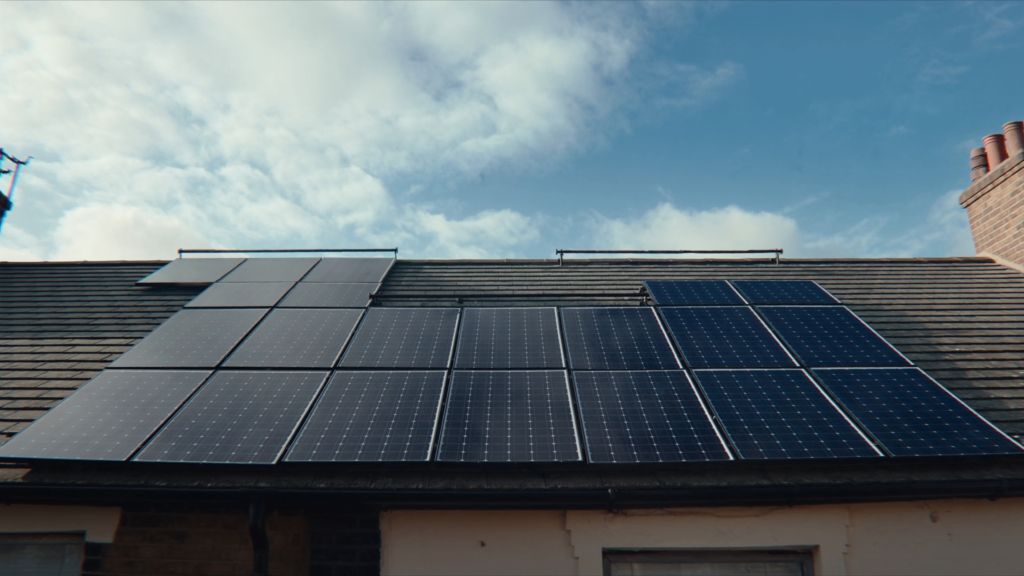
Orientation matters, A south facing roof is ideal, but east west facing roofs can also work well in Aberdeenshire. The long summer days mean you get decent generation from morning until evening. Just avoid north facing roofs unless you have a very large system.
The best Solar Panel Battery Storage options for Aberdeenshire homes
Based on our experience across the county, here are the products that perform best in Aberdeenshire conditions. I have focused on reliability, cold weather performance, and value for money.
Best for detached homes in Inverurie and Peterhead
For a typical 4 bed detached house, I recommend the Tesla Powerwall 3 paired with JA Solar 410W panels. The Powerwall 3 has a usable capacity of 13.5 kWh, which is enough to power most homes through a winter evening. It also works well in cold temperatures, down to -20°C. The JA Solar panels have a strong low light performance, which matters during our cloudy months.
Cost for this setup is around £14,500 installed. That includes the panels, battery, inverter, and all mounting hardware. You can expect to generate about 4,200 kWh per year from a 5.2 kW system.
Best for semi detached homes in Aberdeen and Fraserburgh
The GivEnergy 9.5 kWh battery with Trina Solar 410W panels is a fantastic mid range option. The GivEnergy battery is modular, so you can start with one battery and add another later if needed. The Trina panels are very efficient and come with a 25 year performance warranty.
This package costs around £10,800 installed for a 4.0 kW system. Annual generation is about 3,600 kWh. That covers most of a typical Aberdeenshire home electricity needs.
Best for terraced homes and smaller properties
The SolarEdge Home Battery 5 kWh with Longi 375W panels is perfect for smaller roofs. The SolarEdge system uses optimisers, which means if one panel is shaded by a chimney or neighbouring building, the rest still produce full power. This is very useful in terraced streets in towns like Peterhead.
Cost is around £7,900 installed for a 3.0 kW system. Annual generation is about 2,700 kWh. That covers most of your daytime usage plus some evening power from the battery.
Best budget option for any property
If you want to keep costs down, the FoxESS 3.5 kWh battery with Jinko 400W panels is a solid choice. FoxESS is Chinese made but has excellent reliability and a 10 year warranty. The system is simple to install and maintain.
Cost is around £6,500 installed for a 2.8 kW system. Annual generation is about 2,500 kWh. This is a great entry level option for homeowners in Aberdeenshire who want to start small and expand later.
Grants and funding for Solar Panel Battery Storage in 2026
This is where Aberdeenshire homeowners have a real advantage. Scotland offers some of the best funding support in the UK. Here is what you can access in 2026.
Home Energy Scotland interest free loan
This is the big one. Home Energy Scotland offers interest free loans of up to £15,000 for solar panel and battery storage installations. The loan is repayable over up to 12 years. There is no interest, no fees, and no early repayment penalties.
Eligibility is straightforward. You must own your home and live in Scotland. The property must have an EPC rating of E or better for the full £15,000. If your rating is F or G, you can still get up to £7,500. Most Aberdeenshire homes are band D, so you qualify for the full amount.
You apply through the Home Energy Scotland website. They will arrange a free home assessment, then connect you with approved installers. The loan is paid directly to the installer, so you do not need to pay upfront.
Warmer Homes Scotland
If you are on a low income or receive certain benefits, Warmer Homes Scotland can provide free solar panels and battery storage. This is a fully funded scheme. There is no repayment required.
Eligibility includes households with a total income under £20,000 per year, or those receiving Pension Credit, Universal Credit, or other qualifying benefits. In Aberdeenshire, this scheme has helped hundreds of households in Fraserburgh and Peterhead.
The Energy Company Obligation scheme is still running in 2026. This requires energy suppliers to fund energy efficiency improvements for low income households. Solar panels with battery storage can be included if they are deemed cost effective.
You qualify if you receive certain benefits or if your home has a very poor EPC rating. Your energy supplier will arrange the installation through their approved contractors.
Great British Insulation Scheme (GBIS)
This scheme is primarily for insulation, but it can also cover solar panels and battery storage in some cases. It is aimed at households with an EPC rating of D or below. In Aberdeenshire, this covers most homes.
Funding is limited and varies by region. Your best bet is to contact Home Energy Scotland first, as they can check your eligibility across all schemes.
Smart Export Guarantee (SEG)
This is not a grant, but it is worth mentioning. Once your system is installed, you can sell any excess electricity back to the grid. Most suppliers in Aberdeenshire offer rates between 4p and 8p per kWh. Octopus Energy offers a rate of 15p per kWh for customers with solar and battery storage, which is the best deal available.
Your installer will help you register for SEG. It adds about £100 to £200 per year to your savings.
How to find trusted Solar Panel Battery Storage installers in Aberdeenshire
Finding a good installer in Aberdeenshire is not difficult, but you need to know what to look for. Here is my practical guide.
Certifications that matter
Your installer must be registered with the Microgeneration Certification Scheme (MCS). This is essential for accessing grants and for SEG payments. Do not use any installer who is not MCS certified.
Look for installers who are also members of the Renewable Energy Consumer Code (RECC). This gives you extra protection if something goes wrong. In Aberdeenshire, most reputable installers hold both certifications.
How to get good quotes
Get at least three quotes from different installers. Compare the total cost, the equipment being used, and the warranty terms. A quote that is significantly cheaper than the others might mean lower quality equipment or poor installation.
Ask for a site survey before you accept any quote. A good installer will visit your home, check your roof condition, measure shading, and discuss your energy usage. They should not give you a quote over the phone without seeing your property.
Typical lead times
In 2026, lead times in Aberdeenshire are around 6 to 12 weeks from initial enquiry to installation. This includes the survey, ordering equipment, and scheduling the work. Some installers in Aberdeen city centre can do it in 4 weeks, while those serving Fraserburgh and Peterhead might take a bit longer due to travel.
How installer coverage works across the county
Most installers based in Aberdeen cover the whole county. They will travel to Fraserburgh, Inverurie, Peterhead, and all the smaller villages in between. Some will charge a small travel fee for very remote locations, but this is usually included in the quote.
I recommend using an installer who has experience in Aberdeenshire conditions. They will know how to handle the wind loading, the specific building regulations, and the local planning requirements. Ask them for examples of recent installations in your town.
Red flags to avoid
Be wary of anyone who promises you a specific amount of savings without seeing your energy bills. Be cautious of high pressure sales tactics or offers that expire the same day. And never pay the full amount upfront. A deposit of 10% to 20% is normal, with the balance paid on completion.
Savings you can expect from Solar Panel Battery Storage in Aberdeenshire
Let us get into the numbers that matter most. How much will you actually save with Solar Panel Battery Storage in Aberdeenshire. I have calculated these figures using the county average electricity usage of 3,450 kWh per year and typical generation data for our climate.
Annual savings breakdown
For a typical semi detached home in Aberdeenshire with a 4.0 kW system and a 5 kWh battery, here is what you can expect.
| Item | Value |
|---|---|
| Annual solar generation | 3,600 kWh |
| Electricity used directly from solar | 1,200 kWh |
| Electricity stored in battery and used later | 1,600 kWh |
| Electricity exported to grid | 800 kWh |
Towns in Aberdeenshire
Aberdeen
229,000 residents · EPC D
Fraserburgh
13,000 residents · EPC E
Inverurie
13,000 residents · EPC D
Peterhead
19,000 residents · EPC D Nearby Counties
Moray
87.4 km away
Angus
99.4 km away
City of Dundee
118.8 km away
Highland
124 km away
Perth and Kinross
141.1 km away Latest Guides on Battery Storage
Solar Panels
Eco shed electricity solar UKA single UK shed consumes roughly 650 kWh per year, equivalent to 18% of the average household electricity bill (Ofgem, 2026). If you run power tools, lights, or a small fridge in your shed, the electricity use adds up. Ofgem’s typical domestic consumption values (TDCVs) show a 2–3 bedroom home uses around 2,900 kWh per […]
Solar Panels
Solar garden lights, ranked (UK, 2026)Solar garden lights UK 2026 ranked Are solar garden lights a genuine alternative to mains-powered lighting, or are they still a compromise best left for summer evenings only? With electricity costs at historic highs, homeowners are looking for every possible saving. Quick Answer Solar garden lights cost 70-95% less to run than mains-powered equivalents, saving […]
Solar Panels
Solar diverter for EV chargingA solar diverter for EV charging costs roughly £600–£1,000 installed, which is about one-fifth the price of a typical home battery of equivalent usable capacity. If you have solar panels and an electric vehicle but no home battery, you are exporting surplus solar power to the grid during the day and paying retail rates to […]
Solar Panels
Best SEG tariff, ranked (2026)The Smart Export Guarantee pays you for surplus solar electricity, here is how the rates compare for 2026 The Smart Export Guarantee (SEG) requires larger electricity suppliers to pay you for surplus electricity your solar panels send to the grid. Ofgem sets the minimum SEG rate at 0p/kWh, meaning suppliers can pay nothing, but most […] Frequently Asked Questions About Solar Panel Battery Storage in Aberdeenshire – Costs, Installers and Savings GuideFor a typical Aberdeenshire home with EPC Band D, a good quality 5kWh battery system with installation usually costs between £4,500 and £7,000 in 2026. Prices have dropped about 15% since last year thanks to new Scottish supply chains. We recommend getting at least three quotes from local installers to find the best deal for your home. Yes, the Scottish Government's Home Energy Scotland program offers interest-free loans of up to £6,000 for solar battery storage in 2026, with no upfront fees. Aberdeenshire Council also provides a top-up grant of £500 for homes with EPC Band D or lower. These are available to all homeowners in the region, not just those on benefits. Start by checking the Home Energy Scotland approved installer list, which vets all local companies for quality and customer service. In Aberdeenshire, look for installers based in Inverurie, Stonehaven, or Banchory who regularly work with older homes. Always ask for recent customer references and ensure they are MCS certified for battery storage. Absolutely, modern lithium-ion batteries are very efficient even on overcast days common in Aberdeenshire. In 2026, most systems can still charge to 80% capacity from diffuse light, and they store energy overnight for morning use. Pairing with a smart meter lets you draw from the grid cheaply when solar generation is low. Yes, in 2026 the average Band D home in Aberdeenshire saves between £350 and £550 per year by using stored solar power instead of buying from the grid. This is because you can avoid peak rate electricity which is now 35p per kWh in Scotland. With the loan and grants available, many homeowners see payback within 6 to 8 years. For most homes in Aberdeenshire, solar panels and a battery system are permitted development and do not need planning permission as of 2026. However, if you live in a conservation area, a listed building, or a National Park like the Cairngorms, you must check with Aberdeenshire Council first. Your installer can usually handle this for you. Featured eco home guides.
Boilers & Heating
Heat pump permitted development changes 2025-2026The 2025–2026 rule changes removed the 1-metre boundary setback for most heat pump installations Planning rules for air source heat pumps changed significantly in England from 31 March 2025. The requirement for the outdoor unit to be at least one metre from the boundary of your property was removed for most homes. This change applies […]
Boilers & Heating
Refrigerant types in heat pumps explainedThe two most common heat pump refrigerants in 2026 are R-32 and R-290, and their costs differ by up to 40% If you are buying a heat pump in 2026, the refrigerant inside it directly affects the upfront price, the unit size, and the installer you need. R-32 is the current standard in most air-source […]
Boilers & Heating
Heat pump and solar combination explainedA heat pump and solar panel combination can cut your heating bills by 40–60% compared to a gas boiler. Many homeowners are looking for ways to reduce their heating costs and carbon footprint. A heat pump and solar panel system works together to achieve both goals. Quick Answer A heat pump solar combination saves £500–£1,100 […]
Boilers & Heating
Heat pump space requirements outside the homeThe single most important thing to know about heat pump space requirements Before buying an air source heat pump, you need to know exactly how much outdoor space the unit will occupy. The outdoor unit requires specific clearances for airflow, or the system will not work efficiently. Quick Answer Heat pump outdoor units need a […]
Boilers & Heating
Heat pump buffer tank explainedA buffer tank adds roughly £800–£1,500 to a heat pump installation, compared to a standard system without one. A heat pump buffer tank is a small water cylinder installed between the heat pump and your heating system. It stores a volume of heated water to prevent the heat pump from switching on and off too […]
Boilers & Heating
Heat pump cost calculator – the factors that matterHeat pump cost calculator – the factors that matter If you are considering replacing your gas boiler with a heat pump, the upfront price tag often raises the first question: what will this actually cost? The answer depends on a handful of key variables that interact with each other, meaning no two installations cost the […] Get Quotes in AberdeenshireCompare quotes from trusted local eco home installers. No obligation. Get a Free Quote |