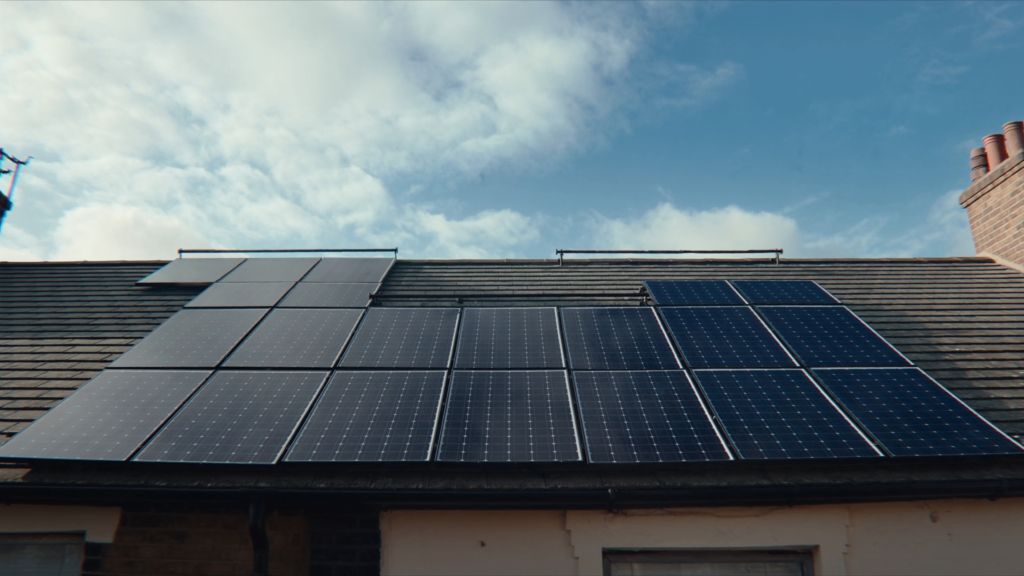
A solar diverter for EV charging costs roughly £600–£1,000 installed, which is about one-fifth the price of a typical home battery of equivalent usable capacity.
If you have solar panels and an electric vehicle but no home battery, you are exporting surplus solar power to the grid during the day and paying retail rates to charge your EV at night. A solar diverter offers a lower-cost alternative that uses your EV as the storage device instead.
A solar diverter for EV charging costs £600-£1,000 installed, saving £150-£250 per year by redirecting surplus solar to your car. Payback is 3-6 years, much faster than a home battery.
- Installed cost is £600-£1,000, one-fifth of a home battery.
- Saves £150-£250 per year on EV charging at 24p/kWh.
- Payback period is 3-6 years, much faster than a battery.
- Uses your EV as storage, no separate battery needed.
- Lifespan 10-15 years, longer than typical home batteries.
- A solar diverter for EV charging costs roughly £600–£1,000 installed, which is about one-fifth the price of a typical home battery of equivalent usable capacity.
- A solar diverter sends surplus solar power to your EV instead of exporting it to the grid
- Quick numbers cost, savings, and payback for a solar diverter with an EV
- The direct answer a solar diverter for EV charging can save you 30–50% of your annual EV charging cost
- Eligibility and certification what you need to check before buying a solar diverter
- Payback how long it takes for a solar diverter to pay for itself
- Compatibility which solar systems and EV chargers work with a solar diverter
- The alternative solar diverter vs. home battery for EV charging
The upfront cost of a solar diverter is typically £600 to £1,000 including installation, compared with £3,000 to £6,000 for a standard 5–10 kWh home battery (Energy Saving Trust, 2026). For homeowners who already have solar panels and an EV, the diverter can redirect surplus generation to the car without buying a dedicated battery.
A solar diverter sends surplus solar power to your EV instead of exporting it to the grid
The principle is straightforward. When your solar panels generate more electricity than your home is using at that moment, a current transformer (CT) clamp fitted to your main electricity cable detects the surplus. The diverter then signals the EV charger to draw that excess power and send it to your car.
The diverter does not store energy. It simply redirects real-time excess generation from your solar system to the EV charger. Your car’s battery acts as the storage medium, so no separate home battery is needed for this function (Ofgem, 2026). The system works continuously, ramping the charging rate up and down to match the available surplus.
Quick numbers cost, savings, and payback for a solar diverter with an EV
| Metric | Solar diverter only (no battery) | Solar diverter + battery | Grid-only charging (baseline) |
|---|---|---|---|
| Upfront cost (installed) | £600–£1,000 | £3,600–£7,000 | £0 |
| Annual solar miles covered | 3,000–5,000 miles | 5,000–8,000 miles | 0 miles |
| Annual electricity saving (at 24p/kWh) | £150–£250 | £250–£400 | £0 |
| Payback period (years) | 3–6 years | 8–12 years | N/A |
| Typical diverter lifespan | 10–15 years | 10–15 years | N/A |
Figures are based on a typical 3.5 kWp solar system, 10,000 miles per year EV usage, and a grid electricity price of 24p per kWh (DESNZ, 2026; Energy Saving Trust, 2026).
The direct answer a solar diverter for EV charging can save you 30–50% of your annual EV charging cost
A solar diverter typically saves 30% to 50% of your annual EV charging cost, based on a 3–4 kWp solar system, 10,000 miles per year of driving, and average UK solar generation (DESNZ, 2026). The exact saving depends on how much surplus solar you generate during daylight hours when the EV is plugged in.
If you work from home and can plug in during the day, you may capture more surplus and save closer to 50%. If you are rarely at home during sunlight hours, the saving drops towards 30% or less (Zap-Map, 2026). The diverter cannot store energy for later use, so your charging window matters.
Eligibility and certification what you need to check before buying a solar diverter
The diverter itself does not require MCS certification. However, the solar PV system it connects to must be MCS-certified if you want to qualify for the Smart Export Guarantee (SEG) tariff (GOV.UK, 2026). Without MCS certification on the solar array, you cannot receive payments for exported electricity.
The diverter must be installed by a qualified electrician registered with NICEIC or NAPIT, working to Part P of the Building Regulations (NICEIC, 2026; NAPiT, 2026). If you plan to claim a grant or future incentive for the EV charger itself, that charger must be on the Office for Zero Emission Vehicles (OZEV) approved list (GOV.UK, 2026).
Payback how long it takes for a solar diverter to pay for itself
Typical payback for a solar diverter is 3 to 6 years, based on an installed cost of £800 and annual savings of £150 to £250 (Energy Saving Trust, 2026). The exact payback depends on your solar system size, EV mileage, and grid electricity price.
Compare this to a home battery payback of 8 to 12 years for the same solar system and EV usage (DESNZ, 2026). The diverter’s faster return on investment makes it a more attractive option if you can charge your EV during daylight hours and do not need to store energy for evening use.
Compatibility which solar systems and EV chargers work with a solar diverter
Most solar diverters work with single-phase solar PV systems and any EV charger that accepts AC power. The diverter connects between your consumer unit and the EV charger, so the charger itself does not need to be solar-compatible (MCS, 2026).
The diverter must be compatible with your solar inverter. Popular models include myenergi Eddi, Solar iBoost, and generic CT-clamp models that work with most inverters. Smart chargers with built-in solar divert functions, such as the Zappi or Ohme Home Pro, integrate the diverter into the charger itself, which can simplify installation (GOV.UK, 2026).
If you have a three-phase solar system or a three-phase EV charger, check compatibility carefully. Not all diverters support three-phase setups.
The alternative solar diverter vs. home battery for EV charging
A solar diverter is cheaper upfront but cannot store energy for evening charging. A home battery can charge from solar during the day and discharge to the EV at night, giving you more flexibility (Energy Saving Trust, 2026).
For homeowners who charge their EV during daylight hours, such as people working from home or those with off-peak solar generation, a diverter is often sufficient. If you need to charge the EV after dark, a battery or a time-of-use tariff like Octopus Flux is more effective (Octopus Energy, 2026).
Compare solar diverter vs battery for EV charging in more detail
Guide to Smart Export Guarantee tariffs for solar homeowners
Frequently Asked Questions
A solar diverter costs £600-£1,000 installed, according to the Energy Saving Trust. This is roughly one-fifth the price of a typical 5-10 kWh home battery.
Most solar diverters work with type 2 EV chargers, but compatibility varies. Check with the manufacturer or MCS certified installer before purchase.
You can save £150-£250 per year at 24p/kWh, covering 3,000-5,000 solar miles annually. Actual savings depend on your solar generation and driving habits.
A solar diverter is cheaper and has a faster payback (3-6 years vs 8-12 years) if you already have solar and an EV. A battery stores energy for night use, but costs £3,000-£6,000.
A typical solar diverter lasts 10-15 years, according to Ofgem. This is similar to the lifespan of a solar inverter.