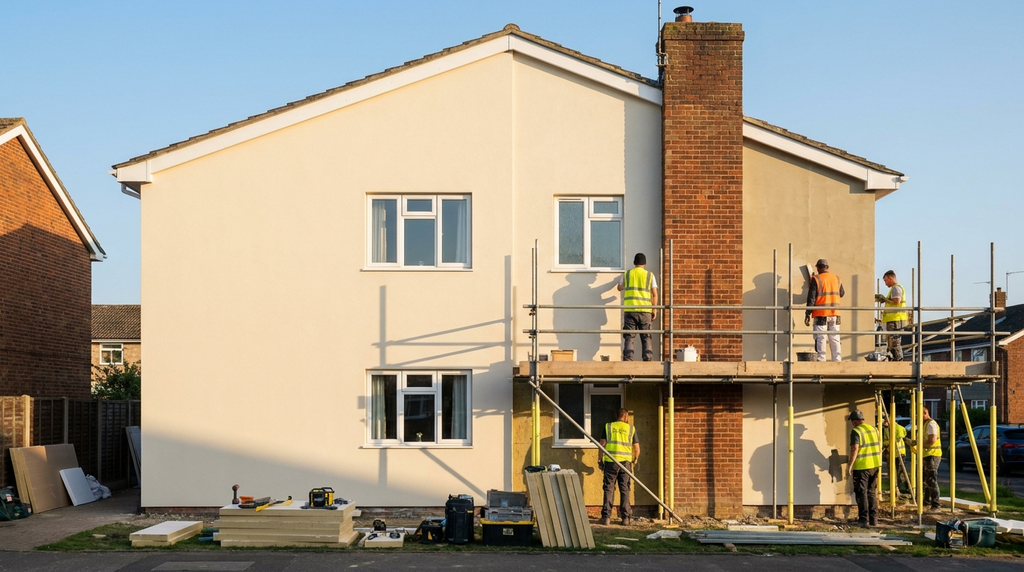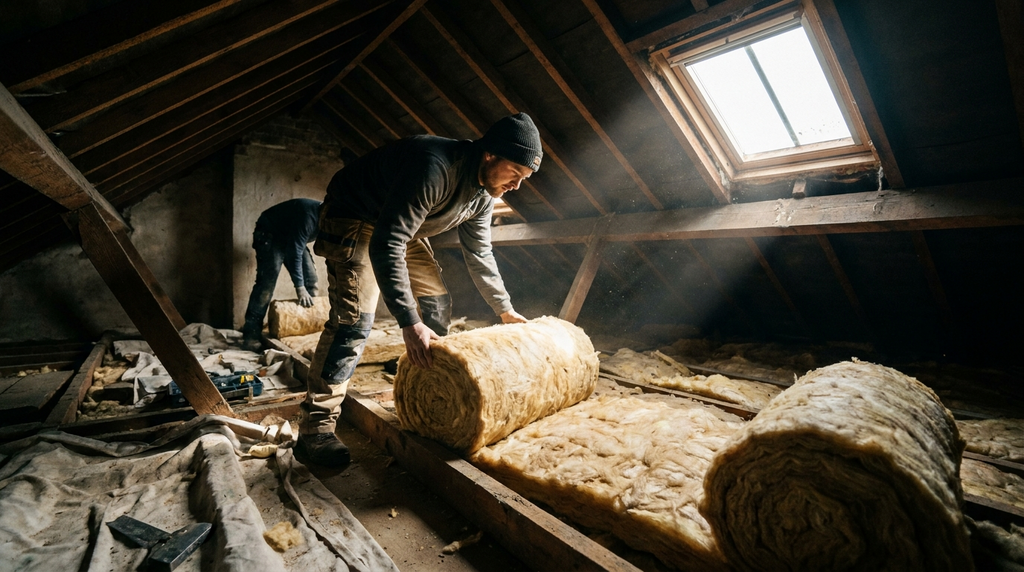
Installing insulation on a Welsh stone wall costs roughly £60–£120 per square metre
The final price for insulating a Welsh stone wall depends on two main variables: the wall’s construction type, solid stone, rubble-filled, or lined, and the insulation method you choose. Internal insulation using PIR boards, wood fibre, or insulated plasterboard typically costs between £60 and £90 per square metre for supply and installation, according to Energy Saving Trust 2026 cost tables (Energy Saving Trust, 2026). External insulation, which involves fixing a rendered insulation system to the outer face, runs higher at £100–£120 per square metre, but is only suitable for walls without listed-building or conservation-area restrictions (DESNZ retrofit cost data, 2026).
Welsh stone wall insulation costs £60–£120 per square metre, with internal PIR at £60–£90 and external rendered systems at £100–£120. The final price depends on wall construction type and whether your property is listed, which typically bans external insulation.
- Internal insulation costs £60–£90 per m² for PIR or wood fibre.
- External insulation ranges £100–£120 per m² but is often prohibited for listed buildings.
- A typical semi-detached stone cottage costs £3,000–£6,000 total.
- Uninsulated Welsh stone walls lose heat at 2.0–2.5 W/m²K.
- 100mm PIR insulation cuts U-value to 0.25 W/m²K, meeting Part L.
- Installing insulation on a Welsh stone wall costs roughly £60–£120 per square metre
- The typical U-value of an uninsulated Welsh stone wall is 2.0–2.5 W/m²K
- Internal insulation is the most common retrofit method for Welsh stone walls
- Quick numbers key cost and performance figures for Welsh stone wall insulation
- The payback period for insulating a Welsh stone wall is 10–20 years, depending on heating type
- The Great British Insulation Scheme closed on 31 March 2026. It funded insulation measures only and never covered windows or glazing.
- Welsh stone walls require a vapour-permeable insulation system to avoid damp
- The direct answer to "does Welsh stone wall insulation work?" is yes, but only with the right system and installer
For a typical semi-detached stone cottage with roughly 50 square metres of wall area, total installation costs range from £3,000 for internal PIR to £6,000 for external rendered systems. If your property is listed or in a conservation area, external insulation is almost certainly prohibited, making internal insulation the only viable option. Always obtain multiple quotes from certified installers, as prices vary significantly by region and wall condition.
The typical U-value of an uninsulated Welsh stone wall is 2.0–2.5 W/m²K
Solid stone walls without a cavity lose heat at roughly 2.0 to 2.5 W/m²K, compared to 0.3 W/m²K for a modern insulated cavity wall, according to the BRE U-value calculator (BRE, 2026). A 100mm layer of PIR insulation with a thermal conductivity (k-value) of 0.022 W/mK can reduce the U-value to around 0.25 W/m²K. A 120mm layer of wood-fibre insulation, which has a higher k-value of 0.040 W/mK, achieves approximately 0.30 W/m²K, sufficient to meet current Building Regulations Part L requirements for solid walls (DESNZ SAP tables, 2026).
The dramatic improvement from 2.0–2.5 W/m²K down to 0.25–0.30 W/m²K is a heat-loss reduction of roughly 85–90%. This means the insulated wall retains heat far more effectively, cutting the energy needed to keep the room warm. However, the exact U-value achieved depends on the wall’s thickness, the stone type (granite, sandstone, or limestone), and the quality of installation, specifically, avoiding thermal bridges at junctions with floors, ceilings, and windows.
Internal insulation is the most common retrofit method for Welsh stone walls
Internal insulation involves fixing insulation boards, PIR, phenolic, or natural fibre, to the inner face of the stone wall, then plastering or dry-lining over them. This method preserves the external stone appearance, which is critical for listed buildings or conservation areas where altering the facade is not permitted (Historic England, 2026). The main trade-off is loss of internal floor space; insulated plasterboard systems typically add 60–80mm per wall, reducing room dimensions by that amount on each insulated face.
For rubble-filled walls, common in older Welsh properties, internal insulation requires careful detailing to avoid trapping moisture within the wall core. Installers must use vapour-permeable materials or incorporate a ventilated cavity to allow the wall to breathe. MCS installer survey data indicates that internal insulation accounts for over 80% of solid wall insulation installations in Wales, largely due to the prevalence of listed buildings and conservation areas (MCS, 2026).
Quick numbers key cost and performance figures for Welsh stone wall insulation
| Insulation type | Cost per m² | Typical U-value achieved | Thickness needed | Internal floor-space loss | Suitable for listed buildings? |
|---|---|---|---|---|---|
| Internal PIR boards | £60–£80 | 0.25 W/m²K | 100mm | 60–80mm per wall | Yes, with vapour-control layer |
| Internal wood fibre | £70–£90 | 0.30 W/m²K | 120mm | 80–100mm per wall | Yes, vapour-permeable |
| External rendered system | £100–£120 | 0.25 W/m²K | 80–100mm | None | No (alters facade) |
Costs and U-values sourced from EST 2026 cost tables (Energy Saving Trust, 2026), BRE U-value calculator (BRE, 2026), and Historic England guidance (Historic England, 2026).
The payback period for insulating a Welsh stone wall is 10–20 years, depending on heating type
A typical semi-detached stone-walled house saves between £200 and £400 per year on heating bills after full wall insulation, according to the Energy Saving Trust solid wall insulation savings calculator (Energy Saving Trust, 2026). With installation costs of £3,000 to £6,000 for a medium-sized wall, the simple payback period ranges from 10 to 20 years. Savings are significantly higher if you are replacing electric heating, saving £300–£500 per year, compared to gas central heating, which saves £150–£250 per year (Ofgem typical domestic consumption values, 2026).
The payback period also depends on your current wall U-value, the efficiency of your heating system, and future energy prices. If you heat with oil or LPG, savings fall between the gas and electric figures. While a 10–20 year payback may seem long, the insulation lasts for the lifetime of the building (50+ years if properly maintained), so the cumulative savings over several decades are substantial. Solid wall insulation payback calculator
The Great British Insulation Scheme closed on 31 March 2026. It funded insulation measures only and never covered windows or glazing.
The Great British Insulation Scheme and ECO4 require all wall insulation work to be carried out by an MCS-certified installer. For internal insulation, the installer must hold MCS certification under the relevant product standard, specifically MCS 023 for solid wall insulation (GOV.UK, 2026). For external insulation, the installer must also be TrustMark-registered and use products with a valid BBA certificate or equivalent (TrustMark, 2026).
Using an uncertified installer voids eligibility for government grants and may also invalidate your building warranty or insurance. Always check the MCS register (MCS, 2026) before hiring, and request proof of certification in writing. If you are not using a grant scheme, certification is not legally required, but it remains strongly recommended to ensure the work meets industry standards and avoids damp or structural issues.
Welsh stone walls require a vapour-permeable insulation system to avoid damp
Solid stone walls rely on evaporation to manage moisture, sealing them with non-breathable insulation can trap water within the wall and cause rot, mould, or frost damage. Natural fibre insulations such as wood fibre, hemp, and sheep’s wool are vapour-open. This allows moisture to pass through and reducing condensation risk (Historic England, 2026). PIR or phenolic boards, which are vapour-closed, must be paired with a vapour-control layer and a ventilated cavity to avoid moisture build-up (BRE Good Building Guide 88, 2026).
For rubble-filled stone walls, which contain loose stone and mortar debris, vapour-permeable systems are especially critical because the wall core holds more moisture than solid stone. A professional survey is essential before any insulation work to assess the wall’s moisture content and recommend the appropriate system. Skipping this step risks long-term damage that can cost far more to repair than the insulation itself. Damp proofing for stone walls
The direct answer to “does Welsh stone wall insulation work?” is yes, but only with the right system and installer
When correctly installed with vapour-permeable materials and proper detailing, solid wall insulation reduces heat loss by 60–70%, according to Energy Saving Trust field trial data (Energy Saving Trust, 2026). The key is matching the insulation type to the wall’s construction, rubble-filled walls need different detailing than solid stone, and listed buildings impose additional constraints. A poorly chosen or installed system can cause damp, mould, and structural damage, so certification and professional assessment are essential (DESNZ monitoring reports, 2026).
For most Welsh stone-walled homes, internal insulation with vapour-permeable wood fibre or PIR with a ventilated cavity offers the best balance of cost, performance, and regulatory compliance. External insulation is faster and loses no floor space, but is rarely permitted on historic buildings. Whichever method you choose, invest in a certified installer and a thorough pre-installation survey to ensure the system works for your specific wall type. Choosing the right insulation type for your home
Frequently Asked Questions
Internal insulation costs £60–£90 per m² for supply and installation, according to Energy Saving Trust 2026 cost tables. External insulation runs £100–£120 per m² but is rarely allowed on listed buildings.
Yes, external insulation is possible at £100–£120 per m², but it is almost always prohibited for listed buildings or those in conservation areas, as confirmed by DESNZ retrofit cost data (2026).
100mm PIR insulation with a k-value of 0.022 W/mK reduces the U-value from 2.0–2.5 W/m²K to around 0.25 W/m²K, meeting Building Regulations Part L requirements, per DESNZ SAP tables (2026).
Wood fibre (120mm, k-value 0.040 W/mK) achieves a U-value of 0.30 W/m²K, slightly higher than PIR, but it is more breathable and suitable for older stone walls. Both meet Part L, according to BRE data.
For a semi-detached stone cottage with 50 m² of wall area, internal insulation costs roughly £3,000–£4,500, while external systems run £5,000–£6,000, based on Energy Saving Trust and DESNZ estimates.