Garden office insulation costs about £1,200–£2,500 for a 20 m² structure, roughly half the price of heating it with a space heater for a decade.
If you are building or renovating a garden office, the biggest decision is whether to insulate it properly. The upfront cost of insulating a 20 m² structure runs between £1,200 and £2,500, according to the Energy Saving Trust’s guide to outbuilding insulation (Energy Saving Trust, 2026). By contrast, heating that same uninsulated space with an electric space heater for ten years would cost roughly £2,400 to £5,000, based on Ofgem’s 2026 price cap unit rates for electricity (Ofgem, 2026). Insulation pays for itself in energy savings within five to eight years, and then keeps saving you money.
Garden office insulation costs £1,200–£2,500 for a 20m² structure, cutting heating bills by 60–70%. The upfront cost pays for itself in energy savings within five to eight years.
- Insulate a 20m² garden office for £1,200–£2,500 upfront.
- Cut heating bills by 60–70% compared to an uninsulated structure.
- Insulation pays for itself in energy savings within 5–8 years.
- PIR boards offer the best thermal performance per thickness for outbuildings.
- Heating an uninsulated space costs £2,400–£5,000 over ten years.
- Garden office insulation costs about £1,200–£2,500 for a 20 m² structure, roughly half the price of heating it with a space heater for a decade.
- Garden office insulation reduces heating bills by 60–70 % compared to an uninsulated structure
- The three most common insulation materials for garden offices are PIR boards, mineral wool, and multifoil
- Quick numbers
- The direct answer to "garden office insulation" is to use 100 mm of PIR board in walls and roof, plus 50 mm of rigid foam under a floating floor, achieving a U-value of 0.18 W/m²K
- You must use a certified installer if the garden office is over 30 m² or connected to mains services
- Insulating a garden office floor is non-negotiable for preventing damp and achieving a warm space
- Roof insulation in a garden office must include a vapour control layer to prevent condensation
Garden office insulation reduces heating bills by 60–70 % compared to an uninsulated structure
The primary benefit of garden office insulation is energy saving. Department for Energy Security and Net Zero (DESNZ) analysis of insulated versus uninsulated outbuildings, published in January 2026, found that proper insulation cuts heating demand by 60 to 70 percent (DESNZ, 2026). Uninsulated garden offices lose heat rapidly through walls, roof, and floor, forcing an electric heater to run almost constantly to maintain a comfortable temperature. Insulation creates a thermal envelope that retains heat, so the heater cycles on and off far less often. That translates directly into lower electricity bills and a more consistent indoor temperature.
The three most common insulation materials for garden offices are PIR boards, mineral wool, and multifoil
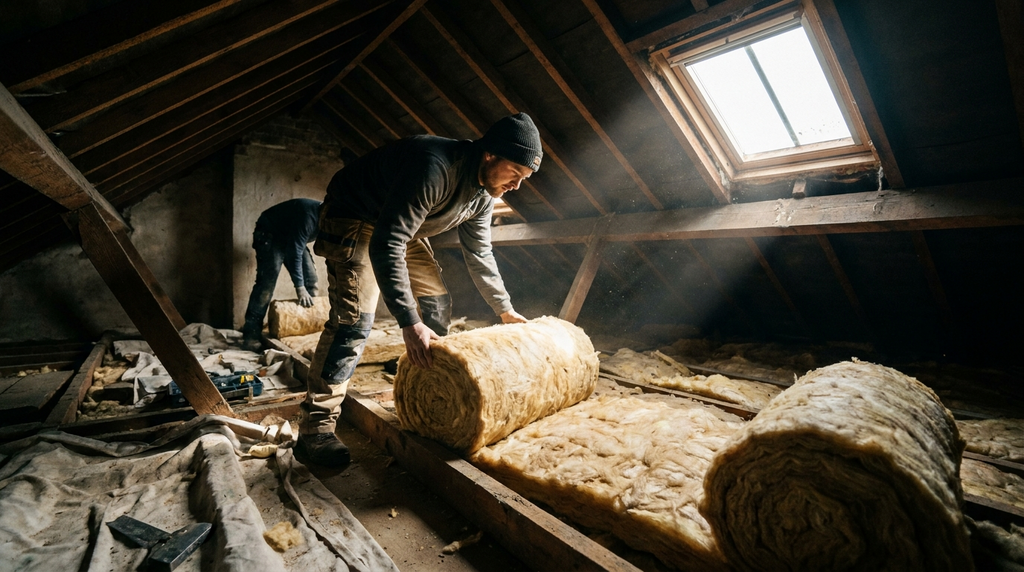
PIR (polyisocyanurate) boards are the most popular choice. They offer the highest thermal performance per thickness, with a U-value of 0.022 to 0.028 W/m²K per 100 mm, according to the Microgeneration Certification Scheme product database (MCS, 2026). U-value measures how quickly heat passes through a material; lower numbers mean better insulation. Mineral wool (rock or glass fibre) is cheaper but needs more depth to achieve the same performance, its U-value is around 0.044 W/m²K per 100 mm. Multifoil insulation reflects radiant heat but performs poorly in cold climates when used alone. The MCS database shows multifoil U-values often above 0.30 W/m²K, which is far too high to meet Building Regulations targets without adding a thicker layer of another material.
Quick numbers
| Insulation material | Typical thickness needed for 0.18 U-value (Building Regs target) | Cost per m² installed | R-value per 100 mm | Lifespan (years) |
|---|---|---|---|---|
| PIR board | 100 mm | £30–£50 | 4.5–5.0 | 50+ |
| Mineral wool | 200 mm | £15–£25 | 2.5–3.0 | 40+ |
| Multifoil | Not suitable alone | £20–£35 | 0.3–0.5 | 30+ |
| Spray foam | 100 mm | £40–£70 | 4.0–4.5 | 50+ |
Costs and performance figures are sourced from the Energy Saving Trust cost guide (Energy Saving Trust, 2026), MCS product data (MCS, 2026), and Building Regulations Approved Document L1B (GOV.UK, 2026).
The direct answer to “garden office insulation” is to use 100 mm of PIR board in walls and roof, plus 50 mm of rigid foam under a floating floor, achieving a U-value of 0.18 W/m²K
This specification is the most cost-effective, code-compliant approach for a garden office. Building Regulations Approved Document L1B sets a U-value target of 0.18 W/m²K for new-build outbuildings that are heated (GOV.UK, 2026). PIR board is the industry standard because it balances high performance, reasonable cost, and straightforward installation. Floor insulation is often overlooked but critical: 50 mm of rigid foam (PIR or XPS) under a floating floor stops cold bridging and damp ingress. MCS product listings confirm that 100 mm PIR boards in walls and roof, combined with 50 mm under the floor, consistently achieve the 0.18 target (MCS, 2026).
You must use a certified installer if the garden office is over 30 m² or connected to mains services
Installers must be MCS-certified for insulation work that is tied to heating systems, such as underfloor heating. For standalone garden offices, Building Control approval is needed if the structure exceeds 30 m² floor area or is within 1 metre of a boundary, as stated on the GOV.UK planning page for outbuildings (GOV.UK, 2026). Check installer credentials on the MCS register at mcs.uk or via TrustMark at trustmark.org.uk. Using an uncertified installer for a larger or connected outbuilding can invalidate your buildings insurance and cause problems when you sell the property.
Insulating a garden office floor is non-negotiable for preventing damp and achieving a warm space
An uninsulated concrete or timber floor can lose up to 15 percent of the heat from the room and will wick moisture from the ground, according to Building Regulations Approved Document C (GOV.UK, 2026). The solution is to install 50 to 75 mm of rigid foam (PIR or XPS) under a plywood or OSB subfloor, with a damp-proof membrane between the ground and the insulation. The Energy Saving Trust guide to floor insulation confirms this method stops damp and keeps the floor warm to the touch (Energy Saving Trust, 2026). Skipping floor insulation is the most common mistake in garden office builds, and it makes the space unusable in winter.
Roof insulation in a garden office must include a vapour control layer to prevent condensation
You have two options for roof insulation: a warm roof (insulation above the rafters) or a cold roof (insulation between rafters). The NHBC technical guidance for outbuildings recommends a warm roof for garden offices because it avoids condensation problems (NHBC, 2026). Whichever method you choose, a vapour control layer (VCL) must be installed on the warm side of the insulation, the side facing the room. The VCL stops moist internal air from reaching the cold roof deck, where it would condense and cause rot. Building Regulations Approved Document F sets ventilation requirements that work alongside the VCL to keep the roof structure dry (GOV.UK, 2026).
How to insulate a garden room floor
Garden office planning permission rules 2026
Frequently Asked Questions
Insulating a 20m² garden office costs between £1,200 and £2,500, according to the Energy Saving Trust's 2026 guide. This upfront cost is roughly half the price of heating an uninsulated space with an electric heater for a decade.
Yes, garden office insulation cuts heating bills by 60–70%, based on DESNZ analysis published in January 2026. Proper insulation retains heat, so your heater runs far less often.
PIR boards are the most popular choice, offering a U-value of 0.022 to 0.028 W/m²K per 100mm, according to the MCS product database (2026). They provide the highest thermal performance per thickness.
Garden office insulation typically pays for itself in energy savings within five to eight years. After that, it continues to save you money on heating costs.
Yes, you can retrofit insulation to an existing garden office. Costs and material choices are similar to new builds, though installation may be more complex depending on access to walls and roof.