A typical uninsulated loft loses £200–£300 a year in heating, spray foam alternatives can cut that for less than half the cost.
If you are considering loft or cavity wall insulation, spray foam is often presented as a high-performance, all-in-one solution. However, it comes with a significant cost premium and some well-documented moisture risks that make it unsuitable for many homes.
Spray foam alternatives cost £10–£20 per m² installed, half the £25–£45 per m² for spray foam. Mineral wool and PIR board are the most common options, with payback periods of 4–7 years compared to 8–12 years for spray foam (Energy Saving Trust, 2026).
- Mineral wool costs £10–£15 per m² installed, half spray foam's price.
- PIR rigid board achieves U-values of 0.18–0.22 W/m²K at 100–150 mm.
- EPS bead injection for cavity walls costs £12–£18 per m² installed.
- Cellulose fibre offers comparable U-values at £14–£20 per m².
- Payback for alternatives is 4–7 years, half spray foam's 8–12 years.
- A typical uninsulated loft loses £200–£300 a year in heating, spray foam alternatives can cut that for less than half the cost.
- The plain-English answer mineral wool and PIR board are the most common and cost-effective spray foam alternatives
- What each alternative actually costs to install in a typical 3-bed semi-detached house
- How to verify an installer MCS certification is mandatory for cavity wall insulation and many loft insulation schemes
- Energy savings how much you could cut your heating bill with each alternative
- The catch when spray foam might still be the better choice (and when it isn't)
The direct answer is that mineral wool and PIR rigid board are the most common and cost-effective alternatives, typically costing £10–£20 per m² installed compared to £25–£45 per m² for spray foam (DESNZ cost data, 2026). Payback periods for these alternatives range from 4 to 7 years, roughly half the 8–12 years typical for spray foam (Energy Saving Trust, 2026).
Quick numbers cost, U-value, and payback for the main spray foam alternatives
| Insulation type | Typical installed cost per m² (2026) | Achievable U-value (W/m²K) | Typical payback period (years) |
|---|---|---|---|
| Mineral wool (loft roll) | £10–£15 | 0.16–0.20 (300 mm) | 4–6 |
| PIR rigid board (loft) | £15–£25 | 0.18–0.22 (100–150 mm) | 5–7 |
| EPS bead/cavity wall injection | £12–£18 | 0.30–0.35 | 4–6 |
| Cellulose fibre (loft) | £14–£20 | 0.16–0.20 (300 mm) | 5–7 |
| Spray foam (reference) | £25–£45 | 0.18–0.22 (100 mm) | 8–12 |
Source: MCS installer data, 2026; EST typical costs, 2026; DESNZ product U-value database, 2026.
Mineral wool and PIR board are the most common and cost-effective spray foam alternatives
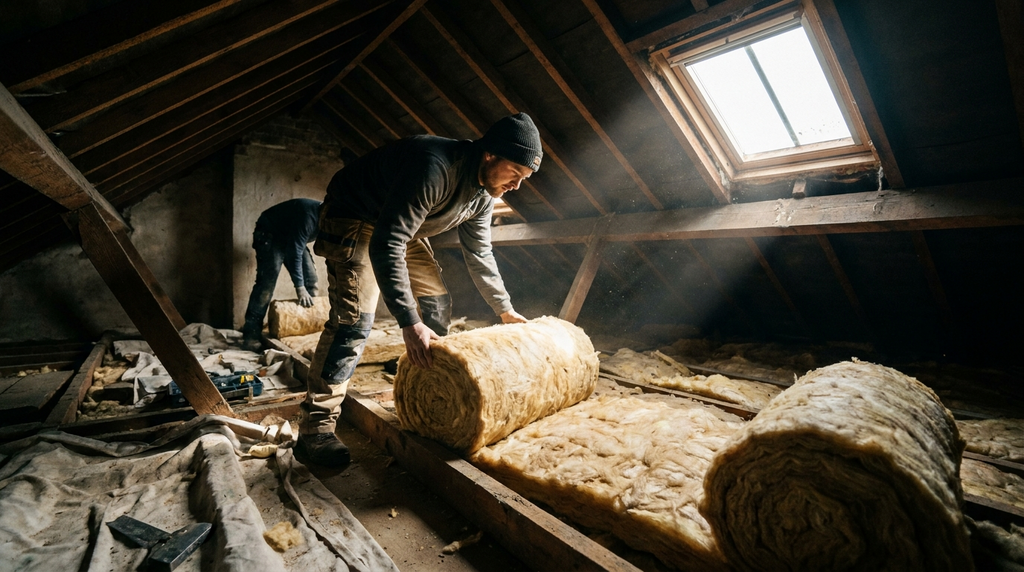
Mineral wool, which includes glass wool and rock fibre, is the standard loft insulation material used in the UK. It is vapour-permeable, meaning it allows moisture to escape rather than trapping it against timber, and it is non-toxic to handle with basic protective gear (Energy Saving Trust, 2026). At 300 mm thickness, mineral wool achieves a U-value of 0.16–0.20 W/m²K, which is equivalent to spray foam at roughly half the installed cost.
PIR rigid board offers higher thermal resistance per millimetre than mineral wool. That makes it the better choice for roofs with limited depth, for example, between rafters in a loft conversion. A 100–150 mm layer typically gives a U-value of 0.18–0.22 W/m²K (DESNZ product specifications, 2026). Unlike spray foam, PIR board requires a vapour-control layer in cold roof constructions to prevent condensation.
Both materials are widely available from builders’ merchants and can be installed by a competent DIYer or a general builder. No specialist spray equipment or certification is needed, which keeps installation costs lower. How to insulate your loft yourself
What each alternative actually costs to install in a typical 3-bed semi-detached house
For a typical 3-bed semi-detached house, ONS housing stock data indicates a loft area of approximately 100 m² and cavity wall area of about 80 m². Based on 2026 installer quotes, here are the typical installed costs:
- Loft mineral wool (100 m²): £1,000–£1,500 installed; a top-up from 100 mm to 300 mm costs £400–£600.
- PIR rigid board (100 m²): £1,500–£2,500 installed; includes cutting and fitting between rafters, plus vapour-control layer.
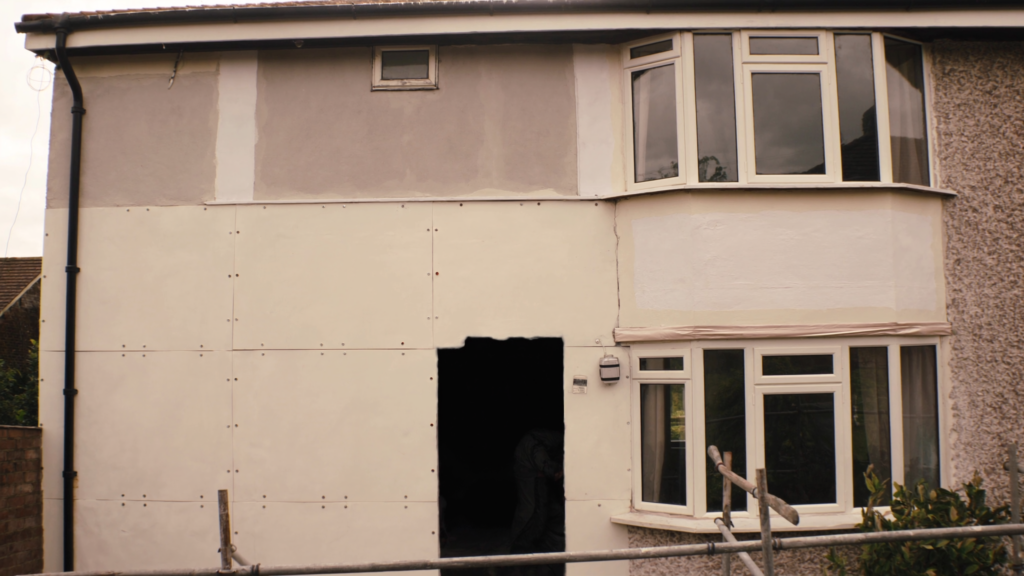
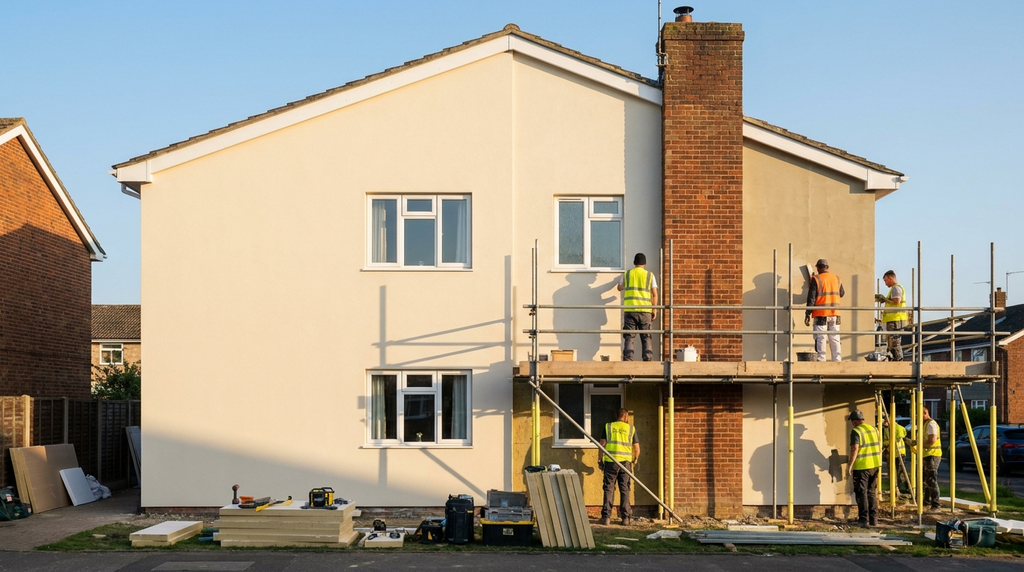
- EPS bead cavity wall (80 m²): £960–£1,440 installed; injected through small holes drilled in the external wall, with minimal disruption.
- Cellulose fibre (loft): £1,400–£2,000 installed; blown-in by an installer, good for irregular-shaped lofts with obstacles.
Source: EST typical installation cost data, 2026; MCS installer quotes, 2026.
How to verify an installer MCS certification is mandatory for cavity wall insulation and many loft insulation schemes
For cavity wall insulation using EPS bead or mineral wool injection, the installer must hold MCS certification under PAS 2030/2035. You can check the MCS register online to confirm an installer’s status.
For loft insulation using mineral wool or PIR board, MCS is not legally required. However, installers should hold TrustMark accreditation and ensure the work meets Building Regulations Part L (GOV.UK, 2026).
If you are using a government scheme such as ECO4 or the Great British Insulation Scheme, the installer must be MCS-certified and the work must comply with PAS 2035 standards (GOV.UK ECO4 rules, 2026).
Energy savings how much you could cut your heating bill with each alternative
The savings depend on your current heating system and fuel type. For a gas-heated semi-detached house, the Energy Saving Trust provides the following typical annual savings for 2026:
- Mineral wool loft insulation (from 0 mm to 300 mm): saves £200–£300 per year.
- PIR board roof insulation (between rafters): saves £180–£250 per year, depending on existing insulation levels.
- EPS bead cavity wall (from uninsulated): saves £150–£250 per year.
- Cellulose fibre loft insulation (from 0 mm to 300 mm): saves £200–£300 per year, comparable to mineral wool.
Source: EST typical savings tables, 2026; DESNZ fuel cost assumptions, 2026.
The catch when spray foam might still be the better choice (and when it isn’t)
Spray foam is useful for irregular-shaped roofs or areas with limited access where rolls or boards are impractical. For example, a roof with multiple dormers, pipework, or awkward angles can be sealed more completely with spray foam than with cut boards (BRE guidance on roof insulation, 2026).
However, spray foam carries a significant moisture risk. If not installed with a vapour-control layer and adequate ventilation, it can trap moisture against timber rafters, leading to rot and costly structural repairs. Mineral wool and PIR board avoid this risk because they are either vapour-permeable or installed with a deliberate vapour-control layer (BRE guidance on spray foam moisture risk, 2026).
If you have a warm roof construction, where insulation sits above the rafters rather than between them, spray foam may be one of the few practical options. Even then, it remains more expensive than alternative warm roof systems using PIR board or rigid mineral wool slabs (DESNZ technical guidance on roof insulation, 2026). Warm roof vs cold roof insulation explained
Frequently Asked Questions
Mineral wool loft roll is the cheapest spray foam alternative at £10–£15 per m² installed, according to Energy Saving Trust 2026 cost data. It achieves a U-value of 0.16–0.20 W/m²K at 300 mm thickness.
Yes, mineral wool is often better for lofts because it is vapour-permeable and lets moisture escape, avoiding timber rot risks. Energy Saving Trust confirms it is non-toxic with basic protective gear and costs half as much as spray foam.
PIR rigid board achieves a U-value of 0.18–0.22 W/m²K at 100–150 mm thickness, equivalent to spray foam at 100 mm. DESNZ product U-value data shows similar thermal performance for a lower installed cost of £15–£25 per m².
Yes, EPS bead injection is a common spray foam alternative for cavity walls, costing £12–£18 per m² installed. MCS installer data shows it achieves a U-value of 0.30–0.35 W/m²K with a payback period of 4–6 years.
Cellulose fibre insulation lasts 50+ years when properly installed, according to Energy Saving Trust. It costs £14–£20 per m² and achieves a U-value of 0.16–0.20 W/m²K at 300 mm thickness.