The sound of a good latch
There is a particular click that only solid brass makes. Not the hollow rattle of a die-cast zinc handle, nor the plasticky snap of a cheap lever set. It is a low, deliberate thunk, the sound of metal seating itself into metal with authority. You feel it through your palm before you hear it. On a wet November evening, when the door is swollen with rain and the key turns stiffly, that weight and warmth against cold fingers is quietly transformative. This is not about fashion. It is about the sensory experience of coming home, repeated hundreds of times a year, and how something as small as a handle can make every arrival feel considered.
Let your front door do the heavy lifting
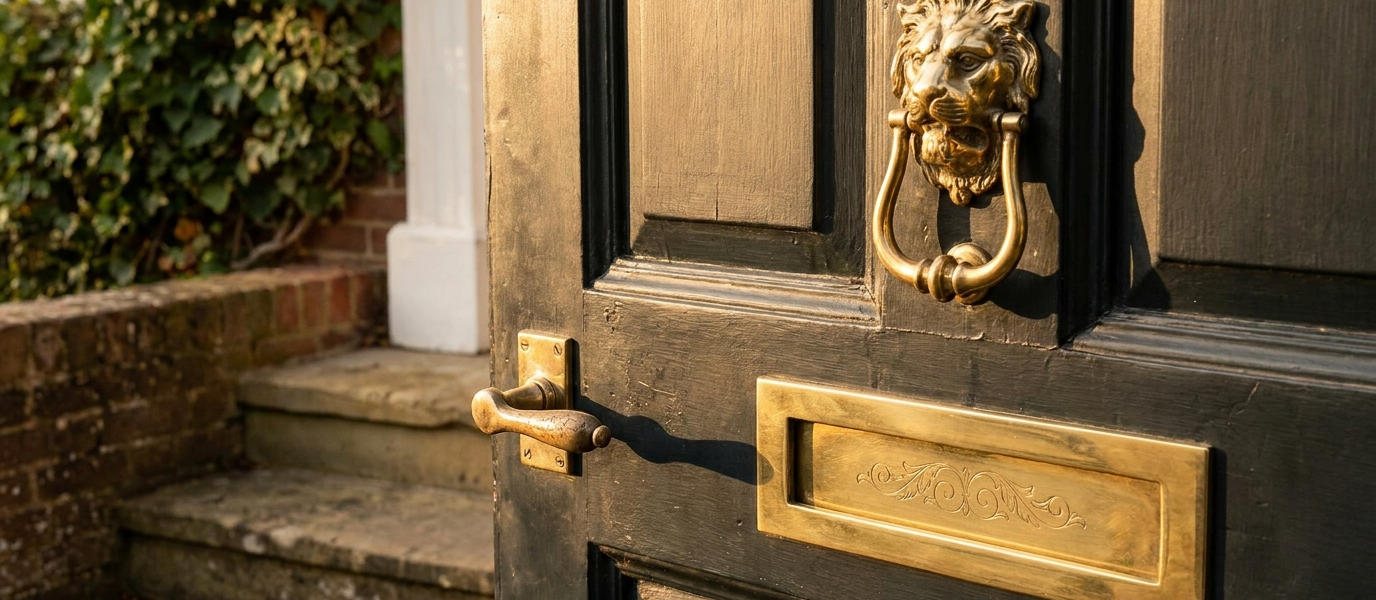
Your front door is the first thing you touch every single day. You turn its handle, pull it shut, lock it behind you. Why settle for plastic or hollow alloy when brass telegraphs permanence? On a period property, a Victorian terrace with panelled timber, a 1930s suntrap with its original frame, brass door furniture anchors the entire facade. It is the jewellery on a well-dressed house. Even on a modern composite door, a solid brass lever and letterplate lift the whole thing from functional to deliberate. You touch these handles hundreds of times a year. Every single one should feel like it was chosen on purpose, not picked from a rack at the builders’ merchant.
Pick a finish that softens with the seasons
The beauty of brass is that it refuses to stay still. Unlacquered brass patinas beautifully over time, darkening from a warm gold to a deep, mellow bronze. Polished brass stays bright and reflective, catching the morning sun like a mirror. Satin brass sits somewhere in between, soft, brushed, catching light differently at dusk. Your choice depends on where you live. A south-facing door gets full sun for hours, accelerating the patina process; unlacquered brass there will weather noticeably within months. A north-facing door under a porch will stay closer to its original colour for years. There is a quiet luxury in watching your handles darken and glow across autumns and winters, knowing that no factory finish could replicate that slow, natural evolution.
Why texture matters more than colour
A door handle is a tactile object first, visual second. The best brass door furniture understands this. Knurled grips give your fingers something to hold onto, a fine diamond pattern that feels secure even with wet hands. Smooth levers offer a clean, minimalist line but can feel slippery. Ribbed backplates catch the light and add a subtle rhythm to the door’s surface. Think of your front door as a canvas: the paint colour sets the mood, but the handle is the jewellery. A deep Farrow & Ball Railings blue or a soft Setting Plaster pink cries out for brass, not chrome. The contrast between warm metal and painted timber is where the magic lives. And it doesn’t stop at the door, brass letterboxes, knobs, and hinges tie the whole threshold together into something coherent rather than accidental.
Eight ways to soften a tall sash window
Your front door sets the tone, but the windows complete the picture. Consistent brass window furniture ties the facade together beautifully. Here are eight ways to bring that same warmth to your sash windows:
- Brass monkey-tail handles, the curved, elegant shape that sits flush against the frame when not in use.
- Brass sash lifts, recessed into the bottom rail, giving you a fingerhold to raise a heavy sash with dignity.
- Brass window stays, the slim arm that holds an open sash steady, available in polished or satin finishes.
- Brass finger plates, protecting the paintwork around the handle from daily grime, and adding a decorative strip of metal.
- Brass pulley wheels, hidden inside the frame, but their smooth, quiet operation changes the feel of opening a window entirely.
- Brass quadrant stays, for casement windows, offering a gentle arc of movement rather than a fixed position.
- Brass casement fasteners, the simple thumb-turn that secures the window, weighty and satisfying.
- Brass window catches, the small lever that locks the two sashes together, often overlooked but touched daily.
Each one changes the relationship between your hand and the window. The weight of brass makes opening a tall sash feel ceremonial, a deliberate act rather than a hurried shove.
The handle you reach for in the dark
Think about the last time you came home late. The street is quiet, the light above the door is off, and you are feeling for the keyhole by touch. That moment, hand outstretched in the dark, is when good brass door furniture earns its keep. The cool, solid weight of a night latch thumb turn. The reassuring heft of a lever as you push the door open. Brass ages differently in different rooms, too. A front door handle patinas faster than a back door handle, which sees less sun but more rain. A garden gate handle weathers to a deep, almost black bronze. These are not flaws. They are records of use, of weather, of the life lived through that threshold. Good brass door furniture outlasts paint colours, trends, and even the door itself. It is the one thing you will still be touching, years from now, that only gets better with time.