You pull back the curtain expecting the thin, hopeful light of a January morning, and instead you get a dust bunny, a forgotten phone charger, and a candle stub that smells of last year’s vanilla. The window was supposed to be the room’s release valve, but somewhere between September and now it became a shelf for the odds and ends that had no other home. The longing this resolves is simple: a room that breathes, where the window becomes a presence rather than a frame for clutter. Clearing the windowsill changes how you experience the first hour of daylight, and that shift is worth more than any decor purchase you could make this month.
This piece is about that shift. It’s about letting the window do what it was made for, and about the quiet, almost radical pleasure of a January morning where the first thing you see is the sky.
Let the glass do its job
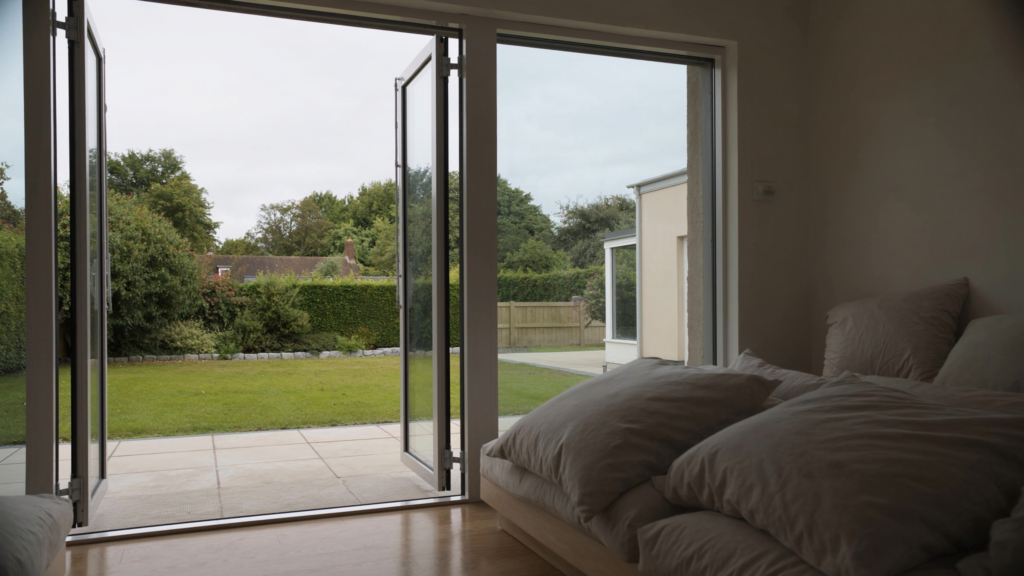
January light is low and precious. It arrives at a slant, barely clearing the rooftops, and every obstruction between it and the room is a loss. A clean, unobstructed pane changes the perceived size of a room, especially in older homes with smaller sash windows, where every inch of borrowed light counts. When the sill is clear, shadows fall cleanly across the floor. Reflections read as depth rather than distraction. The room feels larger not because you moved a wall, but because you stopped blocking the one surface that connects you to the outside.
There is a particular satisfaction in watching the morning sun travel across an empty sill. It lands, it moves, it leaves. You notice the quality of the light itself, its thinness, its patience, rather than the clutter it illuminates.
What stays, what goes, what gets a new home
Walk the windowsill like a curator. The dried lavender from September, it has given its scent and its colour; let it go to the compost. The stack of unread magazines, they belong in a basket by the sofa, not in front of the light. The tiny plant that never thrived, January is the month to admit defeat and find it a kinder spot, or to replace it with something that asks for nothing more than a weekly sip of water.
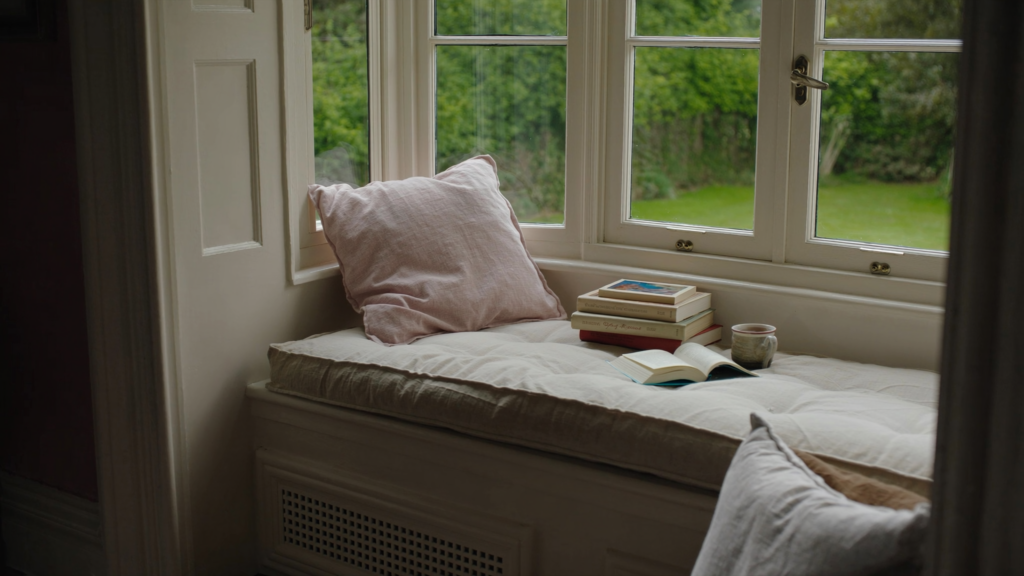
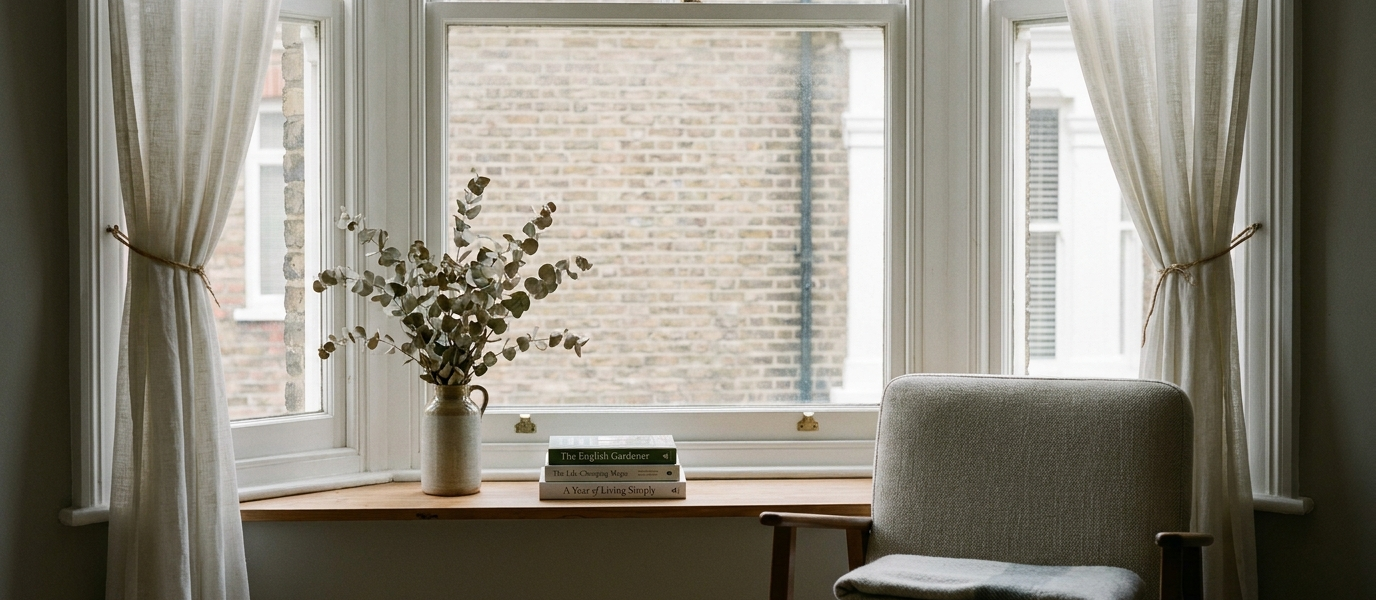
The question to ask is this: does this object earn its place in front of the light? If the answer is no, it moves. One category often overlooked is the window dressing itself. Blinds or curtains that are too heavy for the window’s proportions can block more light than a shelf of clutter. January, with its stripped-back mood, is the month to notice this and to plan a replacement, something in a linen or a light cotton that lets the glass breathe.
The view as a January reset
Treat the view, even if it’s a brick wall or a narrow side return, as a composition worth framing. Clean the glass properly: a microfibre cloth and a squeegee, working from top to bottom in a single continuous motion, with a drop of washing-up liquid in warm water. No streaks, no smears. The first clear morning of the year feels like a renovation, and it costs nothing but ten minutes and a bit of elbow grease.
The psychological lift is real. A clear window is a permission slip to start something, a new habit, a new project, a new way of being in your own home. It says that the year ahead is open, that you have room to move, that the light is on your side.
Three things that belong on a windowsill in winter
Not nothing, but nearly nothing. Three things, and each one earns its place.
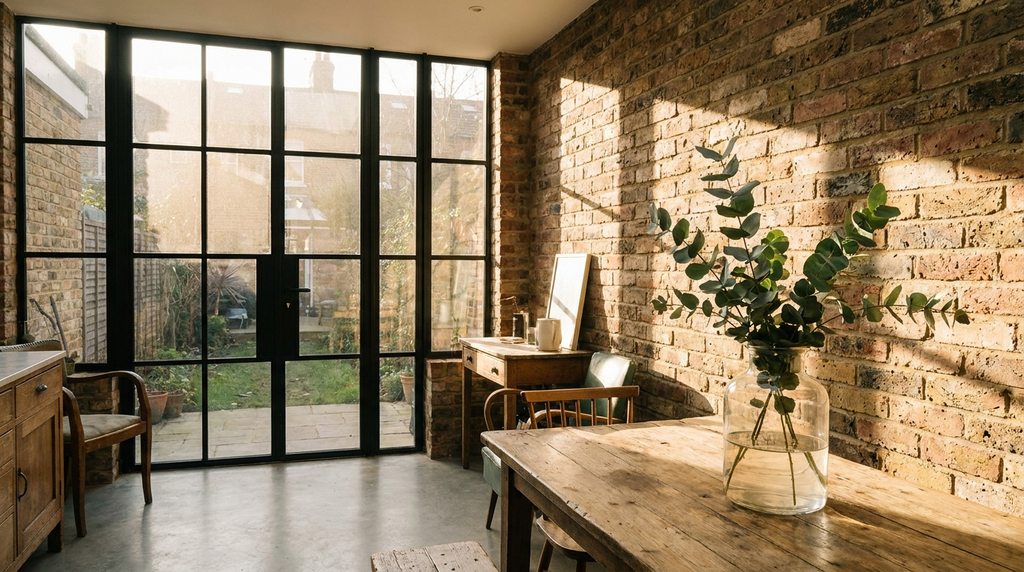
One: a single branch or stem with sculptural form. Bare twigs from the garden, dried eucalyptus from the florist, a sprig of rosemary from the kitchen windowsill. It should have shape, not volume. It should cast a shadow.
Two: a candle in a glass holder, placed low enough not to block the light. A pale beeswax or a creamy soy, nothing scented, nothing coloured. It is there for the evenings, when the window becomes a dark mirror and the flame doubles itself in the glass.
Three: nothing at all. The radical idea of an empty sill works best in a room with a single strong window, where the view is the decoration. It is the hardest thing to leave alone, and the most rewarding.
Why the frame matters as much as the glass
Decluttering isn’t just about what sits on the sill; it’s about the condition of the frame itself. A painted or restored frame draws the eye to the window rather than past it. There is a quiet satisfaction in a clean, well-finished frame, a soft Farrow & Ball Drop Cloth or a deep Setting Plaster pink, that holds the room together without shouting.
If the paint is peeling or the seal is fogged, January’s quiet weeks are the time to plan a refresh. This is not a sales pitch, just an observation about how finishes hold a room together. A window with a sound frame feels cared for. It changes how you sit in the room.
Eight ways to soften a tall sash window
Each of these is a small gesture, not a renovation. Taken together, they transform a tall sash from a drafty liability into the room’s best feature.
- Hang curtains from ceiling height, not from the top of the frame. This draws the eye up and makes the ceiling feel higher.
- Add a single shelf at mid-point for one small object, a piece of sea glass, a ceramic bird, a single book with a cloth cover.
- Use a roller blind that disappears into the top recess. No fabric visible when it’s up, just the clean line of the window.
- Place a low stool beneath the window for a seasonal display, a stack of firewood, a folded blanket, a single potted cyclamen.
- Keep the lower third of the window completely clear. This is where the light enters and where the eye rests.
- Choose a single warm colour for the frame, a deep ochre, a muted terracotta, a soft olive, and paint the sill to match.
- Let the upper sash remain fully visible. Don’t hang anything that cuts across it. The symmetry of the sash is its own ornament.
- Resist the urge to fill the ledge with plants. One, at most two, with clean lines. The rest of the sill stays empty.
The quiet reward of an uncluttered morning
The real gain is not organisation but attention. When the windowsill is clear, the window becomes a place to rest the eyes, not a task to manage. You sit with your tea and watch the light change. You notice the frost on the glass, the way the bare branches outside move in the wind, the slow arc of the sun across the floorboards.
The best decoration for a window in January is the light itself. It costs nothing, it asks nothing, and it changes every hour. Let it in.