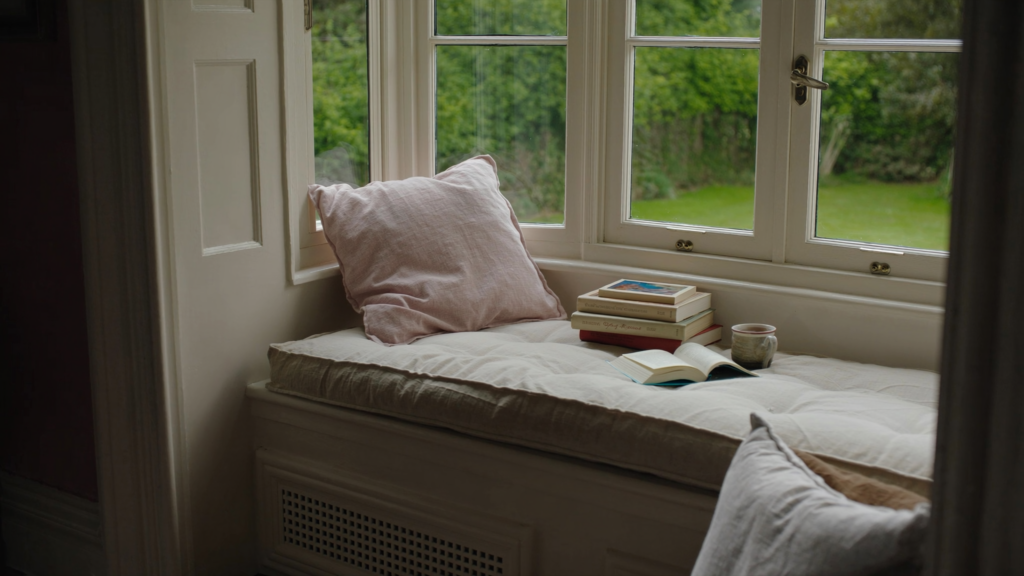
What a kitchen window can become
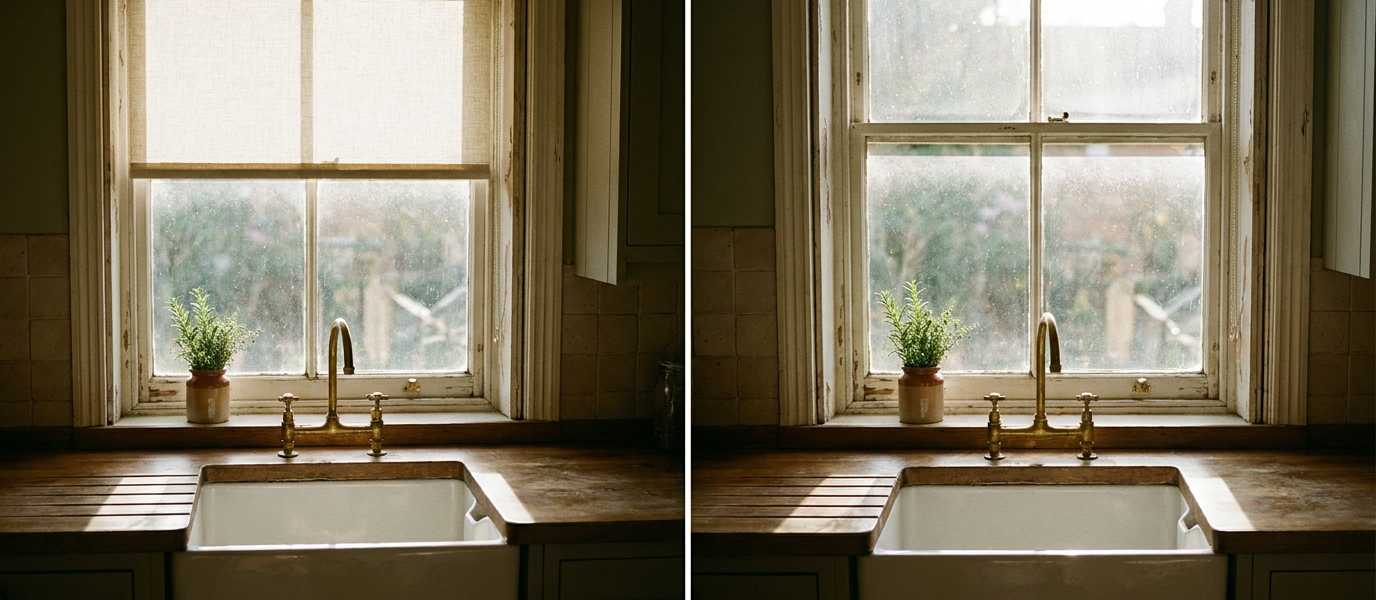
Imagine the scene: a bare pane of glass, steam clinging to it like a second skin. Water rings bloom on the sill. A set of net curtains, once crisp, now hangs limp and yellowed, defeated by years of bacon fat and boiling pasta. It’s the kitchen window at its most neglected, a practical hole in the wall that does nothing but let in light and show the dirt.
Now picture the after. A soft, layered dressing that frames the garden view even mid-boil. A Roman blind in a slubby linen that stays crisp through pancake morning, sheds steam like a duck’s back, and makes you want to linger over a second coffee. This is what a kitchen window can become: not a problem to solve, but a quiet anchor for the room. The kitchen window dressing you choose will either fight the space or settle into it. Get it right, and cooking stops feeling like work.
Let your front door do the heavy lifting (but your kitchen window breathe)
There’s a contradiction at the heart of every kitchen window. You want privacy and softness, a sense that the room is dressed, not bare. But you also need a dressing that can survive steam, grease, and the occasional rogue splash of tomato sauce. It’s a tall order, and many homeowners default to something too heavy, too fussy, or too cheap.
The key insight is this: the dressing should feel light, not heavy. Think Roman blinds in a tailored cotton, or a single linen panel that hangs from a ceiling track. Thick velvets and heavy brocades belong in a drawing room, not above a sink. A lighter dressing lifts the whole room. It lets you keep the sill clear for a row of herbs, a morning coffee, or a vase of garden flowers. And when the window is open, it moves with the breeze rather than fighting it. That lightness is what makes a kitchen feel like a kitchen, practical, yes, but also alive.
Pick a fabric that laughs at steam
Steam is the kitchen’s quiet enemy. It rises from every boil and bubble, settles into fabric, and, over time, leaves behind a faint mustiness that no amount of airing can shift. The right fabric is your first defence. Look for cotton, linen blends, or a good-quality polyester-cotton mix, materials that resist moisture and can take a warm wash without shrinking or fading.
Avoid silk at all costs. Avoid heavy brocades, anything with a deep pile, or fabrics that feel more upholstery than window dressing. They trap steam, develop mildew spots, and will look tired within a year. Instead, check the label for “wipe-clean” or “machine washable”, but don’t sacrifice drape for function. A fabric that hangs beautifully and washes well is the holy grail. A slubby linen, for instance, gets better with age. It softens, it relaxes, and it develops a quiet character that a stiff synthetic never will.
Why texture matters more than colour
Colour is personal. You know whether you want sage or stone, dusty blue or warm cream. But texture is what gives a kitchen window dressing its real character, especially in a room full of hard surfaces. Tiles, worktops, stainless steel, glass: the kitchen is a symphony of smooth, hard materials. A soft, textured fabric cuts through that. A slubby linen, a subtle waffle weave, or a matte cotton with a visible grain softens the glare from the window and adds warmth.
The payoff is subtle but real. The dressing stops being a functional screen and becomes part of the room’s atmosphere. It catches the morning light differently. It feels good when you brush past it. And in a room where everything is built to be wiped clean, texture is the thing that says: this is a home, not a showroom. If you’re unsure where to start, a natural linen in a warm neutral, something like a soft oatmeal or a pale clay, will work with almost any kitchen, from a 1930s terrace to a modern extension.
Eight ways to soften a tall sash window
A tall sash window is a gift, high ceilings, generous light, a sense of proportion. But it can also feel stark, especially in a kitchen where you want warmth. Here are eight ways to soften it without losing what makes it special.
- A full-length Roman blind in a matte fabric. Clean, tailored, and unfussy. It sits flat when raised and folds neatly when lowered.
- Café-style curtains that cover only the lower half. Perfect for ground-floor kitchens where privacy matters but you still want sky.
- A single, wide linen panel hung from a ceiling track. Dramatic and soft. It pools on the floor for a relaxed, lived-in feel.
- A roller blind with a textured weave, mounted inside the reveal. Minimalist, practical, and easy to clean. The texture stops it feeling clinical.
- A pelmet or cornice in the same fabric as the blind. Adds architectural weight and hides the mechanism. Ideal for a period home.
- A double layer: sheer behind, linen in front. Sheer fabric filters harsh light; the linen adds warmth. You can layer or separate depending on the day.
- A bamboo or woven wood shade. Natural, warm, and textural. It brings an organic feel that counters the hard surfaces of a modern kitchen.
- A simple tie-top curtain in a light cotton, drawn back to frame the view. Casual, charming, and easy to remove for washing. It works especially well in a cottage or farmhouse kitchen.
Each of these options can be adapted to your window’s proportions. The rule is simple: let the window lead, and dress it lightly.
Choose a colour that softens with the seasons
Colour in a kitchen window dressing is not about making a statement. It’s about creating a backdrop that shifts with the light. Muted tones, sage, stone, dusty blue, warm cream, feel right in summer light and winter grey. They don’t fight the view or compete with the clutter on the countertop. They sit quietly and let the room breathe.
Avoid high-contrast patterns. A bold stripe or a graphic print might look great in a showroom, but in a real kitchen, it will fight every chopping board, tea towel, and jar of pasta. The quiet win here is that a neutral dressing lets the view and the changing light be the decoration. On a grey January morning, it adds warmth without shouting. On a bright June evening, it recedes and lets the garden do the work. That’s the kind of versatility a busy kitchen needs.
Keep the hardware as quiet as the fabric
The best kitchen window dressing is one you barely notice. When it’s up, it should disappear. When it’s down, it should soften the room. The hardware plays a quiet but important role. Slim, brushed-steel or matte-black rods and brackets that don’t compete with the window frame. A clip-on track or a tension rod for a sink window, no drilling, easy to remove for cleaning, and almost invisible.
Why does this matter? Because a kitchen is already full of visual noise. Taps, handles, tiles, appliances. The window dressing should not add to that noise. It should be the calm in the room. If you’re considering a full overhaul, door colour ideas might give you a sense of how a single tonal choice can anchor a whole space. And if you’re still deciding between a blind and a curtain, remember: the dressing that disappears when you don’t need it, and softens the room when you do, is the one that will make your kitchen feel less like a workspace and more like a room you want to be in.