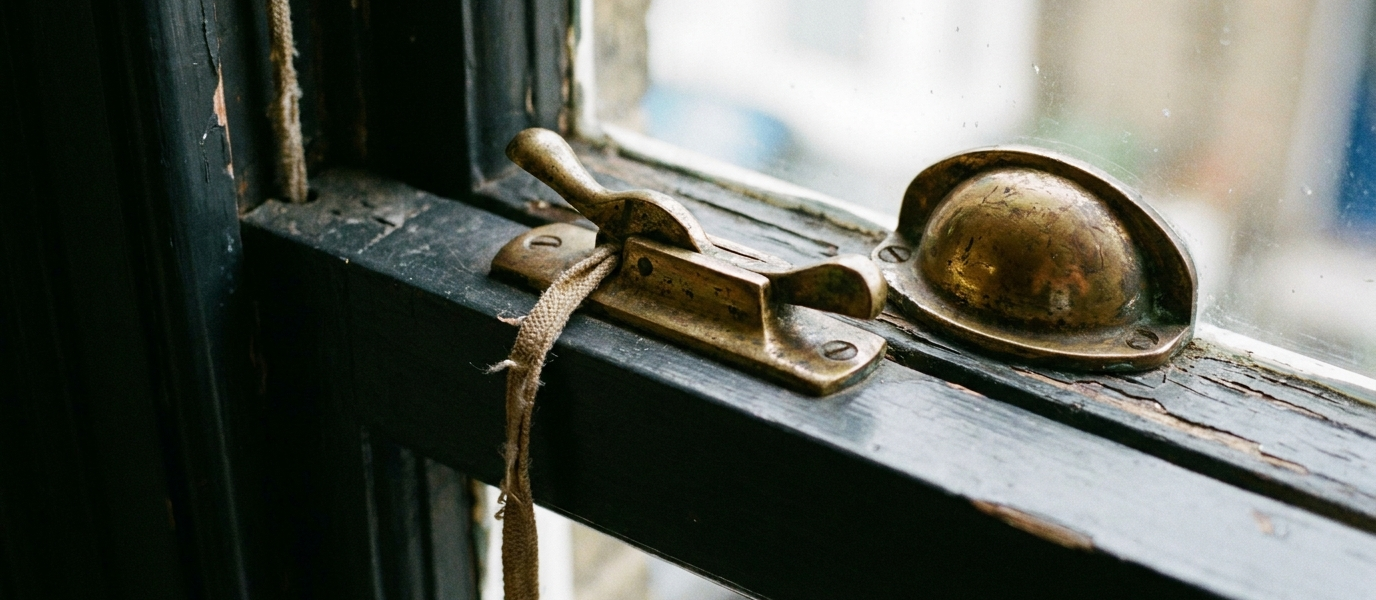
The single detail that changes everything
You walk into a room with original sash windows and your eye does the usual dance: up to the light pouring through the tall glazing, across the deep timber reveals, over the gentle curve of the architrave. You register height, character, a sense of age. But you almost certainly miss the metalwork. And that’s the problem, because the hardware is the architectural equivalent of a good handshake. You notice it only when it’s wrong. A flimsy chrome latch on a Victorian sash feels like a limp grip. A mismatched brass lift on a Georgian frame reads as a room that gave up halfway through.
The difference between a restored sash window and an unloved one is often just a few millimetres of brass or bronze. Not the glass, not the paint colour, not the joinery, the tiny metal pieces your fingers find every single day. This is the detail nobody photographs, but everyone subconsciously judges.
Why brass ages better than you do
Unlacquered brass does something that almost no other finish in your house can manage: it ages gracefully. It starts bright, almost gaudy, like a new penny. Then the oils from your hands, the moisture from the morning air, the dust from an open window on a summer afternoon, they all work on it. Within a year, that bright brass has softened to a warm, honeyed glow. Within five, it develops a patina that shifts with the light and the season. It becomes a living finish, one that mirrors the life of the room itself.
Compare that to cheap nickel or chrome-plated hardware. It arrives looking crisp and modern, then flakes, dulls, or blisters within a few years. It doesn’t age, it just wears out. And that matters because you want a sash window that looks like it has always been there, not one that announces when it was last renovated. A good brass catch from a specialist supplier costs around £15 to £40. It will outlast every piece of furniture in the room, and it will look better the whole time it does it.
Bronze for the rooms that don’t want to shine
Bronze is the quieter, darker sibling of brass, and it deserves a room that doesn’t want to shout. Think of a study with deep green walls, a north-facing bedroom where the light stays soft all day, or a hallway painted in a rich, moody blue. In those spaces, bronze hardware doesn’t compete, it settles. It catches light differently to brass: not with a reflective gleam, but with a soft, almost velvety absorption that makes the window feel grounded rather than bright.
There’s a practical edge too. Bronze is harder than brass, which means it wears less on the spindle and the catch mechanism. If you have a sash window that gets opened daily, a kitchen sash, or a bathroom window that works hard to clear steam, bronze will hold its shape and its finish longer. It’s the difference between a window that feels solid under your hand and one that rattles after a couple of years. door colour ideas If you’re already thinking about deep paint tones, bronze hardware is the natural partner.
The three pieces most people forget to match
Here’s where the best intentions fall apart. You source a beautiful brass sash lock, spend time getting the finish right, fit it perfectly, and then you grab a random sash lift from the hardware drawer, or a finger pull from a different range, because you ran out of patience. The result is a window where the visual rhythm is broken. A curved lift with a square lock feels like two different conversations happening at once. The eye doesn’t consciously register why, but it knows something is off.
The three pieces to match are:
- The sash lift, the small handle or recessed pull you use to raise the lower sash.
- The sash lock, the fastener that holds the two sashes together.
- The finger pull, the small catch on the top sash that lets you pull it down.
And then there’s the one piece nobody photographs but everyone touches: the sash cord weight cover plate. It’s that small, often overlooked rectangle at the bottom of the window frame where the cord disappears into the box. A plain, cheap brass plate can undermine an otherwise beautiful window in the same way a scuffed shoe ruins a good suit. Spend the extra tenner on a plate with a subtle bead or a cast edge. Your fingers will thank you, and the window will feel complete.
Five ways to let the hardware lead the palette
Most people choose their paint colours first and their hardware second. Try reversing it. Let the metal finish be the starting point for your room’s accent colours, and watch how the whole scheme pulls together.
- Brass pulls a warm scheme. Pair it with soft creams, warm greys, terracotta, or a deep ochre. Think of a Farrow & Ball Setting Plaster pink with polished brass lifts, it’s soft, feminine, and quietly luxurious.
- Bronze pulls a cool scheme. Match it with slate blues, sage greens, charcoal, or a deep inky black. A north-facing room painted in Hague Blue with bronze hardware feels like a library in a country house.
- Polished brass leans Georgian. Bright, reflective, symmetrical. It suits rooms with lots of natural light and a formal layout.
- Aged bronze leans Victorian. Darker, more textured, more grounded. It suits rooms with deep skirting boards, heavy curtains, and a sense of enclosure.
- Repeat the finish. If you’ve chosen brass for the sash hardware, use the same brass finish on a curtain pole finial, a door handle, or even a picture light. That quiet visual thread ties the room together without anyone knowing why.
The case for keeping the original stuff
Before you reach for the catalogue, stop. Have a proper look at what’s already on your windows. Original cast brass from the 18th or 19th century has a weight and a detail that modern replicas rarely match. The edges are sharper, the casting marks tell a story, and the metal itself has a density that feels different under your fingers. If your hardware is salvageable, check for maker’s marks on the back, look at the screw heads for age (slotted screws are a good sign), and see if the mechanism still moves freely, then a day with a soft cloth and some fine brass polish might be all it needs.
There’s an emotional argument too. Those tiny wear marks on an original brass catch, the slight rounding of the edge where a thumb has pressed it open a thousand times, are a record of every hand that has opened that window before yours. They’re the physical trace of a house lived in. You can’t buy that from a catalogue. period window restoration And honestly, you don’t need to. The best hardware for your sash window might already be sitting in the frame, waiting for someone to notice it.