Before, the room that felt borrowed
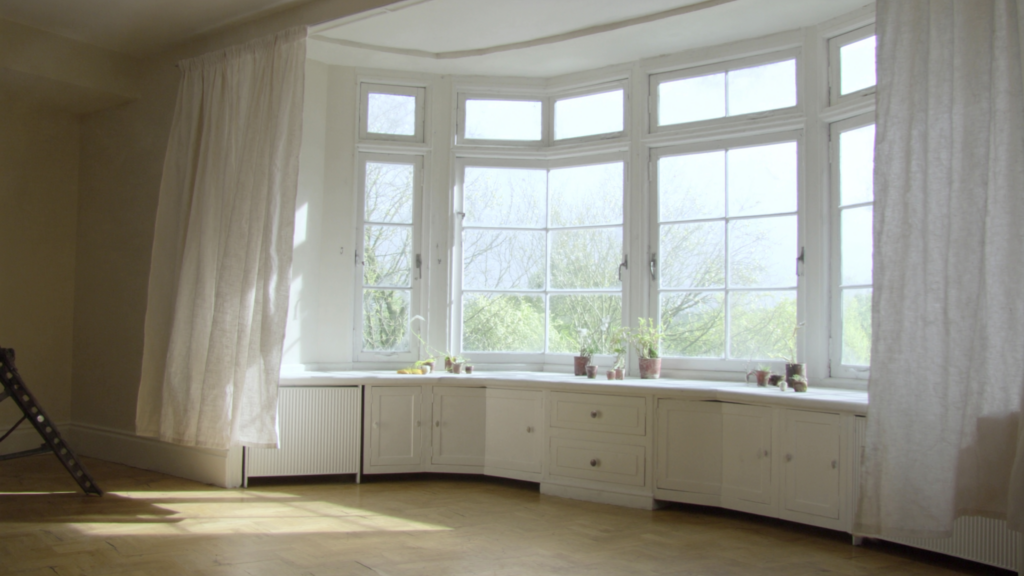
The sitting room in the Victorian terrace had a particular quality of disappointment. It was a good room, generous ceiling height, a south-facing bay, original cornices still intact, but the replacement uPVC casement in the main window never quite sat flush. You could feel the draught before you saw it, a thin, persistent lick of cold air that ran along the skirting board like a complaint. The light fell flat, too; that peculiar, deadened quality that plastic seems to impose on a room, as if someone has turned down the colour saturation. The room felt like it belonged to someone else’s house, a reasonable approximation, but not the real thing.
Then the original timber sash windows were restored. Not replaced, restored. The same frame, the same glass, the same slender glazing bars that had been there since the 1880s. And the room exhaled. The light now shifts across the floor in slow, deliberate slices, tracking the afternoon in a way that feels almost intentional. The room stopped borrowing its character from a catalogue and started being itself.
This is the tension, isn’t it? Modern efficiency versus inherited character. The sensible choice versus the one that makes your home feel like yours. But what if you don’t have to choose?
Why your home already knows what it’s doing
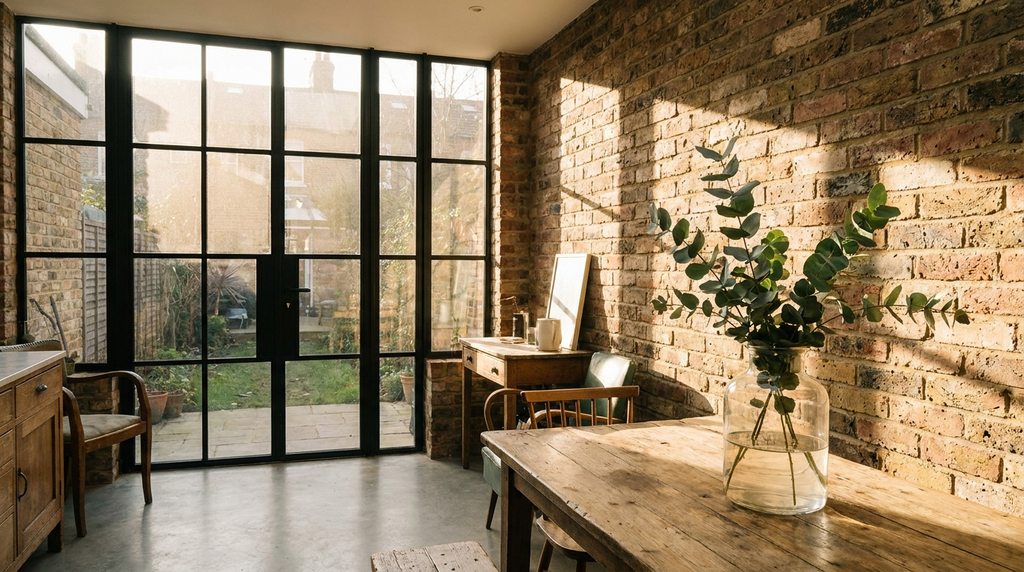
There is a quiet logic to older houses that is easy to overlook when you’re standing in a showroom being told about U-values and thermal breaks. Original features, the deep window reveals, the weighted sash frames, the glass that catches afternoon sun differently from any modern equivalent, were designed for a slower rhythm. They understood that a room is not a sealed box but a series of relationships: between inside and outside, between light and shadow, between the architecture and the person sitting in it.
When you keep original features, you stop fighting the house and start listening to it. The deep sill that was built to hold a pot of geraniums? It still works. The sash cord that lets the window open from top and bottom simultaneously? That was never just a convenience; it was a ventilation strategy, built to draw warm air out at the top while cool air enters at the bottom. The house already knew what it was doing. You just have to let it.
Let the window frame tell the story
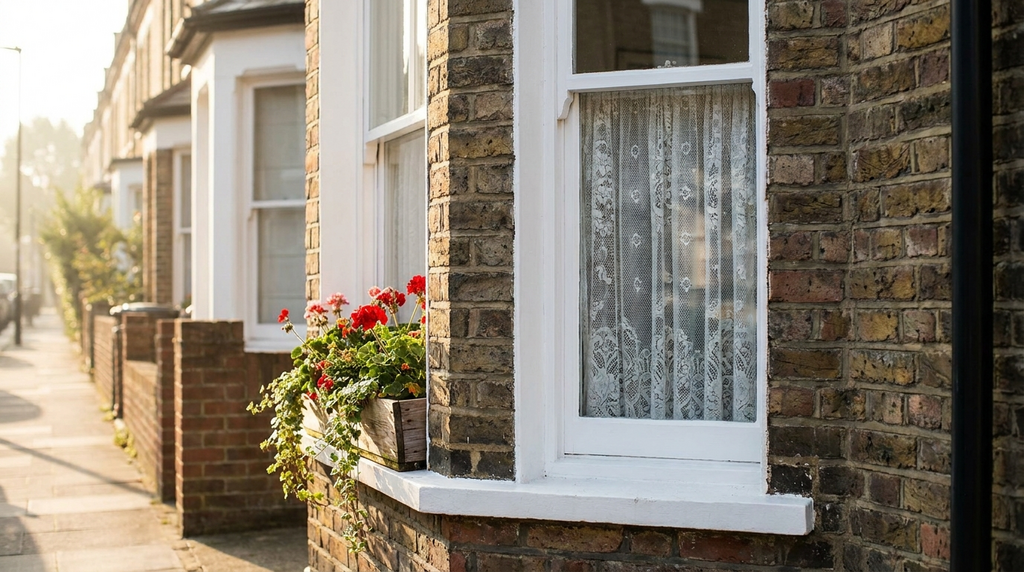
Look closely at an original timber sash window, really look, and you’ll see what a modern replacement cannot replicate. The joinery is finer, the proportions more deliberate. A slim glazing bar draws the eye outward rather than blocking the view; the frame itself seems to recede, letting the garden or the street become the subject. There is a craft to it that mass production cannot touch.
A properly restored sash doesn’t just open; it breathes. The counterweights glide silently in their pockets, the pulley wheels turn without complaint, and the window holds its position at any height you choose, no wedges, no props, no fuss. It is a small, daily pleasure that a plastic casement will never deliver. If your original sashes are still in place, even if they are draughty and painted shut, find a local joinery specialist who can re-cord, re-weight, and draught-proof the original frame. The cost, typically £400 to £800 per window, is often less than a decent replacement, and the result is something that will outlast you.
Eight ways to soften a tall sash window
A restored sash window doesn’t need much help, but it accepts company gracefully. These are not rules; they are observations from rooms that get it right.
- Hang a sheer linen panel from a brass rod set just below the architrave. The fabric should barely register, a whisper of privacy, nothing more.
- Place a low armchair in the bay so the window becomes a backdrop, not a hole. The chair faces into the room, but the eye is drawn past it, outward.
- Paint the inner reveal a muted clay tone, something like Farrow & Ball’s Setting Plaster or a soft Dead Salmon, to warm the light as it enters. The effect is subtle but unmistakable, like sunlight through a paper lampshade.
- Use a single statement pendant centred in the window’s axis. At night, the window becomes a dark mirror; the pendant anchors the room.
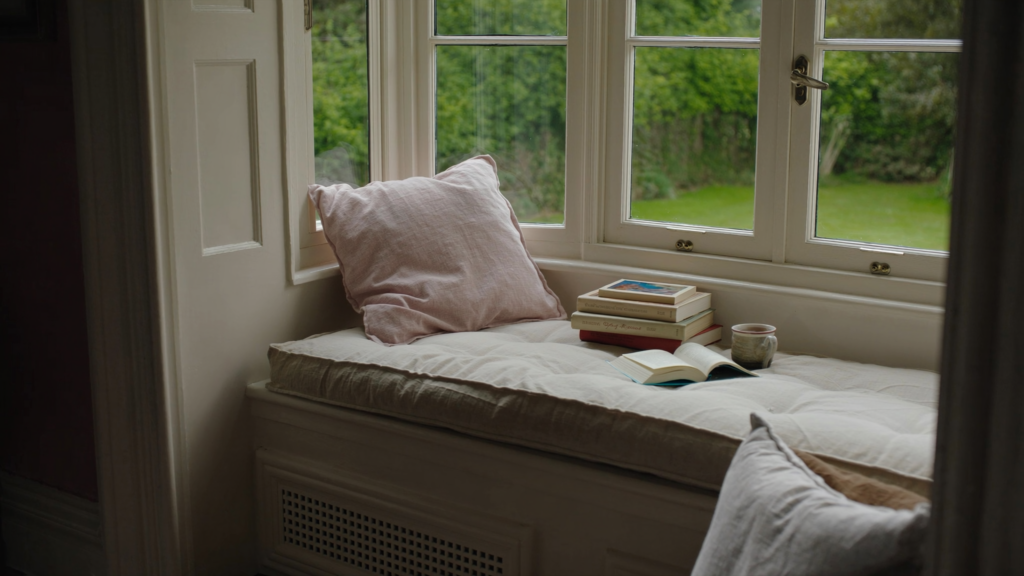
- Keep the sill clear except for one ceramic vessel or a small stack of books. The sill is a ledge, not a shelf; treat it like a stage.
- Add a slim roman blind in a natural texture, linen, slub cotton, hemp, with no blackout lining. Let the light filter through.
- Let the floorboards run uninterrupted up to the window line. No rug, no mat, no visual break. The floor becomes a runway for the light.
- Hang a small mirror opposite to bounce the window’s light deeper into the room. A round mirror works best; it softens the geometry.
The quiet case for secondary glazing
Now for the thermal question. It comes up every time, and it deserves an honest answer: original single-glazed sash windows are draughty. They lose heat. They let in noise. Pretending otherwise is sentimental nonsense. But the solution is not to rip them out.
Secondary glazing is the companion, not the rival. A discreet slimline panel, magnetic or sliding, with a thin aluminium or timber frame, sits inside the window reveal, invisible from the street and barely visible from the room. No plastic grids, no permanent fixtures, no interference with the original sash. The effect is transformative: the room stays warm, the street noise drops to a murmur, and the original window remains entirely untouched. You can still open the sash for ventilation; the secondary panel slides aside when you do.
The cost, around £300 to £700 per window, depending on size and finish, is a fraction of replacement, and the preservation of the original frame adds value in a way that uPVC never will. You keep original features by adding something that steps aside.
Pick a colour that softens with the seasons
Once the window is restored and the room is warm, the paint becomes the final layer. Not the window itself, leave the timber in its natural state or a crisp white, but the walls around it. The window is the source; the room is the echo.
A warm off-white, something like Drop Cloth from Farrow & Ball or Wimborne White, allows the light to do the work. A faded sage, such as French Gray, deepens in the evening and softens in the morning. The trick is to choose a colour that shifts through the day: cool in the sharp morning light, honeyed by late afternoon, and barely visible by dusk. A restored sash window amplifies that effect because the glass itself has a subtle variation, small imperfections, tiny bubbles, a slight ripple, that modern glass cannot replicate. The light passes through it differently, and the room changes with it.
Nothing should compete with the window’s architecture. The paint is there to receive the light, not to argue with it.
After, the room that finally belongs
The same sitting room, now with the original sashes restored, the secondary glazing invisible, the paint soft, the furniture placed to honour the light. The feeling is settled. The room no longer borrows its identity from a catalogue or a contractor’s suggestion. It is not pretending to be something else.
There is a quiet satisfaction in walking past a window that looks like it has always been there, because it has. The glass catches the afternoon sun in the same way it did a hundred and forty years ago. The frame opens with the same smooth glide. The room exhales. And you, standing in the doorway, feel like you finally belong to it, too.