Damp after insulation is almost always caused by trapped moisture, not the insulation material itself
Condensation forms when warm, moist indoor air meets a cold surface. Insulation that blocks airflow can make this worse if the vapour-control layer is missing or breached (GOV.UK, 2026). The most common scenario is interstitial condensation inside a wall or roof build-up, where moisture accumulates unseen over weeks or months.
Damp after insulation is almost always caused by trapped moisture, not the material itself. The most common fix is restoring ventilation, clear blocked eaves vents or seal vapour barriers. Check for condensation first using a 48-hour foil test.
- Check vapour-control layer is continuous to prevent interstitial condensation.
- Blocked eaves vents cause loft insulation damp; clear them annually.
- Use a 30cm foil test to distinguish condensation from penetrating damp.
- Internal wall insulation needs a sealed vapour barrier behind studwork.
- External wall insulation fails if render is unsealed at windows and doors.
- Damp after insulation is almost always caused by trapped moisture, not the insulation material itself
- How to tell whether the damp is condensation, penetrating damp, or rising damp
- The three insulation types most linked to post-installation damp
- Quick numbers, typical costs and repair outcomes
- The first thing to check, is the insulation vapour-control layer intact?
- Damp after insulation, the direct answer to "is it the insulation's fault?"
- Who can verify the problem and fix it, certification and installer checks
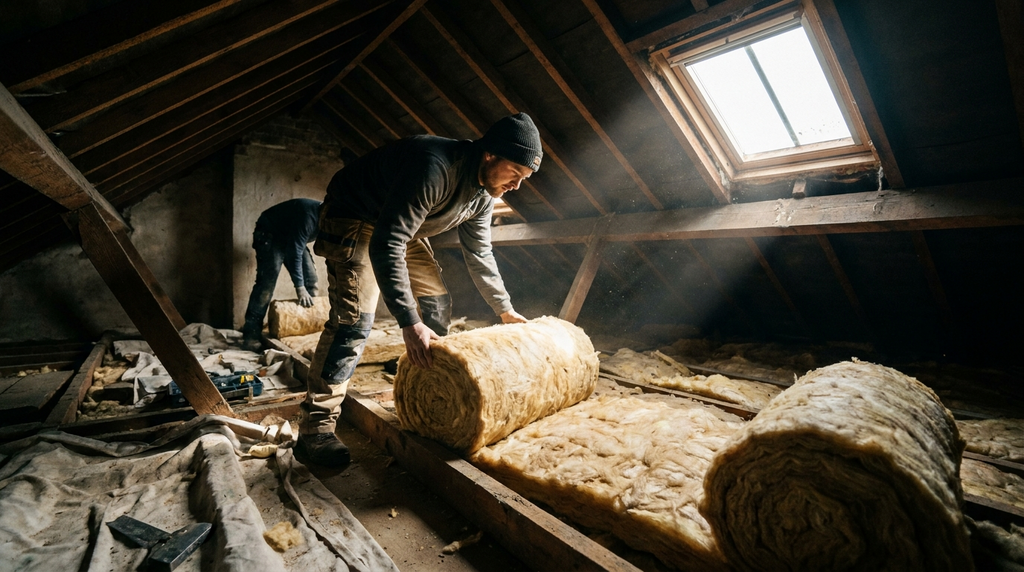
Solid-wall insulation, whether internal or external, carries the highest risk because the dew point shifts inside the structure. The dew point is the temperature at which water vapour in the air turns into liquid water on a surface. Loft insulation can cause damp if eaves vents are blocked, preventing the roof void from breathing (BRE, 2026).
How to tell whether the damp is condensation, penetrating damp, or rising damp
Condensation damp appears as surface mould on cold walls, often in corners, behind furniture, or around windows, and clears briefly when wiped (Property Care Association, 2026). Penetrating damp shows as a localised wet patch after rain, often with a tide mark, and is caused by a roof leak, failed pointing, or a cracked pipe.
Rising damp is rare in modern insulated homes. It forms a horizontal band up to one metre high with a salt-ridden “skirting line” deposit. A simple test: tape a 30 cm square of kitchen foil to the wall for 48 hours. Condensation shows as droplets on the foil’s outer face (British Standard BS 5250, 2026).
The three insulation types most linked to post-installation damp
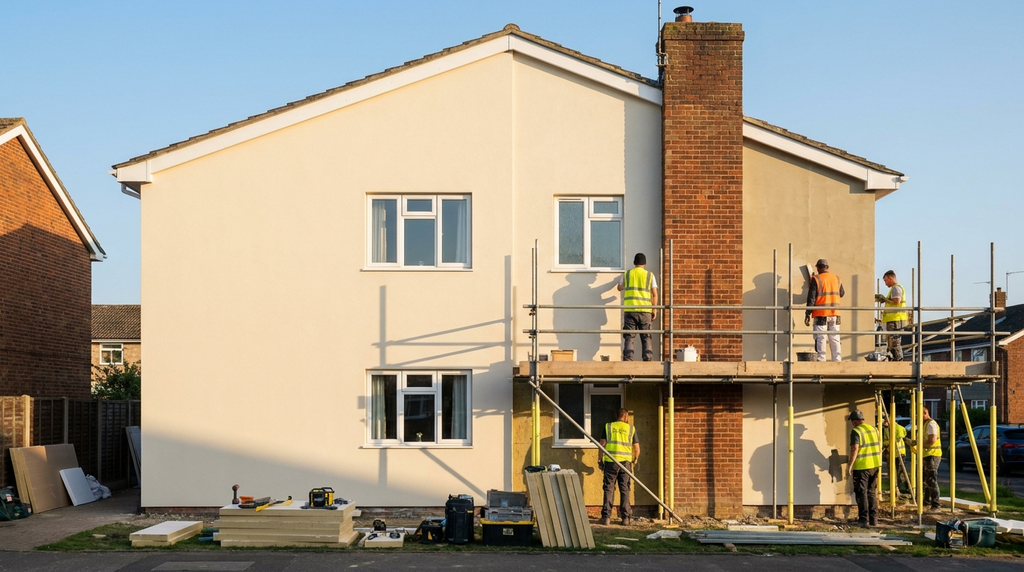
Internal wall insulation (studwork or rigid boards) carries a risk of condensation on the cold wall behind the insulation if the vapour barrier is not continuous. External wall insulation (EWI) can cause damp if the render system is not sealed at windows and doors. This allows rainwater to track behind. Cavity-wall insulation creates damp risk if the cavity is too narrow, the fill is wet at installation, or the wall is exposed to driving rain in exposure zone 3 or 4 (NHBC, 2026).
Quick numbers, typical costs and repair outcomes
| Issue | Typical repair cost (2026) | Success rate if caught early | Time to resolve |
|---|---|---|---|
| Condensation after loft insulation | £150–£400 (ventilation fix) | 90%+ | 1–2 days |
| Interstitial condensation in solid wall | £1,500–£4,000 (strip and re-insulate) | 70% | 1–2 weeks |
| Wet cavity-fill insulation | £2,000–£5,000 (remove and replace) | 80% | 1–3 weeks |
| Penetrating damp behind EWI | £800–£2,500 (re-seal and patch) | 85% | 3–5 days |
Source: Energy Saving Trust, 2026; TrustMark, 2026.
The first thing to check, is the insulation vapour-control layer intact?
A vapour-control layer (VCL) on the warm side of insulation prevents moist indoor air from reaching the cold structure. A tear, gap, or missing overlap is the top cause of post-insulation damp. In lofts, check that the VCL under the insulation is sealed at joists and around loft hatches (BS 5250:2021, 2026). In internal wall insulation, the VCL should be a continuous polythene sheet or specialised membrane taped at all joints (NHBC technical standard 8.3, 2026).
Damp after insulation, the direct answer to “is it the insulation’s fault?”
In nearly all cases, the damp is not caused by the insulation material itself but by a failure in the installation process or a pre-existing moisture problem that was not addressed. Insulation changes the temperature profile inside the wall or roof, which shifts the dew point. If the VCL is missing, condensation will form inside the structure (BRE Digest 369, 2026). The insulation is the trigger, not the cause. The root cause is either a missing vapour barrier, blocked ventilation, or a pre-existing leak (Energy Saving Trust, 2026).
types of home insulation explained
Who can verify the problem and fix it, certification and installer checks
For cavity-wall insulation damp, use an installer registered with the Cavity Insulation Guarantee Agency (CIGA). They can inspect and claim a guarantee if the work is under 25 years old (CIGA, 2026). For solid-wall insulation (internal or external), the installer must be MCS-certified for the system used (MCS, 2026). For any damp diagnosis, use a surveyor accredited by the Property Care Association (PCA) or the Royal Institution of Chartered Surveyors (RICS). For ventilation fixes such as PIV units or extractor fans, the electrician should be NICEIC or NAPIT registered (TrustMark, 2026).
how to find a certified insulation installer
Frequently Asked Questions
Yes. Insulation itself does not cause damp, but trapped moisture from condensation or installation errors does. GOV.UK (2026) advises checking the vapour-control layer is intact and vents are unblocked to prevent damp after insulation.
Condensation shows as surface mould on cold walls and clears when wiped. Rising damp forms a horizontal band up to one metre high with salt deposits. The Property Care Association recommends a 48-hour foil test to confirm.
Internal wall insulation can trap moisture if the vapour barrier is missing or breached. The dew point shifts inside the wall, causing interstitial condensation. Check for gaps around sockets and at floor level.
Yes, if the cavity is too narrow, the fill is wet at installation, or the wall faces driving rain. The BRE (2026) notes that proper installation and a dry cavity are essential to avoid damp after cavity wall insulation.
Clear any blocked eaves vents to restore airflow in the roof void. Ensure insulation does not block the vents. If damp persists, check for a missing vapour barrier and consider adding a breathable membrane.