A home survey determines whether your property is suitable for a heat pump
Before any equipment is ordered, an MCS-certified installer worth visiting your property to carry out a detailed survey. This is not a quick quote. The surveyor performs a heat-loss calculation under the MCS 020 standard, which measures how much heat your home needs to stay warm on the coldest day of the year (MCS, 2026). The result dictates the correct heat pump size. An undersized unit will struggle in winter. An oversized unit will cycle on and off inefficiently.
Heat pump installation typically takes 2-5 days from start to finish. The process begins with an MCS-certified survey and heat loss calculation, followed by indoor and outdoor unit fitting, pipework, and electrical connections. Compare quotes from registered installers.
- MCS-certified installer must complete a 1-2 hour home survey first
- Heat loss calculation under MCS 020 determines correct pump size
- Radiators may need upgrading for lower flow temperatures of 35-55°C
- Hot water cylinder of 180-300 litres is typically required
- Full installation takes 2-5 days with final commissioning by a qualified engineer
- A home survey determines whether your property is suitable for a heat pump
- The installer must be MCS-certified and registered with the Microgeneration Certification Scheme
- The installation itself takes 2–5 days for a typical air-source heat pump
- The system is commissioned and set up for optimal efficiency
- Quick numbers, typical heat pump installation figures
- After installation, the system requires minimal regular maintenance
- The heat pump installation process must comply with building regulations and planning rules
The survey also checks your existing heating system. Radiators sized for a gas boiler running at 70°C flow temperature may need replacing with larger models to work efficiently at the lower flow temperatures a heat pump uses, typically 35–55°C (Energy Saving Trust, 2026). The surveyor examines loft and wall insulation levels because a heat pump works best in a draught-proofed, well-insulated home. If insulation is below current Building Regulations standards, the survey will flag upgrades required before installation can proceed.
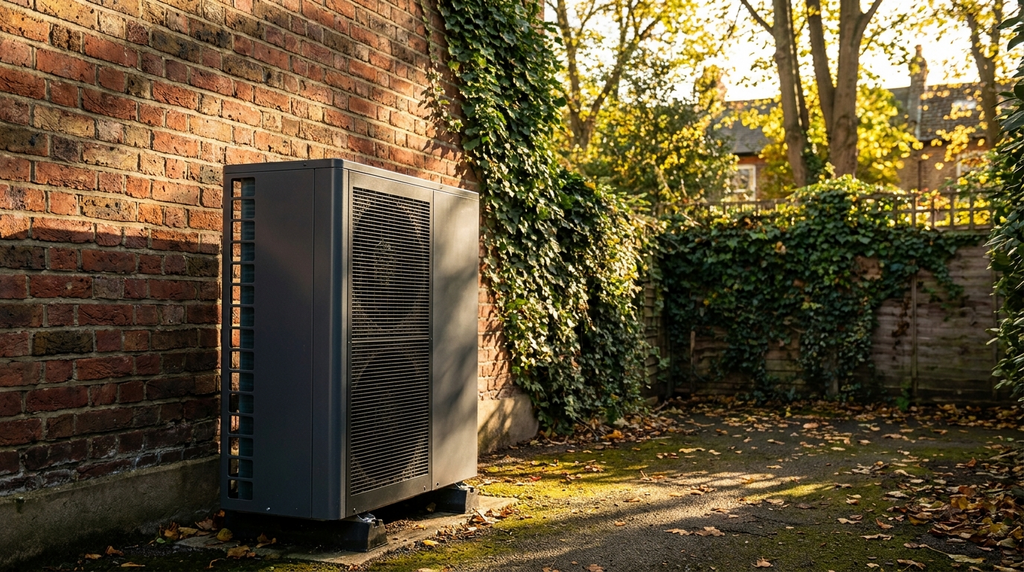
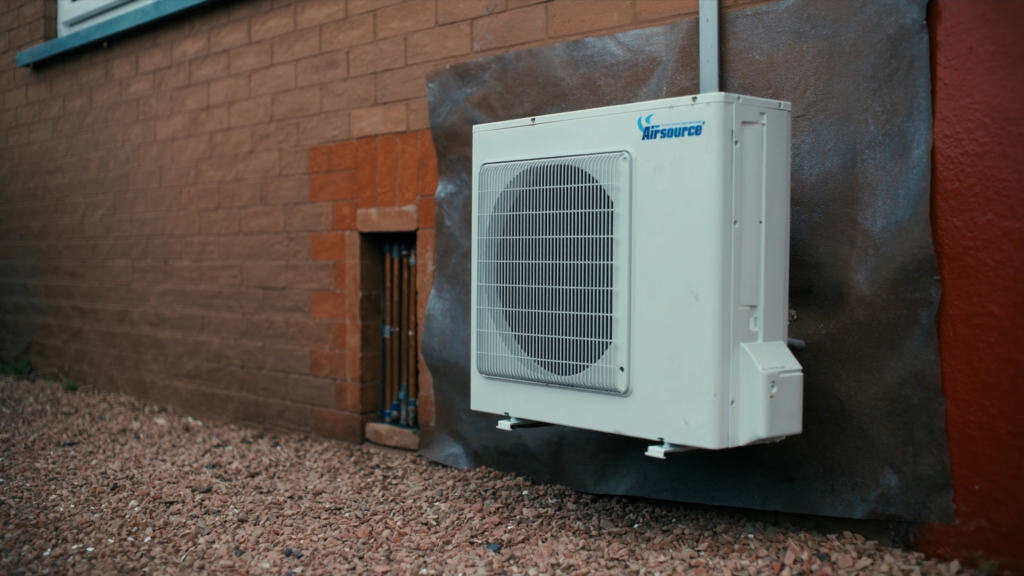
The survey confirms the hot water cylinder size needed. Most homes need a cylinder of 180–300 litres to store enough hot water for daily use (DESNZ, 2026). The location for the outdoor unit is also assessed, with a minimum 1-metre clearance from boundaries and windows to meet noise limits. The full survey takes 1–2 hours and produces a detailed report that the installer submits as part of your Boiler Upgrade Scheme application (GOV.UK, 2026).
The installer must be MCS-certified and registered with the Microgeneration Certification Scheme
MCS certification is a legal requirement for eligibility under the Boiler Upgrade Scheme (GOV.UK, 2026). You can check an installer’s MCS number on the official register at mcscertified.com (MCS, 2026). TrustMark registration is also required for installations funded by the Boiler Upgrade Scheme (DESNZ, 2026).
Before work begins, the installer must provide a full written quote covering all labour, materials, and any electrical or plumbing upgrades. Homeowners should verify that the installer holds public liability insurance and product warranties. Typical warranties are 2–5 years on labour and 7–10 years on the heat pump unit itself. how to choose a heat pump installer
The installation itself takes 2–5 days for a typical air-source heat pump
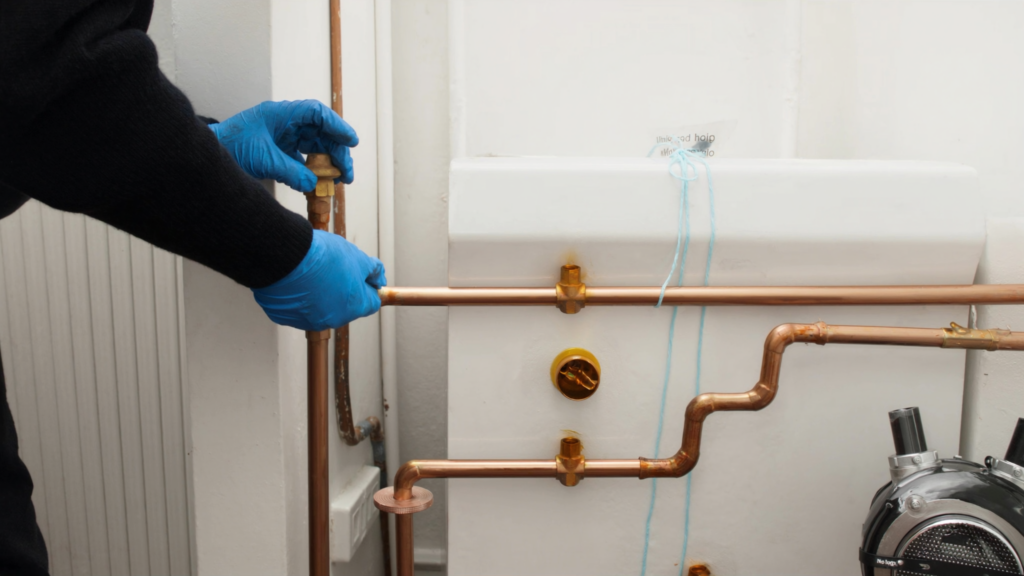
Day one: The outdoor unit is sited on a concrete base or wall bracket, and the indoor hot water cylinder is positioned in an airing cupboard or utility room (Energy Saving Trust, 2026). Day two: Refrigerant pipework is run between the indoor and outdoor units, insulated, and pressure-tested to MCS 020 standards (MCS, 2026).
Day three: Electrical connections are made, including a dedicated circuit from the consumer unit, and the system is filled with refrigerant and commissioned under Part P of Building Regulations (GOV.UK, 2026). Days four and five: The installer connects the heat pump to your existing heating system, installs any new radiators or underfloor heating manifolds, and tests the full system.
Ground-source heat pump installations require trench digging or borehole drilling, which adds 3–7 days to the timeline (Ground Source Heat Pump Association, 2026). The outdoor ground loop installation is typically done by a specialist groundworks team before the heat pump unit itself is connected.
The system is commissioned and set up for optimal efficiency
Commissioning is the final stage where the installer runs the heat pump through its full operating range, measuring flow temperatures, refrigerant pressures, and electrical consumption against MCS 020 standards (MCS, 2026). The installer sets the weather compensation curve, which automatically adjusts the flow temperature based on outdoor temperature, keeping efficiency high across the year (Energy Saving Trust, 2026).
The homeowner is shown how to use the controller, set schedules, and adjust room temperatures. The installer completes a commissioning certificate and submits it to the MCS database, which is required for the Boiler Upgrade Scheme payment (GOV.UK, 2026). A final handover checklist includes confirming the system is quiet, free of refrigerant leaks, and producing the expected heat output.
Quick numbers, typical heat pump installation figures
| Metric | Typical value | Source |
|---|---|---|
| Installation time (air-source) | 2–5 days | Energy Saving Trust, 2026 |
| Installation time (ground-source) | 5–12 days | Ground Source Heat Pump Association, 2026 |
| Boiler Upgrade Scheme grant (air-source) | £7,500 | GOV.UK, 2026 |
| Boiler Upgrade Scheme grant (ground-source) | £7,500 | GOV.UK, 2026 |
| Typical heat pump unit lifespan | 15–20 years | DESNZ, 2026 |
| Noise level at 1 metre (air-source) | 40–60 dB | MCS 020, 2026 |
| Hot water cylinder size range | 180–300 litres | DESNZ, 2026 |
After installation, the system requires minimal regular maintenance
Annual servicing by an MCS-registered installer is recommended to check refrigerant levels, clean filters, and inspect electrical connections (MCS, 2026). Homeowners should clear leaves and debris from the outdoor unit’s fins at least twice a year, ideally in spring and autumn (Energy Saving Trust, 2026).
The system’s performance should be monitored via the controller or app to spot any drop in efficiency early. Most heat pumps have a 7–10-year manufacturer warranty, which is voided if servicing is missed, so check individual warranty terms. Ground-source heat pumps require a check of the ground loop fluid every 2–3 years to ensure the antifreeze concentration and pressure remain correct (Ground Source Heat Pump Association, 2026). heat pump maintenance checklist
The heat pump installation process must comply with building regulations and planning rules
Part L of Building Regulations covers the energy efficiency of the heating system. The installer must provide a commissioning certificate to prove compliance (GOV.UK, 2026). Part P covers electrical work. The installer must be registered with a competent person scheme, such as NICEIC or NAPIT (GOV.UK, 2026).
Planning permission is generally not needed for air-source heat pumps in England, but listed buildings and conservation areas require consent from the local planning authority (Planning Portal, 2026). Ground-source heat pumps do not usually need planning permission for the indoor unit, but boreholes may need environmental agency approval if they affect groundwater (Environment Agency, 2026). The installer must notify the local building control body of the installation unless they are registered with a competent person scheme that self-certifies the work.
Frequently Asked Questions
Installation typically takes 2-5 days depending on property size and system complexity. The process includes indoor unit fitting, outdoor unit placement, pipework connections, and electrical wiring (Energy Saving Trust, 2026).
In most cases, no. Air source heat pumps are permitted development in England, Scotland, and Wales if they meet size and noise limits under the MCS 020 standard (GOV.UK, 2026). Check with your local authority for conservation areas.
MCS (Microgeneration Certification Scheme) is a legal requirement for heat pump installations to qualify for the Boiler Upgrade Scheme. It ensures the installer follows industry standards for design, installation, and commissioning (MCS, 2026).
Yes, but existing radiators sized for 70°C flow temperature may need replacing with larger models. Heat pumps operate at 35-55°C, so radiators must be oversized to deliver the same heat output (Energy Saving Trust, 2026).
The survey includes a heat loss calculation, insulation check, and assessment of existing radiators and hot water cylinder. The surveyor also checks outdoor unit location with minimum 1-metre clearance from boundaries (MCS, 2026).