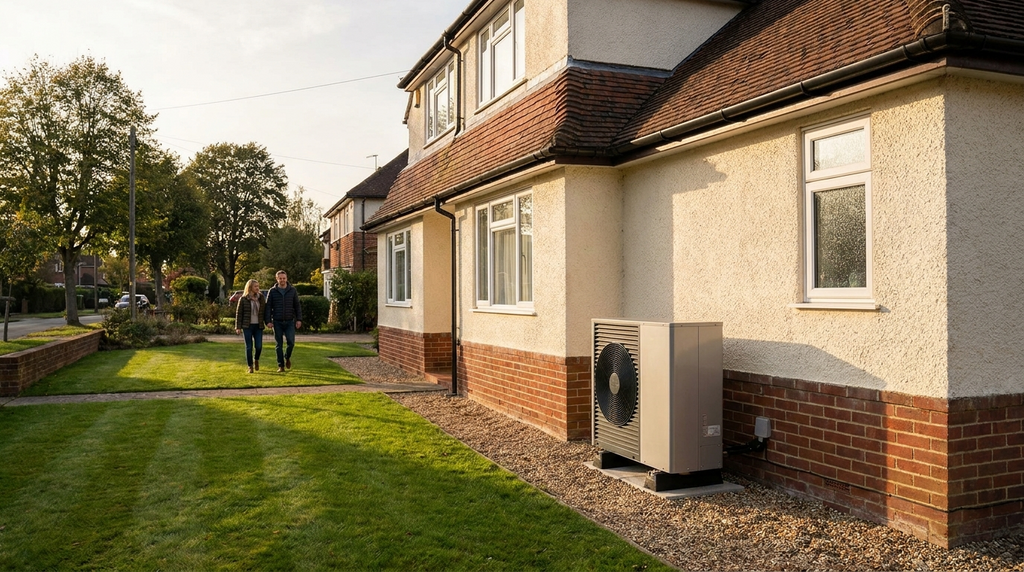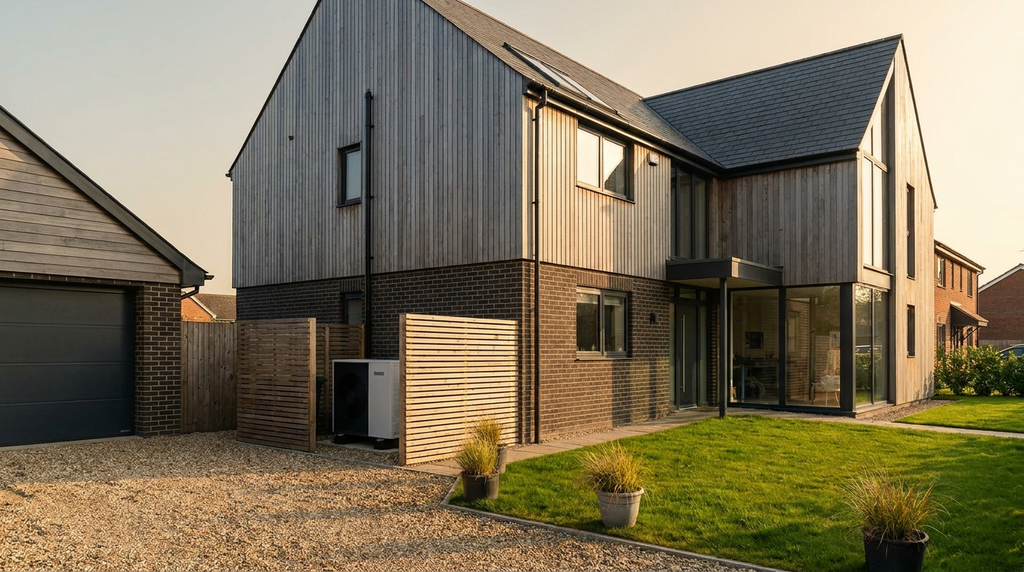
A heat pump system works by using electricity to move heat from outside air, ground or water into your home, rather than burning fuel to generate it. The Energy Saving Trust explains that for every 1 kWh of electricity used, a well-installed air source heat pump can deliver 2.5 to 3 kWh of heat (Energy Saving Trust, 2026).
The key variable is the efficiency, measured as the Coefficient of Performance (COP). A higher COP means lower running costs. This applies to most homes with adequate insulation, but not to properties with single glazing or uninsulated walls, where heat loss can outweigh the savings. The system works best with underfloor heating or large radiators, as it operates at lower temperatures than a gas boiler.
Heat pump system components explained
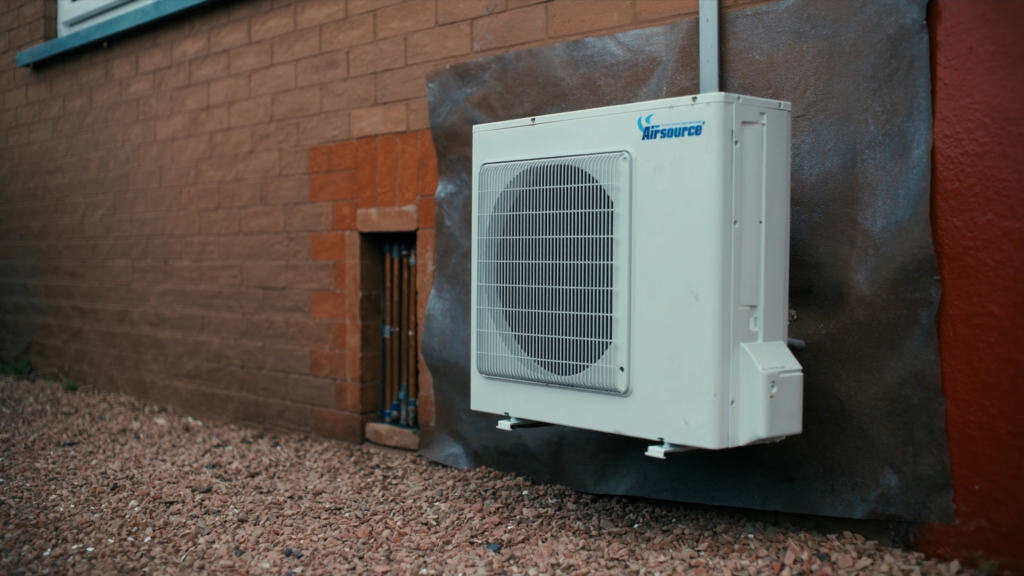
An air source heat pump has an outdoor unit containing a fan and a heat exchanger, plus an indoor unit with a compressor and a refrigerant circuit. The refrigerant absorbs heat from outside air, even at temperatures as low as -15°C, according to the Energy Saving Trust (Energy Saving Trust, 2026). The compressor increases the pressure and temperature of the refrigerant, which then transfers heat to your home’s heating system via a heat exchanger. A ground source heat pump uses buried pipes filled with a water-antifreeze mixture instead of an outdoor fan unit, achieving typical COPs of 3.0 to 4.5 (GOV.UK, 2026).
Heat pump system operation cycle
The cycle starts as the refrigerant, at low pressure, passes through the outdoor heat exchanger where it absorbs ambient heat and evaporates into a gas. The compressor then pressurises this gas, raising its temperature to around 50-60°C. The hot gas flows to the indoor heat exchanger (condenser), where it releases heat into your home’s water or air system, condensing back into a liquid. A pressure-reducing valve then lowers the refrigerant’s pressure and temperature, returning it to the outdoor unit to repeat the cycle. The Microgeneration Certification Scheme (MCS) confirms that modern heat pumps can reverse this cycle to provide cooling in summer (MCS, 2026).
Heat pump system installation requirements
You need outdoor space for the unit (air source) or a garden for ground loops (ground source). The system must be installed by an MCS-certified installer to qualify for the Boiler Upgrade Scheme grant, which offers £7,500 towards an air source heat pump and £7,500 towards a ground source heat pump in England and Wales (GOV.UK, 2026). Your home should have a hot water cylinder, as heat pumps typically cannot provide instant hot water like a combi boiler. Insulation levels should be at least 270mm loft insulation and cavity wall insulation where possible to maximise efficiency.
A worked example
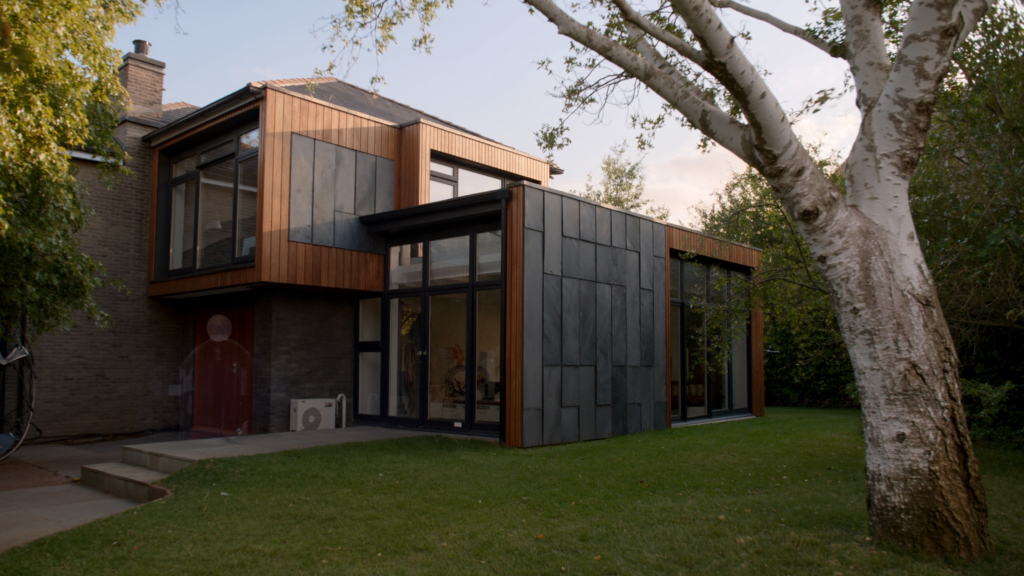
For a typical 1930s semi-detached house in Manchester with cavity wall insulation and loft insulation, an air source heat pump installation costs £11,000 after the BUS grant of £7,500 and the 0% VAT reduction in place until March 2027. The Energy Saving Trust estimates this home would save £395 per year compared to a gas boiler, based on a COP of 3.0 and current energy prices (Energy Saving Trust, 2026). The payback period is roughly 28 years, but the heat pump system lasts 20 to 25 years, so the homeowner would see net savings of about £1,900 over its lifetime. This assumes the property already has adequate insulation and uses underfloor heating or larger radiators to run at lower flow temperatures. If the home qualified for ECO4 funding, the upfront cost could drop even further, potentially to zero depending on household income and energy efficiency ratings.
| Item | Figure |
|---|---|
| Upfront cost after grants | £11,000 |
| Yearly savings | £395 |
| Payback period | 28 years |
| 25-year lifetime savings | £1,900 |
What homeowners often get wrong
The most common mistake is assuming a heat pump system works like a gas boiler and will heat your home instantly to the same temperatures. Here are three key errors homeowners make and what the correct approach looks like.
- Believing heat pumps need high flow temperatures A gas boiler runs at 60°C to 70°C, but a heat pump system works best at 35°C to 45°C. If you keep your existing radiators without upgrading to larger ones or underfloor heating, the system will struggle to heat the home and your electricity bills could be £200 to £400 higher per year than necessary.
- Ignoring insulation before installation Many homeowners install a heat pump without first checking their home’s insulation. The Energy Saving Trust states that a heat pump in a draughty, uninsulated property will have a COP below 2.0, meaning it costs more to run than a gas boiler. Upgrading loft insulation to 270 mm and filling cavity walls can cut heat loss by 35% and make the system viable.
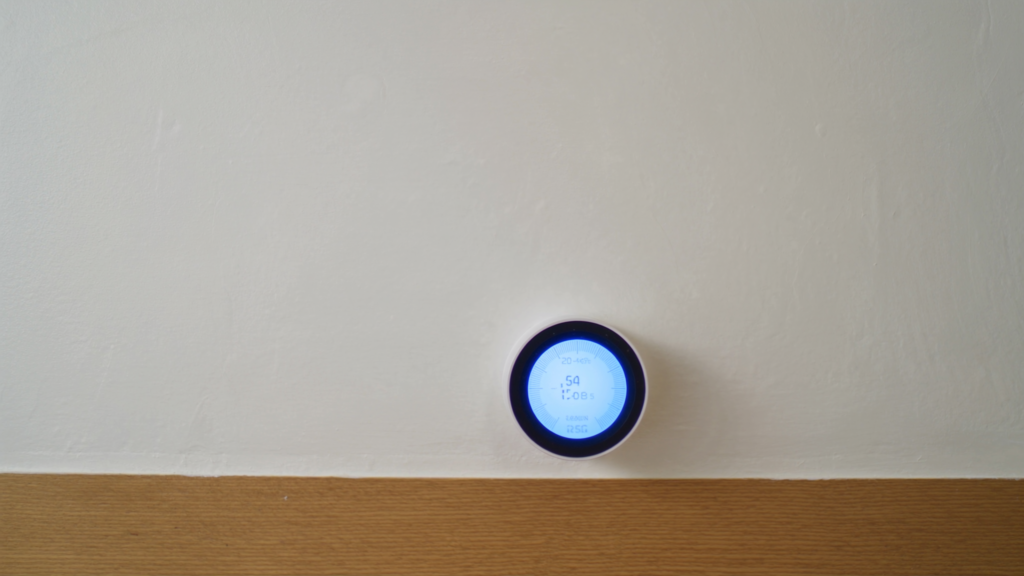
- Setting the thermostat to turn off at night Heat pumps are most efficient when they run continuously at a low level. If you set the thermostat to drop by 5°C overnight, the system has to work harder to reheat the house in the morning, which can increase running costs by 15% and reduce the unit’s lifespan by cycling on and off repeatedly.
Quick reference
- A well-installed air source heat pump system delivers 2.5 to 3 kWh of heat for every 1 kWh of electricity used, according to the Energy Saving Trust.
- The BUS grant covers £7,500 of the installation cost for an air source heat pump, with no income cap and no requirement to remove your gas boiler.
- Ground source heat pumps achieve typical COPs of 3.0 to 4.5, but require a garden large enough for buried pipework, usually 200 to 600 square metres.
- Running costs for a heat pump system are roughly 10% to 30% lower than a gas boiler when the home has adequate insulation and low-temperature heating.
- Installing a heat pump in a home with single glazing or uninsulated walls will void the efficiency guarantee and can lead to electricity bills that are higher than your old gas bills.
Frequently Asked Questions
Yes, it works even at -15°C. The Energy Saving Trust confirms the refrigerant absorbs heat from outside air at low temperatures.
The Coefficient of Performance (COP) for air source heat pumps is typically 2.5 to 3.0, while ground source heat pumps achieve 3.0 to 4.5, according to GOV.UK.
An air source heat pump has an outdoor unit with a fan and heat exchanger, and an indoor unit with a compressor and refrigerant circuit. A ground source system uses buried pipes with a water-antifreeze mixture.